









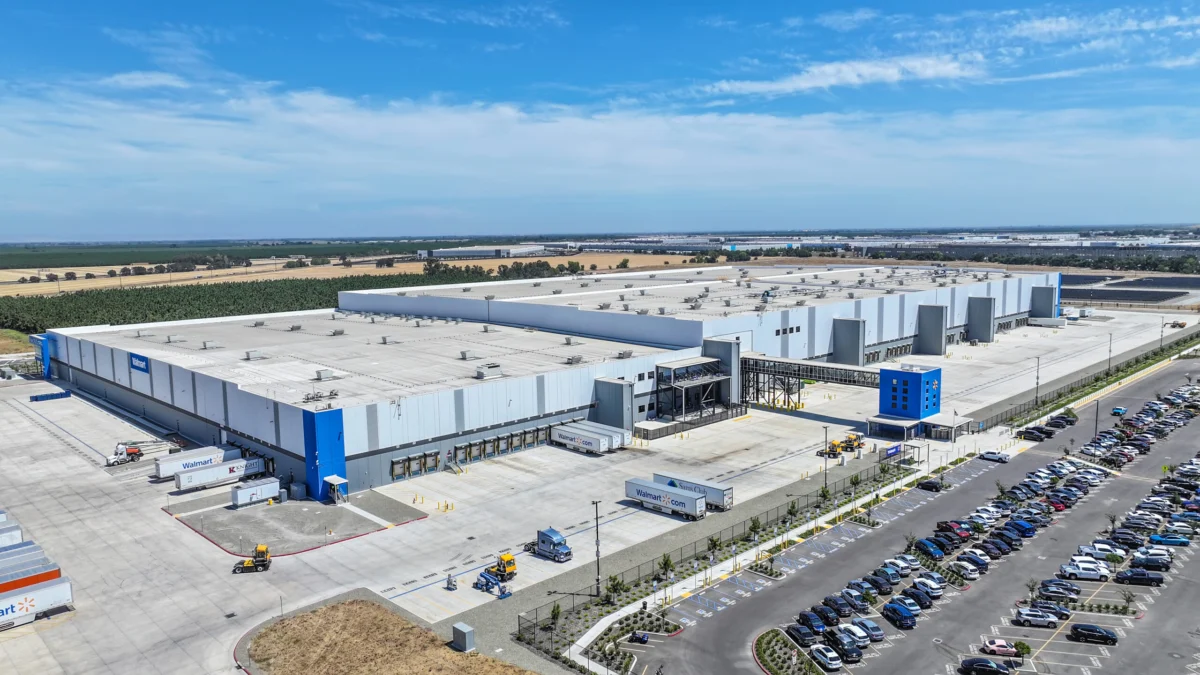
In a move designed to fortify its dominance in the hyper-competitive landscape of North American e-commerce, Walmart has officially unveiled its fifth next-generation fulfillment center in Stockton, California. This massive, 900,000-square-foot facility represents more than just a logistical upgrade; it is a physical embodiment of the retail giant’s pivot toward an AI-driven, automated supply chain architecture.
As the second-largest online retailer in North America, according to the Digital Commerce 360 Top 1000 Database, Walmart is under constant pressure to optimize the "last mile" of delivery. The Stockton facility is positioned to serve as the heartbeat of the company’s West Coast operations, streamlining the flow of goods and significantly reducing the time between a customer clicking "buy" and the arrival of the package on their doorstep.
The Technological Edge: How Stockton Redefines Efficiency
The Stockton center is defined by its cutting-edge, high-density storage and retrieval system. In traditional warehouse environments, fulfillment associates often traverse miles of floor space daily to pick items from shelves. Walmart’s new approach flips this paradigm: the system brings the inventory directly to the human worker.
This automation reduces a cumbersome 12-step fulfillment process down to just five steps. By eliminating the need for excessive walking and manual retrieval, the facility allows associates to focus on higher-value tasks, such as quality control, complex packing, and inventory management. This evolution is not merely about speed; it is about creating a safer, more ergonomically sound environment that mitigates the physical toll often associated with warehouse labor.
Karisa Sprague, senior vice president in fulfillment operations at Walmart U.S., emphasized the symbiotic relationship between humans and machines in a recent statement. "We’re bringing together associates with advanced technology and automation to create a safer, more efficient operation that can fulfill more orders and get products to customers faster," Sprague noted. "This facility is an important investment in the Central Valley and a critical part of how we’re building the next generation of Walmart’s fulfillment network across the West Coast."
A Chronology of Walmart’s Fulfillment Evolution
To understand the magnitude of the Stockton opening, one must look at the timeline of Walmart’s logistical transformation over the last decade.
- Early 2010s: Walmart focuses on leveraging its massive physical store footprint as a "hub" for local fulfillment, creating the foundation for its BOPIS (Buy Online, Pick Up In-Store) capabilities.
- 2020-2021: The pandemic-era e-commerce surge forces a rapid acceleration of warehouse automation. Walmart begins piloting robotic retrieval systems in select regional distribution centers.
- 2022-2023: Walmart formally launches its "next-generation" fulfillment center model. These centers are designed specifically to handle the high volume and speed required by modern e-commerce, utilizing AI to predict demand and optimize stock placement.
- 2024: The company integrates AI-driven inventory management deeper into its logistics stack, ranking No. 37 in Digital Commerce 360’s AI Commerce Rankings.
- Late 2026 (Current): The opening of the Stockton facility marks the fifth "next-gen" hub, confirming that the company has moved from testing to full-scale deployment of its high-tech infrastructure across the U.S.
Supporting Data: The Case for Automation
The figures provided by Walmart to its investors illustrate why this investment in Stockton is not just prudent, but necessary. As of the second quarter of the current fiscal year, more than half of Walmart’s total e-commerce fulfillment volume is processed through these automated facilities. Furthermore, 3,100 of the company’s U.S. stores have integrated automated freight solutions.
The results are tangible. Through the combined power of these next-generation centers and its existing store network, Walmart can now reach 95% of the U.S. population with either next-day or two-day shipping. This metric is a key indicator of competitive health in an era where consumers are increasingly conditioned by the "Amazon Prime" effect.
Moreover, the financial performance of the company’s online arm remains robust. In the first quarter of the year, Walmart U.S. reported a 26% growth in online sales. CFO John David Rainey has repeatedly pointed to delivery speed as the "key catalyst for growth" on a global scale. Currently, Walmart can reach 60% of the U.S. population via delivery in 30 minutes or less, a service that has now been expanded to 38 major markets.
Implications for Marketplace Sellers: The WFS Advantage
Perhaps the most significant aspect of the Stockton facility is that it is not exclusive to Walmart’s own retail inventory. The center will also be utilized by Walmart Fulfillment Services (WFS), the company’s third-party logistics (3PL) arm.
For brands and independent merchants selling on the Walmart Marketplace, the Stockton facility provides a massive boost to their own competitive capabilities. By plugging into Walmart’s network, these sellers can offer their customers the same shipping speeds as Walmart’s first-party products. The demand for this service is clear: in fiscal Q1, units shipped same-day or next-day through WFS grew by nearly 150%.
By lowering the barrier to entry for high-speed shipping, Walmart is incentivizing more high-quality sellers to join its platform, thereby increasing the breadth and depth of its online inventory. This creates a "flywheel" effect: better selection leads to more customers, which leads to more sellers, which further incentivizes investment in infrastructure like the Stockton center.
Strategic Outlook: The "Speed" Mandate
John Furner, CEO and president of Walmart U.S., summarized the company’s philosophy during an August investor call: "Speed matters, and we have a significant competitive advantage."
This competitive advantage is built on the reality that Walmart possesses both the digital infrastructure of a tech firm and the physical infrastructure of a global retailer. While pure-play e-commerce companies have to build logistics networks from the ground up, Walmart is augmenting its existing brick-and-mortar footprint with AI-driven, automated hubs like the one in Stockton.
The implications for the broader retail industry are profound. As fulfillment becomes increasingly automated, the cost per unit to ship decreases, and the reliability of delivery windows increases. Retailers that cannot match this level of efficiency face a significant risk of becoming irrelevant in the eyes of the modern consumer, who views "fast shipping" as a baseline expectation rather than a premium service.
Looking Ahead
As Walmart continues to scale its next-generation fulfillment network, the company will likely look toward further integration of predictive AI. By analyzing localized purchasing trends, the company can move products to the Stockton facility—and others like it—before the orders are even placed. This "pre-positioning" of inventory is the next frontier of the retail supply chain.
For the city of Stockton and the Central Valley, the new facility also represents a major economic development, bringing high-tech operational roles to the region and cementing its status as a critical node in the Western United States’ supply chain.
As the retail sector continues to navigate the complexities of inflation, shifting consumer behavior, and the demand for instant gratification, Walmart’s bet on the Stockton fulfillment center signals that the company is playing for the long term. By marrying human expertise with the precision of automation, Walmart is not just keeping pace with the evolution of e-commerce—it is defining the speed at which the industry will move for years to come.
Are you tracking the shifts in your own competitive landscape? Digital Commerce 360 provides the data and insights necessary to understand where your business stands in the global e-commerce hierarchy. Submit your data today to participate in our next ranking update and ensure you stay informed on the technologies and strategies reshaping the retail world.



