










By [Your Name/Journalistic Desk]
September 23, 2026
The television has long been considered the "hearth" of the modern home, yet for years, the digital creator economy operated primarily in the pocket—on smartphones and tablets. That paradigm is shifting rapidly. Following the 2026 "Made On YouTube" event, the platform has solidified its position as the world’s leading streaming service for three consecutive years, announcing a suite of features designed to bridge the gap between bite-sized mobile content and the immersive, "lean-back" experience of the living room.
As over half of YouTube’s top 100 creators now find that their primary audience interaction occurs on TV interfaces, the company is doubling down on features that treat creators with the same "prime time" respect traditionally reserved for Hollywood studios.
The Rise of the Microdrama and the Shorts Series
At the heart of YouTube’s recent update is the introduction of Shorts Series. While YouTube Shorts were initially conceived as a mobile-first competitor to TikTok, the platform has observed an unexpected and explosive trend: the "microdrama."
These episodic, short-form narratives—often ranging from three to ten minutes per segment—are capturing global attention. Data from the first half of 2026 reveals the staggering scale of this shift: microdramas on YouTube have surpassed 6.5 billion views. Perhaps more importantly, while these stories are produced for vertical mobile screens, their consumption on television sets has surged by over 90% year-over-year.
Structuring Content for the Big Screen
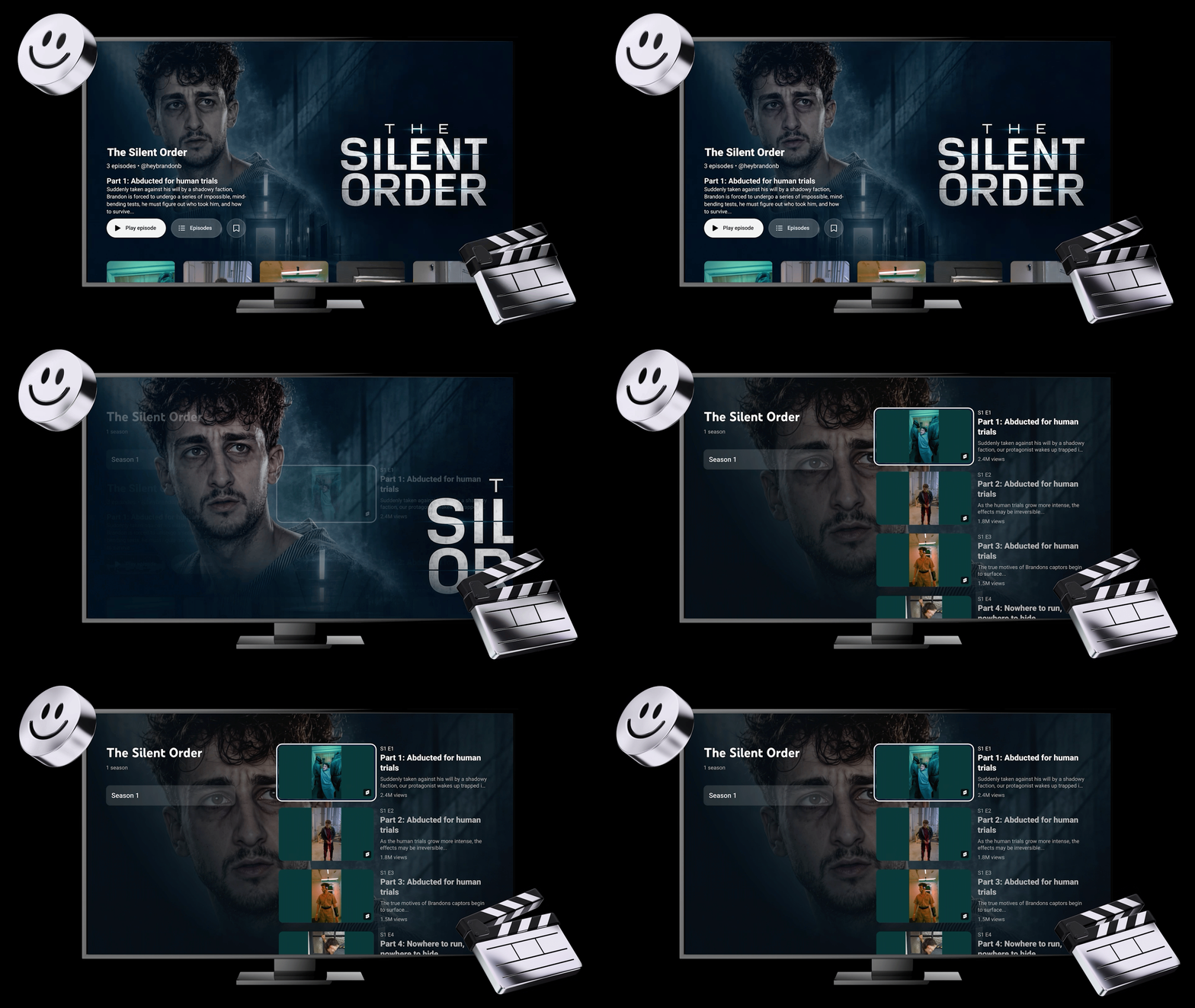
To accommodate this appetite for serialized storytelling, YouTube is rolling out Shorts Series. This feature allows creators to organize their vertical content into structured seasons and episodes. By introducing custom thumbnails and sequential playback, YouTube is effectively transforming the chaotic, endless-scroll nature of short-form video into a curated, bingeable television experience.
Creators like Kinigra Deon and GOKKO CLUB are already pioneering this format, proving that high-quality, narrative-driven content can thrive regardless of the screen size. The move signals a maturation of the creator economy: content creators are no longer just "influencers"; they are producers of episodic series that rival traditional cable television in both production value and audience retention.

Bridging the Interaction Gap: Comments and Community
For years, the "TV experience" on YouTube was a passive one. Viewers could watch, but they could not easily participate in the community discourse that defines the platform. That is changing with the integration of voice-input commenting.
The Death of the "Second Screen" Requirement
Previously, if a viewer wanted to comment on a video while watching on their TV, they were forced to pull out their smartphone, navigate to the video, and type. The new update allows users to post comments directly through their TV interfaces using voice commands.
This reduction in friction is designed to keep viewers in the "lean-back" state for longer. By removing the need for a "second screen," YouTube is fostering a more cohesive environment where the community interaction—often the primary draw for YouTube viewers—remains centered on the largest screen in the house.
The Evolution of "Posts"
Beyond video comments, YouTube is giving its "Posts" feature a significant upgrade. With over 300 million users engaging with community posts daily, this feature has become a vital tool for creators to poll their audience, share behind-the-scenes imagery, and announce new content.
In the coming months, these posts will be fully integrated into the TV interface. Furthermore, the algorithm is being adjusted to recommend creator posts within the Shorts feed on web and mobile, ensuring that creators can maintain a consistent brand presence across all devices.
Chronology of a Transformation: How We Got Here
The transition from a mobile-first platform to a living-room powerhouse did not happen overnight. The following timeline illustrates the strategic steps YouTube has taken to dominate the television landscape:
- 2022–2023: The Optimization Phase. YouTube began prioritizing the TV interface, refining its UI to ensure that navigation felt intuitive for remote controls rather than touchscreens.
- 2024: The Rise of Creator Shows. Recognizing the demand for long-form, serialized content, YouTube introduced "Creator Shows," allowing users to browse content by series rather than just individual uploads.
- 2025: The Streaming Dominance. YouTube officially maintained its position as the #1 streamer for the third consecutive year, leveraging its vast library of both long-form and short-form content to outpace traditional subscription-based services.
- 2026: The "Made On YouTube" Pivot. The announcement of Shorts Series, TV-integrated comments, and cross-platform post recommendations represents the final piece of the puzzle: making the TV experience as interactive and deep as the mobile experience.
Supporting Data: Why the Shift Matters
The statistics driving these product decisions are undeniable. When we analyze the data provided by YouTube’s product teams, three clear trends emerge:

- The "Top 100" Benchmark: More than 50% of the top 100 YouTube channels see the TV as their primary interface. This suggests that the highest-earning, most professionalized creators are already effectively "TV creators."
- The Microdrama Boom: With a 50% year-over-year growth in watch time for microdramas, the format is no longer a niche curiosity; it is a primary revenue driver.
- The TV "Multiplier" Effect: The 90% increase in microdrama viewership on TVs indicates that users are actively seeking out high-quality short-form content to watch on their large displays, validating YouTube’s decision to optimize the Shorts experience for the living room.
Official Perspectives
Kurt Wilms, Senior Director of Product Management for YouTube on TV, noted in his address during the "Made On YouTube" event that the company’s philosophy is rooted in viewer autonomy.
"What makes YouTube unique is that viewers have the choice between leaning back or leaning into their favorite content, regardless of where they’re watching," Wilms stated. "We are simply removing the barriers that prevent that choice from being seamless. Whether you want to binge a microdrama series with your family or engage in a community poll from your couch, the TV should be just as capable as your phone."
Industry analysts suggest that this shift is a direct challenge to traditional streaming services like Netflix and Disney+. By providing a mix of episodic creator content and community-driven social features, YouTube is attempting to replicate the "water cooler" effect that television used to provide, but with a degree of personalization that legacy media cannot match.
Implications for the Future of Media
The implications of these updates are far-reaching for both creators and advertisers:
- For Creators: The pressure is on to "think in seasons." As viewers begin to expect structured series, creators will need to invest more in narrative arcs and episode pacing. The barrier to entry for "TV-quality" production is effectively being lowered, as Shorts Series provides a professional structure for vertical content.
- For Advertisers: The Living Room is the "holy grail" of advertising. By bringing community interaction and social posts to the TV, YouTube is creating a more sticky environment, which in turn leads to higher ad-load tolerance and better engagement metrics for brands.
- For the Industry: We are witnessing the final blur between "Web Video" and "Television." As the screen size becomes increasingly irrelevant to the content format, the distinction between a "YouTuber" and a "TV Producer" will continue to dissolve.
Conclusion
As YouTube continues to evolve, it is clear that the platform is not just trying to keep up with the changing habits of its users—it is actively shaping them. By making the biggest screen in the house as social, interactive, and serialized as the mobile device in our pockets, YouTube is securing its place as the primary destination for the next generation of entertainment.
Whether it is a 60-second microdrama or a community-driven conversation, the living room is no longer just for watching—it is for participating. And in the world of 2026 media, that is the most valuable currency of all.



