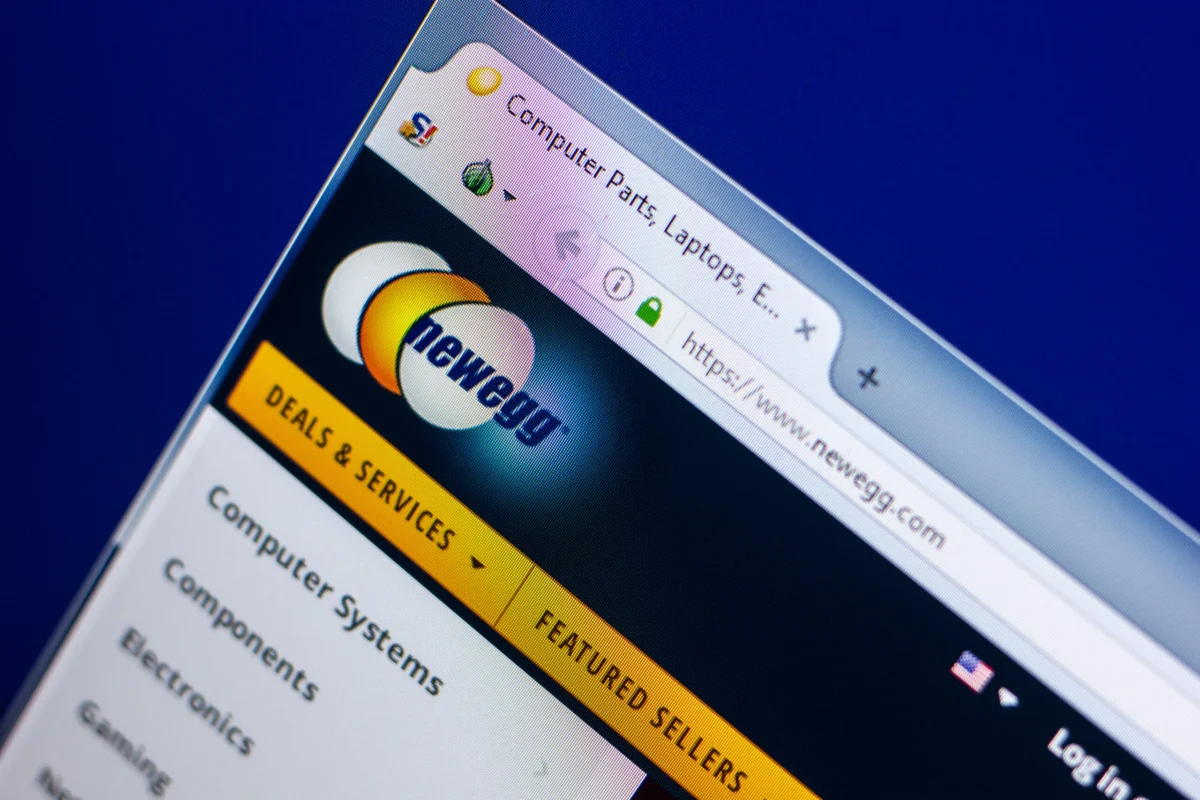
In a significant move that underscores the rapid evolution of "agentic commerce," electronics retail giant Newegg Commerce Inc. has officially announced its integration of Google’s Universal Commerce Protocol (UCP). This strategic deployment marks a critical milestone for the retailer, positioning its extensive product catalog directly within the conversational and search-driven ecosystems of Google’s AI-powered platforms. By joining a prestigious cohort of industry leaders—including Walmart, Wayfair, and Macy’s—Newegg is cementing its role as a pioneer in the transition from traditional e-commerce to AI-facilitated shopping.
Main Facts: What is the Universal Commerce Protocol?
The Universal Commerce Protocol (UCP) is an open-standard framework designed to bridge the gap between AI-driven discovery and physical transaction fulfillment. Formally launched by Google in January, the UCP allows merchants to surface their product data within Google’s AI Mode, Google Search, and Gemini interfaces in a way that makes those products immediately purchasable.
For Newegg, the integration means that when a consumer interacts with Google’s AI regarding technology purchases, they no longer need to navigate away from the search interface to complete a transaction. Instead, the checkout process occurs natively within the Google ecosystem, utilizing Google Pay. Importantly, while Google facilitates the transaction and provides the interface, Newegg remains the "merchant of record." This distinction ensures that Newegg maintains ownership of the customer relationship, logistics, and data integrity, while benefiting from the high-traffic, high-intent environment of Google’s AI search tools.
Chronology: Building the AI-Commerce Infrastructure
Newegg’s adoption of UCP is not an isolated experiment; it is the culmination of a deliberate, multi-year strategy focused on "agentic commerce"—a paradigm where AI agents act on behalf of the consumer to browse, compare, and purchase items.
- Early 2025 (Strategic Pivot): Newegg begins aggressively investing in AI-driven customer experiences, aiming to move beyond traditional keyword-based search.
- November 2025 (Perplexity Partnership): Newegg announces support for listings displayed within Perplexity’s AI-enabled search experience, signaling a commitment to "wherever the customer is" retail.
- January 2026 (UCP Launch): Google introduces the Universal Commerce Protocol to the industry, inviting retailers to streamline the path from AI recommendation to checkout.
- June 2026 (Internal Innovation): Newegg launches "Celeste," a proprietary conversational AI assistant on its own website, designed to guide shoppers through complex technical specifications and product recommendations.
- Late 2026/Early 2027 (The UCP Integration): Following months of technical alignment, Newegg officially integrates the UCP into its backend, enabling the current, seamless checkout functionality across Google’s platforms.
Supporting Data: Newegg’s Position in the Retail Landscape
Newegg’s proactive approach to AI integration is reflected in its standing within the broader e-commerce market. According to Digital Commerce 360’s Top 1000 Database, Newegg is currently ranked No. 86 among the largest online retailers in North America. This ranking, based on annual e-commerce sales and operational scale, highlights the company’s status as a formidable player in the consumer electronics sector.
However, the retailer’s commitment to innovation is even more evident in its performance within specialized rankings. Newegg currently holds the No. 429 position in Digital Commerce 360’s AI Commerce Rankings—a metric specifically designed to track how effectively retailers are leveraging artificial intelligence to drive growth, customer satisfaction, and operational efficiency.
As the retail industry shifts toward agentic commerce, these rankings underscore a fundamental truth: legacy retailers that do not adapt their infrastructure to meet the demands of AI agents risk being bypassed. Newegg’s investment in the Top 1000 Pro with AI Database underscores its data-driven approach to maintaining its market share against both traditional competitors and AI-native shopping platforms.
Official Responses: Leadership Perspectives
The transition to UCP-integrated checkout is viewed by Newegg’s leadership as a natural evolution of the digital storefront. Montaque Hou, Chief Information Officer at Newegg, emphasized the strategic necessity of this move during the announcement.
"AI is changing how the world buys technology, and Newegg intends to be at the forefront of that change," said Hou. "We moved early to make our catalog shoppable inside AI experiences, and integrating Universal Commerce Protocol-powered checkout across Google brings that vision to life in one of the most widely used platforms in the world."
Hou further elaborated on the company’s vision, noting that the goal is to be omnipresent in the buyer’s journey. "Wherever someone asks an AI what to buy, we want Newegg ready to answer," he stated. This "omnipresence" strategy is a direct response to the decline of traditional search traffic in favor of direct, AI-answered queries.
Google, for its part, views the partnership with Newegg as a validation of the UCP model. Ashish Gupta, vice president and general manager for merchant shopping at Google, noted that the collaboration represents a "new milestone" in the industry’s trajectory. "We’re building the future of AI-driven shopping together as an industry," Gupta said. "This is another strong example of businesses delivering delightful, diverse experiences and products for their shoppers."
Implications: The Shift Toward Agentic Commerce
The implications of this integration are profound, both for Newegg and for the wider e-commerce ecosystem.
1. Reducing Transactional Friction
The primary hurdle for e-commerce conversion has historically been "the click-away"—the moment a user decides to purchase but is deterred by the need to create an account, enter payment details, or navigate a slow-loading site. By enabling Google Pay within the UCP, Newegg eliminates these friction points. The consumer stays in their preferred environment (Google Gemini or Search), and the transaction is completed in a fraction of the time.
2. The Role of the "Merchant of Record"
One of the key concerns for retailers entering the AI space is the potential loss of brand identity and control. By leveraging the UCP, Newegg has managed to participate in a "headless" commerce environment while retaining its identity as the merchant of record. This means that even if the AI recommends and facilitates the sale, the customer service, shipping, and return policies remain under the purview of Newegg, protecting the brand’s reputation.
3. The Future of Search Discovery
For years, the battleground for retailers was SEO—optimizing pages to rank high on Google’s search engine results page (SERP). Now, the battleground is shifting to "AI answer optimization." If an AI agent recommends a product, it must have the data required to facilitate the purchase immediately. Newegg’s early adoption of these protocols ensures that its products are the ones being recommended, rather than being excluded because they are "hard to buy" within the AI workflow.
4. Competitive Dynamics
By integrating with Google’s UCP, Newegg is effectively setting a new bar for mid-to-large-scale electronics retailers. Smaller retailers may find it difficult to replicate this level of technical integration, potentially leading to a market consolidation where only those who can afford the AI-backend infrastructure remain relevant in the "agentic" era.
Conclusion: A Paradigm Shift in Retail
Newegg’s integration of Google’s Universal Commerce Protocol is a clear signal that the "AI-as-a-shopping-assistant" phase of e-commerce has arrived. The company is no longer just selling products; it is embedding its inventory into the cognitive architecture of the world’s most powerful search engine.
As shoppers increasingly turn to generative AI to solve complex purchase problems—such as "What is the best GPU for video editing under $600?"—the ability to provide an immediate, frictionless path to purchase will define the winners of the next decade. By combining its internal AI initiatives like "Celeste" with external, massive-scale integrations like the Google UCP, Newegg is ensuring that it remains the go-to destination for technology consumers, regardless of how or where they choose to shop.
For the rest of the industry, Newegg’s roadmap serves as a blueprint. The future of retail is not just about having a website; it is about having a presence in every digital space where the customer chooses to think, search, and buy. As Newegg continues to scale its agentic commerce capabilities, it remains a company to watch for those tracking the intersection of technology and consumer behavior.