











In an impressive display of industrial resilience, India’s gem and jewellery sector has demonstrated a robust recovery, posting a 9.43 per cent year-on-year growth in exports for September, reaching a total value of $2.95 billion. This surge, driven primarily by the high-value studded gold jewellery segment and a rapidly expanding lab-grown diamond market, underscores the industry’s agility in navigating a complex macroeconomic landscape marked by record-high gold prices and geopolitical uncertainties.
While the traditional cut and polished diamond segment continues to grapple with structural pressures, the data released by the Gem & Jewellery Export Promotion Council (GJEPC) highlights a broader trend: a pivot toward value-added products and diversified market strategies.
The September Performance: A Snapshot of Growth
The month of September served as a critical barometer for the sector’s health. In rupee terms, the performance was even more striking, with exports climbing to Rs 28,157.55 crore, marking an 18.24 per cent increase compared to the Rs 23,813.91 crore recorded in the same period last year.
This growth was not merely a seasonal anomaly but a result of strategic positioning. The total export value of $2.95 billion for the month highlights that despite the headwinds of an uncertain global trade environment, Indian manufacturers are successfully capturing demand in key international markets, particularly through high-end, intricately crafted studded jewellery.
Cumulative Gains: First Half of FY27 Overview
When viewed through the lens of the first half of the fiscal year (April–September), the sector’s trajectory remains positive. Cumulative exports rose 3.07 per cent in dollar terms to $14.30 billion. In local currency, the growth is even more pronounced, with rupee-denominated exports expanding by 13.40 per cent to Rs 1.36 lakh crore.
This divergence between dollar and rupee performance serves as a testament to the sector’s ability to maintain revenue stability even when currency fluctuations and gold price volatility create a challenging export environment. The first half of the year has effectively set the tone for a year of consolidation and strategic recalibration.
The Pillars of Expansion: Studded Jewellery and Lab-Grown Diamonds
Two specific segments have emerged as the primary engines of this growth:
1. The Dominance of Studded Gold Jewellery
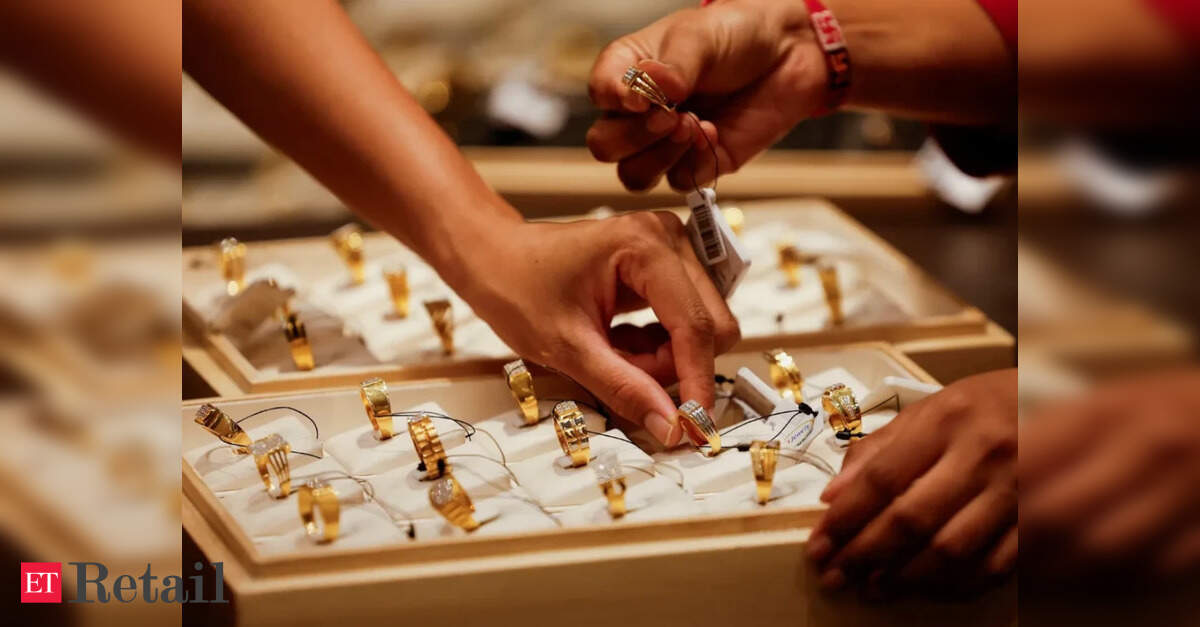
Studded gold jewellery has proven to be the most vital growth driver for the first half of FY27. Exports in this category soared by 31.31 per cent year-on-year, reaching $3.69 billion. The momentum was particularly visible in September, where the segment saw an explosive 50.24 per cent increase, totaling $812.62 million for the month alone.
Several factors have converged to facilitate this growth. According to GJEPC Chairman Kirit Bhansali, trade agreements—specifically improved access under the India-UK trade deal—have played a pivotal role. Furthermore, reduced tariff barriers in the United States, combined with a sustained appetite for Indian craftsmanship in Hong Kong, Singapore, and France, have allowed exporters to bypass the stagnation affecting plain gold jewellery.
2. The Rise of Lab-Grown Diamonds (LGDs)
The lab-grown diamond segment continues to redefine the Indian jewellery export basket. With an increase of 17.08 per cent to $685.10 million during April-September, this sector is clearly capturing a growing segment of the conscious-consumer market. September was a standout month, with LGD exports jumping 40.72 per cent to $151.43 million, suggesting that the industry’s investment in cutting-edge technology and manufacturing capacity is yielding high returns.
Navigating Headwinds: The Gold Price Challenge
The narrative of growth is not without its complications. The global gold market has experienced unprecedented volatility, with prices rising 31.17 per cent in dollar terms to $4,415.70 per troy ounce during the April-September period.
This inflationary pressure on raw materials has hit the "plain gold jewellery" segment hard. Exports in this category declined by 8.81 per cent to $2.53 billion over the six-month period. The decline reflects a classic economic reaction: as gold prices hit record highs, consumer demand—particularly in price-sensitive regions like the Middle East—has become increasingly subdued. The challenge for exporters in this segment is to navigate the balance between maintaining margins and managing the reduced purchasing power of their traditional consumer base.
The Diamond Dilemma: Volume vs. Value
The cut and polished diamond segment remains the largest component of India’s export basket, yet it continues to face significant pressure. For the first half of the fiscal year, exports declined by 6.96 per cent to $5.81 billion.
However, a closer look at the data reveals a more nuanced story. While value has dropped, the volume of exports actually increased by 4.64 per cent to 83.98 lakh carats. This indicates that while the industry is shipping more goods, the realization per unit remains under pressure. The fact that the segment recorded a 2.31 per cent growth in rupee terms suggests that the market may be bottoming out, with increasing shipment volumes and improving prices potentially signaling a slow, albeit consistent, recovery in the coming quarters.

Supporting Segments: Silver and Platinum
Beyond the traditional gold and diamond sectors, niche categories are showing significant promise. Silver jewellery exports rose by 23.10 per cent to $729.32 million during the first half of the fiscal year. This growth is largely attributed to the shift toward design-led, high-value collections that appeal to modern global consumers who prefer fashionable, statement pieces. Platinum jewellery also mirrored this positive trend, growing by 15.75 per cent to $123.29 million, further diversifying the export portfolio and reducing reliance on traditional gold-based products.
Official Perspective: The Road Ahead
GJEPC Chairman Kirit Bhansali has maintained a tone of cautious optimism regarding these figures. He noted that the September performance serves as a strong indicator of the sector’s resilience.
"The growth during the first half of FY27 is encouraging," Bhansali stated. "It demonstrates that even in the face of global trade uncertainties and commodity price spikes, the Indian gem and jewellery sector has the inherent strength to pivot and capture new opportunities."
Looking ahead, the council is emphasizing three strategic pillars:
- Product Innovation: Moving further up the value chain to offer high-design, high-margin products.
- Value Addition: Enhancing the finishing and technical complexity of jewellery pieces to differentiate them from international competitors.
- Market Diversification: Reducing dependency on traditional markets by tapping into emerging economies and strengthening presence in existing luxury markets.
Implications for the Industry
The current data suggests that the Indian gem and jewellery sector is undergoing a structural transformation. The decline in plain gold jewellery and the sluggishness in natural diamonds are being offset by the meteoric rise of lab-grown diamonds and high-end studded pieces.
For industry stakeholders, the implication is clear: the era of relying solely on traditional product lines is waning. Future growth will be dictated by the ability to adapt to changing consumer preferences—such as the demand for sustainable, lab-grown alternatives—and the ability to leverage trade agreements to maintain price competitiveness.
As India continues to solidify its position as the global hub for cutting and polishing, the integration of technology, design innovation, and agile market strategy will be the deciding factors for success in the latter half of the fiscal year. With global economic conditions remaining fluid, the sector’s performance in the coming months will be a crucial test of its ability to sustain this momentum into the next calendar year.



