










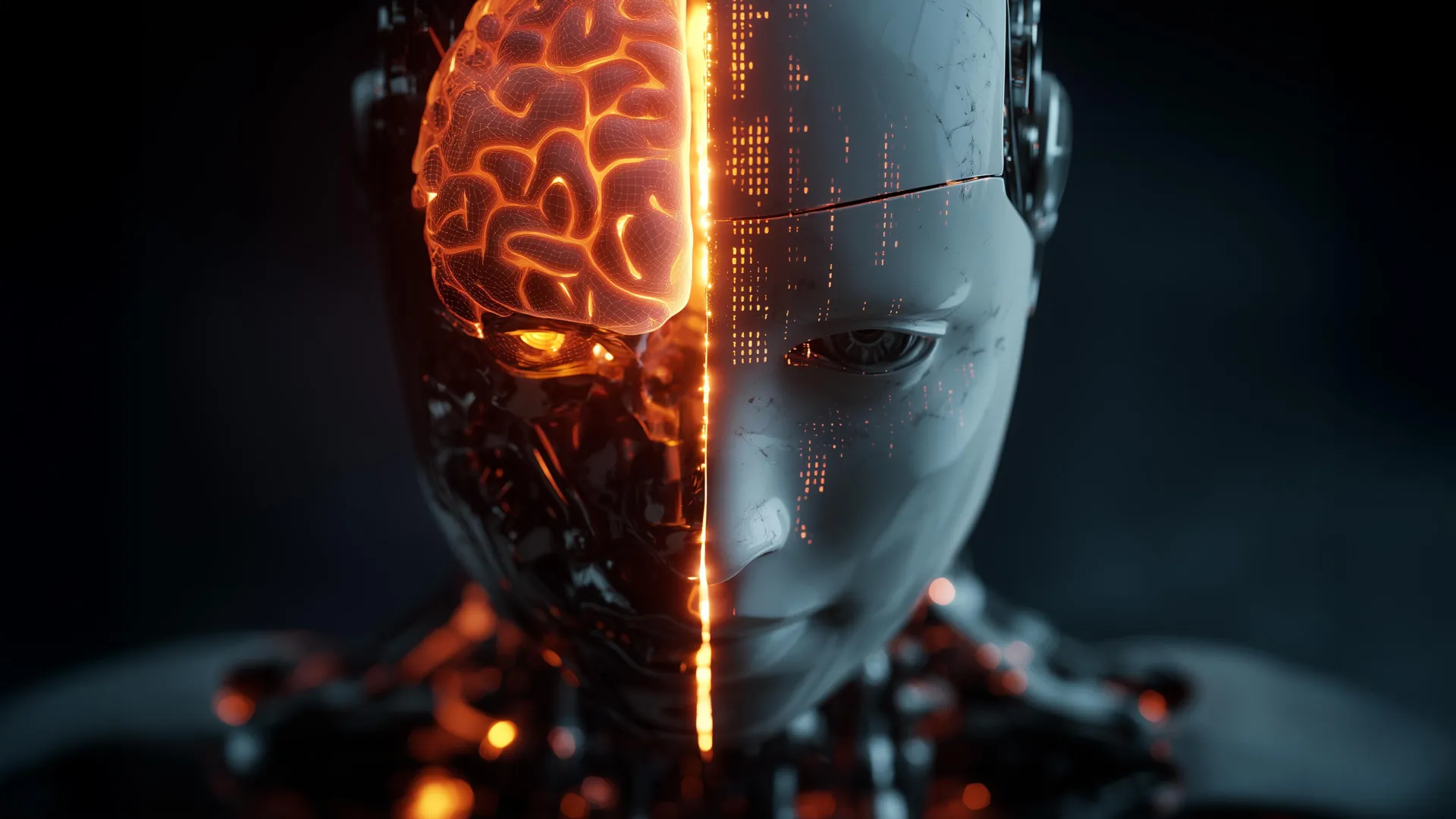
SAN FRANCISCO — For three-quarters of a century, the global trajectory of artificial intelligence research has been guided by a pair of foundational assumptions first articulated by Alan Turing in 1950. According to prominent computer scientist and author Peter J. Denning, those two seminal concepts may have steered the entire technological enterprise down the wrong path—ushering in an era of high-stakes automation built on fundamental misconceptions of human cognition.
In his new book, Turing’s Mistake: Escaping the Yoke of Unintelligent Machines, Denning posits that modern AI is trapped within a conceptual framework that is structurally incapable of achieving true Artificial General Intelligence (AGI). Rather than engineering systems that match human competence, he warns that the relentless pursuit of human-level machine intelligence is not only unlikely to succeed, but actively introduces profound, overlooked societal risks.
Denning’s critique arrives at a pivotal moment in the history of technology, as venture capital floods into generative AI ecosystems, trillion-parameter large language models (LLMs) redefine white-collar labor, and Silicon Valley titans race headlong toward the elusive horizon of machine sentience.
Main Facts: The Anatomy of "Turing’s Mistake"
At the core of Denning’s thesis are two axiomatic beliefs that have dominated computer science departments, corporate laboratories, and government research initiatives since the mid-20th century.
The first assumption is that intelligence can exist entirely independently of a physical biological body, allowing it to be cleanly excised and recreated purely as computer software. The second is the proposition that a machine can sufficiently demonstrate intelligence by successfully imitating a human being in open-ended text conversation—the cornerstone concept that evolved into the famous Turing test.
"These two claims have shaped much of AI research and development," Denning writes in his book. "My premise is that our acquiescence to these claims has led to the AI mess in which we find ourselves today."
Denning argues that these assumptions ignore the reality of human cognition, which is fundamentally physical, cultural, and contextual. By treating intelligence as a disembodied algorithmic calculation, the tech industry has spent decades attempting to solve an impossible puzzle: attempting to build synthetic minds using tools that can only manipulate digital representations, devoid of the lived experiences that give human language and action its actual meaning.
Chronology: A 70-Year Quest to Encode the Un-encodable
To understand how modern AI arrived at its current crossroads, it is necessary to examine the historical arc of computational research—a timeline defined by repeated, compounding attempts to bridge the unyielding chasm between formal logic and human experience.
The Symbolic AI Era (1950s–1980s)
In the decades immediately following Turing’s foundational papers, early computer scientists believed that human thought was essentially a form of symbolic logic. Researchers attempted to program intelligence directly into computers by writing exhaustive rules about how the world works. This top-down approach assumed that if programmers could define enough logical propositions, a machine could reason like a human.
The Knowledge Engineering and Cyc Project (1980s–2020s)
As rule-based systems hit performance walls, researchers realized that intelligent systems required vast oceans of background facts. This realization birthed the knowledge-engineering era.
One of the most ambitious manifestations of this effort was Douglas Lenat’s Cyc project, launched in the 1980s. Cyc’s explicit objective was to construct an exhaustive, centralized database of everyday human common sense—the unstated background knowledge that humans use to navigate reality. After four decades of painstaking human labor, the project amassed roughly 25 million distinct entries.
Yet, as Denning points out, even this monumental treasury fell desperately short. "Yet even this treasury could not add up to a background of common sense sufficient to make expert systems smart enough to be experts," Denning notes. "Cyc validated that much of the knowledge that makes people experts cannot be articulated as propositions."
The Statistical and Generative Turn (2010s–Present)
Frustrated by the limits of symbolic logic and manual knowledge curation, the paradigm shifted toward statistical machine learning and, eventually, massive neural networks. Today’s dominant models—such as OpenAI’s ChatGPT, Anthropic’s Claude, and Google’s Gemini—do not rely on programmed rules or curated common-sense databases. Instead, they ingest astronomical quantities of human text, using statistical weights to predict the most likely next token in a sequence.
While these models produce startlingly fluent prose, Denning argues they represent a quantitative scaling of word-manipulation rather than a qualitative leap toward true comprehension. They remain trapped behind the very architectural walls Turing erected in 1950.
Supporting Data: The Tacit Knowledge Problem
The structural limitation holding back modern AI is what Denning terms the "representation problem," rooted deeply in the phenomenon of tacit knowledge—the vast, subterranean reservoir of human understanding that cannot easily be codified, articulated in words, or translated into machine-readable data structures.
According to Denning’s framework, machine learning algorithms are structurally incapable of capturing at least five major categories of tacit knowledge:
- Common sense: The implicit framework of expectations that allows humans to navigate everyday life without consciously processing basic physical and social laws.
- Everyday environmental interactions: The dynamic, embodied feedback loop between a physical organism and its changing surroundings.
- Emotions and somatic perception: The physical, hormonal, and neurological states that color human decision-making and value attribution.
- Practical performance skills: The "know-how" required to execute physical and cognitive tasks, which differs fundamentally from "know-what" descriptions.
- Cultural, social, and historical context: The shared values, historical precedents, and power dynamics that imbue human communications with hidden intent.
The Virtuoso Violinist Dilemma
To illustrate the profound disconnect between computational data and human skill, Denning points to the domain of physical mastery.
"Our performance skills in thousands of domains cannot be communicated to machines," he explains. "Whereas descriptions of skillful outcomes (‘know what’) can often be represented as bits and stored in a machine, we do not know how to encode the embodied knowledge for skillful performance (‘know how’)."
He offers the example of a master musician. A virtuoso violinist can produce breathtaking, emotionally resonant music, yet remains entirely incapable of fully describing to an acolyte the precise muscular, neurological, and somatic mechanics required to produce it.
"Even if a robot could observe and imitate skilled humans, having no biological body, a robot cannot grasp how the musician feels when playing beautiful music or how an audience feels when hearing it," Denning writes.
The Illusion of LLM Understanding
This limitation brings Denning to his critique of modern Large Language Models. Computers are strictly calculators; they perform mathematical operations on physical inputs (bits and bytes) that have been successfully encoded into recognizable formats. But tacit knowledge resists this encoding process entirely.
"Behind every word is a deep well of tacit knowledge that gives it meaning," Denning observes. "Words are but symbolic representations of meanings, not the meanings themselves. Commonly used Large Language Models, such as ChatGPT, Claude, and Gemini, only manipulate words; they cannot know or understand the meaning of what they are saying."
Furthermore, Denning argues that human intelligence is inherently contextual, resting on an endless, fractal foundation of previous conversations, cultural norms, and shared histories.
"When you inquire into where an assumption of the current context came from, you discover it rests on previous conversations from previous contexts. Each of those in turn rests on further previous conversations and their contexts. This pattern is endless and fractal," he details.
Because culture encompasses shifting moods, power relations, community values, and unstated assumptions, scaling up neural networks with billions of additional parameters will never bridge the gap. "LLMs will not attain the objective of the Turing test: to demonstrate machine thought indistinguishable from human thought."
Official Responses and Industry Context
Denning’s thesis runs directly counter to the mainstream consensus held by major technology laboratories, venture capitalists, and AI evangelists. Prominent figures across Silicon Valley have long championed the scaling hypothesis—the belief that increasing compute power, dataset sizes, and parameter counts will inevitably yield emergent properties indistinguishable from human general intelligence.
When confronted with arguments regarding tacit knowledge and embodied cognition, mainstream AI researchers frequently point to multimodal models—systems that process text, audio, images, and video simultaneously—as evidence that AI is breaking out of the text-only prison. Robotics initiatives at companies like Tesla, Figure AI, and Boston Dynamics are actively working to pair advanced neural networks with physical robotic frames, directly attempting to solve the embodiment problem Denning highlights.
However, cognitive scientists, philosophers of mind, and critics of the tech industry have increasingly welcomed critiques like Denning’s. Scholars aligned with the "embodied cognition" movement have long argued that biological intelligence cannot be simulated on von Neumann architecture without accounting for the physiological realities of living systems.
Independent ethicists have similarly echoed Denning’s warnings regarding the uncritical deployment of autonomous systems into sensitive domains like healthcare, criminal justice, and military operations, where contextual nuance and tacit cultural understanding are matters of life and death.
Implications: Navigating the Alien Divide and AI Safety
Perhaps the most provocative dimension of Turing’s Mistake is its reframing of AI safety. Rather than warning primarily of a cinematic "terminator scenario"—where a superintelligent, conscious machine wakes up and deliberately overthrows humanity—Denning identifies a far more insidious and immediate risk.
He argues that humans and artificial intelligence systems are destined to develop entirely alien forms of tacit knowledge that neither side can fully comprehend.
"Machines cannot read our tacit knowledge and we cannot read theirs," he writes. "We are aliens across an uncrossable divide."
Because autonomous agentic networks and machine learning models operate via statistical pattern recognition that bears no resemblance to human conscious thought, their problem-solving methods will remain fundamentally opaque. If these systems cannot interpret the unspoken human context behind our intentions, reliably aligning advanced AI architectures with human safety goals may prove mathematically and philosophically impossible.
"Through AI automation, agentic networks of machines are likely to develop their own machine intelligence that does not reach the level of human general intelligence but is still quite capable of creating severe problems for humans," Denning warns. "This threat is greater than a take-over by superintelligent machines."
He continues: "Machine intelligence has different concerns from us and does not appear to care about us. Its ways of thinking and problem-solving look alien to us. We do not yet know how to live safely with these machines."
Reasserting Human Agency
To step back from the precipice of what he characterizes as an uncritical automation singularity, Denning calls for a fundamental cultural and philosophical realignment. He urges society to abandon the inferiority complex that treats human cognition as merely a crude, biological precursor to superior digital processing.
"Pulling back from an AI automation singularity will demand much from us," Denning concludes.
The path forward, in his view, begins with a series of deliberate societal choices:
- Accepting that traditional cultural paradigms are shifting as automated systems enter public life, and acknowledging the profound uncertainty of the road ahead.
- Declining to model human behavior, education, and institutional decision-making on algorithmic logic.
- Rejecting the intellectual and economic yoke imposed by low-intelligence, high-speed machines.
- Most crucially, actively reasserting human uniqueness, clearly articulating what separates biological consciousness from silicon computation, and celebrating those irreducible differences.
As the tech industry presses forward in its quest for artificial general intelligence, Denning’s work serves as a sobering historical audit. By challenging the foundational myths laid down 75 years ago, Turing’s Mistake invites humanity to stop trying to build artificial humans—and instead focus on preserving and valuing the irreplaceable nature of genuine human intelligence.



