










By: Global Technology & Marketing Desk
Main Facts
Traditional brand marketing has long relied on a straightforward premise: companies craft a story, and the market hears it. Whether through carefully orchestrated public relations campaigns, meticulously designed product pages, or targeted advertisements, organizations maintained a firm grip on their narrative. Today, that foundational dynamic is fracturing.
As consumers increasingly turn to AI-powered answer engines—ranging from conversational search assistants to specialized recommendation tools—to research products and services, the mechanism of brand discovery has fundamentally changed. These answer engines do not simply direct users to a collection of blue links; instead, they synthesize vast quantities of web data to construct direct, automated summaries and descriptions of brands.
This synthesized perspective is drawn from a decentralized web ecosystem: customer reviews, independent comparison pages, volatile forum discussions, and third-party editorial coverage. Consequently, the version of a brand presented by an AI tool often diverges significantly from the company’s internal positioning. To combat this erosion of control, modern brand teams are adopting a new discipline: Answer Engine Optimization (AEO). By actively monitoring, managing, and shaping how AI platforms represent them, forward-thinking organizations are reclaiming their market narratives before automated algorithms define them for prospective buyers.

Chronology: The Evolution from Search Engine Optimization to Answer Engine Optimization
To understand the current crisis of brand narrative, it is necessary to examine how digital discovery has evolved over the past three decades.
- The Early 2000s (The Keyword Era): Digital visibility was governed by rudimentary search engine optimization (SEO). Marketers focused on keyword density, metadata, and backlink acquisition to rank higher on search engine results pages (SERPs). The user experience remained transactional: a query yielded a list of links, and the user clicked through to individual websites to read the brand’s messaging directly.
- The 2010s (The Social and Content Marketing Era): As algorithms matured, content marketing took center stage. Brands built vast libraries of blogs, whitepapers, and social media content to capture audience attention. While platforms grew more sophisticated, the core journey remained intact—the consumer interacted primarily with content curated or created by the brand itself.
- The Early 2020s (The Rise of Generative AI): The widespread commercialization of large language models (LLMs) and generative AI altered consumer behavior. Rather than browsing multiple websites to compare software, appliances, or services, users began asking conversational interfaces to do the heavy lifting. Platforms began delivering single, cohesive summaries that synthesized information from across the web.
- The Present Day (The AEO Imperative): Brand marketing has entered the AEO era. Because AI engines act as intermediaries between companies and consumers, corporate survival depends on whether automated systems accurately understand, contextualize, and recommend a brand. Organizations are shifting budgets away from simple keyword optimization toward holistic AI visibility management systems, marking a historic shift in how brand equity is preserved and projected.
Supporting Data & Industry Insights
The quantitative reality of this shift highlights an urgent need for specialized tools to monitor and manage AI brand presence. In the absence of structured tracking, organizations face a blind spot that directly impacts market share.
- The Cost of Inaction: Industry benchmarks indicate that when brand teams rely on a "wait-and-see" approach—waiting for a stakeholder or customer to point out an AI-generated inaccuracy—the damaging description has usually already influenced hundreds, if not thousands, of buyer decisions.
- Early Success Metrics: Real-world implementations of dedicated AEO frameworks demonstrate rapid potential for correction. For instance, following the integration of specialized visibility tracking frameworks within major multinational markets, early adopters observed dramatic shifts in brand mention rates. Notably, internal data from enterprise software implementations revealed that mention rates in localized European markets surged from a baseline of 0% to 33.5% in France and 17.1% in Germany within a single month of targeted content restructuring.
- The Visibility Deficit: Traditional analytics—such as branded search volume, earned media share of voice, and periodic awareness surveys—fail to capture how a brand appears during the critical early stages of the buyer journey when consumers are forming their core category understanding. AEO tools attempt to bridge this metric gap by assigning concrete AI visibility scores and longitudinal citation tracking.
Official Responses and Strategic Perspectives
As the industry grapples with the implications of automated summarization, leading technology providers and marketing executives are speaking out on the necessity of proactive narrative defense.
"Brand marketing has always been about controlling the narrative, so that the story your company tells about itself is the one the market hears. That job has gotten harder," notes product strategy literature from leading digital infrastructure platforms. "Answer engines construct descriptions of your brand from what’s been written about the brand across the web… The result is often a version of your brand that doesn’t match what you’d choose to say."

Industry analysts emphasize that traditional content strategies—while effective for human readers and legacy search engine crawlers—are fundamentally misaligned with the parsing logic of large language models.
"Brand content that was written for human readers and search engines may not be structured to earn AI citations," explains digital marketing expert Sarah Jenkins. "The gap between your intended narrative and the AI-generated version stays open without a process for actively auditing, updating, and structuring your digital footprint to feed these recommendation engines."
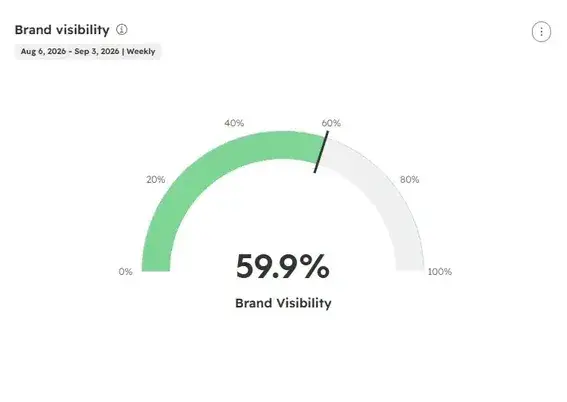
To address this, software developers have rolled out integrated solutions—such as specialized AEO dashboards—designed to give marketing teams a granular view of their AI footprint. These systems aggregate data on AI visibility scores, competitive share of voice, and the specific third-party citations driving algorithmic perceptions. By turning qualitative AI outputs into quantifiable metrics, enterprise leaders can finally report on, and invest in, their AI presence with the same rigor applied to paid media or traditional SEO.
Implications for the Future of Brand Marketing
The transition toward Answer Engine Optimization carries profound implications for corporate strategy, resource allocation, and the fundamental definition of brand equity.

1. The Redefinition of Authority
In the age of AEO, brand authority is no longer just a function of domain rating or high-volume ad spending. It is determined by the breadth, consistency, and structure of a brand’s footprint across the entire digital ecosystem. Because answer engines synthesize data from reviews, forums, and editorial sites, corporate reputation management must extend far beyond owned properties. Public relations, customer success, and community management are now frontline tactics for AI optimization.
2. The Integration of AEO and Core Marketing Stacks
Data isolation has historically plagued marketing departments, separating SEO, brand awareness, and lead generation into distinct silos. The rise of answer engines necessitates a unified operational framework. Moving forward, visibility data generated by AEO tools must sit alongside traditional campaign metrics within unified marketing hubs. This integration allows organizations to draw direct correlations between behind-the-scenes content updates and measurable shifts in top-of-funnel consideration.
3. Proactive vs. Reactive Narrative Defense
Ultimately, the proliferation of AI-generated answers forces a cultural shift within marketing organizations. Waiting for brand discrepancies to manifest in customer complaints or lost deals is no longer viable. Brand teams must adopt an engineering mindset—continually auditing AI responses, identifying narrative gaps, and deploying structured, machine-readable owned content to steer algorithms in the desired direction.
The narrative that a company has spent decades building is a valuable corporate asset, but protecting it in the era of artificial intelligence requires modern tools and unwavering vigilance. The work required to monitor, respond, and improve is fundamentally the same work brand teams have always done; it must simply be directed toward the new algorithmic gatekeepers of the digital economy.



