In the ever-evolving landscape of digital marketing, the concept of the "focus keyword" remains a cornerstone of search engine optimization (SEO). As search algorithms become increasingly sophisticated, the way creators approach content architecture must evolve from simple keyword matching to strategic topical authority. A focus keyword is not merely a string of text; it is the fundamental anchor that aligns a webpage’s intent with the specific queries of a target audience. By strategically embedding these terms, website owners can provide search engines with a clear map of their content’s purpose, ultimately driving organic traffic and improving search engine results page (SERP) rankings.
The Core Fundamentals of Focus Keywords
At its simplest, a focus keyword is the primary search term for which a specific page aims to rank. While a website may target dozens of secondary keywords, the focus keyword serves as the "north star" for that particular piece of content. The golden rule of modern SEO is simple yet rigorous: one page, one focus keyword.
By narrowing the objective, creators avoid the common pitfall of keyword cannibalization—where multiple pages on the same domain compete against one another for the same search query. This dilution of authority can confuse search algorithms and split your potential traffic, making it harder for any single page to secure a top-ten spot.
Clarifying the Taxonomy: Topics vs. Keywords
A common point of confusion for digital marketers is the distinction between a "topic" and a "keyword." While the terms are often used interchangeably, there is a nuanced difference.
- Topics represent the overarching subject matter (e.g., "Pilates fitness").
- Keywords are the specific phrases users type into search bars (e.g., "best at-home Pilates exercises").
- Focus Keywords are the chosen representatives of that topic, selected intentionally after rigorous research to serve as the primary identifier for a specific URL.
For instance, an article titled "10 Pilates Exercises That’ll Give You Rock Hard Abs" might naturally be associated with keywords like "ab workouts," "fitness routines," or "at-home exercise." However, to optimize for search, the publisher must select the single most representative phrase—in this case, "Pilates abs exercises"—to act as the focus keyword.
Chronology of Keyword Evolution: From Meta Tags to Semantic Intent
To understand why focus keywords are essential today, one must look at the history of SEO. In the early 2000s, the "meta keyword tag" was the primary way webmasters told search engines what a page was about. However, due to rampant abuse and "keyword stuffing," Google eventually deprecated the importance of the meta keyword tag entirely.

Today, Google relies on semantic analysis—the context, the surrounding words, and the user experience—rather than simple HTML metadata. This shift moved the focus from "tricking" search engines to "signaling" intent. As a result, the modern SEO workflow follows a distinct chronological process:
- Research & Selection: Before writing, identify the gap in the market using tools like KWFinder.
- Strategic Placement: Integrate the keyword into high-impact areas (Title tags, H1 headers, first paragraphs).
- Content Development: Write high-quality, comprehensive content that satisfies user intent.
- Refinement: Monitor performance and adjust based on data, not just keyword density.
The Keyword Tripod Rule: A Data-Driven Approach
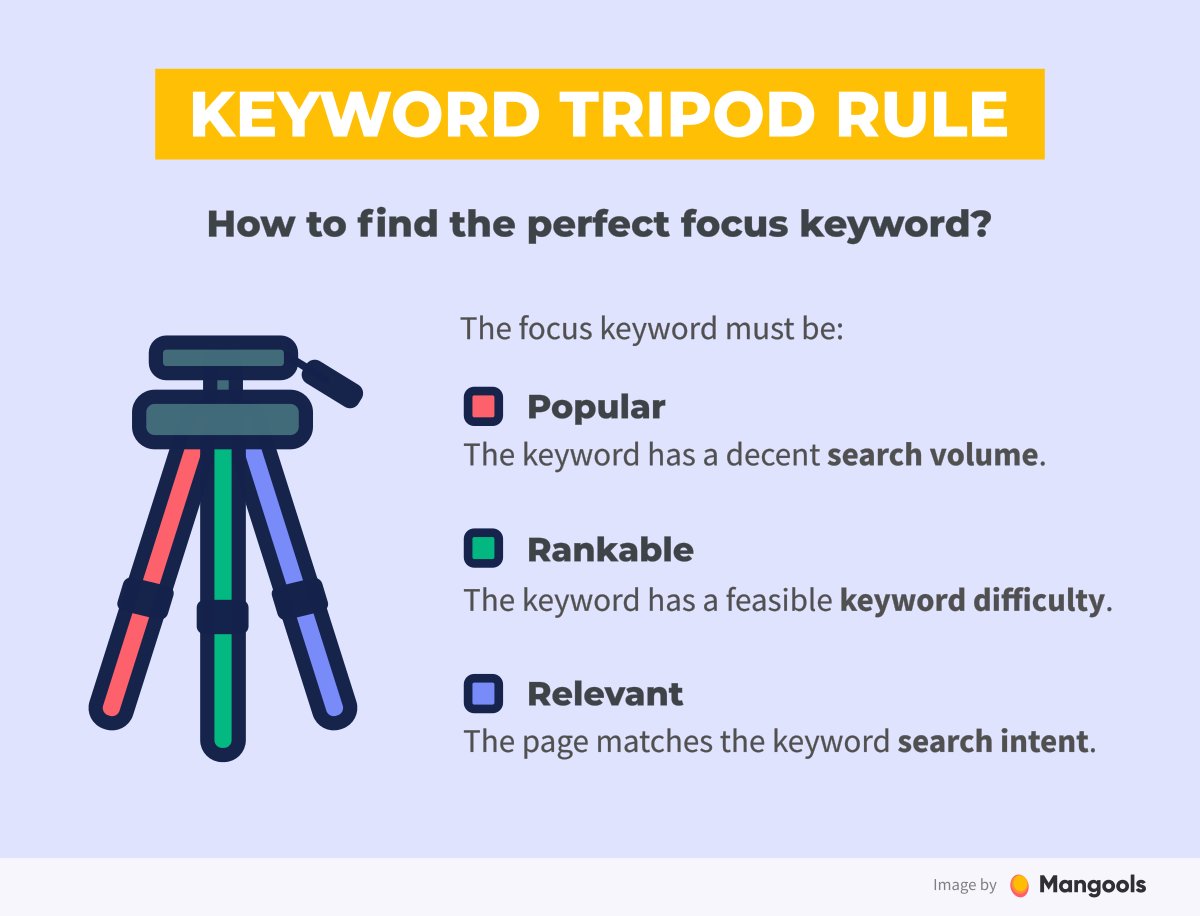
Selecting the right focus keyword is rarely a matter of guesswork. To ensure a keyword is viable, experts often refer to the "Keyword Tripod Rule." This framework suggests that every successful keyword selection must balance three critical pillars:
- Search Volume: Is there a significant enough audience looking for this term to justify the effort of content creation?
- Keyword Difficulty: Given the authority of your domain, is it realistic to rank for this term against established competitors?
- User Intent: Does the intent behind the query match the content you are providing? For example, someone searching "buy running shoes" is looking to purchase, while someone searching "how to run" is looking for information. Misaligning your content with the searcher’s intent is a primary cause of high bounce rates.
By measuring these three aspects, creators can identify "low-hanging fruit"—keywords with enough search volume to matter, but low enough competition to allow a new or smaller site to rank effectively.
Implementation: Integrating Keywords into Your Content Strategy
Once a keyword is selected, the "how-to" of implementation is critical. While there is no official "tag" to tell Google exactly what your keyword is, search engines are highly efficient at identifying relevance through placement.
The Strategic Placement Checklist
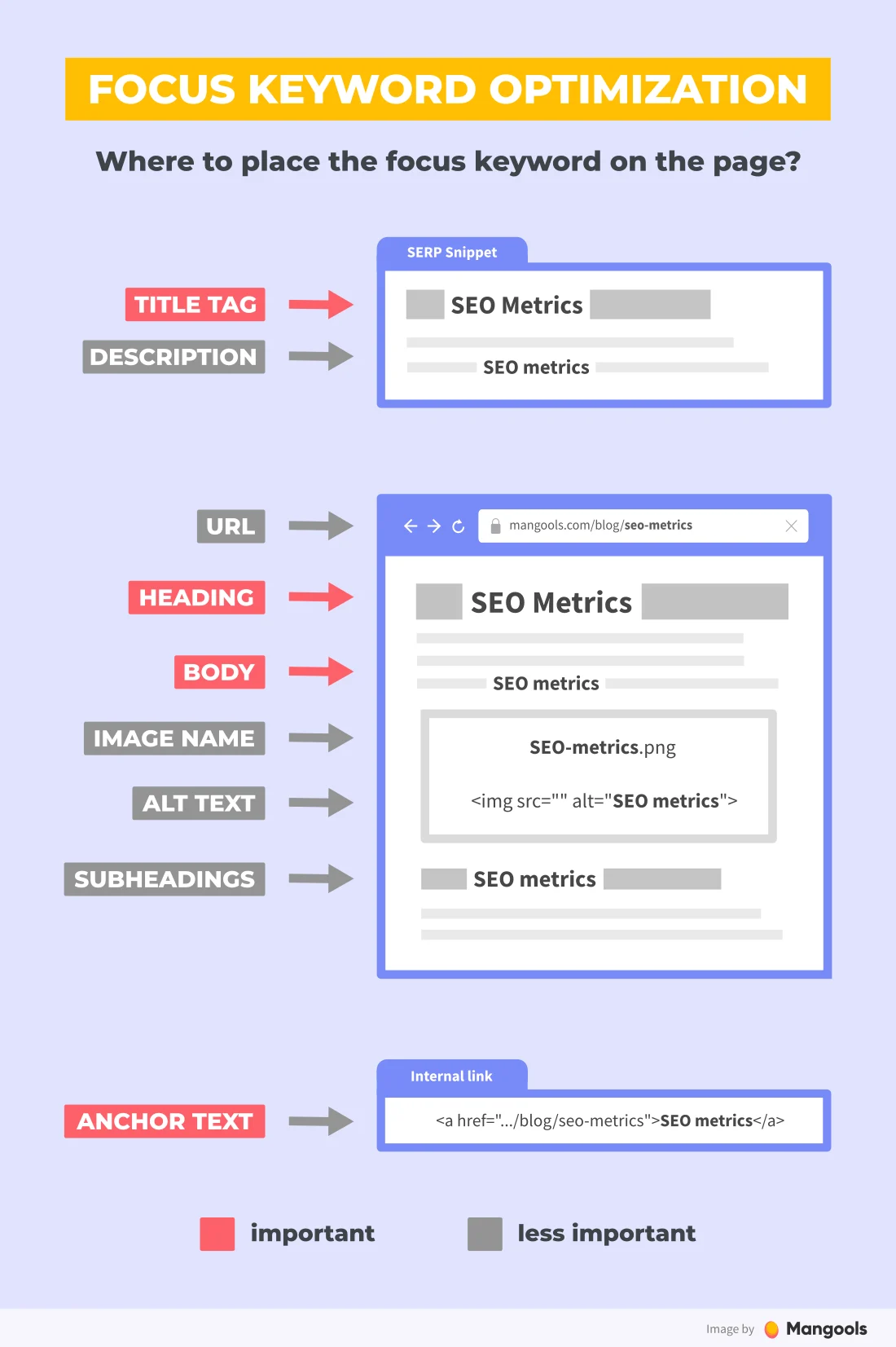
To signal relevance to search algorithms, the focus keyword should appear in the following key areas:
- The URL: Keep it clean and descriptive.
- The Title Tag: This is the most important element, as it is the first thing a user sees on the SERP.
- The H1 Heading: Ensure the main title of your page contains the keyword.
- The First 100 Words: Establishing the topic early helps search engines understand the focus immediately.
- Image Alt Text: When applicable, use the keyword to describe images to improve accessibility and SEO.
Note on "Forced" Optimization: Never prioritize keyword placement over readability. Google’s algorithms are increasingly human-centric; if your content reads as if it were written for a machine, users will bounce, and your rankings will suffer. If the keyword feels forced, it is better to leave it out than to sacrifice the quality of the narrative.
Official Guidance and Industry Best Practices
Google’s own representatives, such as John Mueller, have consistently emphasized that the "ideal" keyword density does not exist. Instead, the focus should be on "clarity." In a notable discussion regarding a 20,000-word article that failed to mention its main topic until the very end, Mueller highlighted the importance of being "perfectly obvious."
If a visitor arrives on your page and cannot tell what it is about within the first few seconds, you have failed the user experience test. Your focus keyword serves as the primary tool to ensure that the topic is transparent to both the visitor and the crawler.
The Dangers of Keyword Stuffing and "Over-Optimization"
The most significant risk in modern SEO is the temptation to "stuff" keywords into text. Keyword stuffing—the practice of repeating a keyword unnaturally throughout a page—is a relic of early internet marketing that is now heavily penalized by search engines.
Google views this as a manipulative tactic that provides a poor user experience. Instead, focus on "LSI keywords" (Latent Semantic Indexing) or related concepts. By using synonyms and topical variations, you reinforce the theme of the page without appearing spammy. A balanced approach—where the focus keyword appears naturally in headers and key sentences—is far more effective than an article that repeats the same phrase in every paragraph.
Implications for Future SEO Strategies
As we look toward the future, the role of the focus keyword is likely to shift further toward "Topical Authority." Search engines are increasingly looking at entire domains as experts on specific subjects rather than evaluating individual pages in isolation.
- Content Clusters: By creating a pillar page optimized for a broad focus keyword and supporting it with several sub-topic pages, you create a "cluster" that signals deep expertise to Google.
- Voice Search Adaptation: As more users move toward voice-activated search, focus keywords are evolving from short, punchy phrases to longer, conversational "long-tail" queries.
- Semantic Search: Google’s BERT and MUM updates have made it possible for search engines to understand the meaning behind a query rather than just the literal words. Consequently, the focus keyword of the future will be less about the exact phrase and more about the underlying question or problem being solved.
Final Thoughts
The strategy of using focus keywords is not an obsolete practice; rather, it has matured. It is the bridge between human intent and technical indexing. By following the tripod rule, maintaining a "one page, one keyword" policy, and prioritizing high-quality, readable content, you ensure that your website remains both visible to search engines and valuable to your human audience. Remember: your keyword is the map, but the quality of your content is the destination. If you provide the value the user is seeking, the search engines will follow.