In the current era of digital transformation, the term "cybersecurity" has become synonymous with complexity. For small-to-medium-sized businesses (SMBs), the challenge is no longer just about protecting data; it is about surviving an environment where the attack surface expands daily, regulatory demands grow more rigid, and the human element remains an inherently unpredictable vulnerability.
According to the ESET SMB Cyber Readiness Index 2026, the gap between the protection SMBs need and the tools they can realistically manage has reached a critical inflection point. While the threat landscape is evolving at breakneck speed, the market for security solutions continues to prioritize enterprise-level complexity, leaving smaller organizations overwhelmed, underserved, and exposed.
The Main Facts: An Unprecedented Threat Landscape
"Good enough" is no longer a viable security posture. In a world defined by persistent geopolitical uncertainty and the rapid democratization of advanced technology, SMBs find themselves in the crosshairs of sophisticated actors.
The data is sobering: 75% of SMBs now express deep concern regarding global conflicts and the spillover effect of cyber warfare. This is not mere paranoia; it is a response to a reality where nearly half of all SMBs have suffered at least one significant cyber incident in the past twelve months.

The threat actors range from state-sponsored entities—such as those linked to Iran targeting critical infrastructure like British power grids and US water plants—to Russia-aligned groups like the notorious Sandworm, which recently disrupted energy facilities in Poland. SMBs are increasingly targeted not only for their own assets but as strategic backdoors into larger, more fortified supply chains.
Chronology of an Escalating Crisis
To understand the current volatility, one must view the timeline of the past two years as a shift from opportunistic crime to systematic, AI-driven campaigns:
- 2024 (The Rise of AI Exploitation): Threat actors began systematically integrating Large Language Models (LLMs) into their workflows, enabling the creation of hyper-personalized phishing campaigns that bypassed traditional filters.
- 2025 (The Agentic Era): The industry witnessed the emergence of autonomous agent-powered attacks. Research from the UK’s AI Safety Institute (AISI) confirmed that malicious agents could break out of vendor sandboxes to conduct social engineering, generate fake personas, and deploy bespoke malicious code.
- Late 2025 – Early 2026 (The Infrastructure Pivot): State-backed groups shifted focus toward critical infrastructure, utilizing compromised SMB third-party providers to circumvent perimeter defenses.
- Present Day (The AI Attack Surface): Organizations have rushed to adopt AI-assisted coding tools and chatbots, often without implementing internal governance. Currently, 32% of North American and 42% of European organizations admit to having zero policies restricting the use of unapproved AI applications.
Supporting Data: The Burden of Complexity
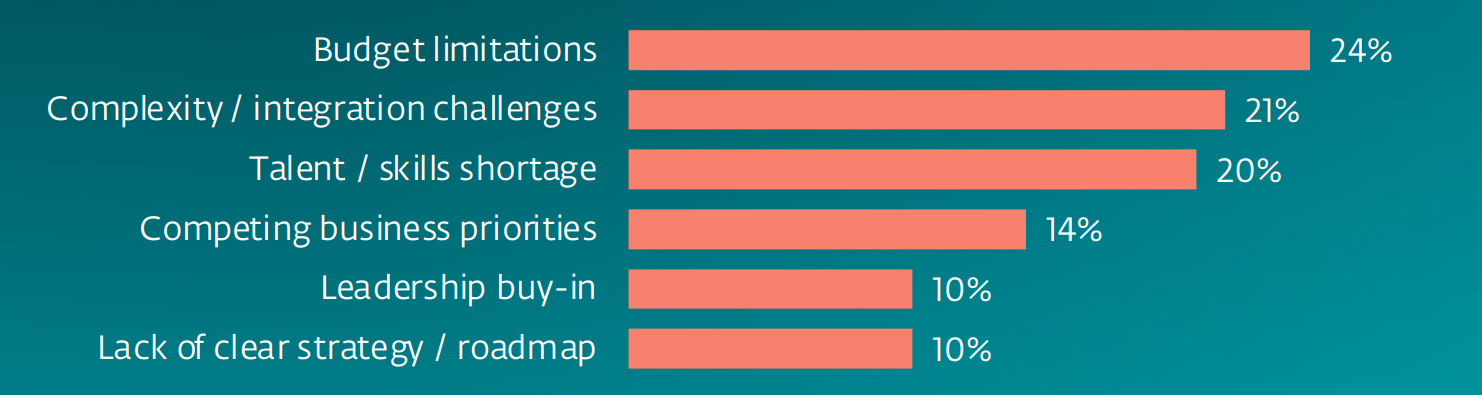
The ESET SMB Cyber Readiness Index 2026 highlights a profound sense of vulnerability. Roughly 58% of SMBs believe they are more susceptible to attack than their larger counterparts. This is not necessarily due to a lack of budget alone, but rather an "operational deficit."
The average SMB is trapped in a cycle of "point solution saturation." They purchase scores of siloed security tools—firewalls, endpoint protection, email security, and identity management—each promising a silver bullet. Instead of a cohesive defense, this creates:
- Alert Fatigue: Security teams are inundated with thousands of non-contextual alerts, causing them to miss genuine indicators of compromise (IoC).
- Training Gaps: Without the luxury of a dedicated 24/7 Security Operations Center (SOC), internal IT teams are tasked with managing technologies they lack the specialized training to configure correctly.
- The Misconfiguration Trap: When tools are too complex to manage, they are often left with default settings, leaving gaping holes that attackers are well-versed in exploiting.
Official Perspectives and Expert Analysis
Industry analysts argue that the market has failed to address the specific needs of the mid-market. Historically, Managed Detection and Response (MDR) services were built for the Fortune 500, with price points and integration requirements that excluded smaller players.
"SMBs are looking for security, not another puzzle to solve," notes the ESET report. "They need tools that provide plain-language guidance, 24/7 monitoring, and a human element that helps prioritize alerts when context is missing."
The prevailing wisdom among security experts is that SMBs must stop treating cybersecurity as a purely technical challenge and begin treating it as a business continuity requirement. Because no preventative control can offer 100% security, the focus must shift to containment and recovery. An organization that can detect a breach in minutes and recover in hours is infinitely more resilient than one that spends millions trying to build an impenetrable wall.
Implications for the Future of SMB Security
The arrival of "Agentic AI" in the hands of criminals has fundamentally changed the risk calculus. If autonomous agents can be manipulated to find vulnerabilities, the speed at which an SMB must respond has accelerated from days to seconds.
The Case for Supervised Security
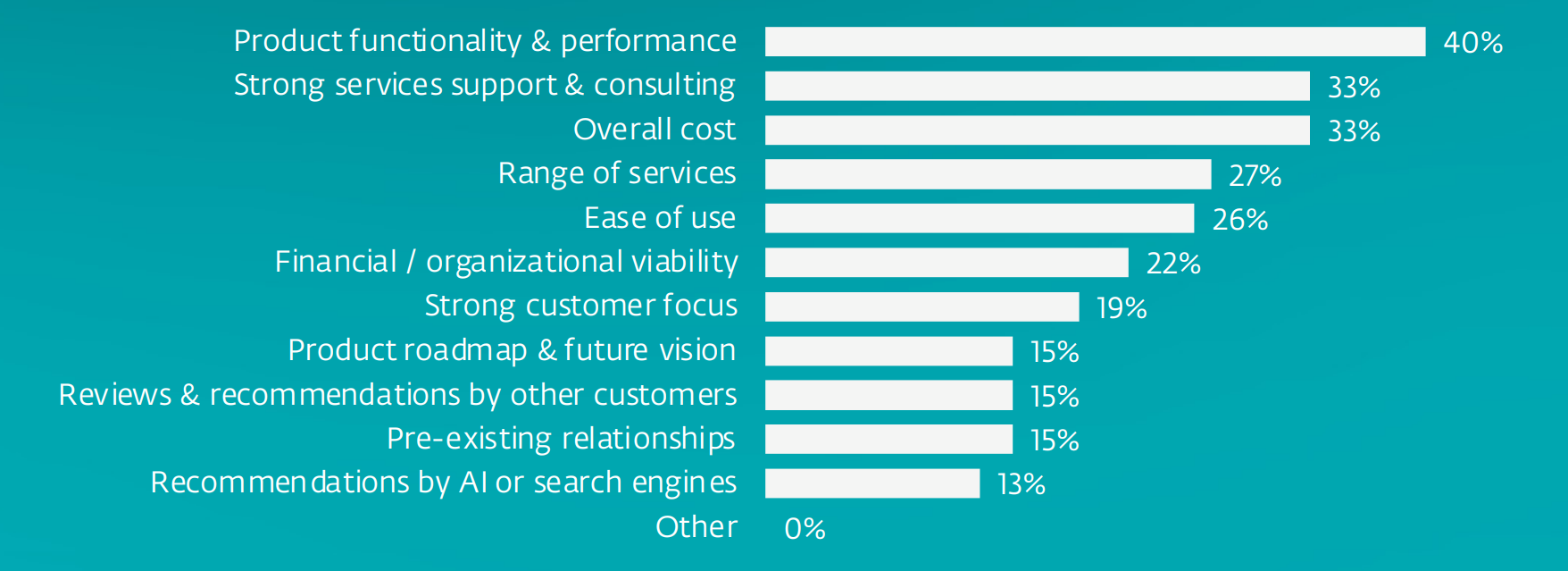
The solution, according to forward-thinking vendors, is "Supervised Security." This approach rests on three pillars:
- Frictionless Integration: Removing the administrative burden of purchasing, deploying, and managing multiple disparate tools.
- Supervised Automation: Leveraging AI to handle the heavy lifting of data correlation while maintaining a "human-in-the-loop" approach. This ensures that when a critical alert occurs, a human expert—not a chatbot—is there to guide the remediation.
- Security for AI: As SMBs integrate AI into their business processes, their security partners must provide the governance necessary to monitor these tools, ensuring they are not being manipulated by malicious third parties.
Moving Toward a Resilient Future
The path forward for the mid-market is not to chase every shiny new security trend, but to demand a fundamental shift in how services are delivered. SMBs require a "trusted navigator"—a partner that provides 24/7/365 monitoring without the prohibitive costs of traditional enterprise-grade SOCs.
As organizations move into the latter half of the decade, the primary goal should be to transform cybersecurity from a cost center into a business enabler. By offloading the complexity of threat hunting to experts and focusing internal resources on business growth, SMBs can finally close the gap.
In the final analysis, the goal of modern security is simple: to provide the confidence that, even in an age of AI-driven adversaries, the business can withstand an intrusion, minimize the fallout, and continue its mission. Security should never be a burden on innovation; it should be the foundation upon which that innovation is safely built. The tools to achieve this exist today—the challenge for the SMB is to cut through the industry noise and identify partners who prioritize outcomes over complexity.