







For creators who excel with words, code, or structured digital layouts but struggle to put pencil to paper, the visual barrier can feel insurmountable. While the digital landscape is saturated with AI-generated art, many non-artists approach these tools with skepticism. Picking up a smartphone to photograph a physical object often seems more intuitive than wrestling with complex prompt engineering.
However, recent technological leaps have moved generative AI far beyond simple photo replacement. Modern image models have carved out a distinct utility niche for content creators: generating bespoke assets that would otherwise require professional illustration skills, specialized software, or costly photo shoots.
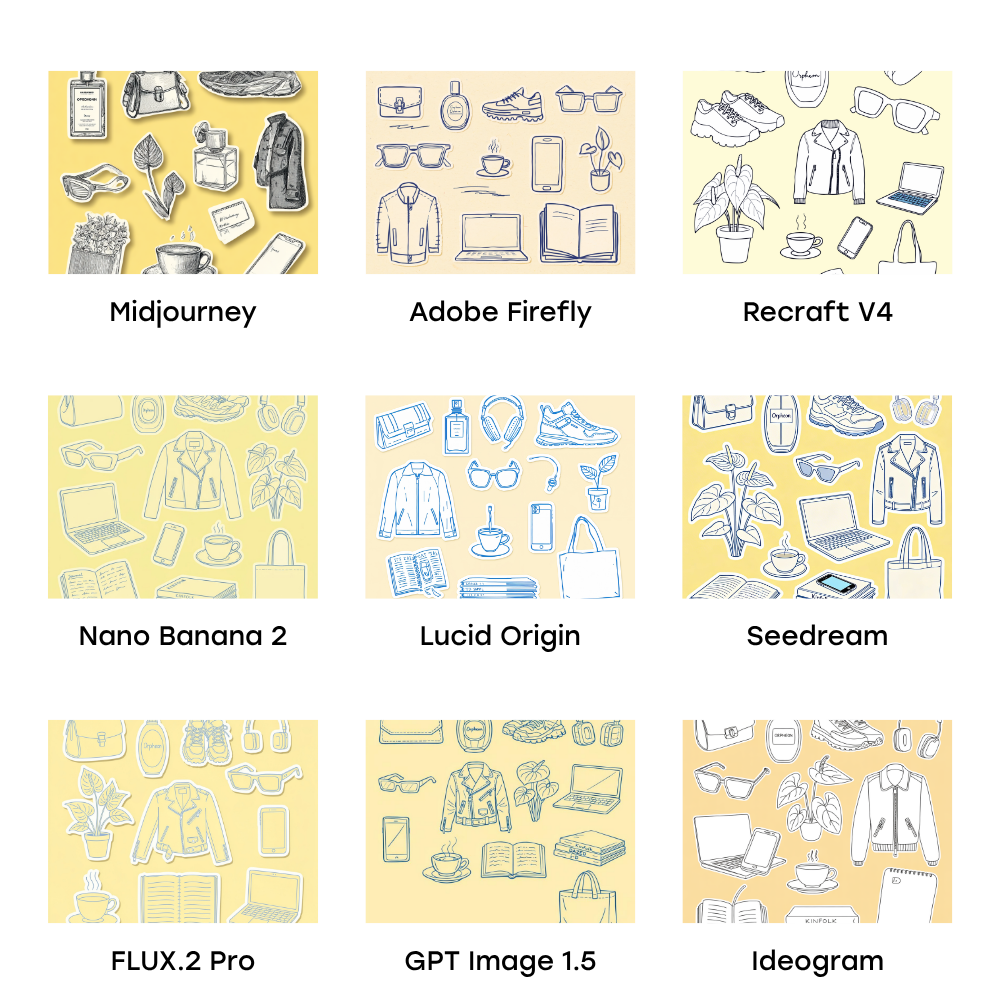
To understand how these tools perform in practical, day-to-day creative workflows, a rigorous, multi-model evaluation was conducted across nine leading generative systems. Testing focused on three distinct social media use cases: an illustrated sticker sheet, a styled product flat lay, and an embroidered typography graphic.
Main Facts: The Evolution of Text-to-Image Generation
The generative AI landscape has shifted away from mere aesthetic novelty toward precision, architectural reliability, and text rendering. Creators no longer need to rely on generic stock photography or abstract digital art; modern models can produce specific objects, brand palettes, and legible typography.
However, the primary bottleneck in AI generation is rarely the technology itself—it is prompt engineering. Understanding how models interpret language, hierarchy, and style is critical to unlocking their full potential.
Key Performance Findings
- Overall Consistency: Google’s Nano Banana 2 model emerged as the most consistent performer, expertly handling real-world objects, proportions, and complex illustration requests.
- Text Reliability: ByteDance’s Seedream and Ideogram 3.0 proved most dependable for rendering complex typography and spelling within generated assets.
- Designer Control: Recraft V4 Pro offered unmatched granular control over style references, vector outputs, and brand palettes via hex-code integration.
Chronology and Testing Methodology: Pushing Nine Models to the Limit
The evaluation framework was designed to mimic the actual demands of digital content creation. Testing was centralized through Leonardo.ai as a primary hub for models available on that platform, while Midjourney, Recraft, and Adobe Firefly were evaluated as standalone environments.
Each model was subjected to three standardized, highly specific prompt structures:

- The Illustration Prompt: A complex, multi-object sticker sheet on a butter-yellow background, detailing 13 distinct items ranging from a Diptyque Orphéon perfume bottle to chunky trail running sneakers, using single-color line art with zero shading.
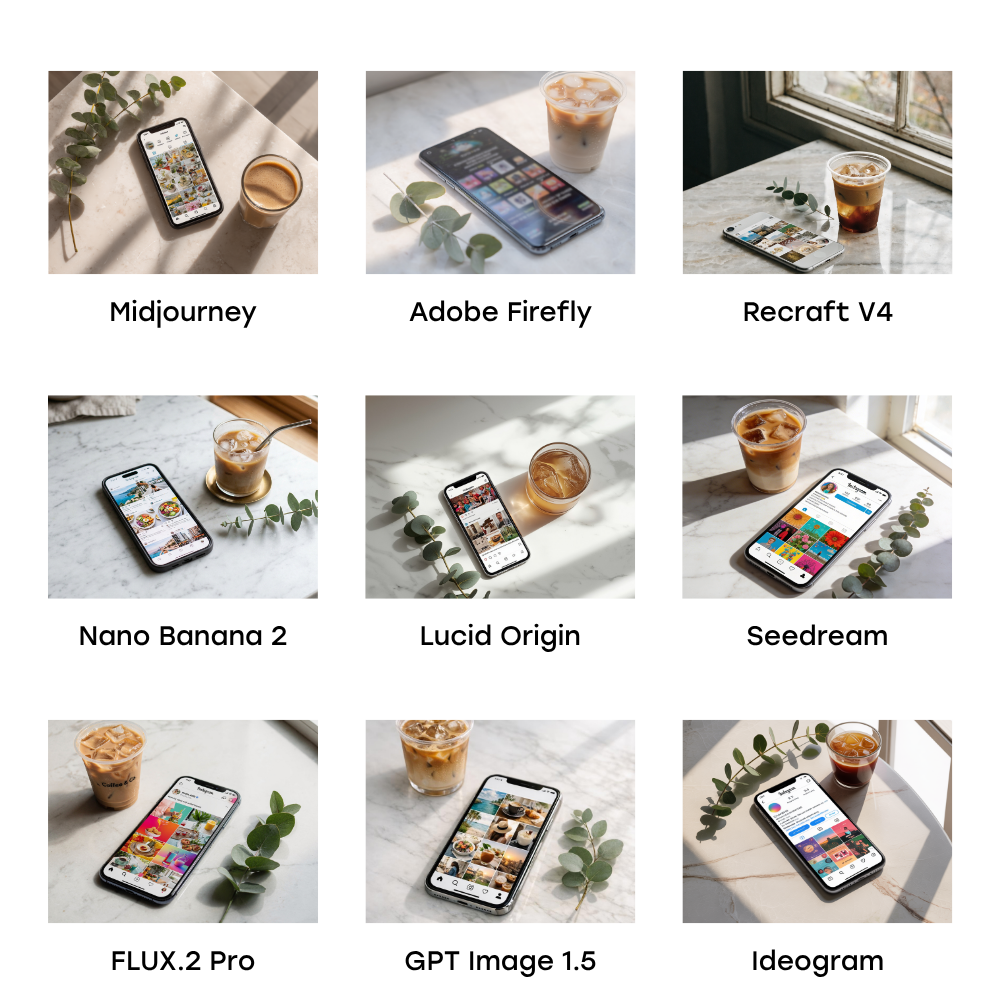
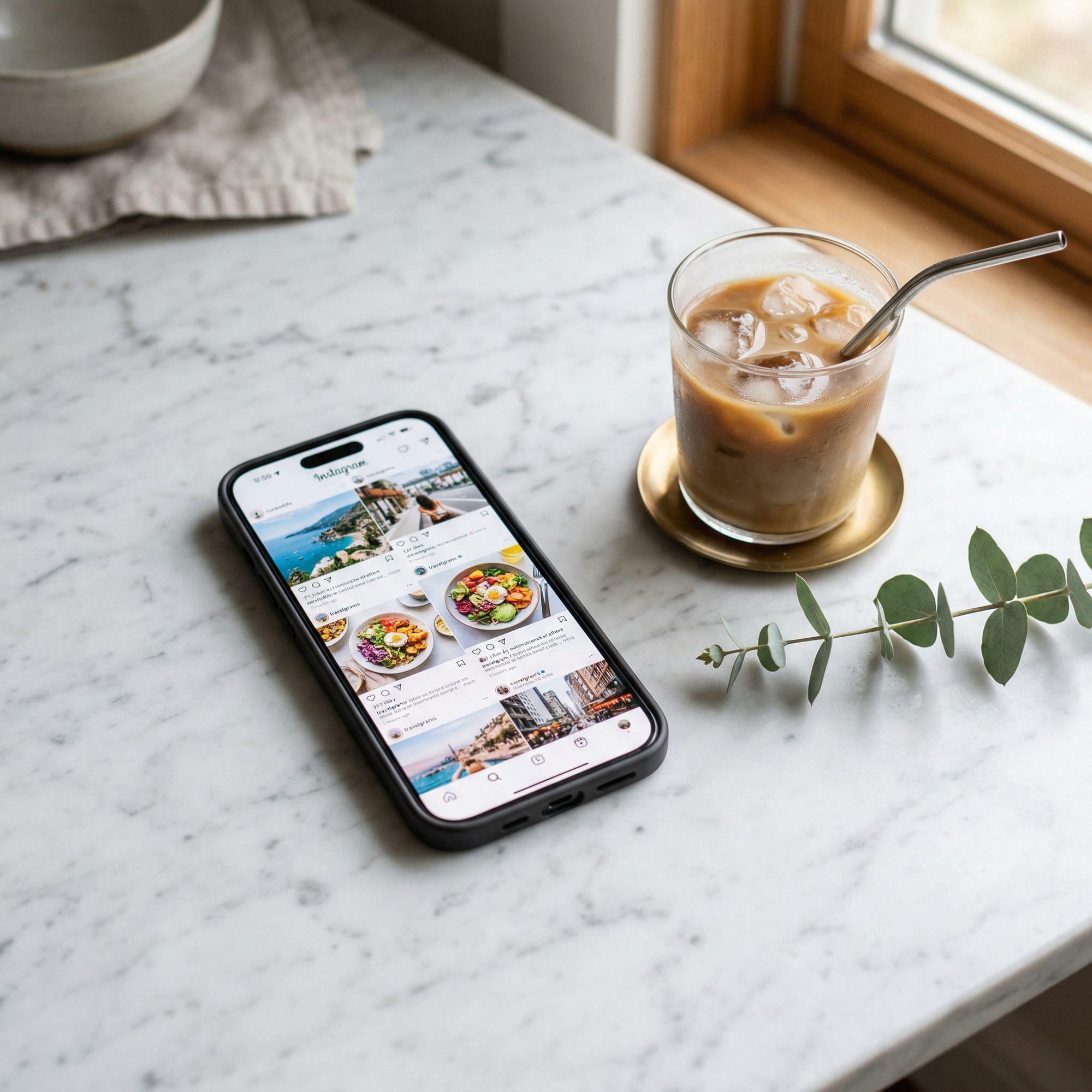
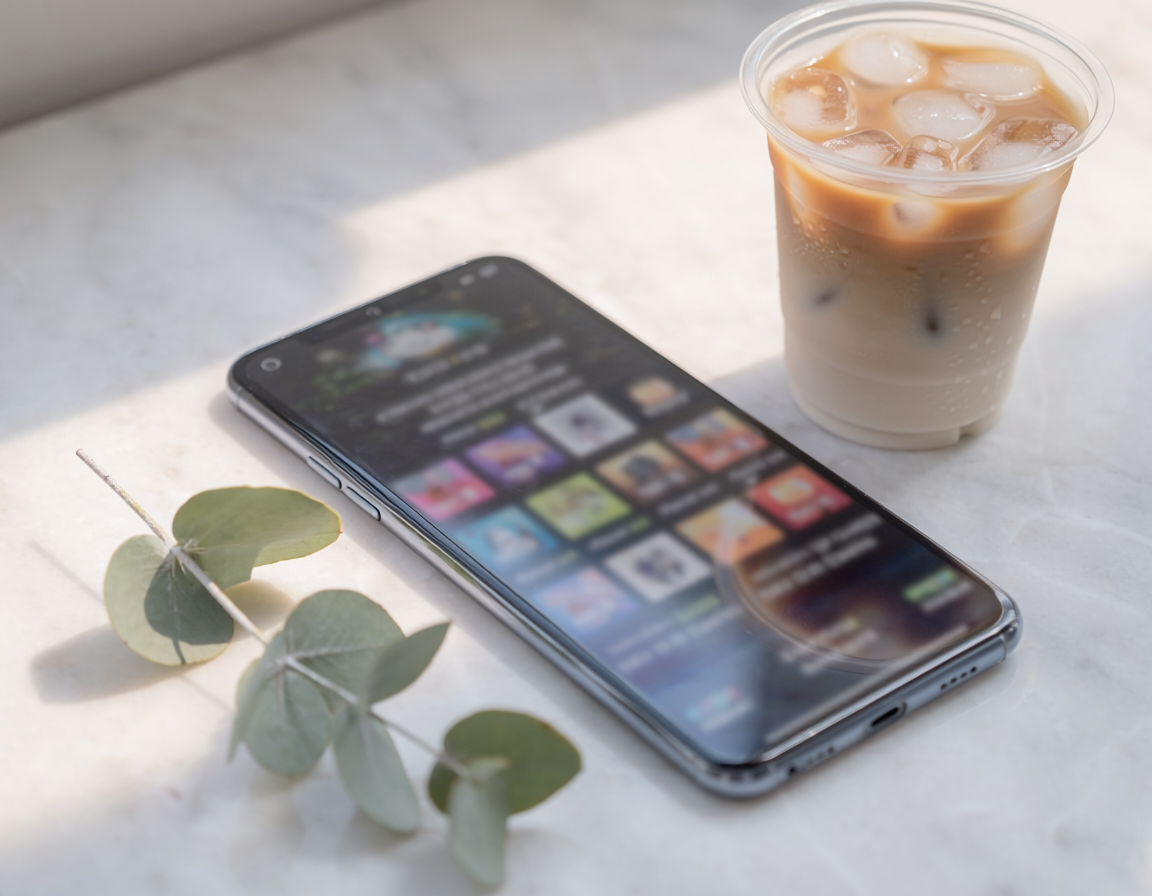
- The Product Shot Prompt: A photorealistic editorial flat lay featuring an iPhone on marble, an iced coffee, and a eucalyptus sprig under soft natural window light.
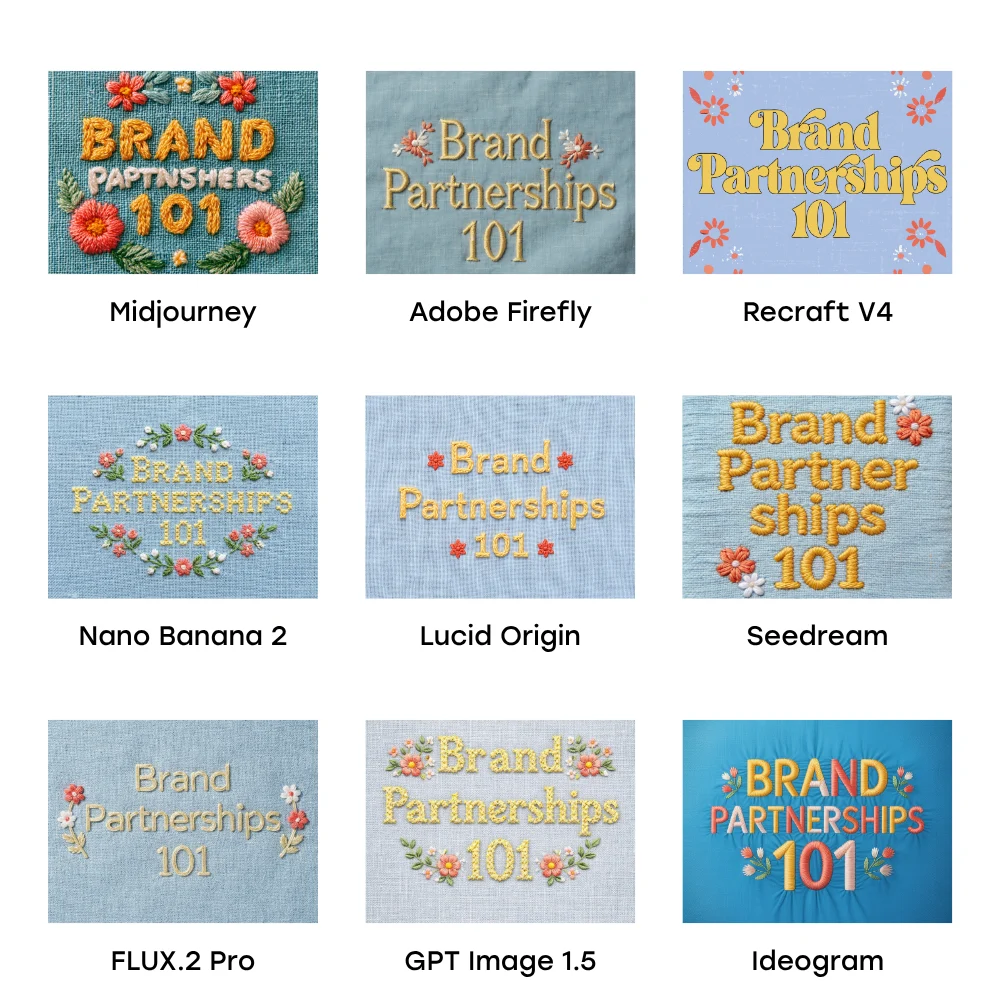
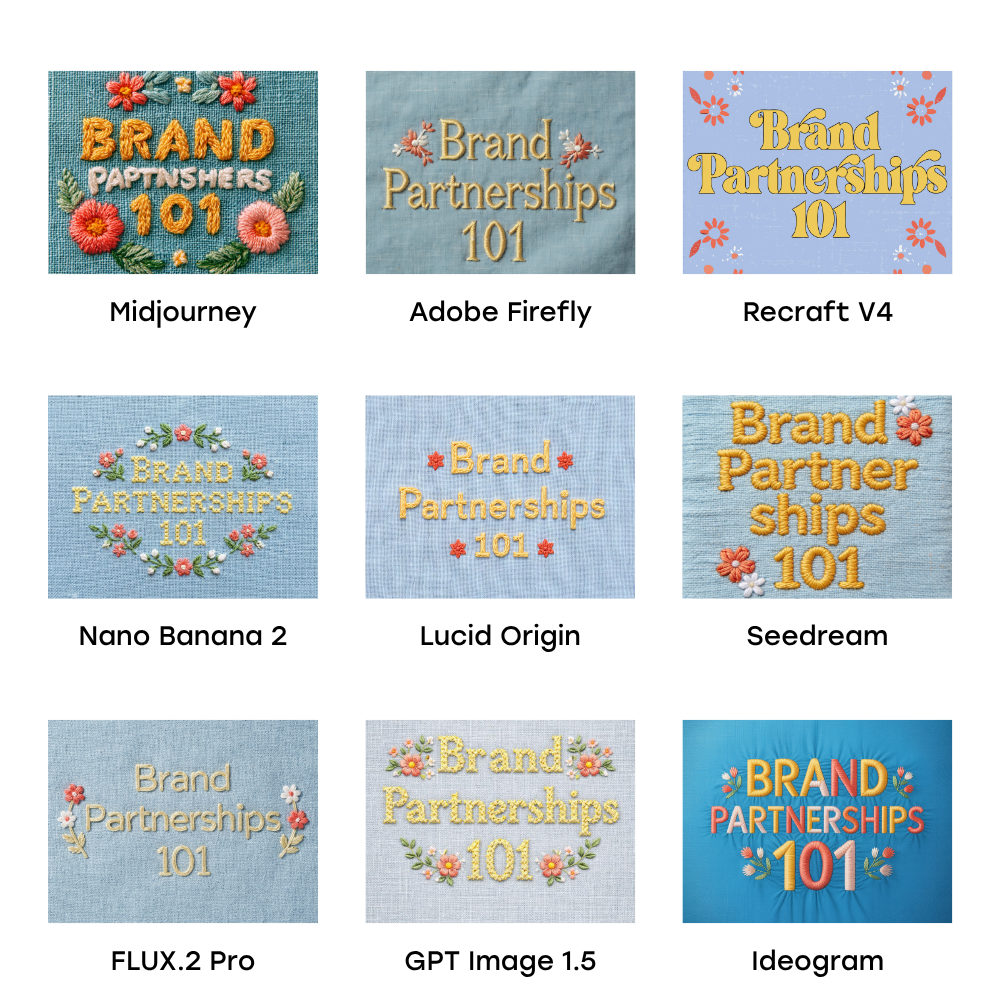
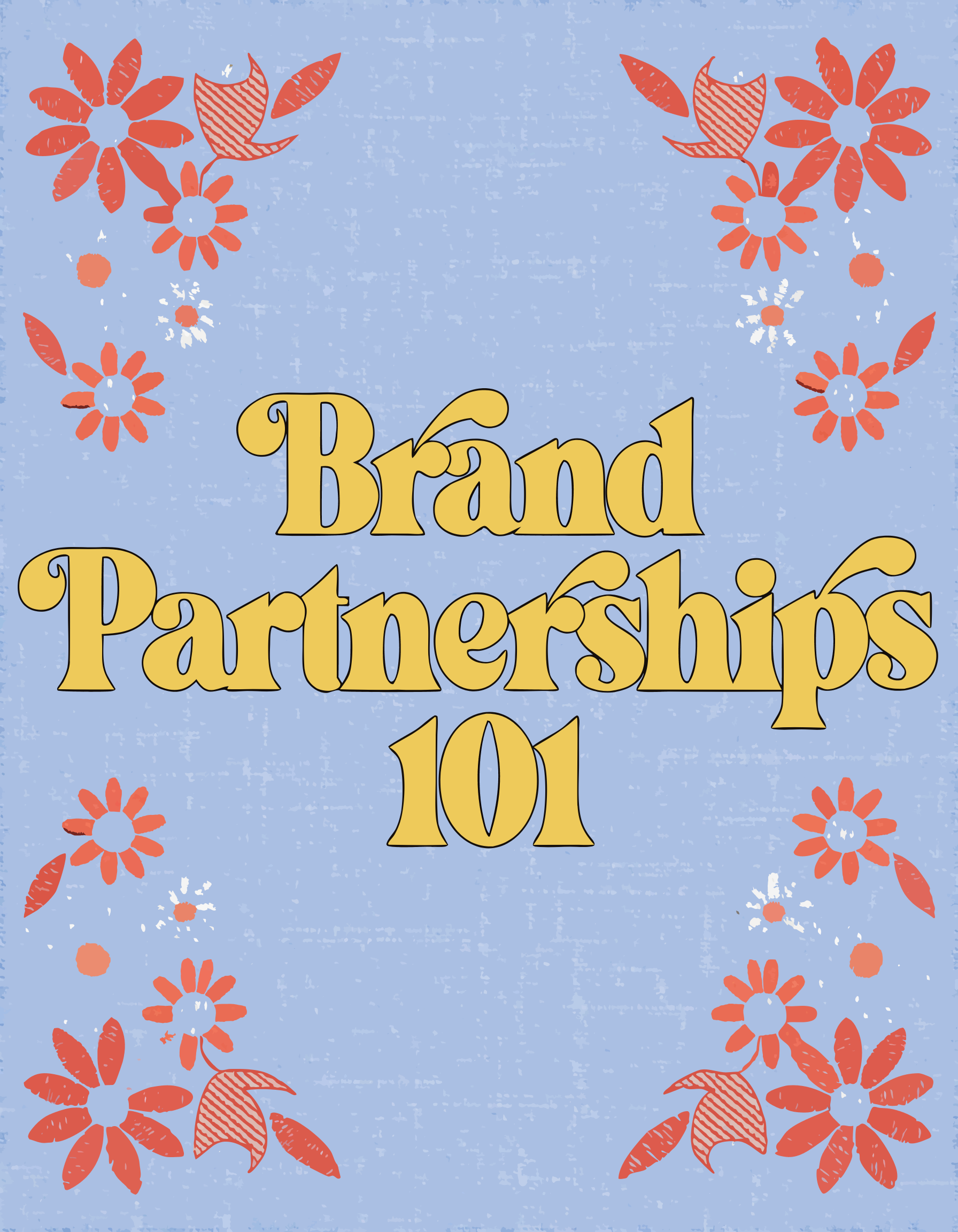
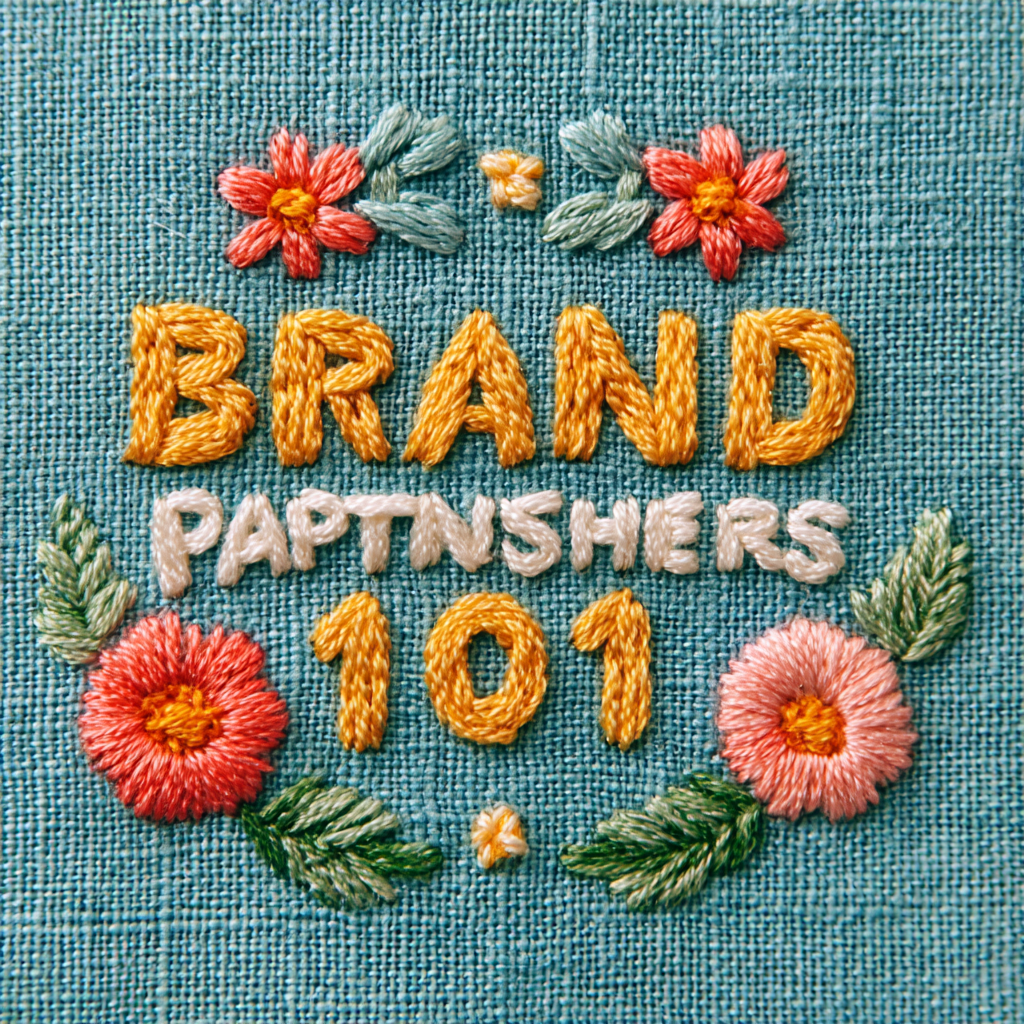
- The Typography Prompt: A square graphic featuring the phrase "Brand Partnerships 101" rendered as embroidery stitching on light-blue linen, complete with floral accents.
Supporting Data: Comparative Analysis of the Nine Generators
| AI Generator | Best For | Key Strength |
|---|---|---|
| Nano Banana 2 | Overall accuracy | Most consistent rendering of real-world objects and styles. |
| Seedream | Typography & CapCut | Flawless text spelling and placement within images. |
| Recraft V4 Pro | Designers | Superior control over visual style and reference images. |
| Midjourney | Artistic visuals | High visual richness and mood-driven outputs. |
| Adobe Firefly 5 | Adobe users | Seamless integration with Photoshop and Illustrator. |
| FLUX.2 Pro | Creative liberty | Unique point of view and excellent shadow handling. |
| Ideogram 3.0 | Text precision | Reliable spelling for text-heavy graphics. |
| GPT Image 1.5 | ChatGPT users | Convenience for those already in the OpenAI ecosystem. |
| Lucid Origin | Dimensionality | Distinctive 3D quality and quick generation. |
Deep-Dive Model Reviews
Nano Banana 2 (Google)
As part of Google’s rapidly evolving model family, Nano Banana 2 demonstrated a profound understanding of real-world objects. When prompted for specific items like niche perfume bottles or branded footwear, the model accurately reflected their actual physical appearance. It excelled in the illustration test, maintaining clean proportions, realistic object categorization, and appropriate typography on miniature magazine spines.
Seedream (ByteDance)
Integrated within the CapCut ecosystem, Seedream proved to be a powerhouse for text accuracy. Every label, word, and spelling request across the test prompts was executed flawlessly. While its photorealistic rendering of consumer electronics (such as smartphones) felt slightly artificial, its shadow placement and object cohesion made it a dependable tool for social media assets.

Recraft V4 Pro
Designed specifically for creators and designers, Recraft features an extensive reference library and powerful vector output capabilities. Operating via the Vector Pro and V4 Pro models, it handled hex codes effectively for brand alignment. Although minor inconsistencies occasionally appeared in complex multi-object prompts, its aesthetic vision and agentic refinement tools offer unmatched professional utility.

Midjourney
Renowned as the art-house choice of generative AI, Midjourney delivers unparalleled visual richness and mood-driven outputs. However, its artistic tendencies work against it when handling strict object counts and specific typography. While it produced the most convincing embroidery texture in the typography test, it struggled significantly with the 13-item sticker sheet and warped complex text strings like "partnerships."

Adobe Firefly 5
Tailored for users embedded in the Adobe Creative Cloud, Firefly 5 prioritizes clean commercial workflows. Its most notable characteristic during testing was its strict copyright filters, which actively blocked trademarked terms like "iPhone" and "Instagram." For creators comfortable working within Adobe’s compliance boundaries, Firefly offers exceptional texture generation and smooth cross-app handoffs.

FLUX.2 Pro
Available via Leonardo.ai, FLUX.2 Pro strikes an impressive balance between generation speed and creative interpretation. It handled ambient lighting and drop shadows with high fidelity, creating assets that sat dynamically between illustration and photography.

Ideogram 3.0
Marketed heavily as a text-rendering specialist, Ideogram 3.0 provided mixed results. While its lighting and shadow generation for product shots were strong, its stylistic interpretation of the illustration and embroidery prompts leaned toward a cartoonish aesthetic that lacked a handcrafted feel.

GPT Image 1.5 (OpenAI)
Embedded within Leonardo.ai, OpenAI’s image model offered solid conversational integration. However, it struggled with complex, spaced-out prompts like the sticker sheet, resulting in compressed layouts and an overarching color cast. It remains a convenient choice for users already operating within the OpenAI workspace.
Lucid Origin
Lucid Origin offers rapid generation speeds and a distinctive 3D dimensional quality. While its prompt adherence was looser than models like Nano Banana 2, its unique depth of field and visual styling make it an interesting option for punchy social media graphics.

Prompt Engineering Mastery: Rules for Consistent Results
Testing demonstrated that the primary variable in generative success is not the tool, but the prompt. Creators looking to maximize their output should adopt structured prompting habits:

- Lead with the Subject: Place the core subject at the very beginning of the prompt (e.g., "A ceramic mug on a wooden desk" before "editorial lifestyle photography"). Leading with style causes models to lose focus on content.
- Employ Camera Language: Use photographic terminology—such as "shallow depth of field," "35mm film," or "golden hour lighting"—to guide realistic outputs.
- Describe Colors Explicitly: Plain-language color descriptions ("light blue," "butter yellow") outperformed hex codes in the majority of models, unless using a design-specific platform like Recraft.
- Anchor Illustration Styles: Without explicit stylistic anchors (e.g., "single line art, wobbly hand-drawn quality, outlines only"), models frequently default to generic flat vectors or unwanted photorealism.
- Utilize Negative Prompts: Explicitly state what you do not want at the beginning of negative prompt fields (e.g., "no watermarks, no text").
Official Responses and Industry Implications
As generative AI tools become permanent fixtures in digital marketing and content creation, industry standards around copyright, commercial licensing, and platform integration are rapidly solidifying.
Commercial Rights vs. Copyright Ownership
While platforms like Adobe Firefly and Recraft offer clear commercial licensing parameters for their paid tiers, a broader legal grey area remains. The U.S. Copyright Office has repeatedly maintained that simple prompt generation does not confer legal authorship or copyright ownership over an AI-generated image. Consequently, while AI assets serve exceptionally well as supporting social media graphics and mood boards, brands relying on wholly proprietary visual identities must weigh the risk of third-party replication.

Workflow Integration
The trajectory of AI image generation is moving away from standalone web portals and toward native ecosystem integration. As demonstrated by ByteDance’s CapCut integration and Adobe’s Creative Cloud suite, the future belongs to tools that reduce friction by embedding generation directly into editing timelines and scheduling dashboards. Once visuals are generated, tools like Buffer allow creators to seamlessly schedule and publish multi-platform content from a single interface, streamlining the journey from ideation to distribution.
Conclusion
AI image generators have evolved from experimental novelties into practical production assets. Non-artists no longer need to accept visual mediocrity or rely entirely on saturated stock libraries. By mastering prompt architecture and selecting the model best aligned with specific creative needs—whether that is Nano Banana 2 for objective accuracy, Seedream for text rendering, or Midjourney for artistic mood—creators can drastically expand their visual footprint across social media.