In the modern corporate boardroom, the narrative surrounding climate strategy has undergone a profound shift. Sustainability is no longer viewed as a peripheral "nice-to-have" or a marketing exercise; it has graduated to a core pillar of long-term business viability. Yet, despite record-high levels of executive buy-in, the path to a low-carbon future is becoming increasingly treacherous.
According to the 2026 State of Supply Chain Sustainability report published by the MIT Sustainable Supply Chain Lab, we are witnessing a global phenomenon where corporate willpower is colliding with a volatile geopolitical and economic landscape. Based on an expansive survey of 1,810 supply chain professionals across 91 countries, the data suggests that while the "what" of sustainability is clearer than ever, the "how" remains dangerously elusive.
Main Facts: The Great Decoupling of Intent and Outcome
The central tension identified by the MIT researchers is a decoupling of ambition from execution. For the first time in the report’s seven-year history, 83 percent of respondents categorized sustainability as "important" or "very important" to their firm’s long-term success. This is a watershed moment for environmental, social, and governance (ESG) priorities.
However, this heightened sentiment is not translating into linear progress. The report highlights a "sustainability agenda stuck between conviction and constraint." As companies attempt to operationalize their climate goals, they are being buffeted by three primary headwinds: tariff uncertainty, geopolitical instability, and a lack of internal governance infrastructure. The findings suggest that companies are currently better at performing incremental "green" tasks—such as optimizing a single shipping route—than they are at re-engineering their entire supply chains for long-term decarbonization.
Chronology of a Changing Landscape
To understand why sustainability efforts are stalling, one must look at the timeline of the last few years:
- 2020–2022 (The Foundation): Post-pandemic recovery efforts saw a surge in corporate climate pledges. Organizations built decarbonization plans based on the prevailing assumptions of globalized, stable trade and a relative, if fragile, peace.
- 2023–2024 (The Geopolitical Shift): The stability of trade routes began to fracture. Geopolitical tensions, particularly in Asia and Europe, forced companies to move from "just-in-time" to "just-in-case" supply chains, often prioritizing regional security over carbon efficiency.
- 2025 (The Policy Divergence): Significant policy shifts in the United States—specifically those deprioritizing environmental regulations—created a split-screen reality. While 59 percent of firms reported becoming more committed to sustainability in response to these shifts, the economic reality of the market forced a retreat.
- 2026 (The Current Stasis): The State of Supply Chain Sustainability report marks this as the year of "the accountability gap." Firms are now struggling to move beyond the "low-hanging fruit" of incremental decarbonization toward the "genuine transition" of their capital expenditure and network design.
Supporting Data: The Anatomy of the Obstacles
The data provided by the MIT Sustainable Supply Chain Lab offers a sobering look at why corporate sustainability is currently hitting a ceiling.
The Governance Gap
The report identifies a massive disparity between public ambition and internal structure. While companies are happy to broadcast their net-zero goals, only 51 percent have established a formal, cross-functional sustainability team. Even more concerning, only 33 percent of organizations have integrated sustainability oversight at the board level.
The "return on governance" is measurable: companies with formal cross-functional teams report that sustainability is integrated into daily decisions 57 percent of the time. In organizations where responsibility is siloed into a single department, that figure plummets to 13 percent—a 44-point gap that proves governance is not just bureaucracy; it is the engine of implementation.
The Tariff and Conflict Tax
External pressures are actively dismantling climate progress. Sixty-eight percent of respondents stated that tariff uncertainty has forced them to delay or abandon their sustainability strategies. Perhaps most alarmingly, nearly one-third of the respondents noted that tariff-related disruptions—such as rerouting shipments to avoid trade barriers—have actually increased their total operational emissions. Furthermore, over 80 percent of respondents across North America, Europe, and Asia agree that ongoing geopolitical conflict is directly undermining their climate action efficacy.
The AI Paradox
Artificial Intelligence is often touted as the "silver bullet" for sustainability, and the data confirms its utility. Seventy-eight percent of North American firms use AI for sustainability, and 87 percent of those report positive outcomes, such as reduced material waste (86 percent) and lowered energy use (81 percent).
However, there is a dark side to this digital transformation. Among "mature" AI users, only 53 percent have actually seen a reduction in total greenhouse gas emissions, while 29 percent have seen an increase. This is most visible in automated warehousing: 78 percent of advanced warehouses report higher energy consumption post-AI implementation. The culprit? A lack of monitoring. Only 24 percent of these facilities use AI to track the environmental consequences of their own algorithmic operations.
Official Responses and Expert Perspective
Sreedevi Rajagopalan, director of the MIT Sustainable Supply Chain Lab and the lead author of the report, provides a pragmatic outlook on these findings. "Commitment is strong, measurement is expanding, and AI is accelerating," Rajagopalan notes. "What comes next is harder: converting commitment into accountability, operational integration into strategic decision-making, and incremental decarbonization into genuine transition."
The report emphasizes that the primary constraint is no longer a lack of interest, but a lack of infrastructure. Companies are operating in a "conviction vs. constraint" cycle. The experts suggest that without "hard-wiring" sustainability into the financial and operational structure of the company, the goals will remain symbolic.
Implications: The Path Forward
The 2026 State of Supply Chain Sustainability report provides a clear roadmap for organizations looking to break out of this cycle. The implications for leadership are threefold:
1. From Operational Efficiency to Structural Design
Currently, sustainability is "thinning out" in areas that matter most: capital investment, network design, and long-term risk planning. Companies are becoming efficient at the logistics level but are failing to design sustainable supply chains at the architectural level. Leaders must shift their focus from optimizing existing systems to redesigning the systems themselves to be carbon-neutral by default.
2. The Power of Collaborative Scope 3
One of the most promising findings is the rapid maturation of Scope 3 (indirect emissions) collaboration. The share of companies working entirely alone on their carbon footprint has collapsed from 18 percent to a mere 6 percent in just one year. Participation in joint supplier engagement programs has surged to 58 percent. This suggests that the next wave of sustainability will be defined by "coopetition," where industry peers and suppliers share the burden of decarbonization.
3. Policy and the Capital-Intensive Stall
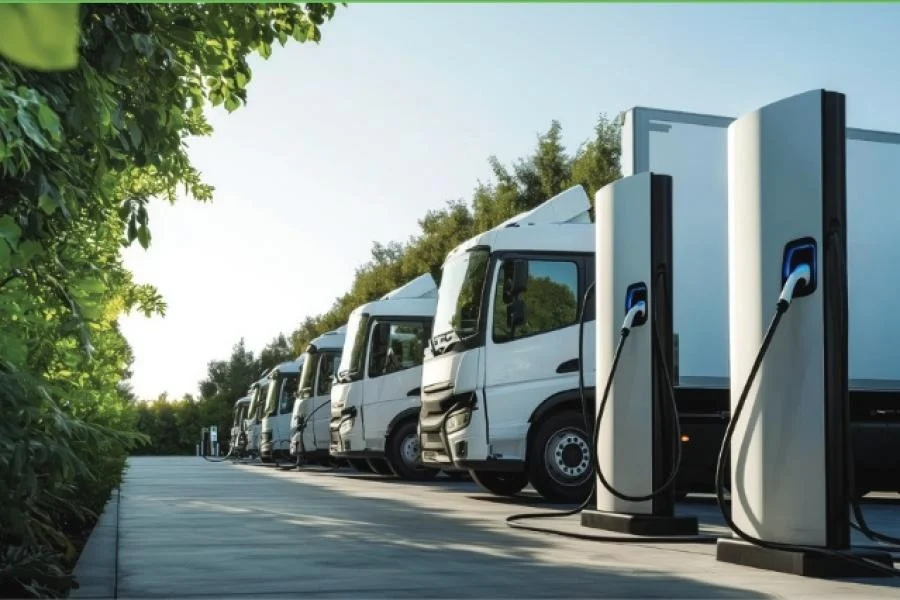
The divergence between Europe and North America regarding freight transportation serves as a warning. In Europe, where policy signals are consistent, 84 percent of freight companies feel supported in their decarbonization strategies, leading to a 60 percent adoption rate of battery-electric vehicles. In North America, where signals are mixed, that adoption rate is only 36 percent. The implication is clear: when policy is unclear, capital-intensive transitions stall. For companies, this means they must learn to build their own "resilience against disruption" rather than waiting for favorable policy winds.
Conclusion: Ambition Without Accountability
The ultimate lesson of the 2026 report is that sustainability is a management challenge, not just an environmental one. The organizations that succeed in the coming decade will be those that reconcile their internal governance with their public pledges. Ambition, when divorced from accountability, creates only a facade of progress. As the global economy continues to navigate geopolitical volatility, the companies that thrive will be those that treat climate strategy with the same rigorous, data-driven, and structural discipline they apply to their financial bottom line. The tools are available; the challenge is now one of organizational will and structural maturity.