In the rapidly expanding landscape of artificial intelligence, the promise of "all-in-one" platforms has become a siren song for developers, businesses, and power users alike. Among the frontrunners in this space is Abacus AI, a technical workspace that aims to consolidate a fragmented AI market into a single, cohesive interface. By integrating diverse model providers, autonomous agents, and cloud-based development environments, Abacus AI seeks to move beyond the simple conversational chatbot experience into the realm of complex, multi-step task execution.
However, as the platform scales, it has become a subject of intense scrutiny. Public forums, user reviews, and developer testimonials reveal a dichotomy: while power users laud its versatility, others point to steep learning curves and opaque billing structures. This analysis breaks down the reality of Abacus AI, separating its ambitious marketing from the nuanced experiences of its user base.
The Core Architecture: A Technical Overview
Abacus AI is not merely a wrapper for LLMs; it is an integrated ecosystem designed for heavy lifting. Unlike platforms like ChatGPT or Claude, which prioritize conversational fluency and content generation, Abacus AI is engineered for functional autonomy.
The Product Ecosystem
The platform is built upon a modular architecture of specialized tools:
- ChatLLM: The gateway, utilizing intelligent routing (RouteLLM) to select the optimal model from providers like OpenAI, Anthropic, and Google.
- Agentic Frameworks (Hermes, Claw, and Agent Swarms): The platform’s crown jewels, these agents are designed for multi-step reasoning, memory retention across sessions, and coordinated task completion.
- SuperComputer: A cloud-based execution environment that allows code and agents to persist and operate even after a user closes their browser.
- Vibe Coding (AppLLM): A streamlined development interface that translates natural language prompts into deployed web applications.
- Smaug: A proprietary family of open-weight models optimized specifically for agentic reasoning and code generation.
Chronology of Platform Evolution
Abacus AI emerged at a pivotal moment in the AI transition—the shift from "Chatbot AI" to "Agentic AI."
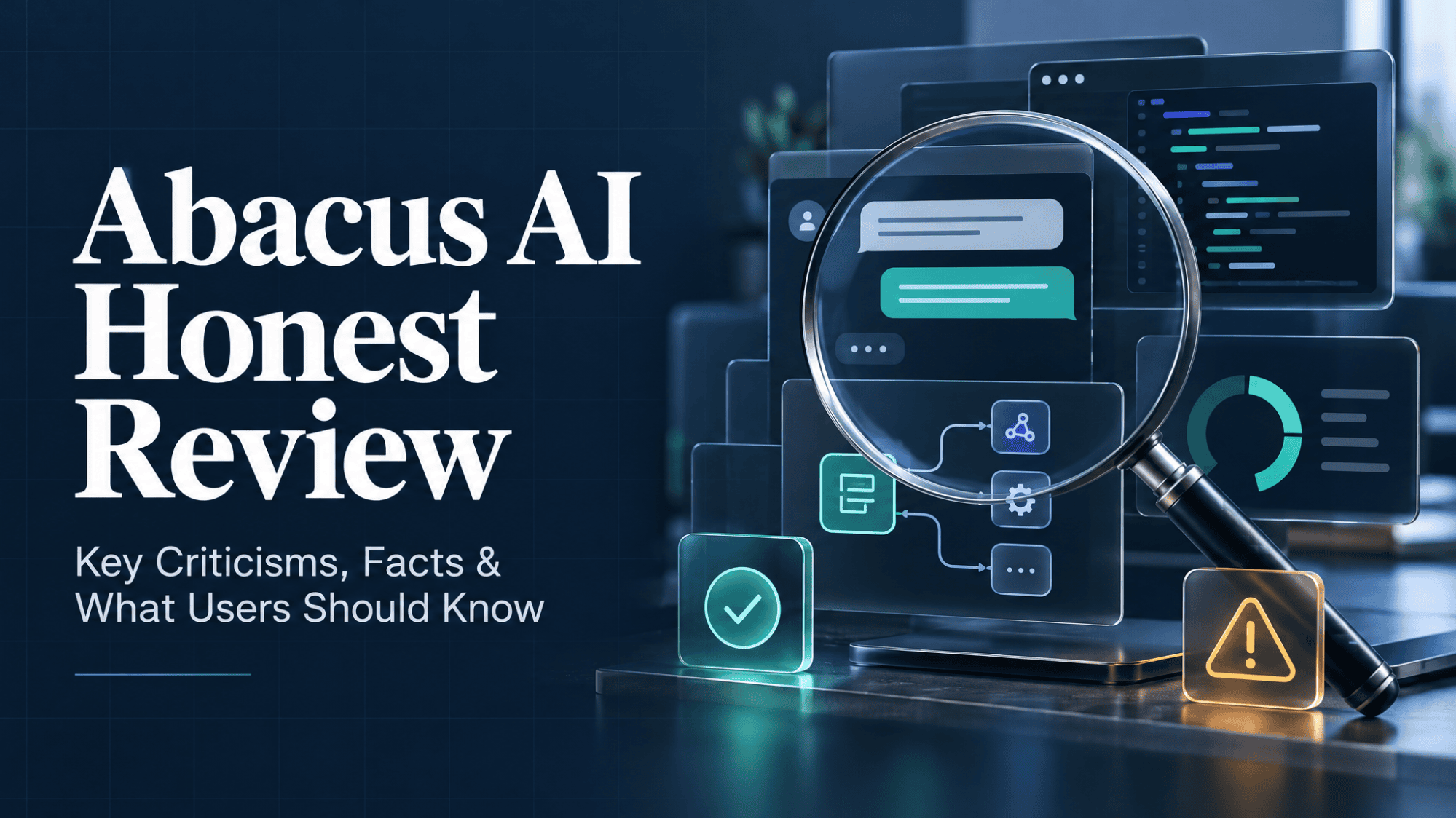
- Phase One (Foundation): Initially launched as a centralized interface to manage multiple LLM API keys, the platform sought to solve "model fatigue," where users struggled to manage subscriptions across different providers.
- Phase Two (Agentic Integration): The introduction of Hermes and Swarm capabilities marked a departure from passive AI. The platform began offering long-term memory and the ability to trigger external tools, such as web browsers and code compilers.
- Phase Three (Infrastructure Scaling): With the addition of the "SuperComputer" and "Abacus AI Desktop," the platform moved into the professional software development lifecycle (SDLC), aiming to replace traditional IDEs with AI-driven, persistent environments.
Evidence-Based Assessment: The User Experience
To understand the efficacy of Abacus AI, one must look at the tension between its feature set and the realities of its implementation.
The Learning Curve and Interface Complexity
The primary critique directed at Abacus AI is its complexity. Because the platform offers a breadth of tools—ranging from image generation (Studio) to complex coding agents—the UI can become overwhelming for those seeking a simple assistant. Users note that while the platform is powerful, the density of options necessitates a period of "onboarding friction." This is particularly evident when switching between disparate models, as the lack of clear tracking can make it difficult to determine which model produced a specific output in a long, multi-threaded session.
The Economics of Credit-Based Usage
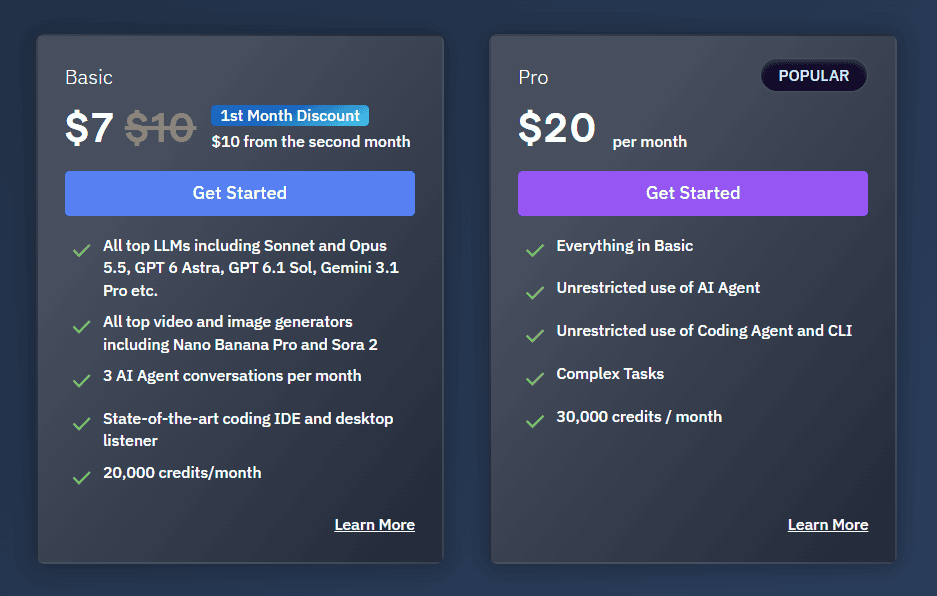
Perhaps the most contentious aspect of the Abacus AI experience is its credit-based billing system.
- The Unpredictability Problem: Users often report difficulty in forecasting costs. In a standard LLM chat, costs are predictable; in an agentic workflow, where an agent might perform dozens of web searches, code compiles, and file edits, the credit consumption can be exponential.
- Failed Runs: A recurring grievance involves the consumption of credits during "failed" agent runs. If an agent encounters a logic loop or an error, it may burn through the user’s monthly allowance while producing no tangible, usable output.
- Pacing Limits: To manage server load, the platform implements usage pacing. While designed to ensure stability, this can frustrate power users who find themselves throttled during intensive development periods.
Real-World Use Cases: Where the Platform Shines
Despite the criticisms, the platform’s utility in specific, high-intent scenarios remains high.
Automated Software Development and QA
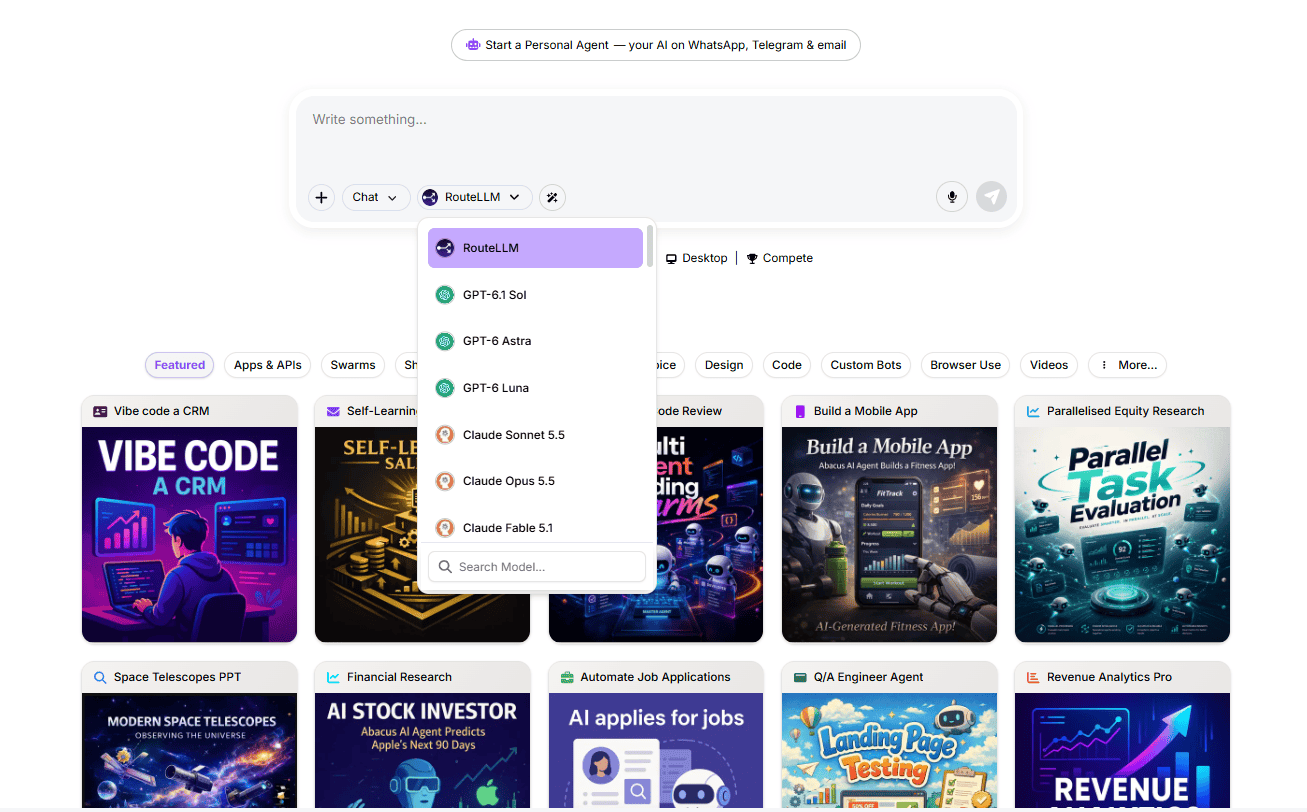
The "AI QA Engineer" and "Multi-Agent Code Review" tools have proven effective for engineering teams. By automating the review of pull requests and simulating user interactions for UI testing, these tools reduce the manual labor typically required for quality assurance. The ability to "vibe code" a CRM or a Stripe-integrated website demonstrates the platform’s capacity for rapid prototyping, which is significantly faster than traditional manual development.
Data Analytics and Research
The "Revenue Analytics Pro" tool highlights the platform’s strength in converting raw data into actionable insights. By leveraging autonomous agents to clean, analyze, and visualize data, the platform allows non-technical stakeholders to perform tasks that previously required a dedicated data analyst. However, the caveat remains: the precision of the output is strictly bounded by the accuracy of the underlying data and the user’s ability to define clear metrics.
Official Perspective and Support Challenges
Abacus AI representatives emphasize that the platform is a tool for "builders," not just "consumers." In response to billing concerns, the company has consistently highlighted the transparency of their usage dashboards.
Regarding support, there is a visible gap between user expectations and reality. Some users report that in a platform as complex as Abacus, support tickets often require deep technical investigation, leading to longer-than-desired resolution times. The company maintains that as the platform matures, the "human-in-the-loop" requirement for troubleshooting will diminish as agents become more self-correcting.
Strategic Implications: Is it Worth It?
Determining the value of Abacus AI requires a cold-eyed assessment of one’s own needs.
Who Should Adopt Abacus AI?
- The Prototyper: Individuals or small startups needing to spin up web apps or automated workflows without hiring a full engineering team.
- The Power Researcher: Users who require multi-agent orchestration for deep, cross-referenced market or scientific research.
- The AI Enthusiast: Those who want a singular, unified workspace to experiment with the latest open-weight models (like Smaug) alongside proprietary models.
Who Should Look Elsewhere?
- The Casual Chatbot User: If you only need a high-quality chatbot for writing emails or basic brainstorming, the overhead and cost of the Abacus ecosystem will likely be unnecessary.
- Budget-Constrained Teams: For organizations that require strictly fixed, predictable monthly costs, the variable nature of credit-based agentic workflows presents a significant financial risk.
Conclusion: A Tool for the Future of Work
Abacus AI represents a transition point in the utility of artificial intelligence. It has successfully moved past the "toy" phase of chatbots and into the "tool" phase of agents and infrastructure. Its strengths—versatility, autonomy, and cross-model interoperability—are significant. However, these are balanced by the realities of a platform still in a state of rapid, sometimes chaotic, evolution.
For prospective users, the advice is clear: Treat the platform as a professional utility rather than a consumer app. Begin by identifying a specific, high-friction workflow in your daily operations, run it through the Abacus ecosystem, and monitor the credit burn rate closely. As the platform continues to refine its agents and optimize its pricing models, it is poised to become a vital component of the modern digital stack, provided the user is willing to invest the time required to master its complex, powerful capabilities.
Ultimately, Abacus AI is an ambitious experiment in the centralization of intelligence. It is not perfect, and it is certainly not for everyone—but for those who need to build, automate, and analyze at scale, it provides a feature set that is difficult to find elsewhere under a single roof.