Main Facts: The Shift from Erasure to Digital Autonomy
For decades, the landscape of Indian mainstream media treated transgender and queer communities through a binary lens of systemic erasure or reductive caricature. Films and television serials largely confined trans characters to rigid, marginalized tropes—often functioning as comic relief, flat antagonists, or tragic figures defined entirely by their suffering. This lack of multidimensional storytelling left a massive void in authentic representation, denying audiences stories grounded in the actual lived realities of queer and trans individuals.
However, the dawn of the creator economy and social media has fundamentally dismantled these traditional gatekeeping structures. Platforms like YouTube and Instagram have given marginalized individuals the tools to bypass traditional media institutions entirely, allowing them to construct their own narratives from the ground up.
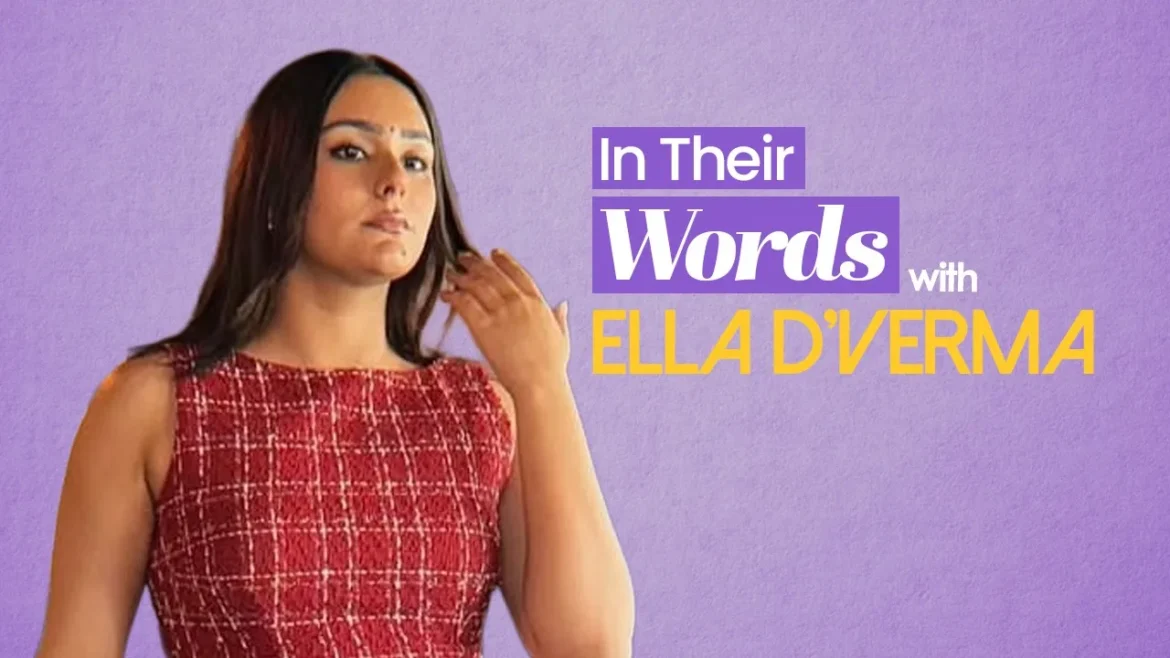
At the vanguard of this cultural shift is Ella D’Verma—a prominent model, actor, and digital creator. D’Verma has utilized digital spaces not merely to document her transition, but to expand into conversations surrounding fashion, beauty, culture, relationships, and societal critique. As part of a new generation of digital architects, she is redefining not only how transgender people are perceived, but who holds the ultimate authority to tell these stories.
Chronology: From Silent Self-Discovery to Digital Leadership
To understand D’Verma’s rise, one must trace the timeline of media representation in India over the past two decades:
- The Era of Invisibility and Caricature (Early 2000s): Mainstream Indian media rarely acknowledged trans identities outside of regressive cinematic stereotypes or localized, often exoticized news segments. For youth growing up during this period, finding language or role models was an isolating endeavor.
- The Digital Awakening (2010s): The proliferation of affordable smartphones and high-speed internet in India democratized content creation. Platforms like YouTube became the first viable stages where queer creators could bypass studio executives and speak directly to audiences.
- The Rise of Independent Creators (Mid-to-Late 2010s): D’Verma emerged during this wave, initially sharing her personal journey online. By providing the raw honesty she lacked in her own youth, she cultivated an engaged, loyal community.
- Mainstream Convergence and Commercial Partnerships (2020s): As digital creators gained cultural capital, brands began courting queer influencers. This transition introduced new tensions regarding tokenism, commercial packaging of identity, and the commodification of lived experience.
- The Current Landscape: Today, D’Verma sits at the intersection of digital influence and industry critique, advocating for systemic inclusion and narrative complexity rather than seasonal token visibility.
Supporting Data & Industry Insights: The Economics of Authenticity
The modern creator economy operates on metrics of engagement and visibility, yet structural inequities persist for marginalized creators. Industry analyses and cultural critiques highlight several key dynamics regarding how brands and media engage with trans talent:
- The Tokenism Trap: Early corporate partnerships with queer creators frequently prioritize identity as a marketing headline over creative craft, often concentrating campaigns around Pride month rather than building sustained, long-term partnerships.
- The Marketability of Trauma: Media studies consistently show that audiences and producers are historically more comfortable consuming narratives of queer pain and struggle. Joy and professional success, by contrast, demand systemic equity and disrupt the passive consumption of tragedy.
- Gender as Social Currency: Transitions alter social dynamics. Research and sociological observations mirror D’Verma’s insights regarding how patriarchal and cis-normative societies shift assumptions of authority, emotional range, and capability based on perceived gender presentation.
Official Responses and Perspectives: In Conversation with Ella D’Verma
In a candid interview for the series In Their Words, D’Verma unpacked the complexities of visibility, the realities of the creator economy, and the future of trans representation. Below are edited excerpts from the discussion.
On Growing Up Without Representation
Reflecting on her childhood, D’Verma noted that lacking visible role models forced an intense, early self-awareness.
"When you grow up without representation, confusion doesn’t linger for long," D’Verma explained. "You’re constantly observing, decoding, and piecing yourself together without a reference point. That inevitably builds a kind of early self-awareness—sometimes even an intense hyper-awareness—because you’re trying to name something the world hasn’t yet named for you."
While modern representation gives younger queer people vital context and validation, she emphasizes that visibility alone is insufficient. "It needs to hold nuance, contradiction, and the full spectrum of experience—not just simplified versions that are easy to consume."
Navigating Gender and Social Power
D’Verma shared how her lived experience of gender before and after her transition illuminated the ways society assigns power.
"Before my transition, people projected ideas of strength, authority, and emotional range onto me based on how they read my gender. Afterward, those assumptions shifted—toward softness, vulnerability, and at times even diminished capability. What it really revealed to me is that gender functions like a social currency."
Redefining Family and Chosen Kinship
Challenging the linear narratives often portrayed in media—where queer stories are neatly packaged as rejection followed by cinematic acceptance—D’Verma highlighted the messy reality of familial bonds.
"People often imagine family as a straight line—conflict followed by resolution, rejection followed by acceptance. But real family journeys are far more layered. Love, confusion, learning, and unlearning often coexist in the same moments."
The Commercialization of Identity
Addressing her early days working with brands, D’Verma admitted to feeling pigeonholed. In the nascent stages of her career, her identity frequently served as the primary hook, overshadowing her professional output as a creator.
"The difference now is intention. I’m far more selective, choosing collaborations with brands that see the full picture—not just who I am, but what I bring."
When discussing the creator economy at large, she noted that platforms frequently reward sanitized versions of identity. "Authenticity is celebrated, but usually within boundaries that feel safe and structured for brands. There’s a clear preference for identities that can be easily understood and neatly packaged. Real authenticity, however, is often messy and complex."
D’Verma drew a sharp distinction between companies that participate in transient cultural moments and those that truly invest in queer storytelling. "Genuine investment means going further—beyond token gestures or seasonal campaigns. It involves creative trust, long-term commitment, and storytelling that isn’t limited to Pride cycles. It’s the difference between participation and partnership."
Implications: The Road to Structural Inclusion
The trajectory of creators like Ella D’Verma signals both how far Indian media has traveled and how much ground remains to be covered. Moving from total invisibility to high visibility was a crucial first milestone; however, the persistent lack of narrative complexity remains a critical bottleneck.
True cultural progress, as D’Verma argues, will not be measured by the number of trans characters in specialized or tokenizing roles, but by their integration into everyday storytelling. In a truly inclusive media ecosystem, a trans protagonist’s identity would not serve as the central plot point, but merely as one facet of a fully realized human existence—spanning professions, romances, triumphs, and flaws.
Looking ten years into the future, the ultimate benchmark for success is normalization. Inclusion must shift from a conditional corporate checklist to an institutional standard. When safety, dignity, and professional opportunity are no longer contingent on context or identity marketing, the milestones currently celebrated as groundbreaking achievements will simply become the baseline of a fair society.