







Choosing the right course-hosting platform is one of the most critical decisions an online entrepreneur can make. For creators looking to sell digital courses, offer coaching services, or build a thriving membership community, Thinkific has long been a leading name. However, aligning a platform’s subscription model with a nascent or scaling business budget requires careful financial forecasting.
Following structural price adjustments implemented in August 2026, many older online reviews and cost breakdowns are obsolete. This comprehensive report examines the updated Thinkific pricing landscape, analyzes plan tiers, highlights hidden operational expenses, and provides strategic frameworks to help businesses choose the optimal subscription tier.
Main Facts: The 2026 Thinkific Pricing Ecosystem
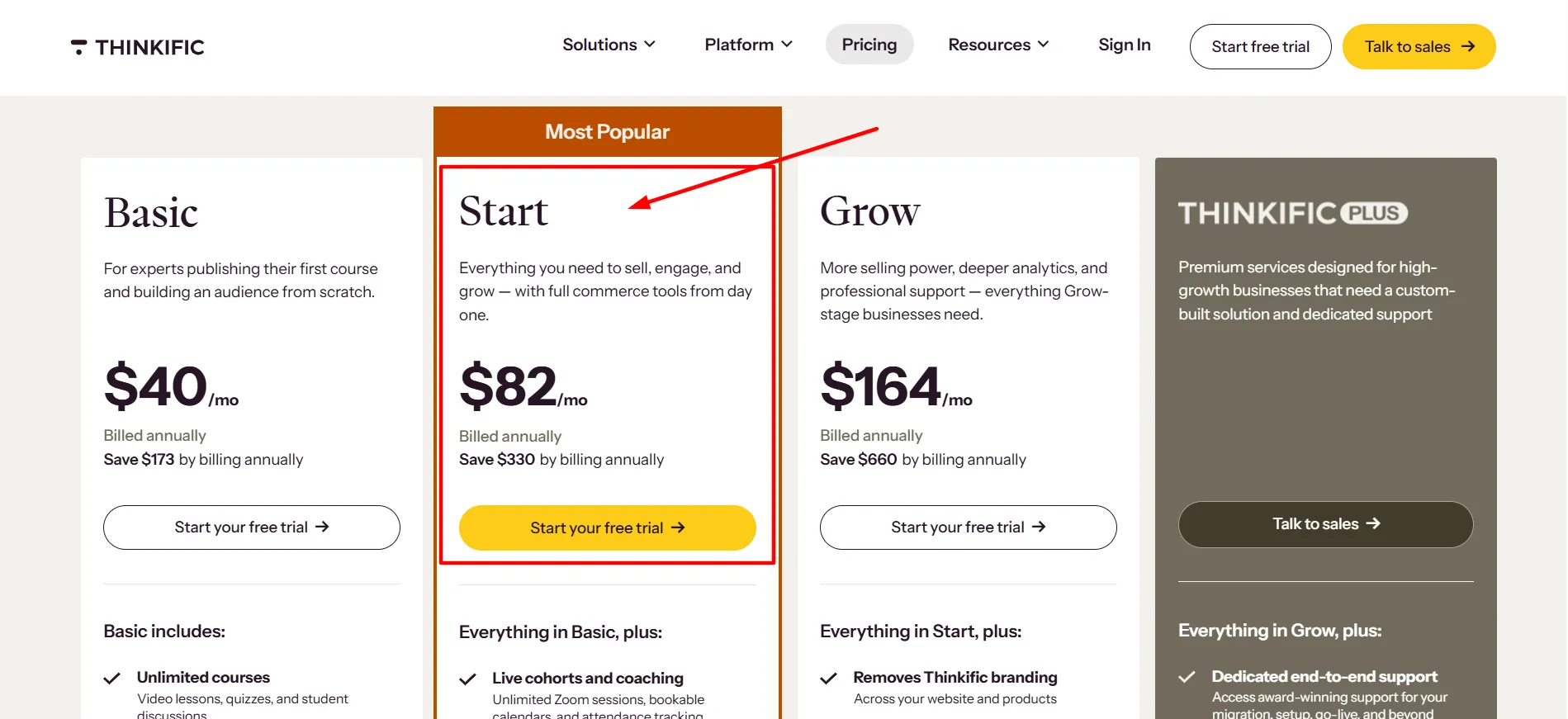
Thinkific structures its self-service software-as-a-service (SaaS) model across four primary tiers: Basic, Start, Grow, and Expand. Each tier is architected for specific business maturities—ranging from solo creators launching their maiden digital product to large training organizations managing sprawling catalogs and administrative teams.
Subscriptions are available via two billing cycles: month-to-month or annual commitments. Opting for annual billing reduces the average monthly financial burden by approximately 25%, though it requires an upfront capital outlay for the full 12-month term.
Thinkific Pricing At-A-Glance
| Plan | Monthly Billing Price | Annual Billing Equivalent (Monthly) | Total Annual Cost |
|---|---|---|---|
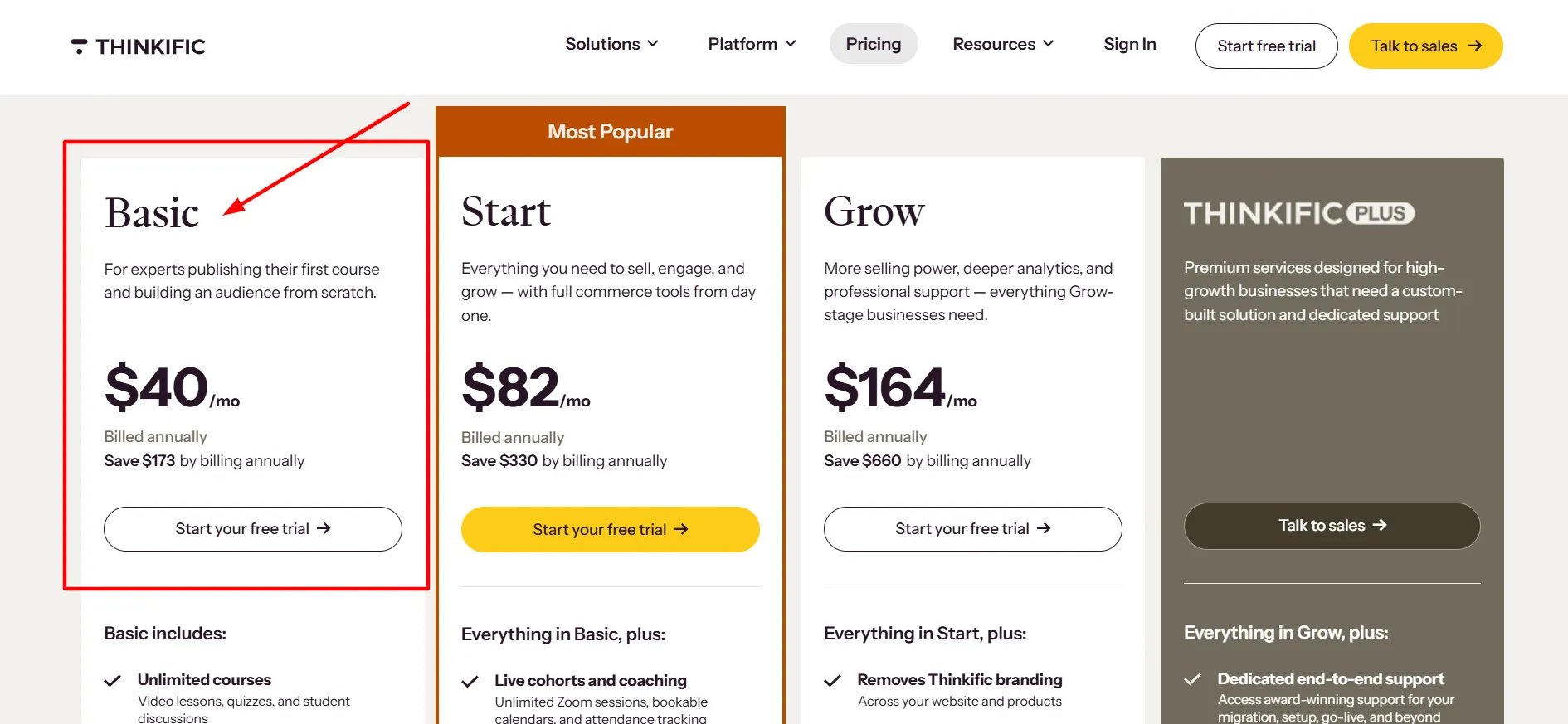
| Basic | $54 / month | ~$40 / month | $475 / year |
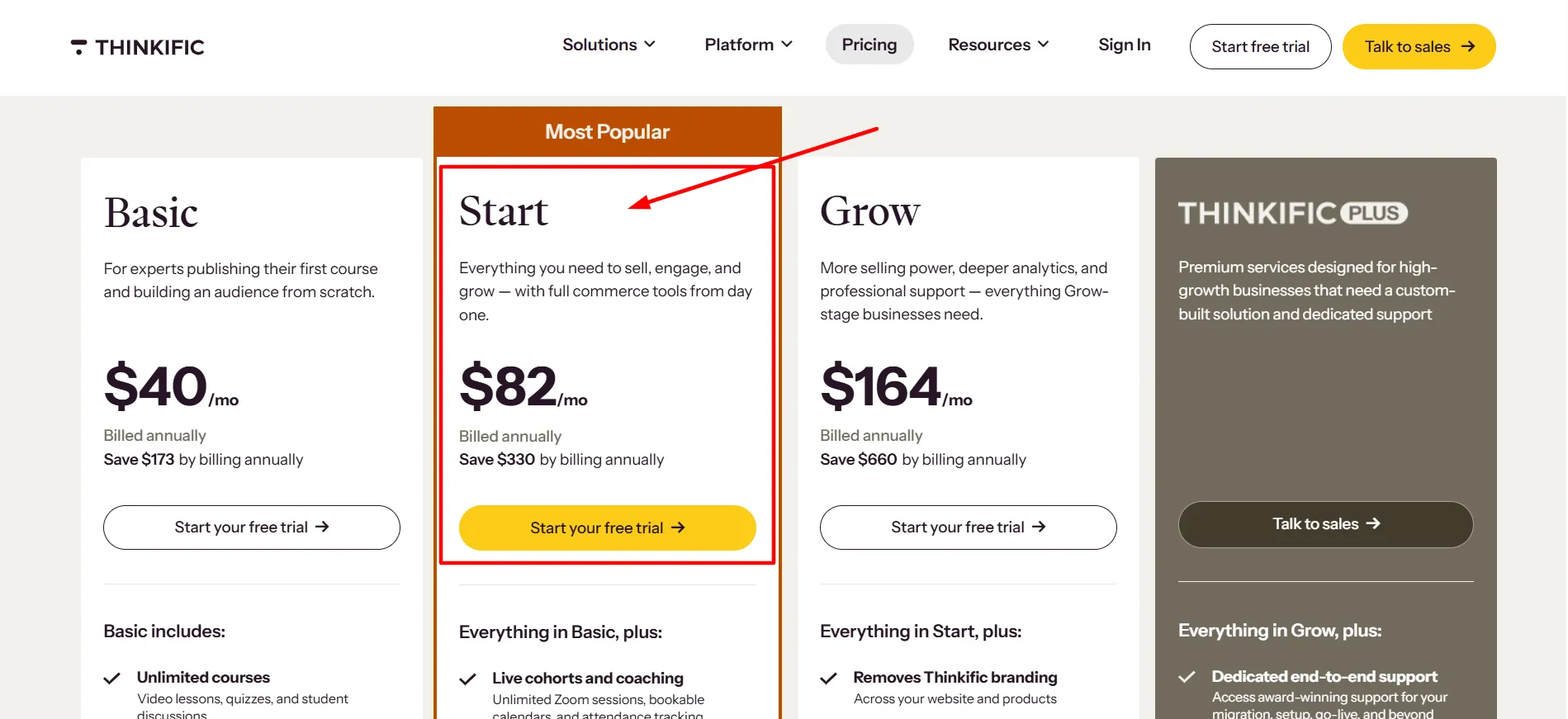
| Start | $109 / month | ~$82 / month | $978 / year |
| Grow | $219 / month | ~$164 / month | $1,968 / year |
| Expand | $499 / month | Contact Thinkific | Contact Thinkific |
Note: The top-tier "Expand" plan remained fixed at its published monthly rate of $499 during the platform-wide updates.
Chronology: The Evolution of Thinkific’s Plan Structure
To understand current subscription costs, it helps to examine how the platform has evolved its pricing strategy. In the early days of the online course boom, platforms frequently competed on flat transaction fees. As the creator economy matured, Thinkific shifted toward tiered, feature-gated software subscriptions.
- Pre-2024 Era: Thinkific offered a free plan option alongside legacy tiers, relying heavily on transaction fees for lower plans to capture a percentage of creator revenue.
- The Transition to Feature-Gated Tiers: Over successive product updates, the platform phased out broad free-tier offerings in favor of robust, paid entry points, encouraging serious entrepreneurs to invest in their digital infrastructure.
- August 2026 Adjustments: Thinkific revised its pricing structures across the Basic, Start, and Grow tiers to reflect expanded platform capabilities, integrated community tools, and enhanced student management systems. This adjustment rendered pre-2026 pricing guides inaccurate, necessitating a transparent, updated review of the platform’s economics.
Supporting Data: Deep Dive Into the Four Tiers
1. Thinkific Basic ($54/Month)
Designed explicitly for independent creators launching their first online courses, the Basic plan strips away unnecessary enterprise bloat to offer an accessible entry point.
- What You Get: Core course creation tools, lesson organization, student management systems, and custom domain mapping.
- Who It’s For: Solo practitioners, such as a marketing consultant launching a social media strategy masterclass or a freelance language teacher organizing asynchronous module libraries.
- Financial Breakdown: Billed monthly, Basic costs $54. An annual commitment drops the price to $475 ($40/month), realizing a net savings of $173 over 12 months.
- The Caveat: While cost-effective, Basic lacks robust membership mechanics and advanced community engines. Creators anticipating rapid diversification should evaluate higher tiers.
2. Thinkific Start ($109/Month)
The Start tier targets creators expanding beyond simple, one-off course sales into recurring revenue models.
- What You Get: Enhanced membership capabilities, cohort-based features, and community-building tools designed to cultivate ongoing student engagement.
- Who It’s For: Fitness instructors offering subscription-based workout libraries alongside standalone programs, or business coaches managing private mastermind communities.
- Financial Breakdown: Priced at $109 monthly or $978 annually (roughly $82 monthly equivalent). Upgrading from Basic to Start on an annual basis adds $503 to yearly software overhead.
- The Verdict: The increased price is easily justified if your business model relies on monthly recurring revenue (MRR) through subscriptions or active community forums.
3. Thinkific Grow ($219/Month)
Built for established digital education businesses, Grow accommodates multi-instructor teams and complex administrative workflows.
- What You Get: Expanded administrative permissions, advanced reporting, and bulk student operations designed to streamline high-volume teaching environments.
- Who It’s For: Boutique agencies, multi-author course academies, and established creators with growing catalogs that require delegating tasks to virtual assistants or co-instructors.
- Financial Breakdown: This tier commands $219 per month, or $1,968 annually ($164 monthly equivalent).
- The Strategic Warning: Because Grow is a significant business expenditure, creators should avoid preemptively upgrading based on future projections. Wait until operational bottlenecks demand these administrative features.
4. Thinkific Expand ($499/Month)
As the enterprise-grade solution, Expand caters to organizations requiring sophisticated educational infrastructure.
- What You Get: Advanced integrations, priority support channels, and enterprise-level learning management system (LMS) capabilities.
- Who It’s For: Corporate training departments, mid-sized institutions, and major digital media companies running multifaceted training operations.
- Action Item: Organizations considering this tier must consult directly with Thinkific sales teams to confirm custom billing setups, service-level agreements (SLAs), and exact feature inclusions.
Official Responses and Financial Realities: Uncovering Hidden Costs
When budgeting for an online learning business, the software subscription is only the foundation. A comprehensive financial model must account for transaction variables, taxes, and third-party tools.
1. Payment Processing Fees
Every digital sale incurs payment gateway charges. Standard credit card processing rates typically average around 2.9% plus $0.30 per transaction (varying by region and processor). For example, a $100 course sale yields roughly $3.20 in processing overhead, completely detached from your Thinkific subscription fee.
2. Third-Party Gateway Fees
Thinkific’s documentation outlines specific third-party transaction fees for creators utilizing external gateways (such as Stripe or PayPal outside of Thinkific Payments) in eligible regions like the United States, Canada, the United Kingdom, and the EU:
- Basic Plan: Up to a 5% fee on eligible transactions.
- Start Plan: Up to a 2% fee.
- Grow Plan: Up to a 1% fee.
Note: These fees generally apply to the first $1 million in annual sales and are waived beyond that threshold. Creators utilizing native Thinkific Payments bypass these additional charges entirely.
3. Indirect Expenses: Taxes and Currency Conversions
Advertised subscription prices rarely include local sales taxes, VAT, or digital services taxes, which are calculated dynamically at checkout. Furthermore, international users billed in non-native currencies may incur foreign transaction fees or unfavorable exchange rates from their financial institutions.
4. Complementary Business Software
A functional online academy rarely operates in a vacuum. Creators frequently budget for adjacent software stacks, including:
- Email marketing automation platforms (e.g., ActiveCampaign, ConvertKit).
- Video hosting and production suites.
- Graphic design utilities (e.g., Canva, Adobe Creative Cloud).
- Customer relationship management (CRM) software.
Implications: Choosing the Right Plan for Your Stage of Growth
Selecting a Thinkific plan requires balancing current cash flow against operational necessity.
- If you are validating an idea: Opt for monthly billing on the Basic plan. While it costs slightly more over a full year, it preserves vital working capital and gives you the flexibility to pivot without being locked into an annual contract.
- If you have proven product-market fit: Lock in annual billing for Basic or Start to capture the roughly 25% discount, provided your cash reserves can absorb the upfront payment without jeopardizing marketing and production budgets.
- If you manage a team: Scale up to Grow or Expand only when administrative friction (such as needing multiple admin logins or advanced reporting) directly inhibits your revenue growth.
Summary FAQs
Q: What is the absolute cheapest way to use Thinkific?
A: The Basic plan billed annually at $475/year offers the lowest barrier to entry, breaking down to an effective rate of about $40 per month.
Q: Are there hidden transaction fees?
A: Standard payment processing fees apply to all sales. Depending on your region and payment gateway configuration, third-party transaction fees may apply to Basic, Start, and Grow tiers unless you utilize Thinkific Payments.
Q: Can I change my plan later?
A: Yes. Platform subscribers can upgrade, downgrade, or switch between monthly and annual billing cycles directly through their admin dashboard settings.