






In the landscape of modern media, the consumption of news has undergone a seismic shift. No longer confined to the rigid constraints of traditional cable broadcasts or morning newspapers, global audiences are increasingly turning to digital platforms to stay informed. In 2025 alone, users engaged with more than 35 billion hours of news content on YouTube. Perhaps most telling of this behavioral pivot is that over 12 billion of those hours were consumed via connected TVs (CTVs), signaling that audiences now treat YouTube with the same level of trust and focus as they once reserved for legacy television.
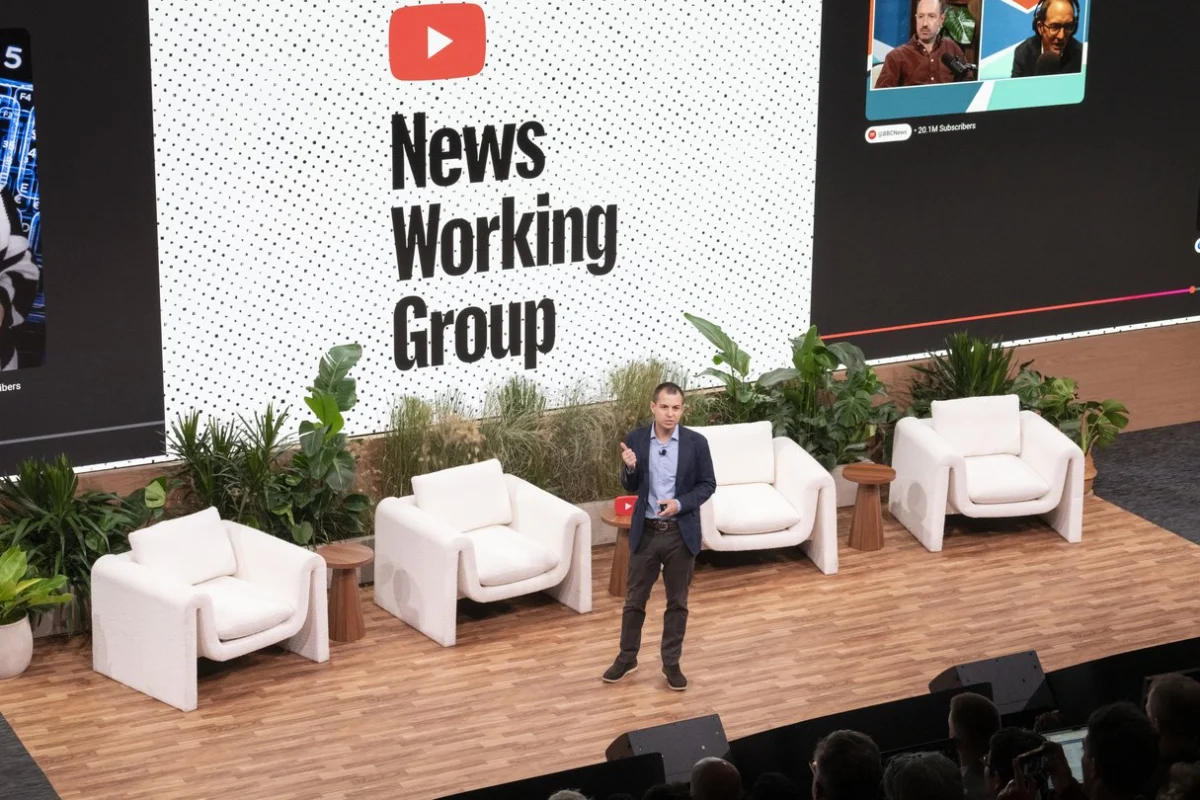
Recognizing this evolution, YouTube recently convened its 14th annual News Working Group in New York City. The summit brought together more than 100 global news leaders—ranging from massive legacy broadcasters to independent, next-generation digital reporters—to address the intersection of rapid technological advancement and the imperative of journalistic integrity. As the platform looks toward the future, it has unveiled a tripartite strategy designed to support news organizations in storytelling, monetization, and the critical defense of digital identity.
1. Advanced Creative Tools: The New Editorial Sounding Board
The velocity of the modern news cycle demands that editorial teams make split-second decisions regarding packaging, headlines, and visual presentation. In the past, these decisions were often based on intuition or legacy best practices. Today, YouTube is introducing a suite of AI-integrated features within YouTube Studio designed to act as an "editorial assistant" for newsrooms.
Optimizing the Narrative
The new suite of tools offers more than just data analytics; it provides actionable, real-time feedback on narrative flow, pacing, and storytelling structure. For a newsroom under pressure to break a story, these features allow teams to test hooks and visual formats before—or even shortly after—publication.
Cassie Thornton, VP of Video and Strategy Operations at Dow Jones, highlighted the necessity of this shift: "Fast-moving news cycles require us to make split-second editorial and packaging decisions daily. The integrations of insights and feedback will allow our digital teams to optimize our coverage performance, ensuring our reporting finds its audience."
Dynamic Testing and Data-Driven Packaging
One of the most anticipated rollouts is the introduction of advanced A/B testing for video packaging. Journalists will soon be able to test different hooks, thumbnails, and visual styles to see what resonates most with their specific audience segments. Furthermore, YouTube’s new "dynamic thumbnail" feature automatically serves the best-performing image to different viewers, maximizing click-through rates without requiring manual intervention from a graphic designer.
"Ask Studio," another upcoming feature, leverages historical data from an organization’s past coverage. By reviewing previous successful content, it can suggest refreshed thumbnails or packaging strategies for new reporting, effectively recycling institutional knowledge to capture new viewers.

2. Revenue Sustainability: The Shift to Direct Support
The financial viability of journalism has been a point of global contention for over a decade. As traditional advertising models fluctuate, news organizations are increasingly looking toward direct-to-consumer revenue streams. YouTube’s response has been a doubling down on its "Channel Memberships" program, which has already facilitated over $1.5 billion in payouts to creators over the last five years.
Enhancing the Member Experience
To further empower publishers, YouTube is transforming the membership experience from a simple donation button into a comprehensive ecosystem. The new "in-app hub" for exclusive content allows publishers to gate investigative pieces, behind-the-scenes footage, or deep-dive analysis for their most dedicated supporters.
Additionally, new video preview features allow prospective members to watch a snippet of exclusive content before committing, lowering the barrier to entry. Perhaps most significantly, the introduction of "members-only communities" offers a dedicated space for journalists to engage in direct dialogue with their audience. This fosters a sense of transparency and accountability, turning passive viewers into an active, invested community that sustains the newsroom’s operational costs.
3. Protecting Truth: Safeguarding Identity in the AI Era
Perhaps the most pressing concern raised at the 14th News Working Group was the threat posed by AI-generated deepfakes and the misappropriation of a journalist’s likeness. In an era where misinformation can be generated at scale, the ability for a news organization to verify its identity is a matter of public safety.
The Evolution of Likeness Detection
YouTube has been at the forefront of implementing defensive AI tools. While the platform has already deployed "Likeness Detection" for visual imagery, it is now expanding these protections to include the human voice.
"If someone can fake my likeness to report false news, trust is instantly questioned," noted Jon Laurence, VP of Production at Newpress. "YouTube has shown real leadership with these tools—which are critical for protecting our work and defending our identity at the pace the AI era requires."
The upcoming integration of voice-matching with existing facial-detection software represents a major leap in accuracy. By creating a biometric layer of protection, YouTube aims to make it significantly harder for malicious actors to impersonate legitimate reporters. Furthermore, by bringing these tools directly into the YouTube mobile app, the platform ensures that journalists can manage their digital safety and report unauthorized content while on the front lines of a story, rather than waiting to return to a desk.

Chronology: The Road to the 14th News Working Group
The evolution of YouTube’s relationship with news media has not been an overnight success; it is the result of over a decade of incremental policy shifts and technological investment:
- 2012-2015: YouTube begins formalizing its relationship with major news organizations, focusing on live streaming and breaking news infrastructure.
- 2018: The launch of the "News Working Group" series begins, providing a formal feedback loop between the platform and editors-in-chief.
- 2021-2023: Significant investment in "breaking news" shelves and authoritative sources to combat misinformation during global crises.
- 2024: YouTube integrates early AI-assisted editing tools into YouTube Studio, responding to the rise of generative AI.
- 2025: A landmark year where viewership on connected TVs eclipses previous mobile-only trends, prompting a re-evaluation of how news is produced for the "living room" experience.
- September 2026: The 14th News Working Group in NYC focuses exclusively on the "AI-Journalism" paradox—how to use AI for growth while mitigating its risks for deception.
Implications for the Future of News
The implications of YouTube’s recent strategy are profound. By providing newsrooms with the same caliber of data analytics used by entertainment creators, YouTube is essentially helping news organizations move from a "broadcast" model to a "community-growth" model.
However, the transition is not without challenges. The reliance on algorithmic feedback and AI-driven packaging raises questions about the "sensationalization" of news. If the algorithm prioritizes the most engaging thumbnail, will complex, nuanced stories struggle to find an audience? YouTube contends that its new tools are designed to amplify quality reporting by ensuring it reaches the right demographic, rather than changing the nature of the reporting itself.
Furthermore, the emphasis on direct monetization signals a future where news organizations are less reliant on volatile ad markets and more reliant on the loyalty of their specific viewers. This could lead to a more fragmented media landscape, but one that is arguably more resilient and transparent.
As the industry moves toward 2027, the role of the platform is shifting from a mere "hosting service" to a "partner in production." By safeguarding the identity of journalists and providing the tools to sustain them financially, YouTube is positioning itself as a central pillar of the global news ecosystem. Whether this partnership can successfully preserve the bedrock of objective journalism in an era of infinite, AI-generated content remains the industry’s defining challenge. Yet, for now, the path forward appears to be one of cautious, tech-enabled optimism.