In an era defined by hyper-fragmentation and the rapid proliferation of digital touchpoints, the modern marketer faces an existential challenge: how to maintain a cohesive brand narrative when consumer attention is split across a dozen different channels. For Bruce Williams, CEO of Dentsu X North America, the answer lies not in more technology, but in a fundamental restructuring of how media, data, and creative teams interact.
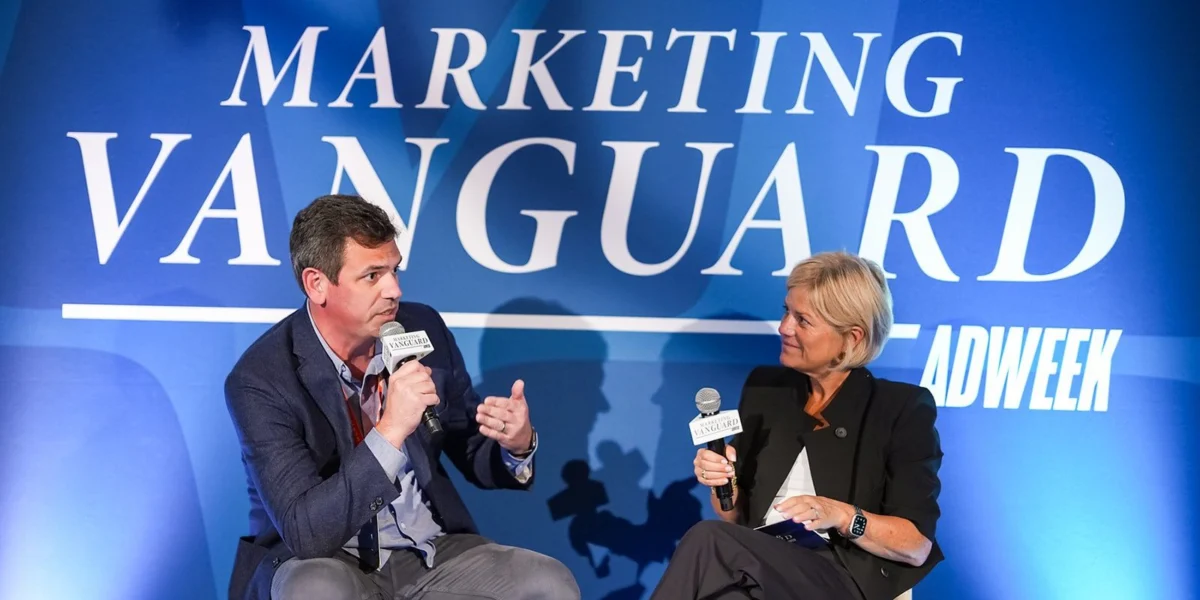
Speaking at ADWEEK’s Brandweek 2026 in Atlanta, Georgia, Williams laid out a compelling vision for the future of advertising. During a keynote session titled “Media As a Flywheel For Growth,” hosted by ADWEEK Chief Brand and Community Officer Jenny Rooney, Williams argued that the traditional “siloed” approach to campaign management is no longer merely inefficient—it is an impediment to business growth.
The Problem: The Myth of Experience Planning
For years, the industry has relied on a methodology known as “experience planning.” On the surface, this sounds productive: it involves stitching together media, data, content, and technology to craft consumer journeys. However, Williams contends that this practice is inherently flawed because it relies on compartmentalization.
“We have spent years trying to bridge gaps between departments that were never designed to communicate in real-time,” Williams noted during the session. When teams operate in silos, the resulting campaign is often a patchwork of disconnected interactions. A consumer might see a compelling ad on social media, only to be met with a landing page that ignores their previous engagement or a retail experience that feels entirely divorced from the digital promise.
This fragmentation creates “leaky buckets” in the marketing funnel. If the technology stack doesn’t talk to the content creators, and the media buyers aren’t aligned with the local market intelligence, the brand experience becomes disjointed. To the consumer, this friction is palpable, often resulting in a diminished perception of the brand and a failure to convert.
The Pivot: From Planning to “Experience Platforming”
To solve for fragmentation, Williams is advocating for a paradigm shift he calls “experience platforming.” Unlike traditional planning, which treats the campaign as a series of linear steps, platforming is a systematic integration of capabilities. It requires melding teams—creative, media, data science, and tech—into a unified engine that operates as a single organism.
“The goal is for the full campaign to work together, not as a collection of individual executions, but as a singular, responsive entity,” Williams explained. This requires more than just a shared Slack channel; it demands a fundamental shift in corporate culture and operational architecture. By breaking down the walls between the agency and the brand, Dentsu X aims to create a feedback loop where every data point informs the next creative iteration.
Case Study: Heineken and the Power of Bidirectional Intelligence
Williams provided a concrete example of this philosophy in action through Dentsu X’s partnership with Heineken. The brewing giant faced the classic challenge of multinational marketing: how to maintain global brand consistency while remaining hyper-relevant to local markets.
The solution was to build a system that enabled bidirectional information flow between the agency and the brand. By centralizing competitive data, store-level performance metrics, and local market intelligence, Dentsu X and Heineken created a “growth flywheel.”
How the Mechanism Worked:
- Data Aggregation: The system ingested real-time information from local markets, including point-of-sale data from retailers and consumer sentiment metrics.
- Cross-Functional Integration: This data was not siloed in a BI report; it was funneled directly into decision-making tools accessible to both brand managers and agency media buyers.
- Activation at Scale: Using this intelligence, the team could adjust media spend, messaging, and promotional tactics at a local level in real-time.
- Closing the Loop: The outcomes of these localized activations were fed back into the central system, benefiting franchisees, stakeholders, and other corporate divisions.
This approach turned the campaign into a living, breathing asset. Instead of running a static three-month campaign, the teams were constantly optimizing, effectively turning media into a “flywheel” that gained momentum as more data was processed.
The Chronology of Change: Adapting to a Fragmented Landscape
The shift toward this integrated model has been years in the making.
- Pre-2020: The industry was dominated by “Channel-First” thinking. Advertisers focused on the efficacy of individual channels (e.g., “How do we maximize Facebook ROI?”).
- 2020-2023: The rise of “Omnichannel” became the industry mantra, yet it was mostly treated as a tech implementation problem rather than an operational one. Brands bought expensive marketing clouds but kept their internal teams separate.
- 2024-2025: The “Data-Privacy” crunch forced brands to move away from third-party tracking, making first-party data and internal integration essential for survival.
- 2026 and Beyond: We are now entering the era of “Experience Platforming,” where agility, scrappiness, and deep integration are the only ways to achieve scale in a cluttered digital environment.
The Implications: What This Means for the Industry
The shift championed by Williams carries significant implications for agencies and brand-side marketers alike.
For Agency Partners:
The agency model is evolving from a service provider to an operational partner. As Williams suggested, agencies can no longer simply execute media buys. They must understand the client’s internal systems, supply chain, and retail dynamics to be effective. The demand for “scrappy and nimble” solutions means that agencies must be willing to iterate rapidly, moving away from rigid, multi-month planning cycles in favor of agile workflows.
For Brand Executives:
For CMOs, the challenge is structural. “Experience platforming” requires the dismantling of internal fiefdoms. If the e-commerce team does not report to the same strategic goals as the brand team, the flywheel will stall. Companies must be willing to invest in the “plumbing” of their organizations—the data infrastructure that allows information to flow between the front office and the field.
The Role of Technology:
Technology is the enabler, not the end-all. Williams was clear that simply buying a new platform will not solve fragmentation. The technology must be used to facilitate human collaboration. When people are enabled to act on the same data set simultaneously, the brand gains a competitive advantage that is difficult for rivals to replicate.
Conclusion: Building for the Future
As the ADWEEK session concluded, the consensus was clear: the era of the “siloed specialist” is coming to an end. Success in the current landscape requires a holistic view of the consumer journey where media is not an end-of-funnel expense, but the primary driver of growth.
Williams’ focus on being “scrappier and nimbler” is a direct response to the complexity of the market. While large-scale solutions are necessary to maintain brand visibility, the ability to pivot based on local market intelligence is what drives conversion. By treating media as a flywheel, Dentsu X is proving that the most powerful tool in a brand’s arsenal is not the media buy itself, but the integrated system that decides where, when, and how that media is deployed.
As marketers look toward the remainder of the decade, the lesson from Dentsu X is simple: stop planning for experiences and start building platforms for growth. In a world of infinite fragmentation, the only way to stand out is to ensure your internal operations are as connected as the consumers you are trying to reach.