







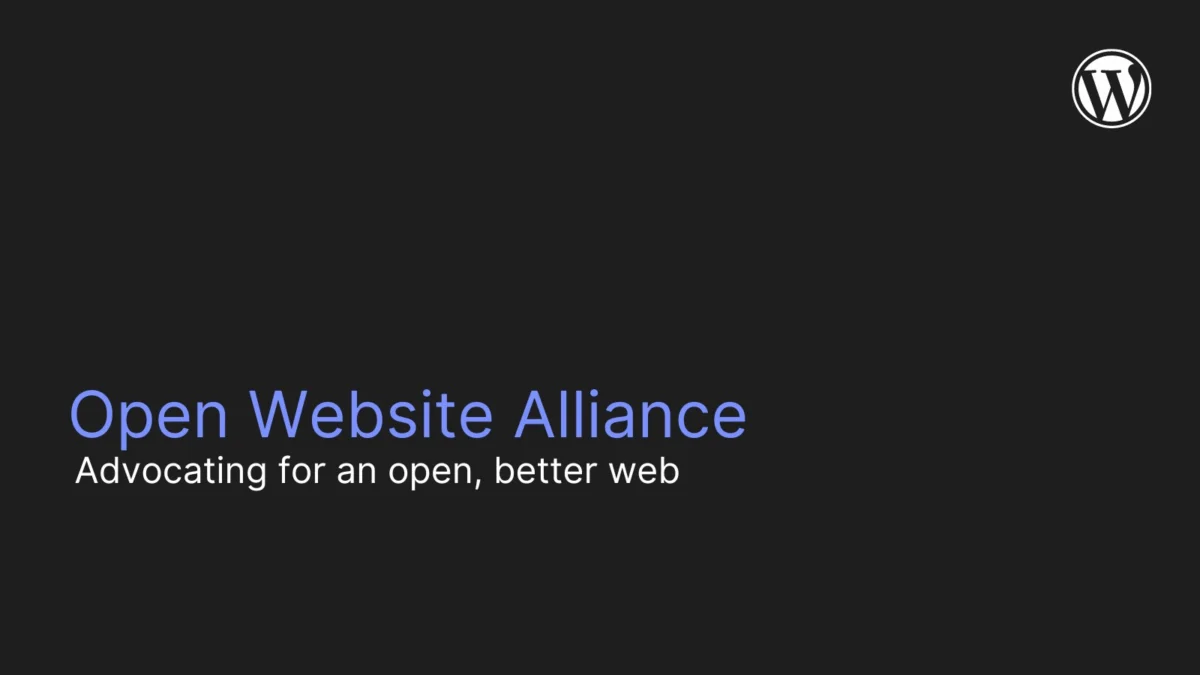
Global Web Ecosystem — In a significant development for the open-source software movement, leadership representing the WordPress Foundation has officially stepped into the role of President of the Open Website Alliance (OWA). This coalition unites the primary community organizations behind four of the world’s most influential content management systems (CMS): WordPress, Drupal, Joomla!, and TYPO3.
The presidency of the Alliance operates on a rotating basis among its constituent members. This leadership transition marks a critical juncture for the collective, reinforcing the shared mission of these foundational platforms to advocate for digital sovereignty, collaborative development models, and open-source principles on a global scale. As proprietary platforms and restrictive licensing models continue to challenge the digital landscape, the unified voice of the OWA aims to secure a sustainable future for community-driven web infrastructure.
Main Facts
The Open Website Alliance functions as a strategic coalition and advocacy body representing the organizations and communities powering a vast majority of the global web. While numerous open-source initiatives focus strictly on foundational digital infrastructure—such as operating systems, programming languages, and databases—the OWA member projects occupy a distinct and vital layer of the technology stack.
- The Member Ecosystem: The Alliance brings together the community organizations behind WordPress, Drupal, Joomla!, and TYPO3.
- Core Economic Footprint: Together, these four content management systems power millions of websites globally, ranging from small-business landing pages and personal blogs to enterprise-level digital experiences for multinational corporations, educational institutions, and governments.
- Leadership Structure: The presidency of the OWA rotates periodically among its member organizations. The current presidential term is held by the representative of the WordPress Foundation, who will steer the Alliance’s strategic advocacy and cross-project initiatives.
- Core Mission: The OWA advocates for open-source policies, shares operational best practices, addresses shared regulatory and technical challenges, and defends the fundamental freedoms of users and developers to study, modify, and distribute website software.
Chronology of Collaboration
The formation and maturation of the Open Website Alliance did not happen overnight; it is the result of years of growing cooperation among open-source CMS communities facing shared external pressures.
The Foundation Years and Early Alignment
Long before the formal establishment of the OWA, the developer and contributor communities behind WordPress, Drupal, Joomla!, and TYPO3 frequently crossed paths at international conferences, developer camps, and standards-setting bodies. Despite competing in the marketplace for market share and user adoption, these projects shared a common DNA rooted in the General Public License (GPL) and community-driven governance. Over successive decades, leaders from these projects recognized that while their user interfaces and codebases differed, their regulatory, legal, and ecosystem-wide challenges were remarkably similar.
2023: The Regulatory Catalyst (The European Union’s Cyber Resilience Act)
The definitive catalyst for formal organizational alignment emerged in 2023, driven by regulatory developments originating in the European Union. When the EU introduced the proposed text of the Cyber Resilience Act (CRA), open-source communities across Europe and globally raised profound alarms.
As initially drafted, the CRA’s strict compliance frameworks, liability clauses, and heavy administrative burdens threatened to criminalize or severely penalize open-source developers and non-profit foundations who freely distribute software. Recognizing that individual lobbying efforts would have limited impact against sweeping European legislation, WordPress, Drupal, Joomla!, and TYPO3 joined forces. They coordinated public responses, issued joint warnings, and engaged directly with policymakers to explain how open-source software development differs fundamentally from corporate, closed-source commercial software production.
2024: Formalizing the Open Website Alliance
Building directly on the momentum and success of their joint advocacy regarding the Cyber Resilience Act, the leadership of the participating projects formalized their collaboration. In 2024, WordPress officially announced its participation in the newly minted Open Website Alliance. This institutionalized framework transformed ad-hoc lobbying into a permanent, proactive alliance designed to monitor global policy shifts, pool legal and operational resources, and champion open web standards.
2026: Broadening Horizons and Leadership Rotation
In 2026, the Alliance expanded its mandate beyond regulatory defense into broader technological advocacy. Notably, WordPress signed the "Open Weights and American AI Leadership" letter, aligning CMS communities with broader debates surrounding artificial intelligence transparency. Shortly thereafter, the presidency of the OWA rotated to the WordPress Foundation representative, cementing a new chapter of coordinated action focused on digital democratization, open-source AI, and user freedom.
Supporting Data and Ecosystem Impact
To understand the weight of the Open Website Alliance, one must examine the staggering scale of the digital infrastructure governed by its member communities. Content management systems are the invisible architecture of the modern internet.
Market Penetration and Web Dominance
- WordPress: Powering over 43% of all websites on the internet, WordPress represents the largest single segment of the CMS market, driven by a massive ecosystem of themes, plugins, and localized communities spanning every continent.
- Drupal: Renowned for its enterprise-grade security, scalability, and complex data handling capabilities, Drupal is the platform of choice for major government agencies, global universities, and Fortune 500 enterprises.
- Joomla!: Offering a powerful balance of ease of use and advanced extensibility, Joomla! serves millions of active sites worldwide, supported by a fiercely dedicated international volunteer base.
- TYPO3: A powerhouse in the European enterprise market, TYPO3 provides sophisticated multi-site, multi-language management capabilities for large-scale corporate and institutional networks.
Economic and Societal Value
Collectively, the OWA member projects support an economy worth tens of billions of dollars annually. Millions of digital agencies, freelance developers, designers, copywriters, and hosting providers build their livelihoods on top of these platforms. Furthermore, the democratic nature of these projects means that millions of individuals—regardless of geographic location or economic status—have access to publishing tools that rival proprietary enterprise software costing hundreds of thousands of dollars.
Official Responses and Perspectives
The transition of the OWA presidency and the ongoing mission of the Alliance have elicited strong commentary from leaders across the open-source landscape.
Perspectives on Regulation and Economic Reality
In a public statement regarding the assumption of the OWA presidency, leadership emphasized the unique position that content management systems hold within the digital economy:
"While many open source projects focus on underlying digital infrastructure, our content management systems power the websites where businesses reach customers and sell products and services. We asked policymakers to account for that economic role when setting security requirements, while respecting how communities of developers, translators, educators, and other contributors build and maintain the software."
This sentiment underscores a persistent challenge in technology policy: legislators often view software through a binary lens of massive commercial tech monopolies versus isolated hobbyist projects. The OWA serves as an essential bridge, educating lawmakers on the reality of non-profit, foundation-backed, community-driven ecosystems that drive global commerce without venture capital backing or proprietary lock-in.
Commitment to Open Standards and Freedom
The philosophical foundation of the OWA is anchored in the belief that software should serve humanity openly. As noted in communications surrounding the Alliance’s charter:
"We share a belief that everyone should have the freedom to use, change, and share the tools they rely on."
This commitment extends beyond traditional CMS codebases into emerging technological frontiers, such as artificial intelligence. By participating in initiatives like the open-weight AI advocacy letters, the Alliance demonstrates that its member organizations are prepared to defend openness not just for websites, but for the entire next generation of digital tools. Leadership has actively encouraged developers, users, and stakeholders to review the Open Website Alliance Charter to understand the shared ethical and operational commitments binding the member foundations together.
Implications for the Future of the Open Web
The leadership of the WordPress Foundation at the helm of the Open Website Alliance carries profound implications for the future of the internet. As digital spaces face increasing centralization, regulatory scrutiny, and the rise of proprietary AI systems, the organized front presented by WordPress, Drupal, Joomla!, and TYPO3 acts as a bulwark for a decentralized web.
1. Unified Regulatory Defense
Governments worldwide are increasingly scrutinizing digital platforms, data privacy, cybersecurity, and artificial intelligence. By speaking with a unified voice, OWA member organizations can punch above their weight, ensuring that regulatory compliance frameworks crafted in Brussels, Washington, DC, and other capitals do not inadvertently crush open-source innovation under mountains of red tape designed for multi-trillion-dollar corporations.
2. Cross-Pollination of Best Practices
Beyond external advocacy, the Alliance serves as an invaluable internal forum. Drupal, Joomla!, TYPO3, and WordPress face similar operational hurdles: managing massive volunteer contributor bases, securing complex supply chains (such as plugin and module repositories), funding non-profit operations, and fostering diversity and inclusion. By sharing governance models, security protocols, and educational resources, all participating projects stand to become more robust and resilient.
3. Safeguarding Digital Democracy
At its core, the Open Website Alliance represents the democratization of the digital public square. When publishing tools remain free, open, and modifiable, authoritarian censorship becomes harder to enforce, and monopolistic gatekeepers lose their absolute grip on human communication.
As the WordPress Foundation steers the Open Website Alliance through its current presidential term, the global web community watches with optimism. The success of this coalition proves that fierce market competitors can set aside commercial rivalries to defend the foundational freedoms that make the open web possible for everyone.