






In the evolving landscape of web design, the balance between consistency and customization has long been a struggle. Designers often face a dilemma: build a reusable section that is too rigid to adapt, or create individual, disconnected sections that become a maintenance nightmare when global design changes are required. With the introduction of Slots in Divi 5, Elegant Themes has provided a sophisticated solution that bridges this gap, allowing developers to maintain a unified design framework while granting the freedom to inject unique, local content into specific instances.
The Evolution of Component-Based Architecture
At its core, a Component in Divi 5 acts as a "source of truth"—a master template that controls the shared structure, typography, and aesthetic of a web element. However, standard components often struggle when a single design must serve multiple purposes. For instance, a workshop section might require a schedule on one page but a booking form on another.
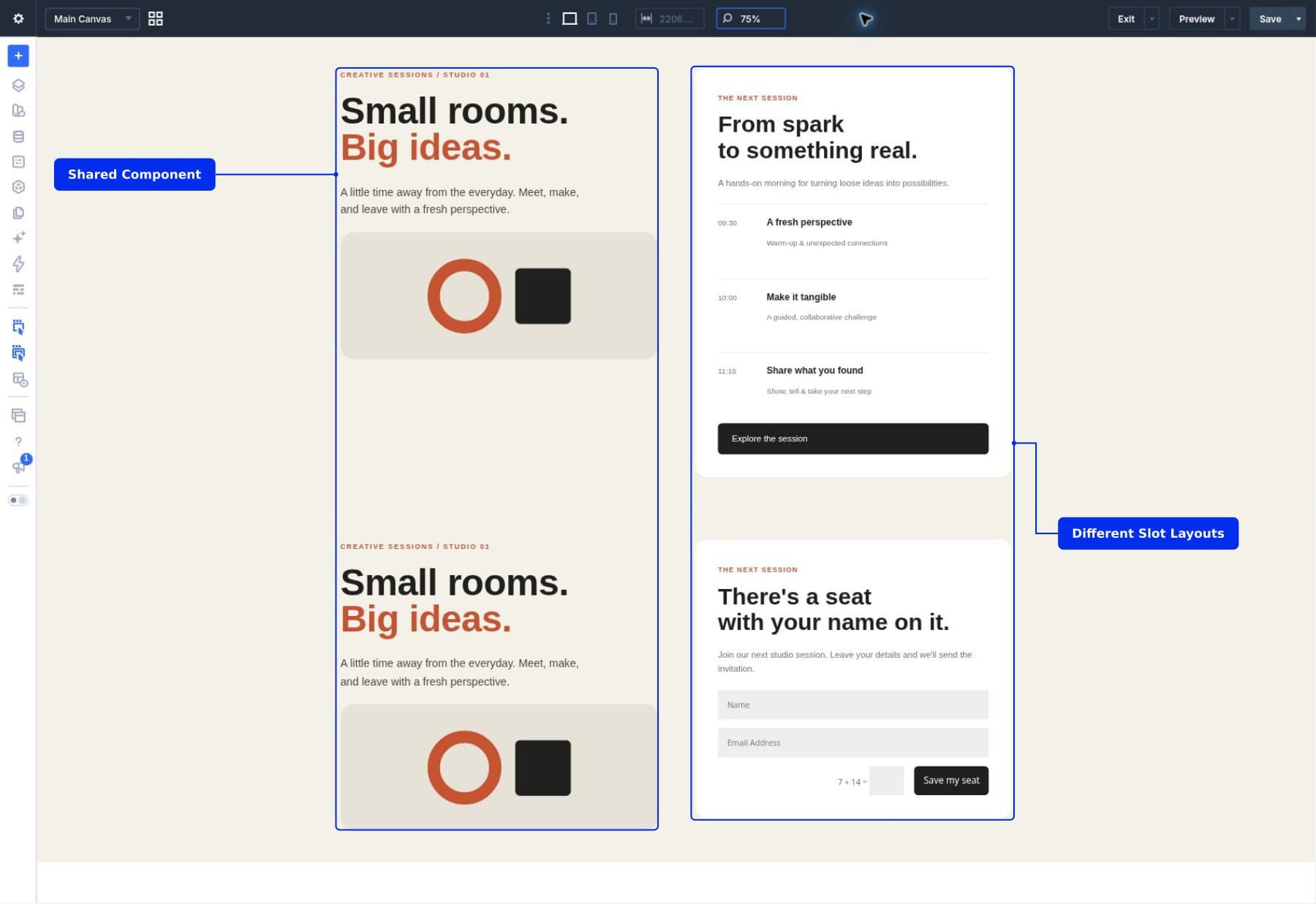
Historically, this would require creating two separate components or abandoning the component system entirely for one of the instances. Slots solve this by creating a designated "placeholder" within the component source. While the outer structure remains locked to the master component, the content within the Slot remains fully editable at the instance level. This architecture ensures that when you update the primary branding or layout of the workshop section, those changes propagate globally, while the unique schedule or form remains untouched.
A Chronological Guide to Implementing Slots
To effectively leverage Slots, one must understand the relationship between the Source (the master template) and the Instance (the specific usage on a page).
Phase 1: Preparation and Structuring
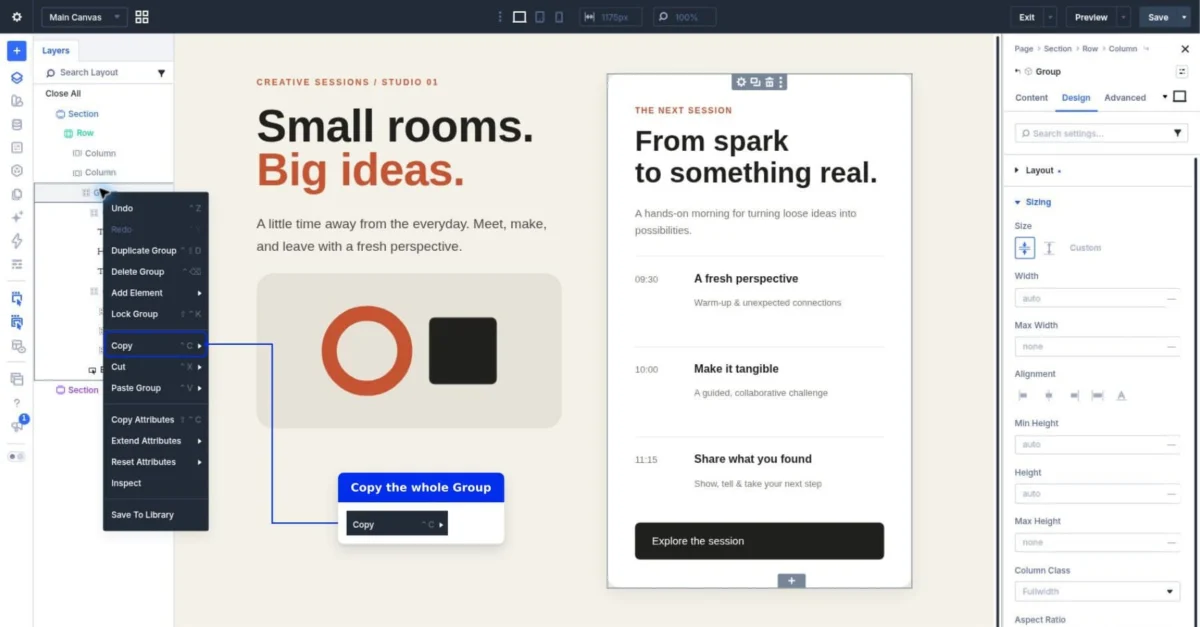
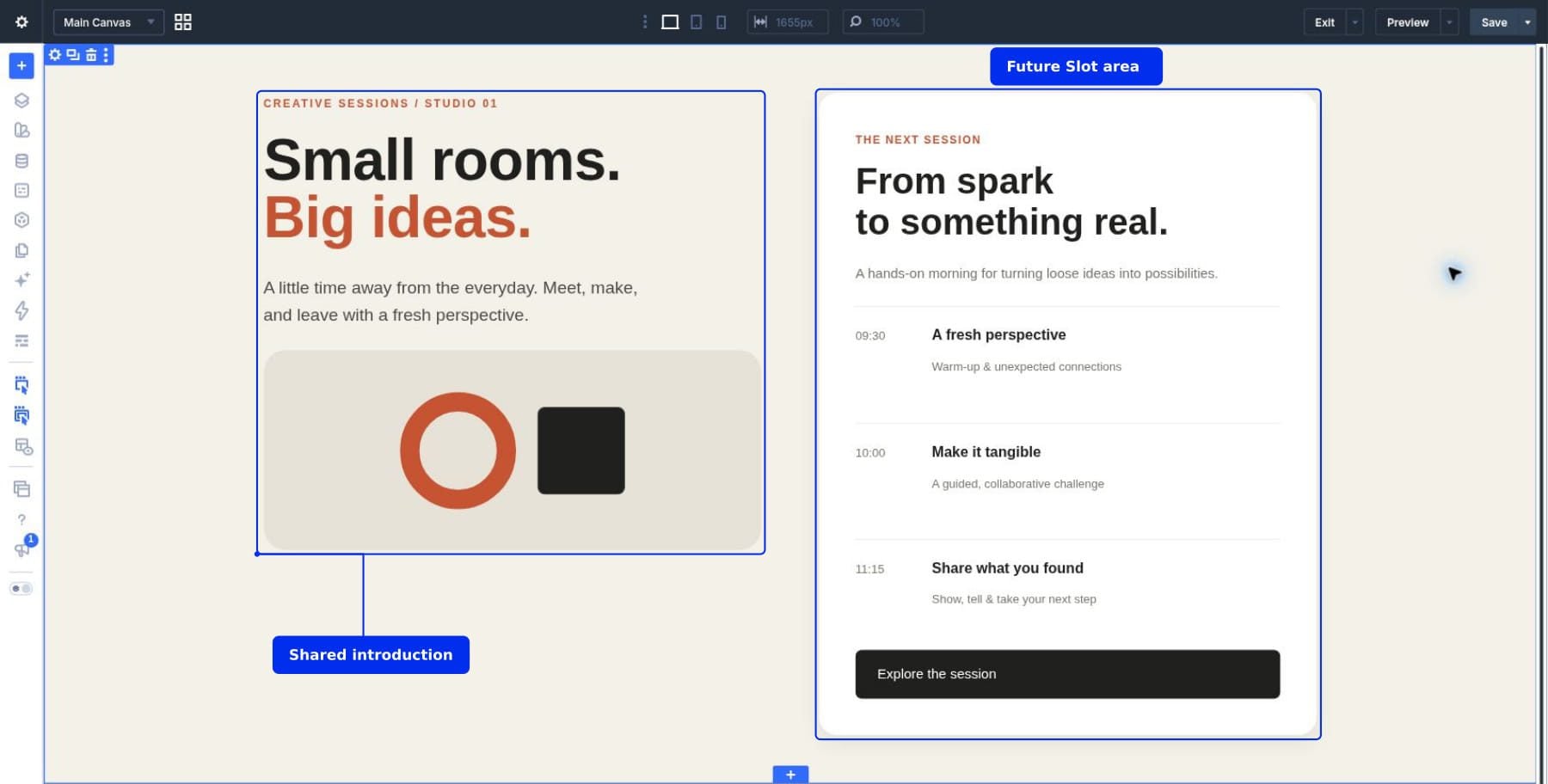
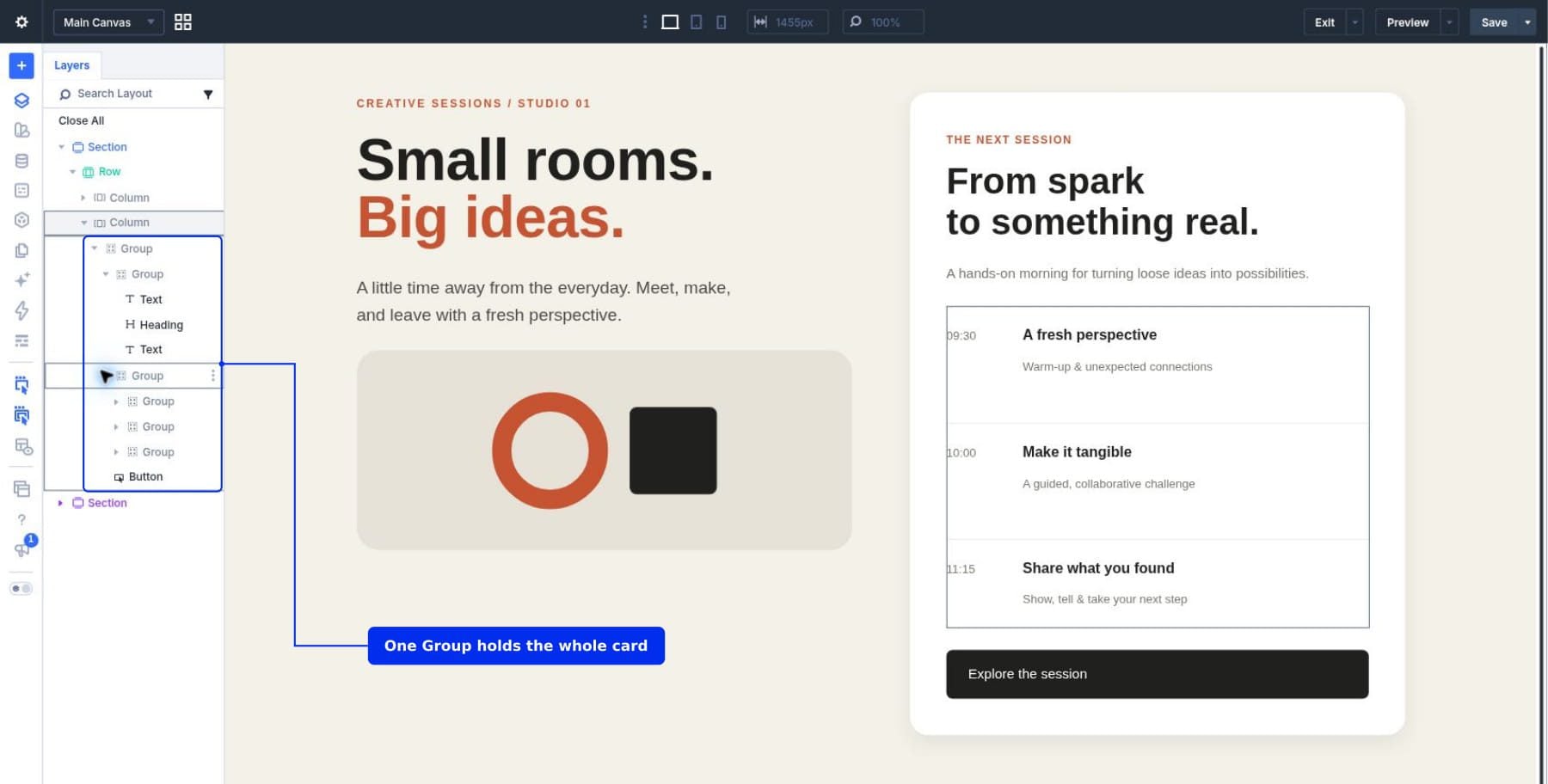
Before diving into the Divi 5 Visual Builder, it is essential to prepare your layout. Start by building a standard, non-componentized section. For a workshop example, this typically includes a two-column layout: an informational text module on the left and a functional "card" (a Group module) on the right. Grouping these elements is critical; it allows you to treat the card as a single object when you later move it into a Slot.
Phase 2: Converting to a Component
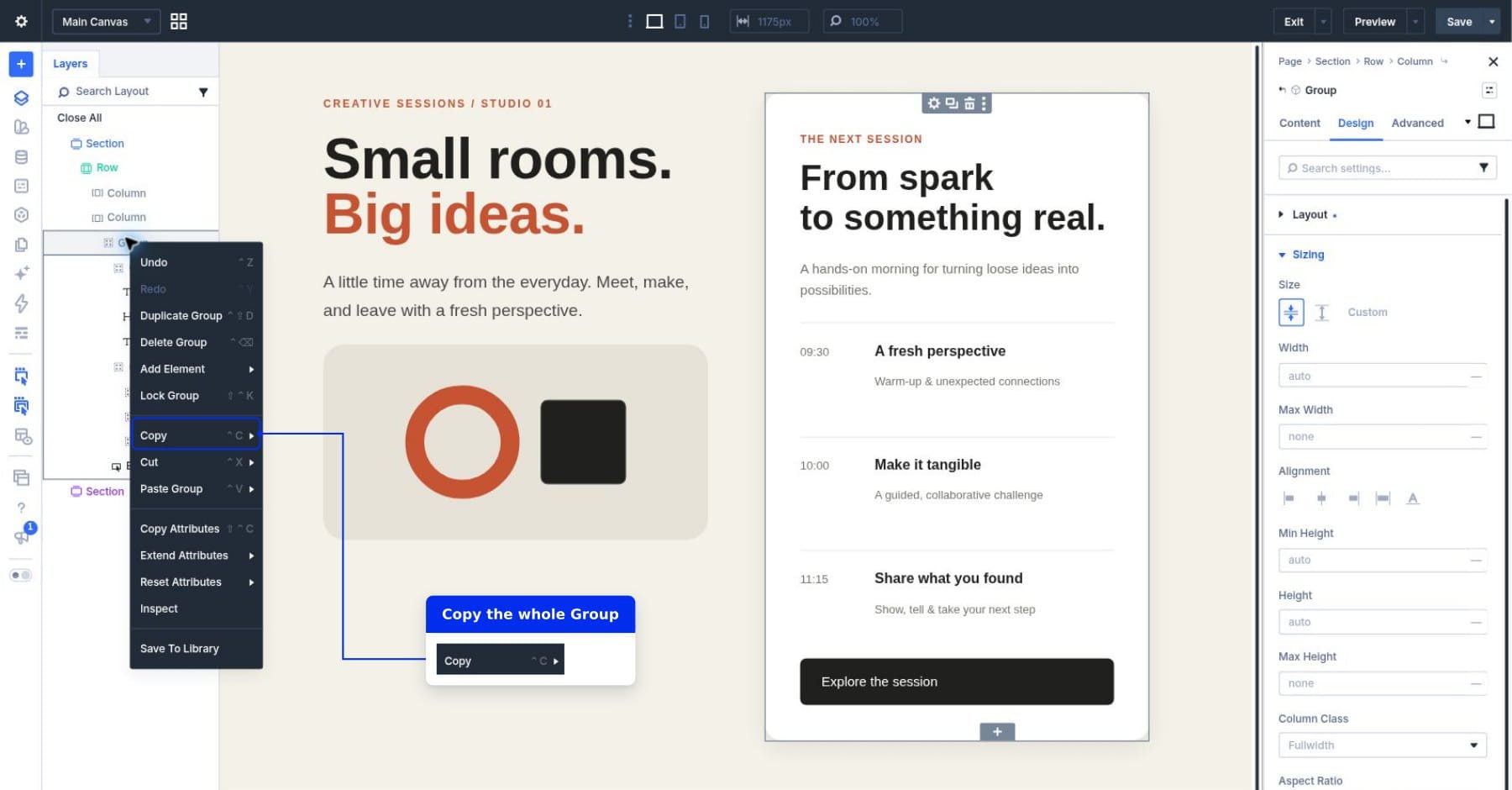
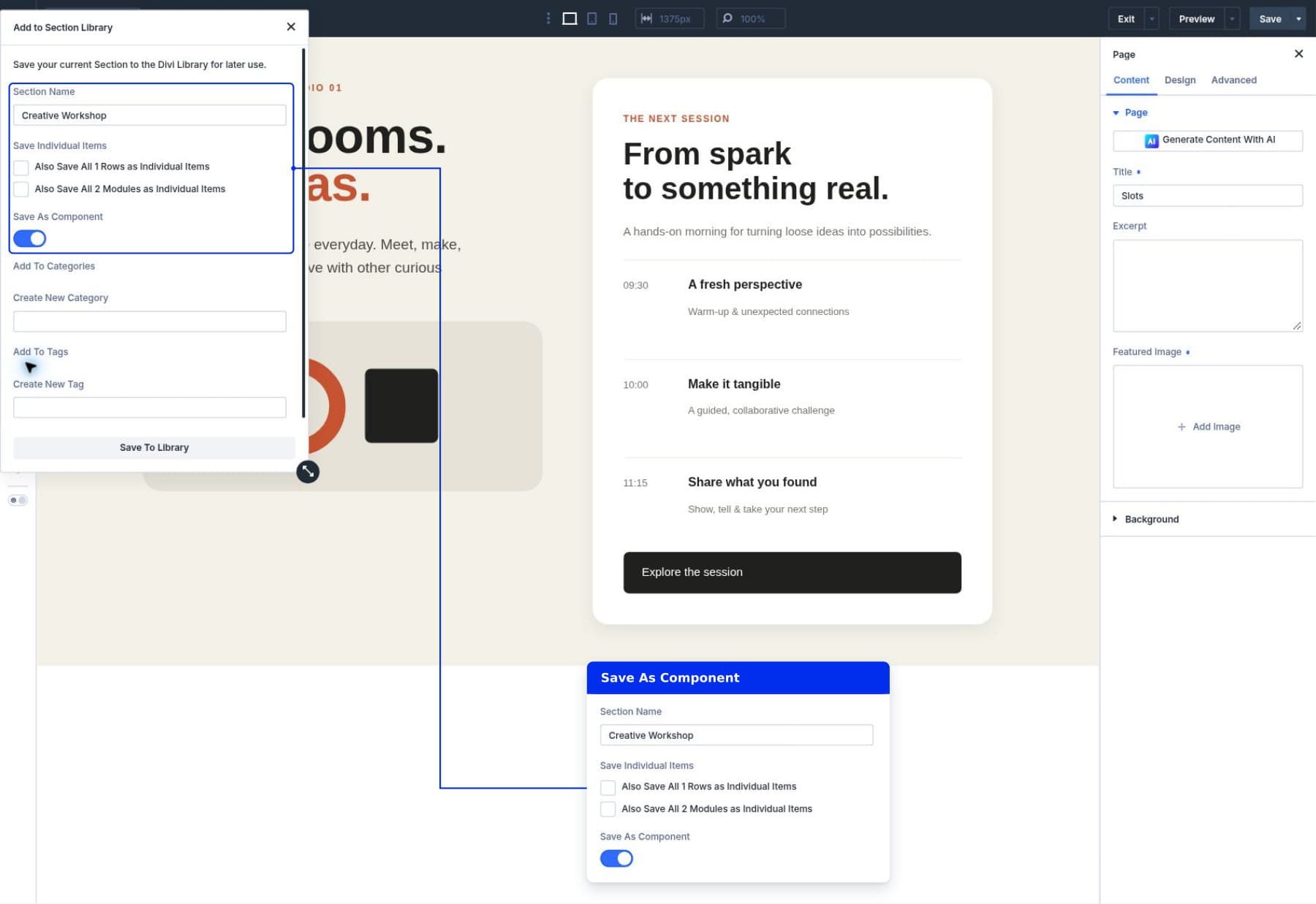
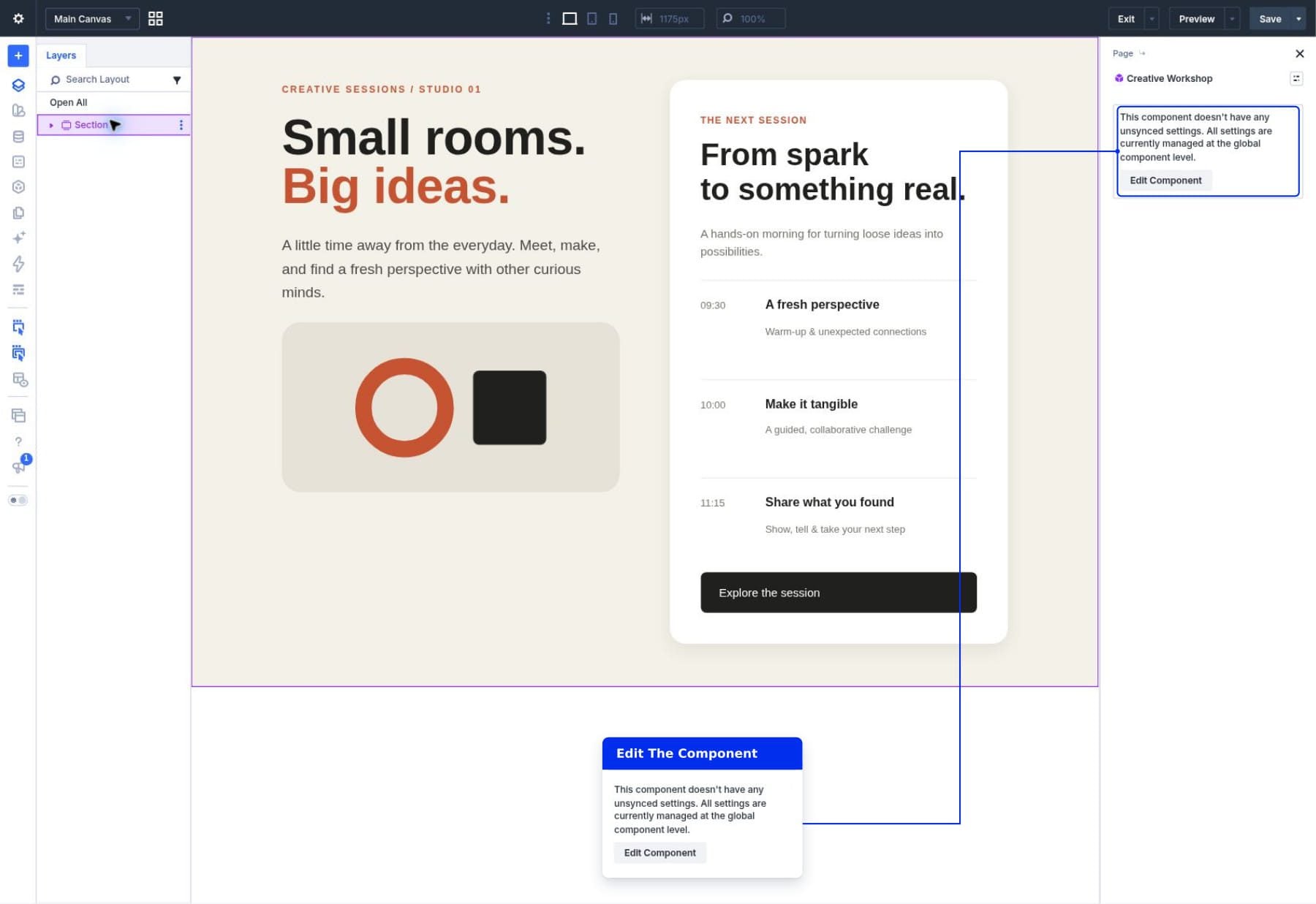
Once the layout is polished, the transition to a component is straightforward. By right-clicking the section and selecting "Save To Library" with the "Save As Component" option enabled, you establish the master source. Any subsequent changes made to this section via the "Edit Component" command will reflect across all instances of that component.
Phase 3: Defining the Slot
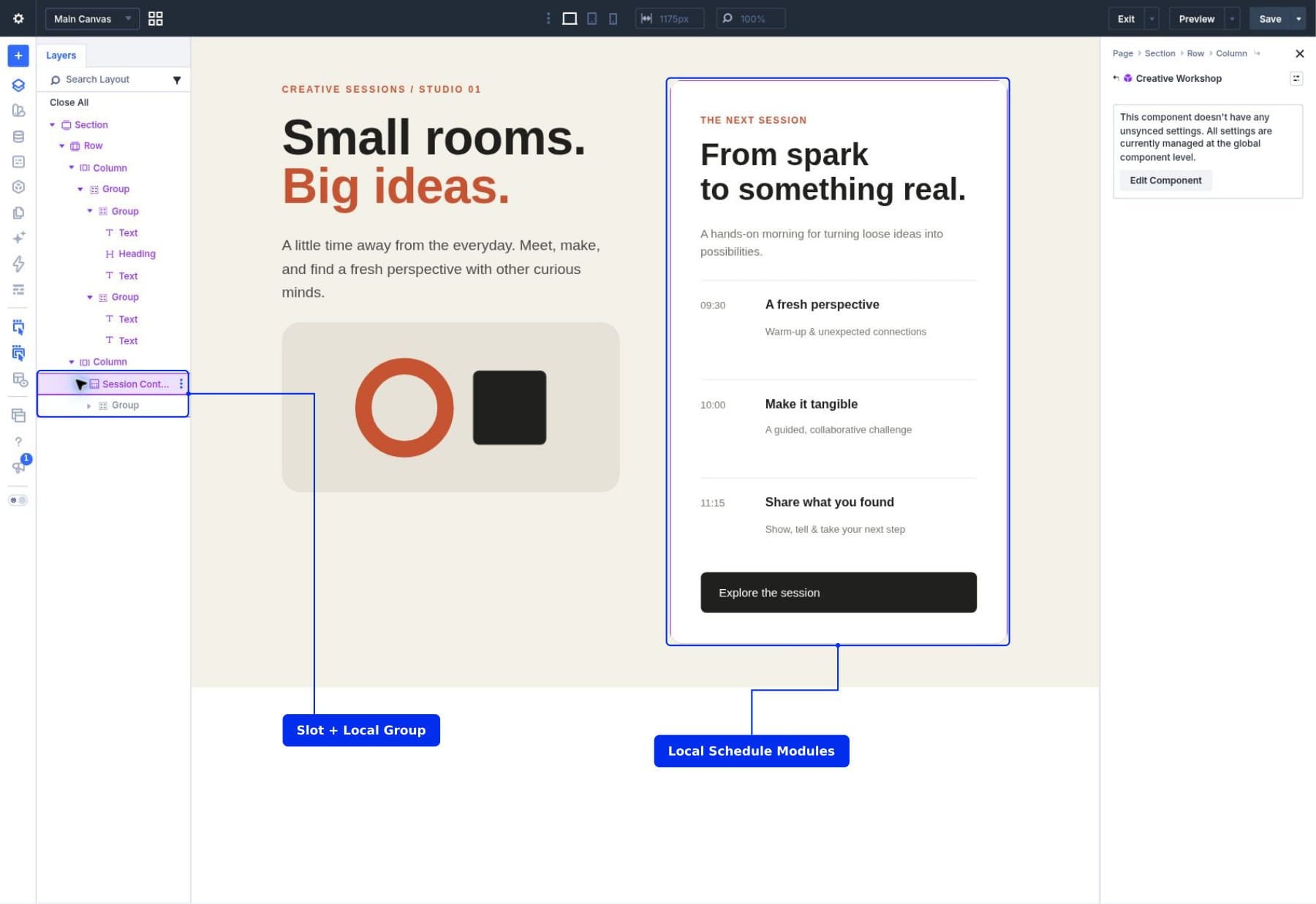
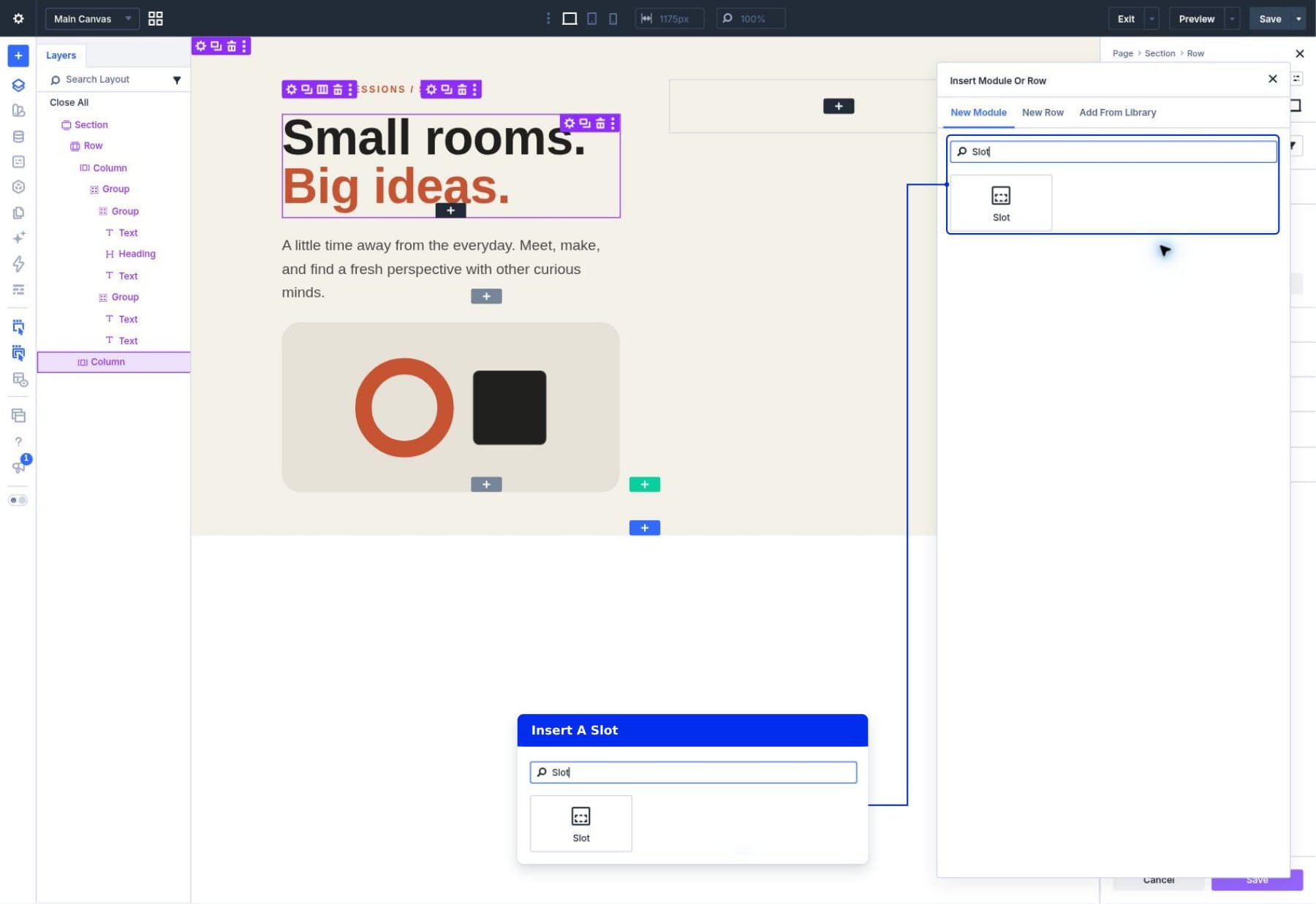
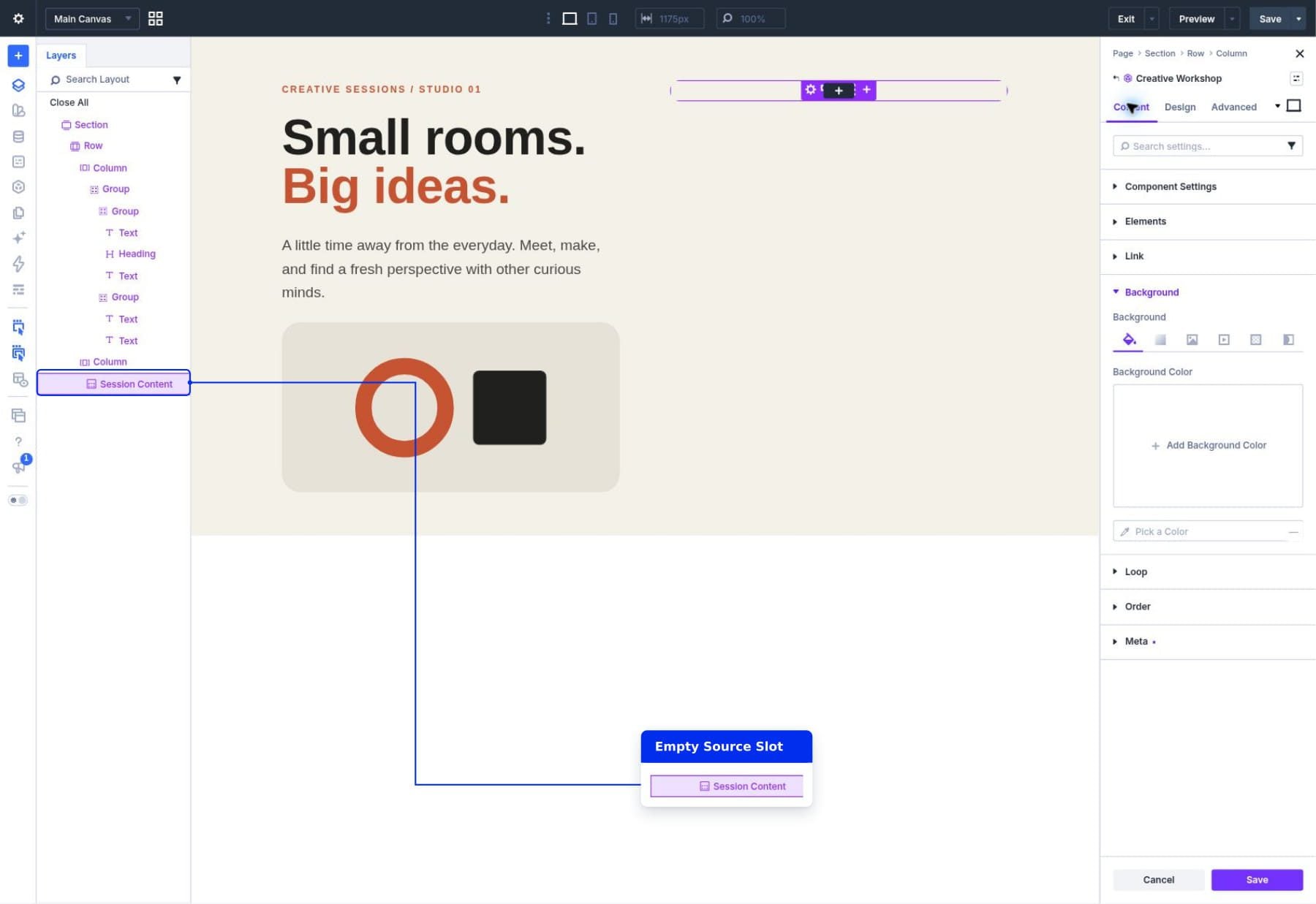
The transition from a standard component to a flexible one occurs when you replace the static content in the right-hand column with a Slot. By entering the "Edit Component" mode, you can remove the existing card and insert a Slot module. By labeling this slot (e.g., "Session Content"), you create a clear, defined boundary for where local content will live.
Phase 4: Populating the Instance
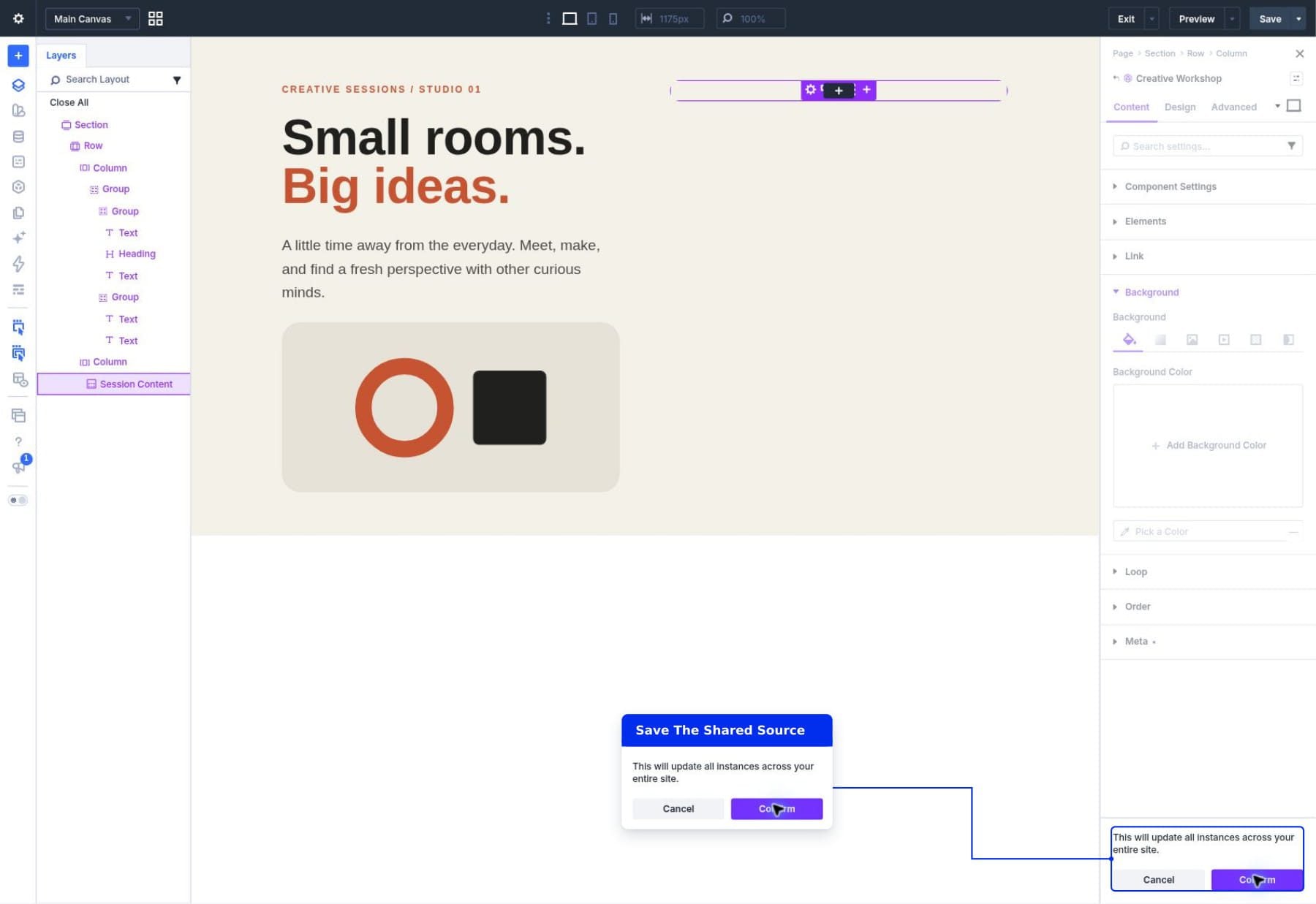
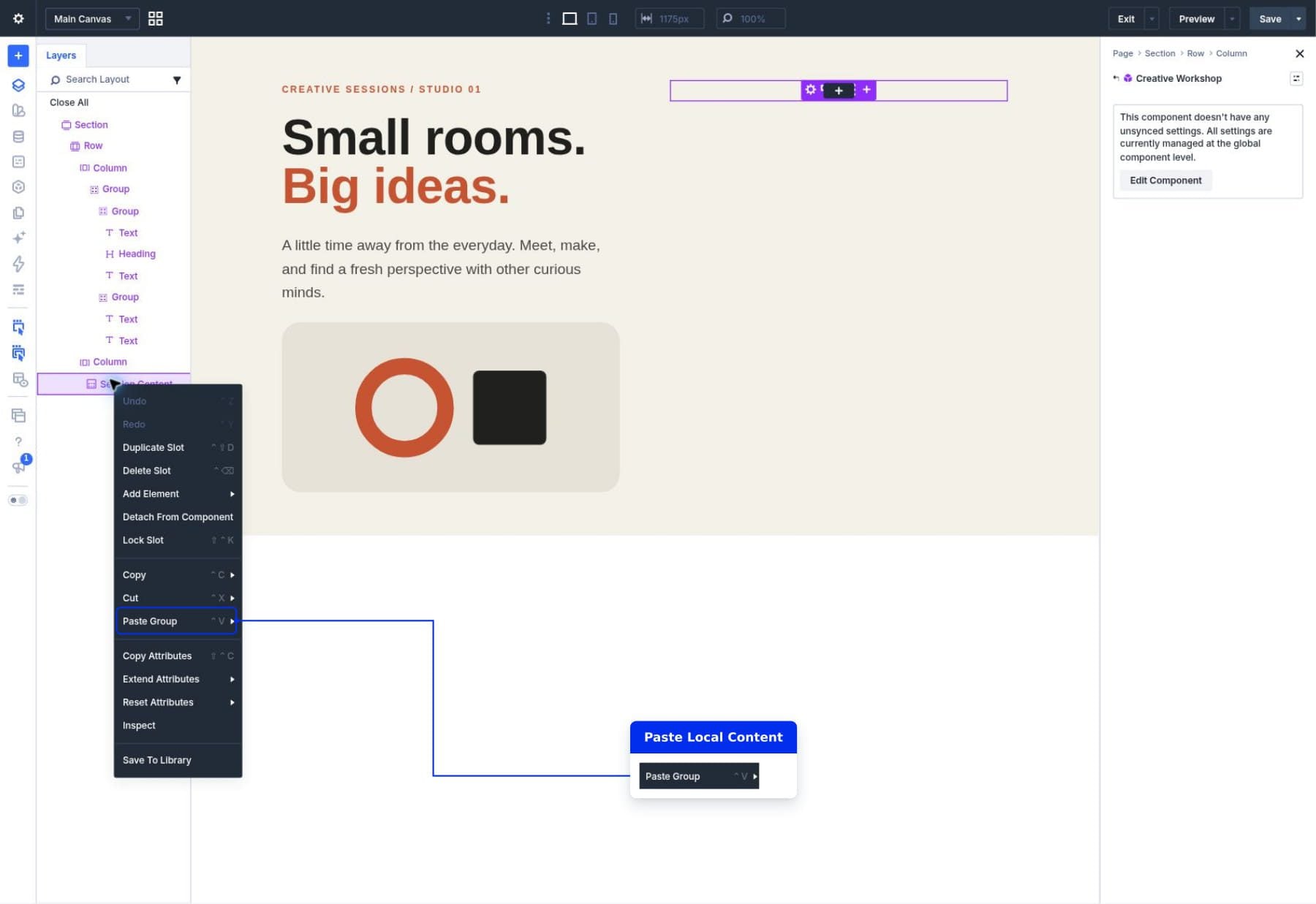
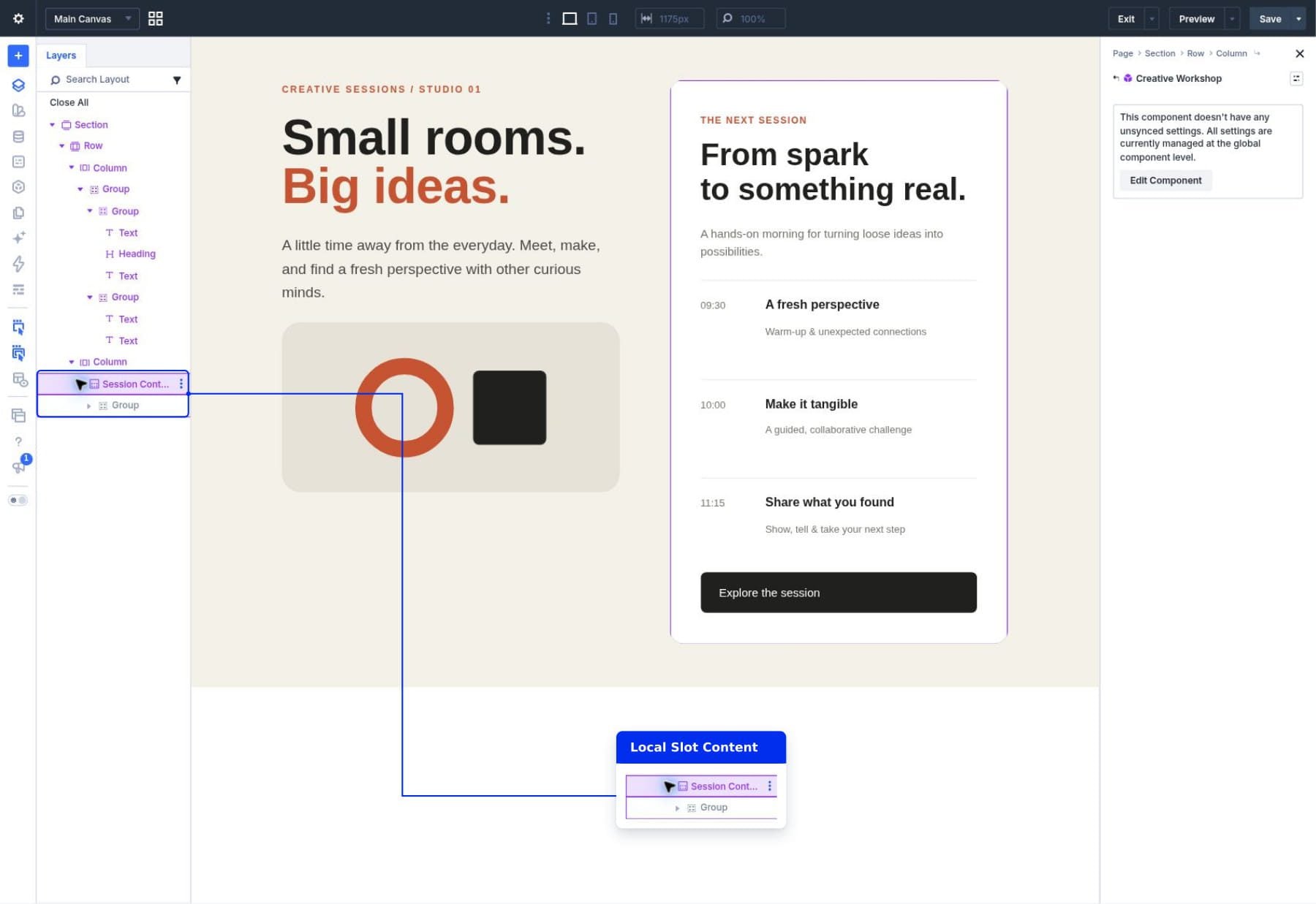
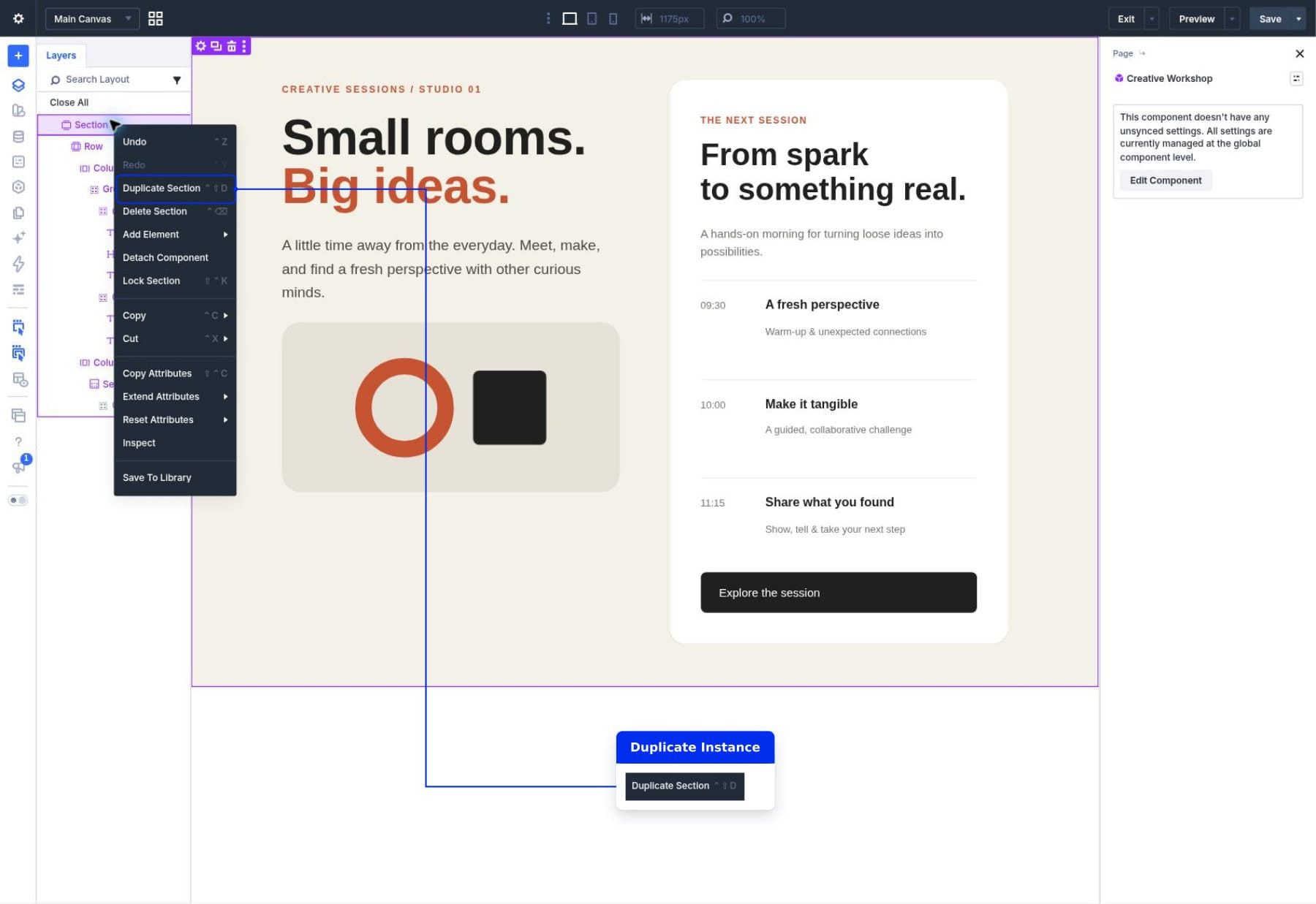
After the Slot is established in the master source, returning to the page level reveals an empty container. Here, you can paste the previously copied schedule group. Because this content is now inside a Slot, it is treated as "local." You can then duplicate the entire section to create a second instance and, within that instance’s Slot, swap the schedule for a contact form or a video module without affecting the first instance.
Supporting Data: Why Component-Based Design Matters
The shift toward component-based design is not merely a stylistic preference; it is a fundamental shift in web development efficiency.
- Maintenance Efficiency: By centralizing design changes, teams can reduce the time spent on site-wide updates by up to 70%. If a brand decides to change its primary accent color, updating the master Component immediately reflects that change across every instance of the workshop section, regardless of whether that instance contains a schedule or a form.
- Performance Optimization: Since Components in Divi 5 are rendered using optimized code structures, maintaining a shared source significantly reduces the overall weight of the DOM (Document Object Model).
- Consistency Metrics: In user experience research, consistency is a primary driver of trust. By using Slots to maintain a shared container (padding, background, border-radius) while allowing for variable internal content, users receive a consistent visual cue that reinforces brand identity while providing the specific information they need.
Official Guidance on Best Practices
According to the documentation provided by Elegant Themes, the key to mastering Slots lies in the "Separation of Concerns."
- Don’t Over-Style the Slot: Avoid applying heavy padding or complex margin settings directly to the Slot container itself. Instead, ensure the local content (the modules inside the slot) manages its own internal spacing. This prevents "double-padding" issues when different content modules have varying requirements.
- Naming Conventions: Always label your Slots clearly. As a project grows, the ability to quickly identify the purpose of a Slot within the Layers view becomes invaluable.
- Responsive Design: Always verify your Slot content on tablet and mobile viewports. Because Slot content is local, Divi’s responsive settings must be applied specifically to the modules within the slot. If a contact form needs to be full-width on mobile to avoid horizontal overflow, that setting must be applied within the instance.
Implications for Web Development
The introduction of Slots represents a significant leap forward for Divi users, moving the platform closer to the architecture used by professional React or Vue developers.
The End of Rigid Templates
Developers are no longer forced to choose between "reusable" and "flexible." This allows for the creation of sophisticated design systems where components can be shared across diverse pages of a website without sacrificing the nuance required for specific user journeys.
Scalability for Agencies
For web agencies, this feature is transformative. An agency can now build a library of "Smart Components" for their clients. A "Call to Action" component can be deployed across a hundred pages; some instances might contain a simple button, while others might include a complex opt-in form. If the client decides to change the section’s background color, the agency performs one update, and the entire site is refreshed in seconds.
The Learning Curve
While powerful, the system requires a mindset shift. Users must learn to distinguish between the Source (the global design) and the Instance (the local content). Misunderstanding this can lead to accidental global changes. However, Divi 5’s clear visual indicators—such as the purple highlights for connected elements—provide necessary guardrails, making the transition accessible to intermediate users.
Conclusion
Divi 5’s implementation of Slots is more than just a new module; it is a robust framework for professional-grade design systems. By enabling developers to create "containerized" flexibility, Elegant Themes has provided the tools necessary to build websites that are both easy to maintain and incredibly dynamic. As the web continues to demand higher levels of customization, the ability to combine global consistency with local adaptability will become the gold standard for high-performance web development. Whether you are managing a simple blog or a complex enterprise site, mastering the Slot-Component relationship is the most effective way to ensure your design remains both scalable and distinct.