







In the rapidly evolving landscape of Artificial Intelligence, Retrieval Augmented Generation (RAG) has emerged as the gold standard for grounding Large Language Models (LLMs) in proprietary or specific domain knowledge. While industry discourse often centers on massive, managed infrastructure—expensive vector databases, proprietary API suites, and complex orchestration frameworks—a growing segment of the developer community is returning to first principles. By leveraging the robust, battle-tested capabilities of scikit-learn alongside open-source models, it is possible to construct a lightweight, high-performance RAG pipeline that is both transparent and entirely free to deploy.
The Paradigm Shift: From Heavyweight Frameworks to Lean Architecture
Modern AI development is frequently characterized by "framework bloat," where developers are nudged toward heavy, managed services that promise ease of scale but often introduce unnecessary complexity and recurring costs. For small-to-medium-sized document corpora, or during the critical prototyping phase of a product, these systems are frequently overkill.
At its core, a RAG system is an exercise in vector mathematics: converting text into numerical representations (embeddings) and calculating the geometric distance between those points. When we strip away the abstraction layers, we find that the fundamental mechanics of retrieval are elegantly handled by standard machine learning libraries. By utilizing scikit-learn for neighbor searching, developers gain a granular understanding of how their data is retrieved, indexed, and processed, without the "black box" limitations of proprietary platforms.
Chronology of Development: Implementing the Pipeline
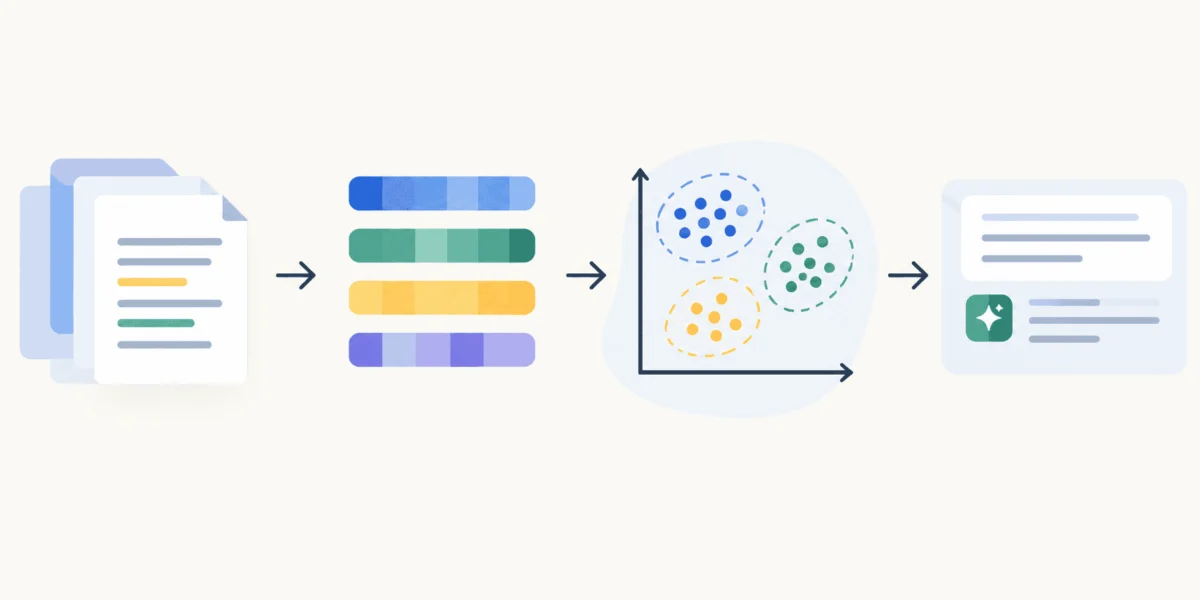
Building a functional RAG pipeline without the reliance on paid services requires a disciplined, step-by-step approach. This process can be divided into four distinct phases: dependency management, data ingestion, vector indexing, and the generation loop.
Phase 1: Foundation and Dependency Setup
To begin, one must establish an environment capable of handling high-dimensional vector math and local model inference. Using an interactive environment like Google Colab with a T4 GPU provides the necessary compute resources to run open-source models without local hardware bottlenecks. The initial stack relies on sentence-transformers for embedding generation, transformers for the LLM pipeline, and scikit-learn for the retrieval logic.
Phase 2: Data Ingestion and Semantic Chunking
A RAG system is only as good as the context it provides to the LLM. Data must be cleaned and fragmented into manageable segments. While our demonstration dataset consists of concise descriptions of Asian countries, real-world applications require sophisticated chunking. By defining a custom function with sliding windows (overlap), we ensure that semantic continuity is preserved between chunks, preventing the loss of context that often occurs at hard boundaries.
Phase 3: Vectorization and Indexing
The transformation of text into vectors is performed via the all-MiniLM-L6-v2 model. This specific model is a favorite in the open-source community for its balance between performance and latency. Once converted into high-dimensional space, these vectors are indexed using sklearn.neighbors.NearestNeighbors. By setting the metric to "cosine," we align our retrieval logic with the way LLMs interpret semantic similarity—treating the angle between vectors as the measure of relevance.
Phase 4: The Generation Loop
The final step is the integration of the Qwen/Qwen2.5-0.5B-Instruct model. Despite its compact size, this model is remarkably capable of following complex instructions, such as adhering strictly to provided context. By formatting the prompt as a chat template, we effectively constrain the model, forcing it to act as a retriever-synthesizer that only speaks to the truth contained within our indexed chunks.
Supporting Data: Why "Lightweight" Beats "Managed"
When evaluating the efficiency of this architecture, we must look at the performance metrics. In traditional enterprise RAG setups, latency is often introduced by network calls to external APIs and the overhead of managing database connections.
- Latency: Because the retrieval index exists entirely in local memory, the search time for a query is measured in milliseconds.
- Cost: The removal of per-token API pricing makes this architecture ideal for high-frequency internal tools or local research applications where cost-prohibitive scaling is a concern.
- Transparency: Unlike proprietary vector databases,
scikit-learnallows developers to inspect the raw distance metrics and indices directly, facilitating easier debugging and model tuning.
For a corpus of thousands of documents, the brute force algorithm in scikit-learn is more than sufficient. It is only when the data scales into the millions that more complex Approximate Nearest Neighbor (ANN) indices, such as HNSW or FAISS, become strictly necessary. Until that threshold is reached, the simplicity of the scikit-learn approach is a feature, not a bug.
Official Perspectives: The Move Toward "Local-First" AI
The industry is currently seeing a "Local-First" trend, championed by the growth of Hugging Face and the maturation of small language models (SLMs). Organizations are increasingly cautious about data privacy and the intellectual property risks associated with sending sensitive documents to third-party API providers.
By building a pipeline that runs entirely locally, developers are not just saving money—they are ensuring data sovereignty. This architecture allows for the implementation of RAG in air-gapped environments or secure internal servers, a requirement for many sectors in finance, healthcare, and government.
Implications for Future Development
The implications of this lightweight RAG methodology are profound for the democratisation of AI.
1. Prototyping Speed
Developers can now iterate on their RAG strategies—testing different embedding models, chunking strategies, and prompt templates—in a matter of hours. The ability to "hot-swap" components without being tethered to a specific provider’s SDK is a significant competitive advantage.
2. Educational Value
For those entering the field of AI engineering, this approach serves as a masterclass in the mechanics of retrieval. By writing the SklearnRetriever class from scratch, developers learn to manage the interplay between vector distance and semantic relevance, a skill that remains constant regardless of the framework used in production.
3. Scalability and Modular Evolution
The beauty of this architecture lies in its modularity. If, at some future point, the corpus grows to a size that requires a dedicated vector database like Pinecone or Milvus, the SklearnRetriever class can be easily swapped for an API-based client. The core logic—the "brain" of the RAG pipeline—remains intact.
Conclusion
The pursuit of AI excellence does not necessitate an endless reliance on expensive infrastructure. By returning to the foundational tools of data science—scikit-learn, numpy, and the robust ecosystem of open-source Hugging Face models—developers can build systems that are fast, reliable, and entirely under their control.
This "scikit-learn way" of building RAG is more than just a cost-saving measure; it is a philosophy of transparency and control. Whether you are building a small-scale prototype, an offline research tool, or a foundation for a larger enterprise system, the principles outlined here provide the roadmap to success in an increasingly crowded AI market. As we move forward, the most successful AI engineers will likely be those who understand how to build the engine from scratch, rather than those who simply know how to turn the key on a managed service.