







GOTHENBURG, SWEDEN — In the high-stakes, hyper-competitive global race to build functional quantum computers, time is arguably the most unforgiving enemy. Unlike classical computing bits—which are robust, reliable, and binary—quantum bits, or qubits, exist in a delicate state of superposition and entanglement. This fundamental nature grants them staggering computational potential, capable of unlocking breakthroughs in drug discovery, cryptography, sustainable energy technology, artificial intelligence, and global logistics.
However, it also makes them agonizingly fragile.
Quantum states are easily ruined by the tiniest environmental disturbances. Electrical noise, ambient heat, and even cosmic radiation can cause a qubit to drift off course, corrupting its data. In quantum computing, duration directly correlates with vulnerability: the longer a quantum operation takes to complete, the more time errors have to accumulate. Once a critical mass of errors builds up before a correction mechanism can intervene, the entire calculation collapses.
Now, a team of researchers at Chalmers University of Technology in Sweden has engineered a groundbreaking method that effectively cuts through this bottleneck. By radically rethinking how quantum operations are executed, the Chalmers team can now perform a broad spectrum of advanced quantum operations more than a thousand times faster than previous methods allowed.
Published in the prestigious scientific journal Physical Review Letters, this theoretical breakthrough offers a vital stepping stone toward the realization of fault-tolerant, scalable quantum computers.
Chronology: Tracing the Path to Single-Period Quantum Control
To understand the magnitude of the Chalmers breakthrough, it is helpful to trace the evolution of quantum error mitigation and the persistent engineering hurdles that have plagued the field for decades.
The Early Era of Fragile Qubits
Since the theoretical inception of quantum computing, scientists recognized that individual qubits were too volatile for practical, large-scale deployment. In classical computing, decades of accumulated engineering led to standard error-correction protocols that rapidly detect and patch corrupted data bits. Quantum data, however, cannot simply be copied and checked due to the "no-cloning theorem."
The Shift to Bosonic Codes
Recognizing the limitations of relying solely on individual, isolated qubits, researchers over the years shifted toward more sophisticated architectural concepts. Among the most promising of these is the use of bosonic quantum codes.
Instead of forcing fragile quantum information to reside exclusively inside isolated qubits, bosonic codes store this vital information within the continuous-variable microwave fields found inside superconducting circuits. This method provides an inherent layer of robust protection against specific subsets of environmental errors, offering a sturdier shelter for quantum data.
The Driving-Cycle Bottleneck
Yet, implementing bosonic codes presented its own major hurdle. Manipulating and controlling these microwave-field states traditionally required guiding the quantum system through thousands of repeated driving cycles.
Every single driving cycle added precious microseconds—or even milliseconds—to the total operation window. Across thousands of cycles, the cumulative time window left wide openings for outside noise to corrupt the quantum states. Speed and reliability were locked in a frustrating inverse relationship: to perform complex operations, researchers had to endure long processes that virtually guaranteed error accumulation.
The Breakthrough at Chalmers
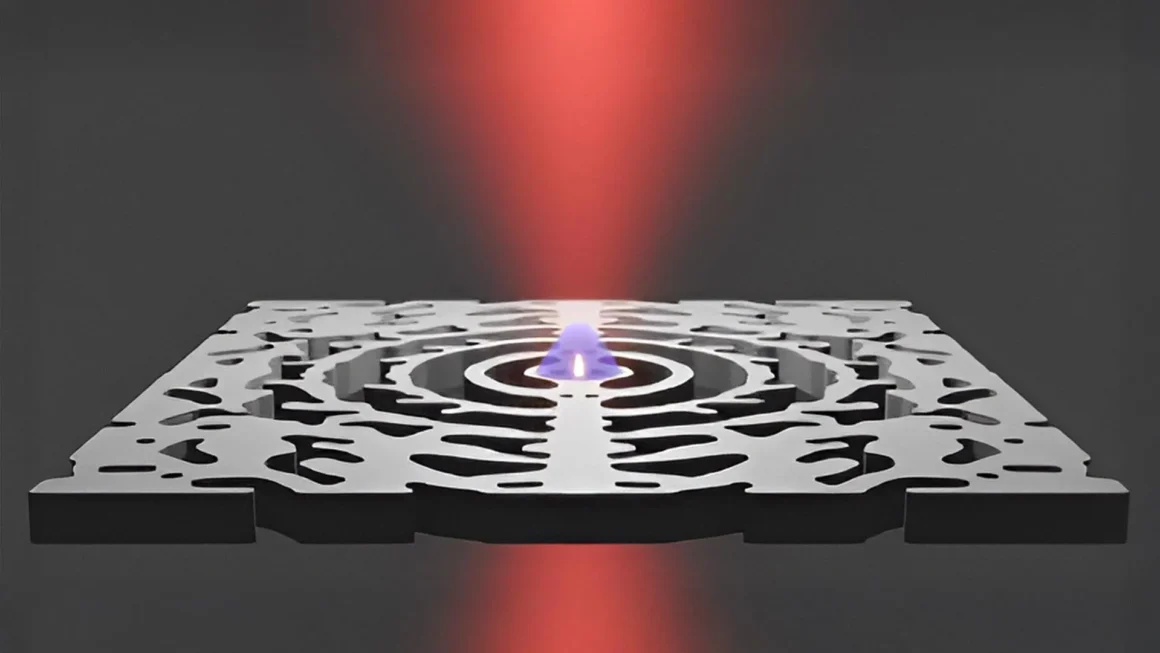
Recently, researchers Tangyou Huang, Lei Du, and Lingzhen Guo—affiliated with Chalmers University of Technology and Tianjin University—confronted this bottleneck head-on. Abandoning the traditional brick-by-brick approach of thousands of incremental cycles, they developed a mathematical and physical framework utilizing quantum lattice gates and advanced Floquet control.
By streamlining the process, their new protocol allows complex quantum operations on bosonic states to execute completely within a single driving cycle. The result is an operation speedup exceeding a factor of one thousand, effectively closing the window of vulnerability to environmental noise.
Supporting Data & Technical Mechanics: How the Technology Works
To truly appreciate how Chalmers University has achieved a thousandfold speedup, one must examine the precise mechanisms of bosonic codes, Floquet control, and the newly introduced quantum lattice gates.
The Lego Analogy of Quantum Gates
To explain how quantum lattice gates bypass the traditional thousands-of-cycles methodology, lead researchers often employ a structural analogy.
Building a complex quantum state via conventional methods is akin to constructing an intricate castle out of microscopic Lego bricks. You have to lay down each individual brick sequentially, verifying alignment at every step. If you get distracted or if an external vibration shakes the table (representing environmental noise), the structure collapses or warps long before you finish.
Quantum lattice gates, conversely, act as massive, pre-fabricated Lego modules. Instead of assembling the quantum state piece by tedious piece, these pre-engineered modules can be snapped into place instantly—completing the intended operation in a single sweeping motion.
Bosonic Quantum Codes Explained
Bosonic codes deviate from standard discrete-variable quantum computing by harnessing infinite-dimensional Hilbert spaces, such as those found in harmonic oscillators (microwave or optical resonators).
- Built-in Defense: By encoding information into the states of these resonators, the system gains natural resilience against amplitude-damping and phase-shift errors.
- The Control Problem: While storage is safer, executing gates (operations) on these codes is mathematically complex. Manipulating them typically demands time-intensive periodic control signals.
Floquet Control and Single-Period Execution
The primary vehicle for driving these quantum systems is Floquet control, a technique that uses periodic control signals to manipulate quantum states over time.
Historically, Floquet-based architectures relied heavily on slow, adiabatic, or multi-cycle evolutions to ensure accuracy. The Chalmers team fundamentally upended this paradigm by designing a mathematical control protocol that achieves the exact same target state transformations in a single period (one driving cycle). By compressing thousands of cycles into one, they remove the temporal runway that noise relies on to degrade quantum information.
Official Responses and Perspectives from the Research Team
The implications of this study are already generating excitement within the global physics community, signaling a shift in how laboratories approach the design of error-correcting hardware.
"The fundamental building blocks of quantum computers, known as qubits, are so sensitive that even the smallest disturbance can cause the quantum state to deviate from the target, resulting in the loss of information. If too many errors accumulate before they can be corrected, the computation can fail," notes Lei Du, researcher in Applied Quantum Physics at Chalmers and lead author of the study.
Du emphasizes that the new method directly targets the core efficiency crisis facing error correction:
"Our method shows that a diverse range of quantum operations on bosonic states can be completed within a single driving cycle, rather than the several thousand cycles that have been required previously. This makes the operations both faster and more efficient, while reducing the risk that disturbances will corrupt the information before the process is finished. It represents an important step towards fault-tolerant quantum computers."
Co-author Tangyou Huang, a researcher in Quantum Technology at Chalmers, highlights the architectural advantages of the team’s approach, particularly regarding its compatibility with existing hardware ecosystems:
"Rather than storing quantum information in individual qubits, bosonic codes encode information in the microwave fields found within superconducting circuits. This approach has been shown to provide stronger protection against certain types of errors."
Furthermore, Huang stresses that the team did not invent a theoretical unicorn requiring completely unimaginable physical machinery; the technique is tailor-made for platforms already dominating the laboratory landscape:
"A key advantage of our approach is that it can be implemented using existing superconducting quantum circuit platforms. We are already discussing possible experimental realizations with colleagues at Chalmers, and we hope to see a demonstration of the method in the near future."
Global and Industrial Implications: Moving Toward Fault-Tolerance
The work conducted by Du, Huang, and Guo arrives at a crucial juncture for the quantum computing industry. Major technology conglomerates and premier academic institutions are locked in a race to cross the threshold of "quantum advantage" and achieve fault-tolerance—the point at which a quantum computer can correct errors faster than it generates them.
Impact on Superconducting Quantum Hardware
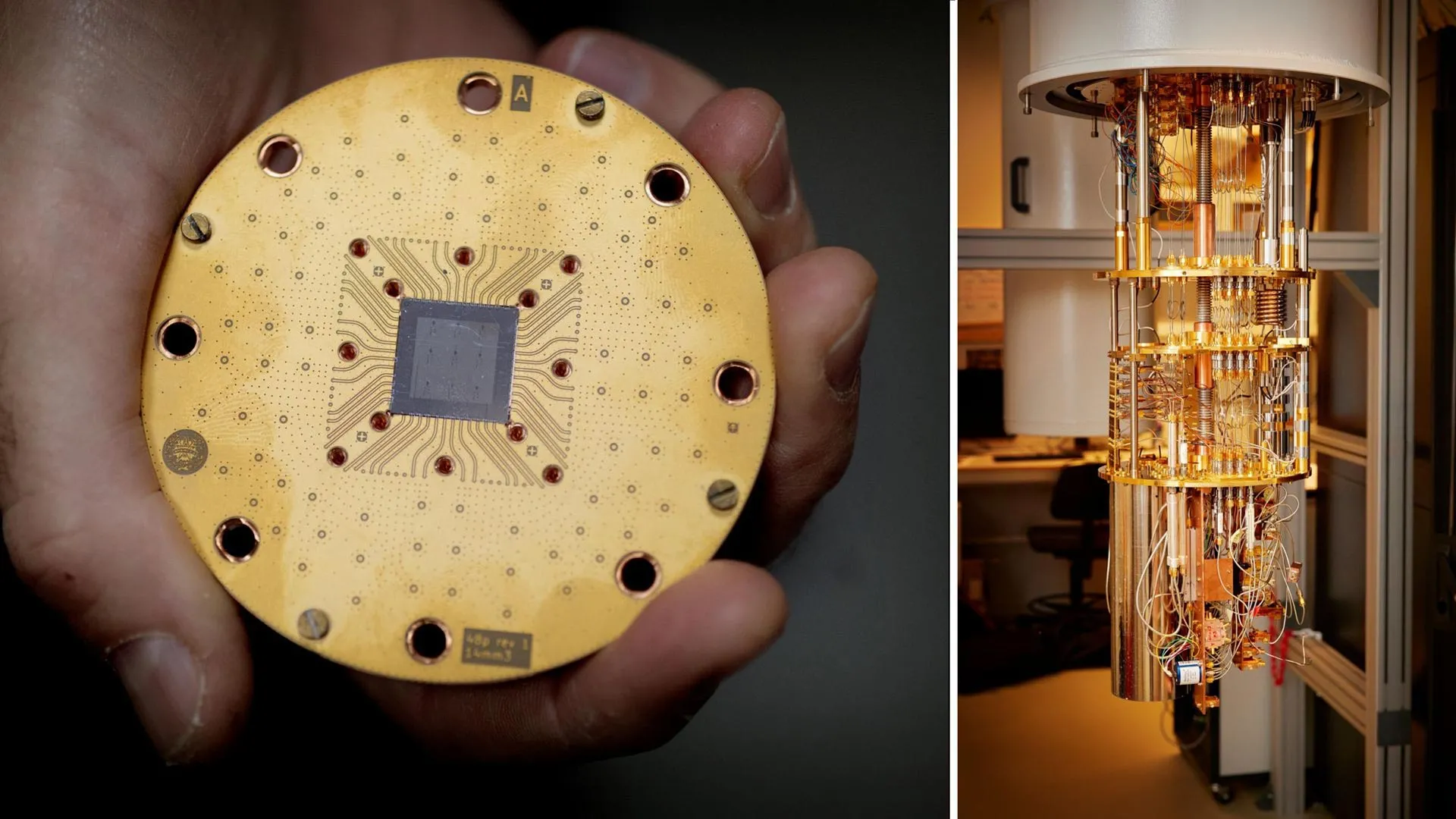
Superconducting circuits represent one of the leading hardware modalities in the international race, championed by institutions worldwide, including Chalmers University of Technology, which is actively engaged in developing a 100-qubit quantum computer.
By proving that quantum lattice gates can be integrated seamlessly into superconducting frameworks without requiring exotic new manufacturing paradigms, the Chalmers team has provided a practical roadmap that hardware developers can adopt immediately.
Opening the Door to Real-World Applications
Until error rates drop significantly, the commercial applications of quantum computers remain limited to experimental runs and specialized simulations. Once fault-tolerance is achieved, the doors will open to transformative capabilities across multiple sectors:
- Pharmaceuticals: Simulating molecular interactions at an atomic level in minutes rather than millennia, dramatically accelerating drug discovery.
- Energy Sector: Designing superior catalysts for carbon capture, optimizing smart grids, and engineering revolutionary battery chemistry.
- Cryptography: While posing future challenges to current encryption standards, quantum computers will simultaneously pioneer unhackable quantum-secured communication protocols.
- Logistics & AI: Solving complex optimization problems for global supply chains and exponentially speeding up machine learning model training.
Funding and Collaborative Foundation
The published research—titled "Single-Period Floquet Control of Bosonic Codes with Quantum Lattice Gates" in Physical Review Letters—was made possible through international and institutional backing. Financial support was provided by the National Natural Science Foundation of China (NSFC), the Wallenberg Centre for Quantum Technology (WACQT), and the Knut and Alice Wallenberg Foundation.
As experimental physicists at Chalmers and their international collaborators move to test this single-period control method in physical hardware laboratories, the quantum computing community watches with bated breath. If experimental results match the theoretical models, the industry will have cleared one of its highest hurdles, bringing humanity one thousand times closer to the true dawn of the quantum age.