










SAN FRANCISCO — For decades, the digital marketing playbook has remained fundamentally unchanged in one critical, painful aspect: it is labor-intensive. From the initial spark of campaign ideation to the tedious mechanics of audience segmentation, workflow building, and performance monitoring, marketing professionals have found themselves trapped in a cycle of operational upkeep.
Today, that paradigm is undergoing a structural fracture. As marketing ecosystems grow exponentially more complex—spanning hyper-fragmented channels, privacy-first data architectures, and hyper-personalized consumer expectations—traditional human-led execution is no longer scaling. The industry’s answer is no longer simply expanding headcount or burning out talent with late-night optimizations. Instead, a new class of technology is taking over the heavy lifting: Artificial Intelligence (AI) agents.
Unlike traditional automation scripts that follow rigid, linear "if/then" pathways, modern AI agents possess the capacity to interpret complex context, adapt to real-time variables, and independently orchestrate multi-step workflows across diverse software stacks. Tools like HubSpot’s Agent Hub and Breeze AI assistant ecosystem are leading this charge, stepping into the trenches of campaign management to shoulder the process-intensive burdens that have long throttled marketing productivity.
Main Facts: The Anatomy of the AI Agent Revolution
The integration of AI agents into digital marketing is not merely an incremental update to existing software; it represents a fundamental transition from tool-assisted execution to autonomous task management.
At its core, the current wave of marketing AI is defined by three distinct capabilities:
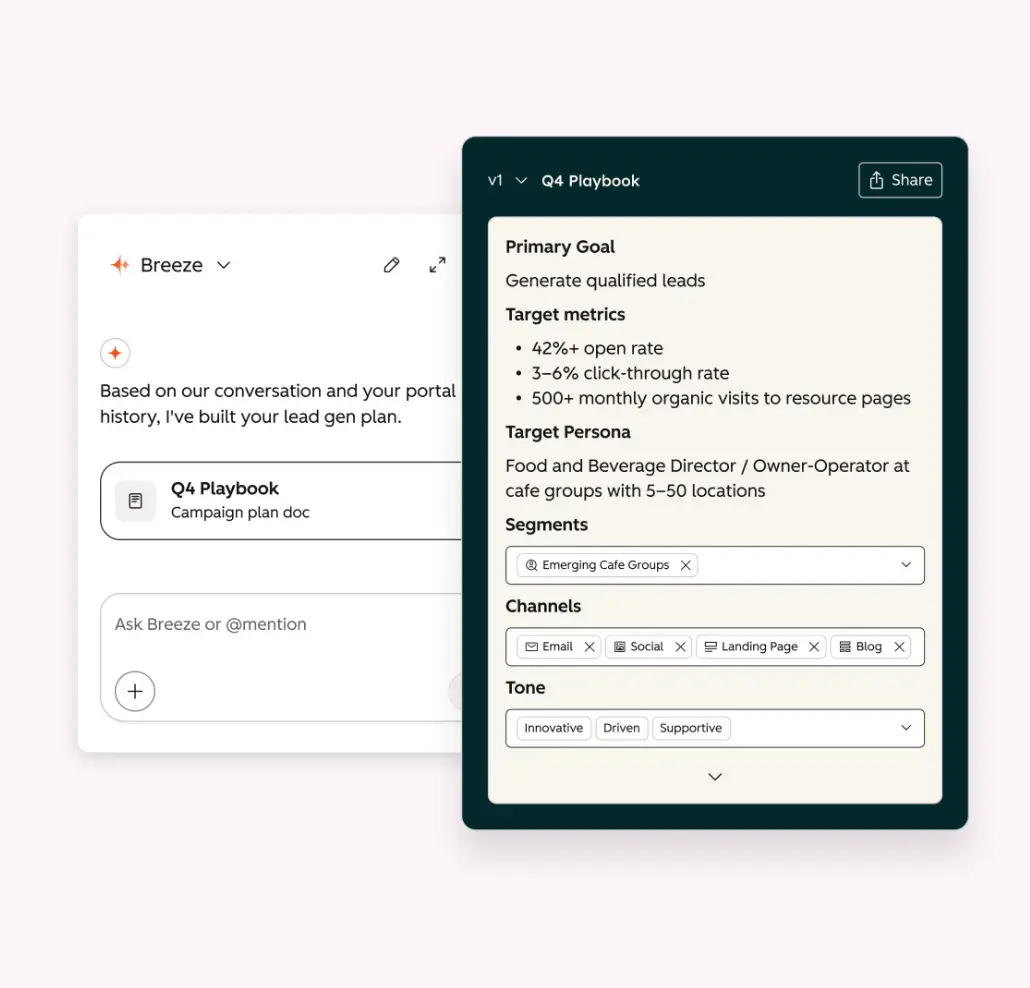
- End-to-End Workflow Orchestration: AI agents can autonomously configure, launch, and manage campaign workflows—handling everything from enrollment triggers and wait steps to complex branching logic—without requiring constant manual oversight.
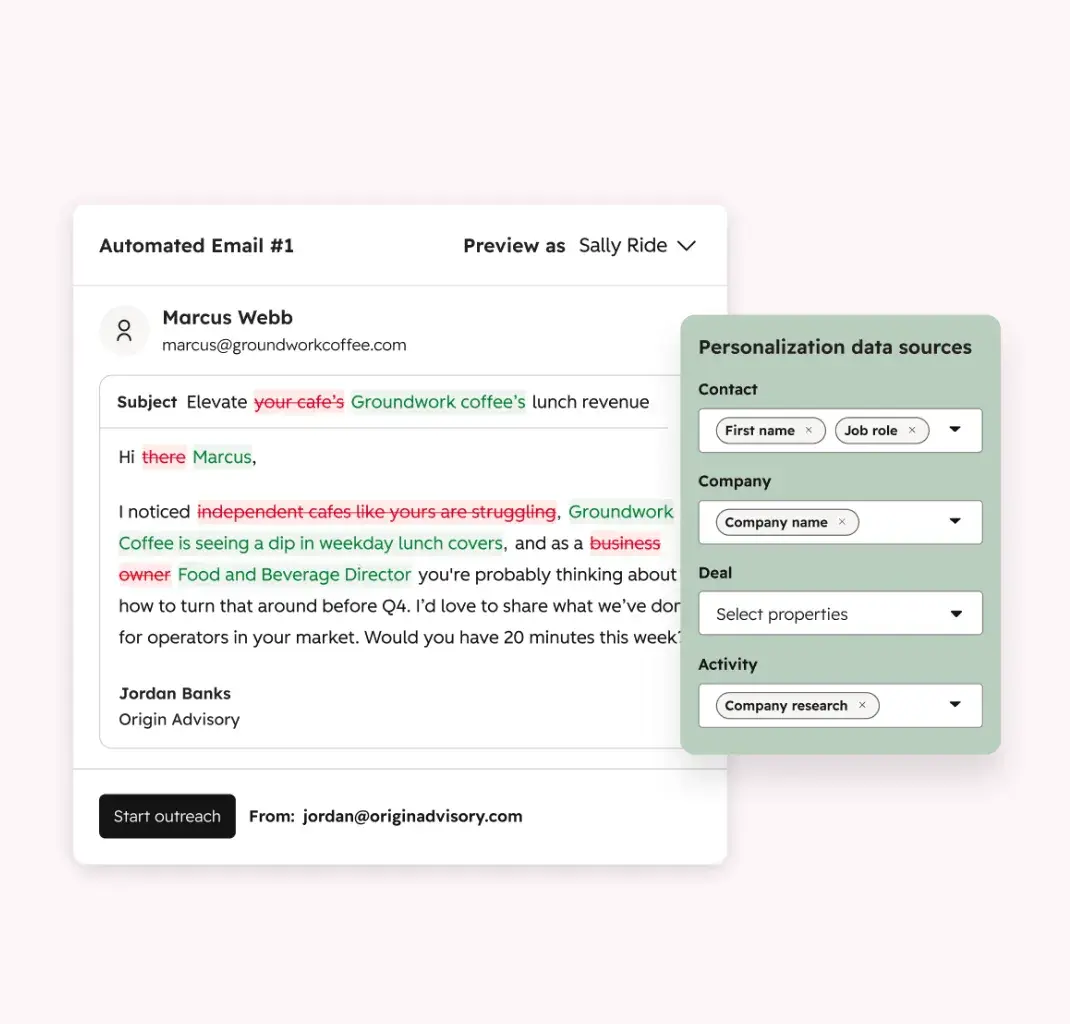
- Dynamic, Contextual Personalization: Moving far beyond basic "First Name" token insertions, modern AI agents leverage deep CRM behavioral data to generate context-aware messaging variations calibrated precisely to an individual’s journey stage and intent signals.
- Proactive Performance Anomalies Detection: Instead of relying on weekly retrospective reports or human discovery, AI-driven assistants continuously monitor key performance metrics, flagging deliverability issues, engagement drops, or conversion bottlenecks before they compound into major pipeline failures.
These capabilities directly address the "execution gap"—the widening chasm between what a modern marketing strategy demands and what a human team has the capacity to execute.
Chronology: From Static Automation to Autonomous Agents
To understand how the industry arrived at the era of marketing AI agents, it is vital to trace the evolution of marketing technology over the past two decades:
- The Early 2000s (The Era of Static Rules): Email service providers introduced basic autoresponders. Campaigns relied on rigid, linear logic. If a user clicked Link A, they received Email B. Any deviation or complex condition required exhaustive, manual list-segmentation and separate workflow builds.
- The 2010s (The Rise of Marketing Automation Platforms): Platforms like HubSpot, Marketo, and Pardot matured, introducing sophisticated visual workflow builders. While these tools democratized multi-channel nurturing, they still demanded intense manual labor. Marketers spent countless hours configuring enrollment triggers, building delay steps, and mapping out branching paths.
- The Early 2020s (The Generative AI Boom): The introduction of Large Language Models (LLMs) gave marketers the ability to draft copy, brainstorm outlines, and generate subject lines at scale. However, these early generative tools remained isolated islands; they could write an email, but they could not independently log into a CRM, build a sequence, test the workflow logic, and monitor its real-time performance.
- 2024–Present (The Agentic Era): The industry has crossed a threshold into "agentic workflows." Software is no longer passive; it is active. AI agents—such as HubSpot’s campaign and nurture agents integrated via Agent Hub—can now reason, plan, and execute multi-step marketing operations autonomously, fundamentally altering the daily responsibilities of digital marketing professionals.
Supporting Data: The Cost of Manual Execution
The necessity for agentic automation is underscored by mounting operational pressures within enterprise marketing departments:
- The Time Tax: Industry studies consistently show that marketing professionals spend upward of 60% to 70% of their working hours on tactical execution, administrative upkeep, and campaign maintenance, leaving a fraction of their time for high-level strategy and creative development.
- The Personalization Deficit: While 80% of consumers report being more likely to do business with a brand that offers personalized experiences, marketing teams frequently cite "capacity constraints" as the primary barrier to creating segmented messaging. Most organizations settle for one or two generic variations per campaign rather than the five to six distinct iterations required to optimize conversion rates across diverse buyer personas.
- The Cost of Latency: In traditional reporting cycles, a campaign deliverability issue or a sudden drop in click-through rates (CTR) often goes unnoticed for days or even weeks. Left unchecked, this latency not only drains ad spend and conversion pipelines but can permanently damage sender reputation and domain health. Real-time anomaly detection by AI assistants mitigates this risk by collapsing the window between detection and remediation to near-zero.
Official Responses and Industry Perspectives
As software providers rush to release autonomous capabilities, industry leaders are weighing in on the profound implications for the workforce and enterprise strategy.
"Digital marketing has long suffered from an execution tax," notes a senior product strategist at HubSpot. "Teams are overflowing with brilliant strategic ideas, but they simply run out of hours in the day to build the twenty different variations of a campaign, map the branching logic, and monitor every downstream metric. AI agents aren’t here to replace the marketer’s judgment; they are here to eliminate the friction between a great idea and its execution."

Critics and analysts, meanwhile, emphasize the importance of data governance in an agentic world. Because AI agents draw directly from CRM repositories and behavioral logs to execute tasks, organizations must clean up their underlying data architectures.
"An AI agent is only as good as the data it interprets," warns an enterprise marketing technology analyst. "If your CRM is messy, segmented poorly, or filled with duplicate contacts, an autonomous nurture agent will scale your chaos, not your efficiency. Moving to agentic marketing requires a renewed commitment to data hygiene."
Implications: Reshaping the Modern Marketing Team
The mainstream adoption of AI agents for digital marketing signals a profound transformation in team structures, skill requirements, and overall business output.
1. From "Doers" to "Directors"
The daily routine of the digital marketer is shifting away from repetitive tactical configuration. Instead of spending hours setting up wait steps, formatting email branches, and pulling manual performance spreadsheets, marketers are stepping into the role of directors and architects. They define the parameters, establish the brand guardrails, approve the overarching creative direction, and let AI agents manage the mechanical execution.
2. Hyper-Personalization at True Scale
By bridging the gap between CRM data and content generation, AI nurture agents make sophisticated personalization economically viable for businesses of all sizes. Companies no longer have to choose between running a broad, generic campaign or spending weeks manually building custom sequences for micro-segments. Autonomous agents can generate and deploy tailored messaging pathways on demand.
3. Accelerated Iteration and Agility
With automated anomaly detection and proactive performance alerts, marketing teams can pivot in real-time. Campaigns that underperform can be automatically flagged, analyzed, and adjusted before small friction points cascade into major financial losses. This agility transforms marketing from a reactive, retrospective discipline into a proactive, adaptive engine.
Conclusion
The transition to AI agents in digital marketing is no longer a futuristic projection—it is an operational reality reshaping how campaigns are built, managed, and optimized. By offloading the process-intensive mechanics of execution to intelligent software, organizations are unlocking a new era of productivity. Ultimately, the future belongs to marketing teams that master the art of delegation, leveraging AI agents not to shrink their workforce, but to amplify their strategic and creative potential.



