SAN FRANCISCO — In the modern enterprise data landscape, engineering teams face a perpetual balancing act: the mandate to protect sensitive customer information versus the operational necessity of leveraging data for business intelligence. Nowhere is this tension more pronounced than in the architecture of massive data pipelines processing Personally Identifiable Information (PII), such as Social Security Numbers (SSNs), financial records, and medical histories.
Recently, engineering teams building high-throughput pipelines for processing tax e-filing data at scale tackled this precise architectural challenge. The core dilemma is deceptively simple: How do you protect highly sensitive data from storage-layer compromises while still allowing downstream analytics teams to perform legitimate operations, such as exact-match lookups and customer record linking, without exposing plaintext values?
This report explores the cryptographic concepts, architectural trade-offs, and design patterns—ranging from deterministic encryption and HMAC to tokenization and key derivation—required to secure enterprise data pipelines at scale.
Main Facts: The PII Protection Dilemma
When processing high-volume data streams like those handling TurboTax e-filing payloads, raw PII cannot be stored unencrypted. If an organization stores plaintext SSNs or email addresses directly in a data lake or relational database, any unauthorized access or storage-layer breach immediately exposes millions of sensitive records.
To mitigate this risk, systems rely on encryption to transform plaintext into unreadable ciphertext. However, standard encryption introduces a massive hurdle for analytics applications. Consider a scenario where an analytics service needs to query records matching a specific customer:
SELECT * FROM customer_data WHERE ssn = '111-22-3333';If standard probabilistic encryption is applied, the database cannot evaluate this query efficiently without decrypting the entire dataset—a computationally prohibitive and insecure practice. Consequently, data architects must look beyond basic encryption primitives to balance confidentiality with searchability.
Chronology: The Evolution of Pipeline Cryptographic Design
The engineering journey toward secure, searchable data pipelines typically follows a clear architectural evolution:
- Phase I: Plaintext Vulnerability. Early-stage pipelines often store data in plaintext for ease of querying, relying strictly on perimeter security (firewalls, database access controls) to protect assets. A single perimeter breach compromises the entire store.
- Phase II: Probabilistic Encryption (Confidentiality First). To satisfy compliance frameworks, teams introduce symmetric encryption algorithms like AES with randomized initialization vectors (IVs). While data confidentiality skyrockets, analytical utility plummets because identical inputs yield entirely different ciphertexts, breaking exact-match queries.
- Phase III: Deterministic Encryption and Key Separation. Recognizing the need for equality searches, architectures adopt deterministic encryption and Key Derivation Functions (such as HKDF). This allows exact-match queries against encrypted columns while isolating cryptographic domains.
- Phase IV: Advanced Abstraction (Tokenization & HMAC). Mature data platforms decouple systems entirely from sensitive strings by implementing tokenization vaults or keyed cryptographic hashes (HMACs), ensuring downstream systems operate strictly on identifiers or non-reversible tokens.
Supporting Data: Comparing Cryptographic and Abstraction Approaches
Choosing the right mechanism requires evaluating performance, searchability, and security trade-offs. The matrix below outlines how different approaches stack up against typical pipeline requirements:
| Approach | Equality Search Support | Reversible (Decryption) | Equality Pattern Leakage | Typical Enterprise Use Case |
|---|---|---|---|---|
| Probabilistic Encryption | No | Yes | Low (High security) | General encrypted data storage at rest |
| Deterministic Encryption | Yes | Yes | Yes (Leaks frequency) | Exact-match lookups on sensitive attributes |
| HMAC (Keyed Hash) | Yes | No | Yes | Equality matching where recovery is unnecessary |
| Tokenization | Yes | Yes (via secure vault) | Dependent on vault design | Shared identifiers across decoupled microservices |
Deep Dive: Core Cryptographic Concepts
1. AES and Probabilistic Encryption
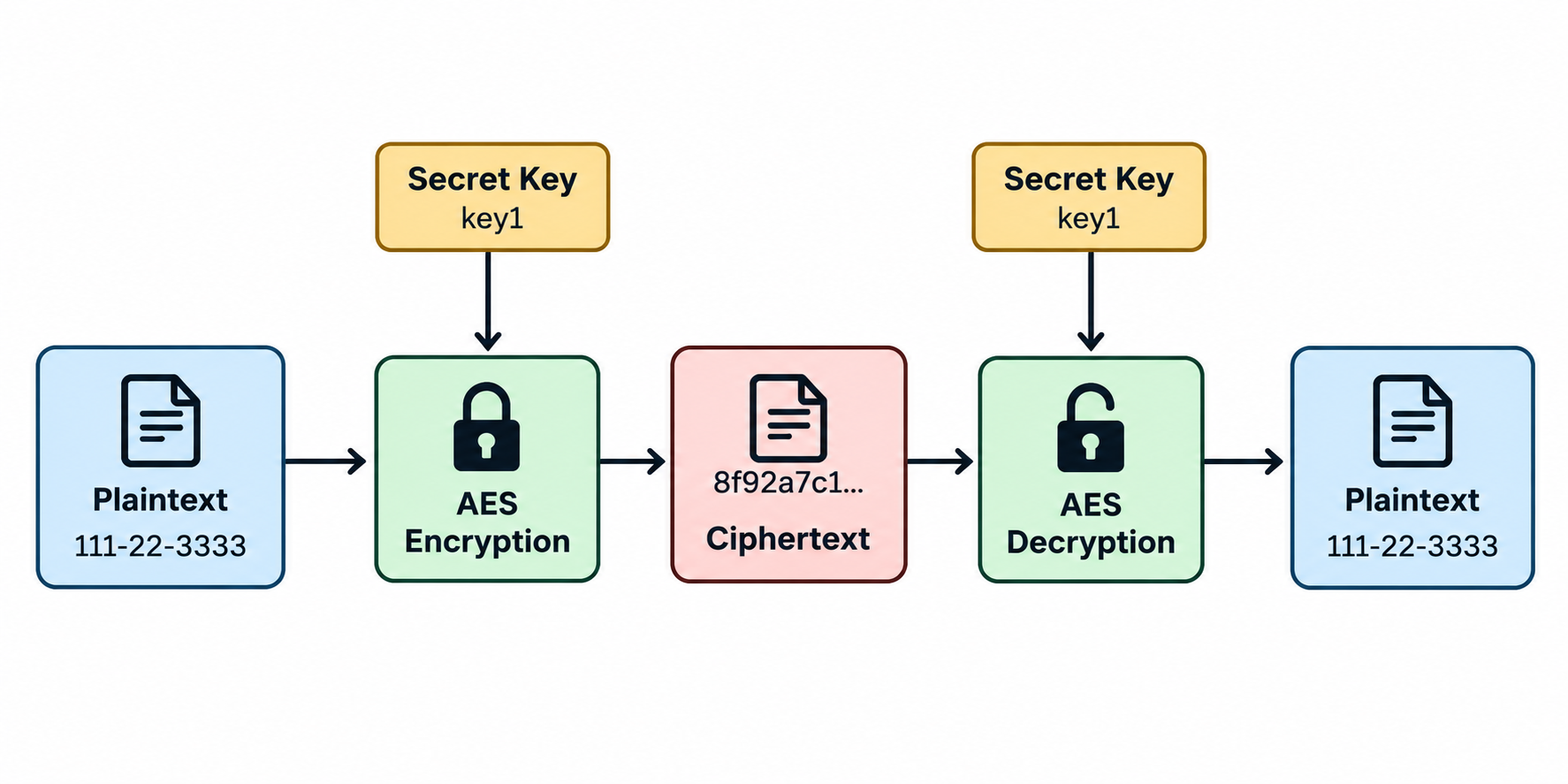
The Advanced Encryption Standard (AES) is the industry-standard symmetric encryption algorithm used to protect data at rest. When implemented with standard randomized modes, encrypting the exact same plaintext string (111-22-3333) with the same key yields entirely different ciphertexts across different records:
Encrypt("ABC", key1) ➔ qwoeoewowe
Encrypt("ABC", key1) ➔ cXcslslsd
Encrypt("ABC", key1) ➔ fjkdfdfd
This intentional randomness prevents attackers from identifying patterns across datasets, making probabilistic encryption the gold standard for pure confidentiality. Its limitation, however, is the complete inability to perform indexed equality searches without full table decryption.
2. Deterministic Encryption
To bridge the gap between security and analytics, deterministic encryption ensures that the exact same plaintext, encrypted under the same key and context, always produces the exact same ciphertext:
Encrypt("ABC", key) ➔ adsfffdfd
Encrypt("ABC", key) ➔ adsfffdfd
This predictability enables SQL equality queries directly against encrypted columns:
SELECT *
FROM customer_data
WHERE encrypted_ssn = EncryptDeterministically('111-22-3333', encryption_key);
The Security Trade-off: Deterministic encryption leaks equality patterns. If an attacker observes that a specific ciphertext appears multiple times within a column, they can deduce that those records share the same underlying plaintext value. For low-cardinality fields (e.g., gender, zip codes), this risk is severe; for high-cardinality fields like SSNs, the risk is mitigated but still requires deliberate threat modeling.
3. Key Management and HKDF (HMAC-based Key Derivation Function)
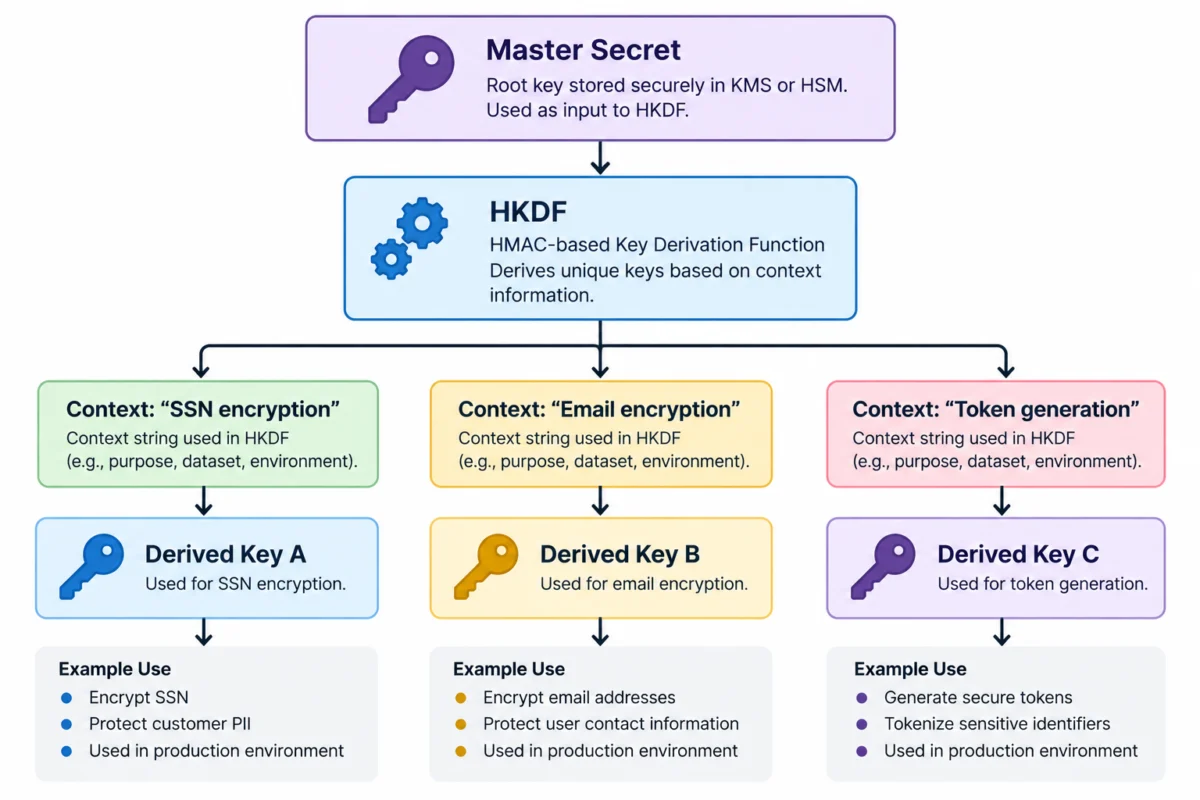
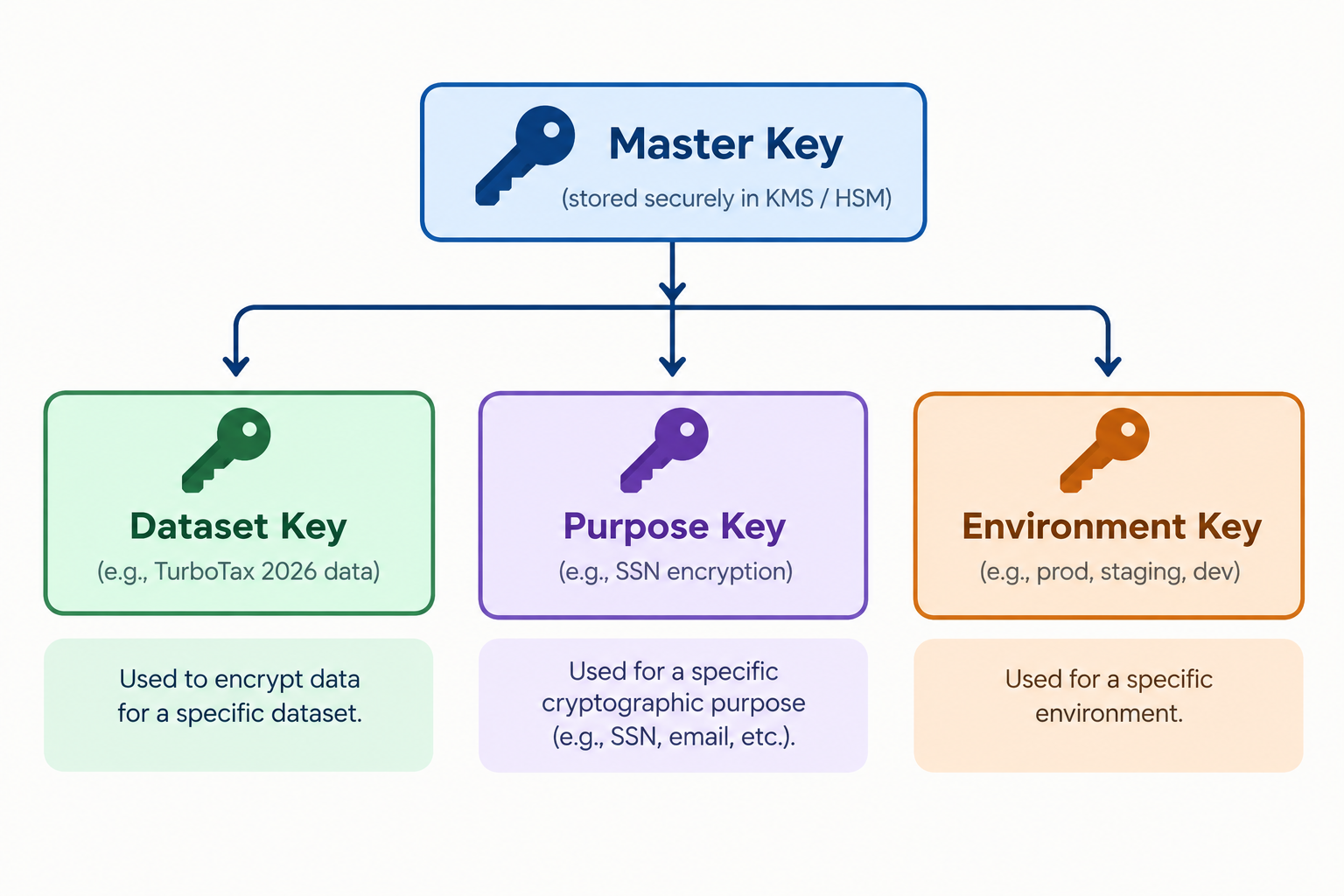
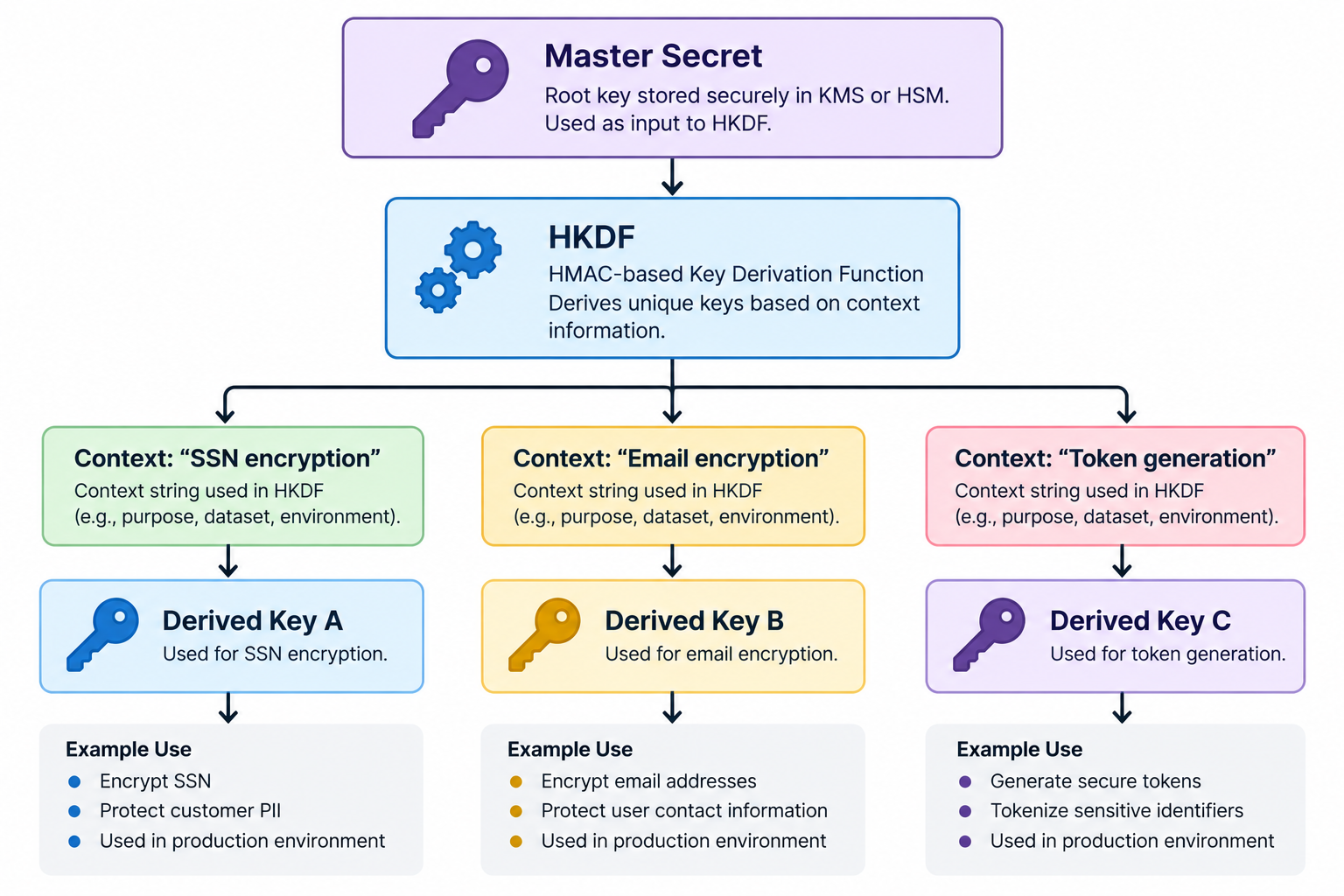
Securing pipelines goes beyond choosing an encryption algorithm; it requires rigorous key management. Rather than hardcoding keys or using a single master key across every database table, robust architectures implement key separation using a master secret and a Key Derivation Function like HKDF.
By passing a root master secret through HKDF along with specific contextual strings, systems can generate isolated cryptographic keys for distinct domains:
DerivedKey_SSN   = HKDF(master_secret, context = "production:ssn")
DerivedKey_Email = HKDF(master_secret, context = "production:email")
If the derived key for email encryption is somehow compromised, the SSN data remains secure under an entirely separate cryptographic domain. Furthermore, master keys are securely housed within managed Key Management Systems (KMS) or Hardware Security Modules (HSMs), preventing exposure in application source code.
4. Alternatives: HMAC and Tokenization
When downstream analytics teams do not need to recover the original plaintext value—and only need to answer questions like "Does this record match a target customer?"—reversibility becomes a liability.
- HMAC (Keyed-Hash Message Authentication Code): Generates a fixed-size, non-reversible cryptographic hash of normalized data using a secret key. It permits exact-match lookups without preserving the underlying plaintext.
- Tokenization: Replaces sensitive values with non-sensitive identifiers (tokens) while maintaining a secure mapping in an isolated vault service. Downstream data lakes consume tokens, completely insulating them from raw PII.
Official Perspectives and Architectural Implications
Security and data platform leaders emphasize that encryption alone does not constitute a complete security strategy.
"The goal isn’t simply to encrypt sensitive data," enterprise data architects note. "The goal is to design a system where sensitive data remains protected while legitimate business operations can still be performed safely."
Key Architectural Takeaways for Data Engineers:
- Match the Mechanism to the Use Case: Use probabilistic encryption for passive storage, deterministic encryption or HMAC for searchable identifiers, and tokenization for cross-system data sharing.
- Enforce Least Privilege and Access Control: The ability to execute an equality query on an encrypted identifier should never automatically grant the right to decrypt the underlying value.
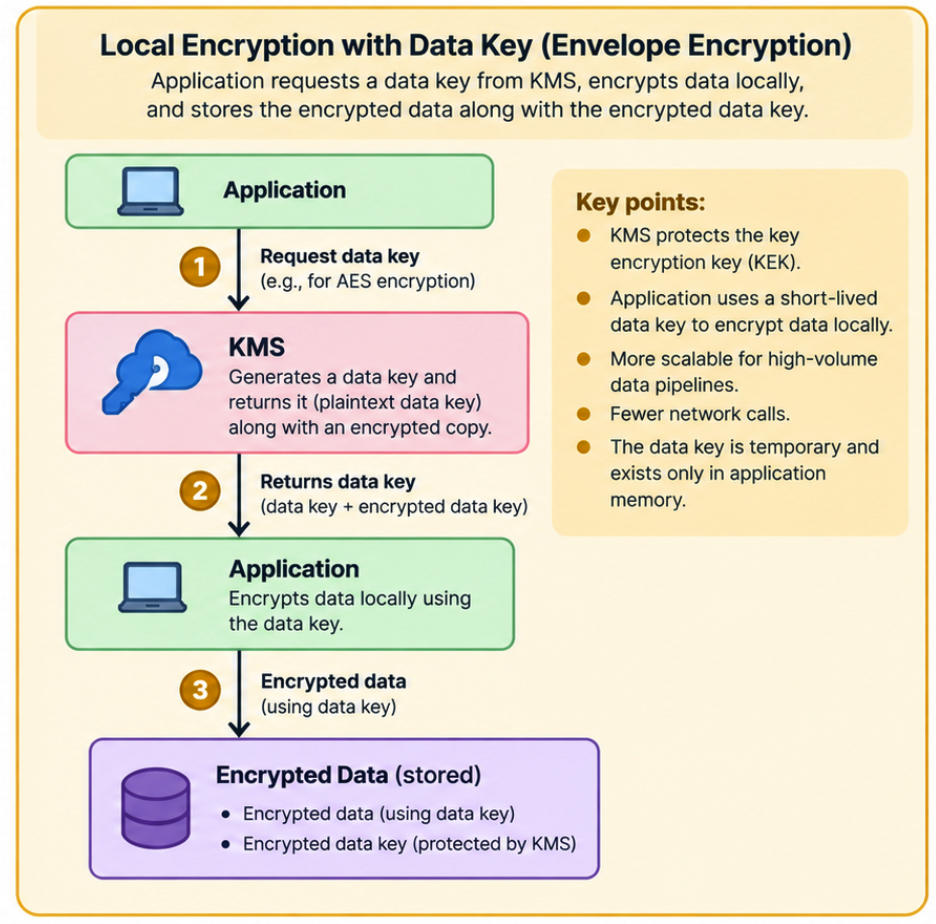
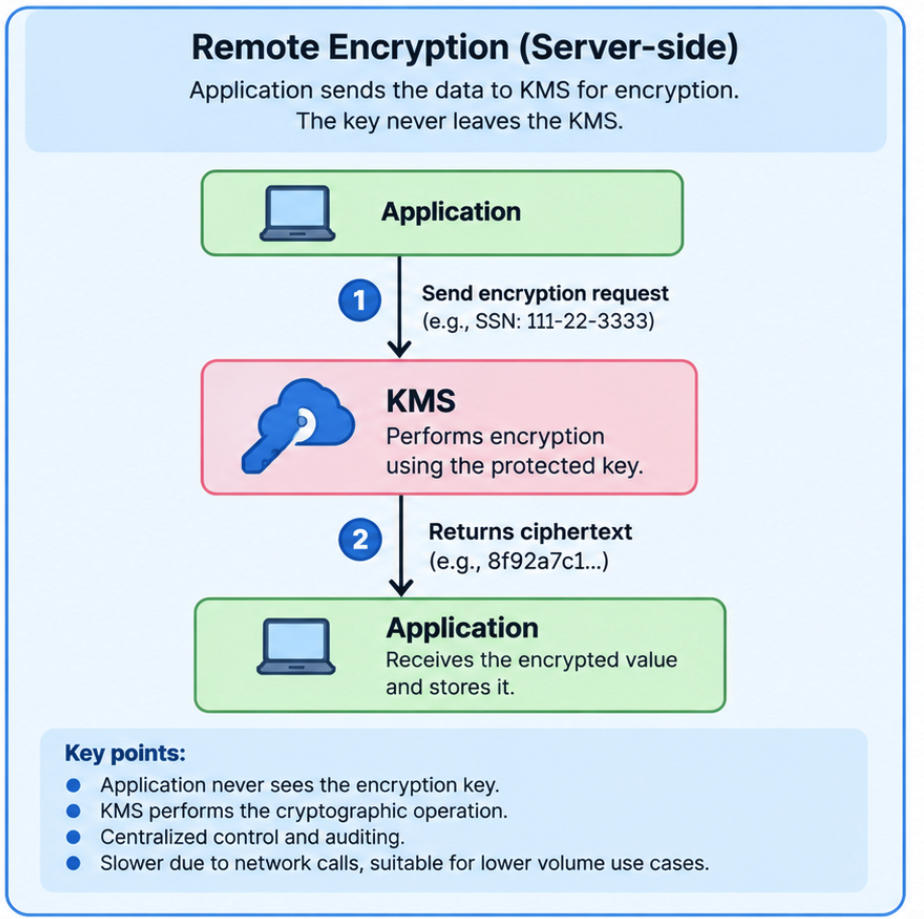
- Centralize Cryptographic Governance: Leverage cloud KMS or HSM boundaries for master key storage while optimizing high-throughput pipelines with local cryptographic caching where appropriate.
Ultimately, building secure data pipelines requires moving past simple library implementations to address the fundamental friction between data utility and cryptographic protection.