






As the curtain falls on 2025, the digital landscape finds itself at a unique inflection point. The past twelve months have been defined by rapid technological acceleration—most notably the integration of generative AI into daily workflows—and a simultaneous, counter-cultural craving for authentic, human-centric connection. For creators, publishers, and independent thinkers, the message is clear: while the tools are changing, the fundamental human need for meaningful content remains more robust than ever.
As we look toward 2026, the question is no longer whether blogging or newsletters are "dying," but rather how they must evolve to remain the cornerstone of a sustainable creative practice.
The State of the Digital Union: A 2025 Retrospective
The trajectory of the creator economy over the last year has been characterized by a "great recalibration." Following the initial shock of AI’s mainstream adoption, creators have moved from a place of fear to a period of strategic integration. Data from industry analysts suggests that while ephemeral content—short-form video, TikTok trends, and AI-generated summaries—dominated the volume of traffic, long-form, owned media maintained the highest levels of trust and audience retention.
For many, 2025 was a year of "pruning." Creators who spent years chasing algorithmic vanity metrics found that a smaller, more engaged community built on newsletters and private blogs provided a more stable economic foundation than platforms susceptible to sudden policy shifts. As we step into 2026, the industry is pivoting toward "Digital Sovereignty"—the practice of building an audience on platforms that the creator fully controls.
Chronology of the Shift: From Social Clout to Community Capital
To understand where we are going, we must look at the path of the last few years:
- Early 2024: The "AI Gold Rush." Creators experimented with automated content generation, leading to a saturation of generic, machine-written articles.
- Late 2024: The "Authenticity Backlash." Audiences began to signal fatigue, showing a marked preference for "human-in-the-loop" content. The rise of the "Dumbphone" movement began to gain traction as a symbol of digital minimalism.
- Mid-2025: The "Newsletter Renaissance." Independent newsletters became the primary vehicle for high-value information, proving that email remains the most intimate and effective channel for direct audience communication.
- Late 2025: The "Hybrid Era." Successful creators moved toward a blended model, utilizing short-form social media as a "top-of-funnel" discovery tool to drive users toward long-form, high-depth owned platforms.
Supporting Data: Why Owned Media Still Reigns Supreme
Despite the noise of the digital age, hard data continues to favor the publisher. Marketing analytics from firms like HubSpot and independent research outlets underscore several critical trends:
- Google’s Persistent Dominance: Despite the growth of AI-search interfaces like ChatGPT and Perplexity, Google continues to process over 8.5 billion searches daily. The internet’s "ground truth" is still largely indexed through traditional search, placing a premium on well-structured, original blog content.
- The Research Gap: Studies indicate that 96% of users still conduct extensive, self-directed research before making significant purchasing or lifestyle decisions. They are not asking AI for a final answer; they are looking for expert, long-form content that provides nuance, context, and a personal perspective—attributes that AI models struggle to replicate consistently.
- The SEO-Content Cycle: Blogging remains a top-five content format for professional marketers. The reason is simple: search engines require fresh, indexable, and high-quality text to populate their results. A blog is the only medium that creates a permanent, searchable archive of a creator’s intellectual property.
Official Perspectives: The Philosophy of Digital World-Building
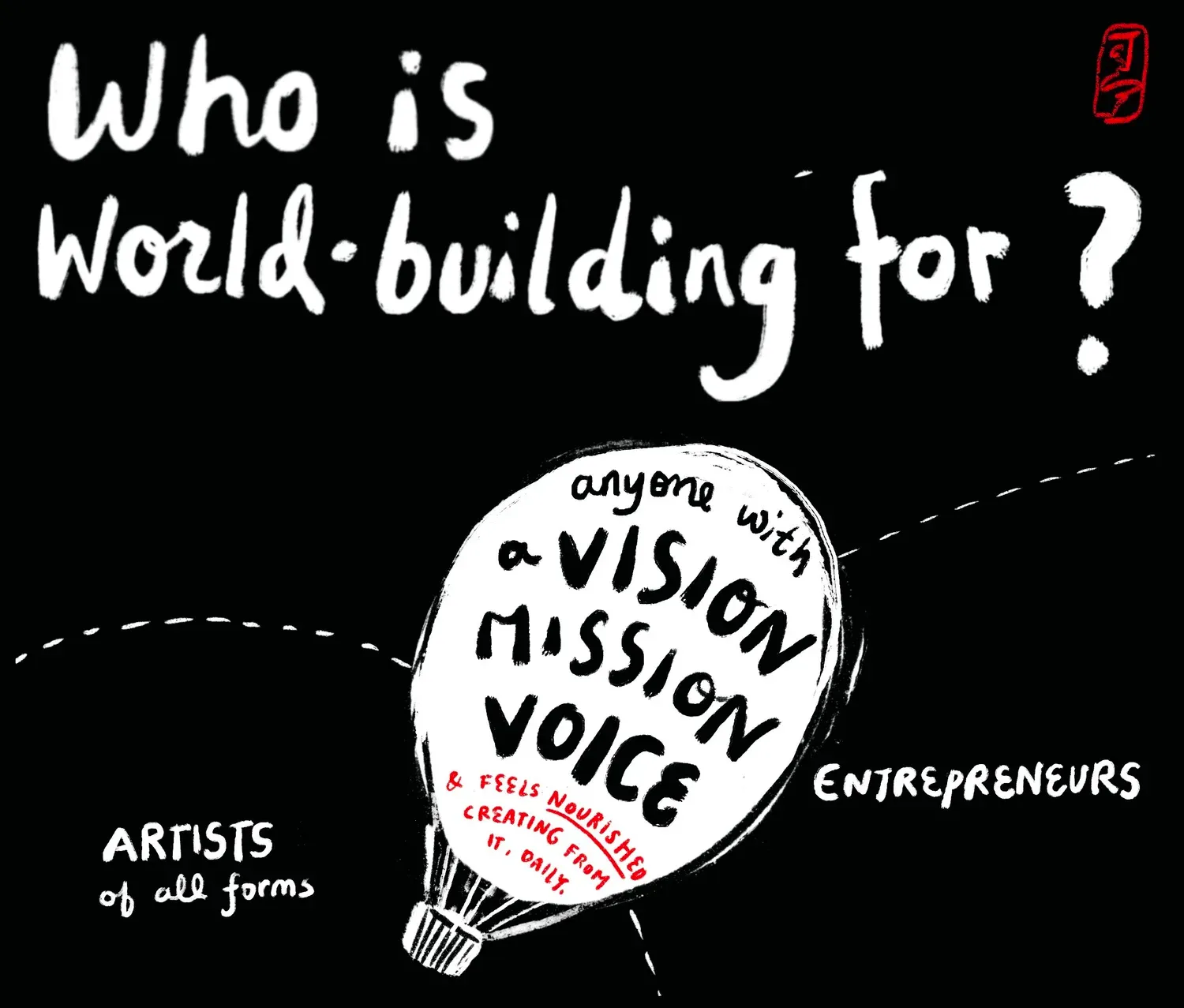
As industry leaders evaluate the next twelve months, the consensus is shifting toward "World-Building" over "Content-Posting." Kening Zhu, a prominent voice in the digital creator space, posits that in an era where AI can synthesize information, the only remaining competitive advantage is lived experience.
The Six Pillars of Modern Digital Presence
Zhu’s framework for creators in 2026 emphasizes the following:
- Nourishment over Validation: Creators must prioritize projects that satisfy their own intellectual curiosity. When creation becomes a chore for the sake of likes, the audience senses the lack of soul.
- Process-Oriented Transparency: Audiences are no longer satisfied with the "finished product." They want to see the behind-the-scenes—the failures, the research, and the evolution of an idea.
- Rule-Breaking: The "best practices" of 2022 are dead. 2026 rewards those who experiment with non-traditional formats and unconventional storytelling.
- The Power of the Niche: A small, hyper-loyal audience is infinitely more valuable than a massive, disengaged one. By serving a specific, under-catered niche, creators build a moat around their business that AI cannot easily bridge.
- Embracing Complexity: AI is excellent at smoothing out the edges of a text. Human creators, conversely, excel at complexity, contradiction, and nuance. Don’t be afraid of writing that is challenging or "messy"—that is where the humanity lies.
Implications for 2026: A Strategy for Success
What does this mean for the independent creator looking to thrive in the coming year? It requires a strategic pivot toward a more holistic, human-first approach to publishing.
1. Diversification of Media
While the blog and newsletter form the "home base," creators should not ignore the power of short-form video. However, the strategy must change: use video as a discovery hook, not as the primary product. A 60-second video should lead to a 1,500-word deep dive, not another video.
2. The "Human-First" AI Strategy
Don’t fear AI; use it as a researcher or a structural assistant, but never as the voice. The most successful publications in 2026 will be those that utilize AI for efficiency while keeping the "voice" of the author front and center. If a piece of content could have been written by a generic chatbot, it is not worth publishing.
3. Repurposing as a Business Model
The "Content Wheel" is essential. A single, high-quality long-form post can be the source material for a newsletter, three short-form videos, an audio summary, and a series of social media threads. This multi-channel approach maximizes reach while minimizing the burnout associated with constant, original creation.
4. SEO and Search Optimization
As the web becomes cluttered, discoverability will become the primary challenge. Creators must focus on "Entity-based SEO"—building authority around a specific topic or theme. By providing the most comprehensive, human-verified answers to specific questions, creators can capture the traffic that AI models are currently struggling to satisfy.
Conclusion: The Future is Yours
The digital world of 2026 will be a challenging environment, but it will also be one of the most rewarding for those who choose to be authentic. As the "AI noise" increases, the signal—your voice, your perspective, and your unique community—will become increasingly precious.
Do not be discouraged by the scale of the digital landscape. Remember that for every person who wants a quick, AI-generated summary, there is another who is looking for a connection, a story, or a piece of advice that only a real person can provide.
As we look toward the new year, the goal is not to compete with machines, but to do what machines cannot: live, learn, and build a world that is uniquely your own. 2026 is not the end of the blogging era; it is the beginning of its most interesting, and most human, chapter yet. Start writing, start building, and most importantly, stay real.