








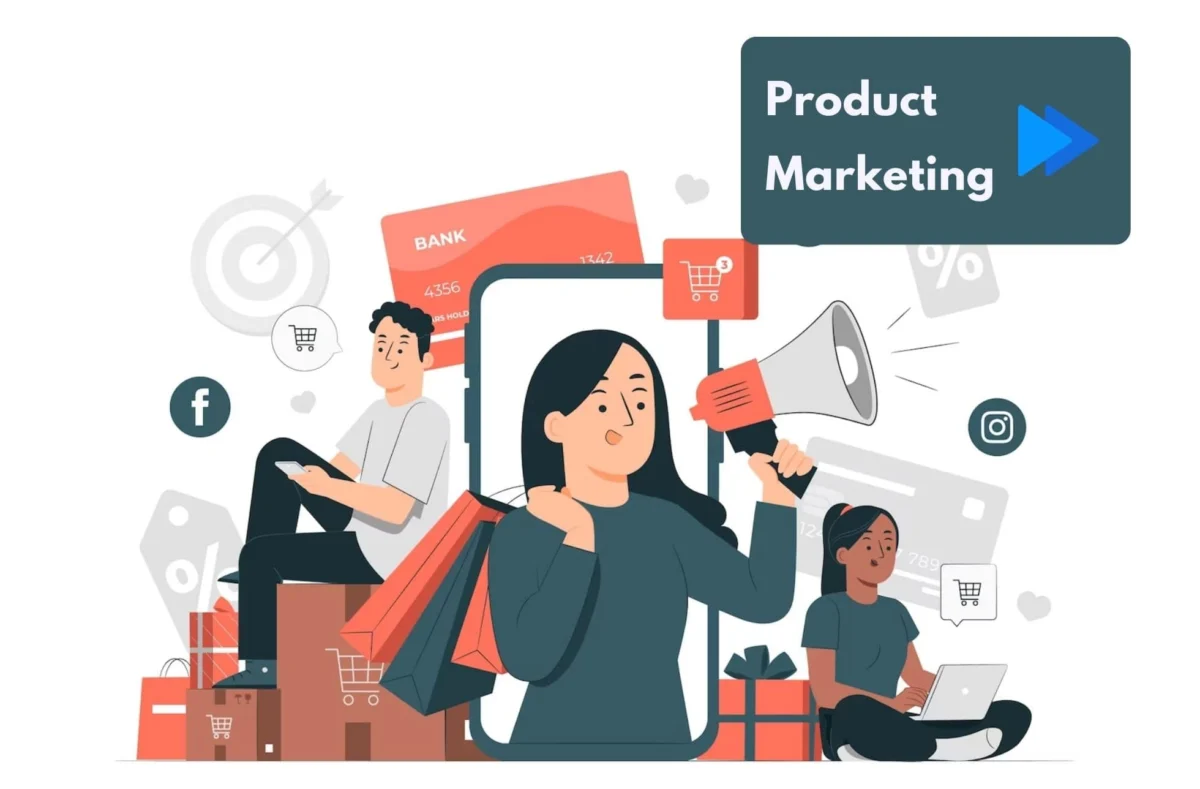
In the modern marketplace, possessing a high-quality product is merely the baseline for entry. The graveyard of business history is littered with revolutionary innovations that failed simply because they lacked a cohesive strategy to connect with an audience. In a hyper-competitive global economy, the difference between a product that languishes on the shelf and one that becomes a household name lies in the mastery of Product Marketing.
Product marketing is not just a department; it is the vital architecture that bridges the gap between product development, marketing, and sales. It is the discipline of defining the "who, where, and why" of a product, ensuring that what a company builds resonates perfectly with the needs of its target market.
1. The Core Fundamentals: Defining Product Marketing
At its essence, product marketing is the process of bringing a product to market, promoting it to the right audience, and optimizing its positioning to drive adoption. While general marketing focuses on broad brand awareness and lead generation, product marketing is laser-focused. It is the art of telling a specific story about a specific solution to a specific problem.
The Critical Distinction: Product Marketing vs. General Marketing
Many businesses conflate the two, leading to diluted messaging.
- General Marketing acts as the megaphone for the brand. It encompasses the overarching identity, public relations, and top-of-funnel lead acquisition.
- Product Marketing acts as the surgical tool. It involves deep market research, competitive analysis, and the crafting of the value proposition. It dictates how a product is packaged, priced, and positioned to ensure it solves the customer’s pain point better than any alternative.
2. Architecting a Winning Strategy
To build a product marketing strategy that yields measurable results, one must approach the task with a structured, data-driven mindset. A robust strategy serves as a roadmap, guiding stakeholders from the development phase to the post-launch lifecycle.
Phase I: Deep-Dive Market Research
Before a single dollar is spent on advertising, research must dictate the direction. This includes:
- Customer Personas: Who is your ideal user? What are their demographics, professional challenges, and purchasing behaviors?
- Competitive Intelligence: Who else is solving this problem? What are their weaknesses, and how does your product create a "moat" against them?
Phase II: The Positioning Framework
Positioning is not just a tagline; it is the mental space your product occupies in the mind of the consumer. A strong position explains why your product is the only logical choice. This involves identifying the "Unique Selling Proposition" (USP) that separates your offering from the commoditized noise of the internet.
Phase III: Pricing as a Strategic Lever
Pricing is often misunderstood as a financial decision; in reality, it is a psychological one. A premium price communicates quality and exclusivity, while a competitive, low-entry price can facilitate mass-market adoption. The product marketing team must analyze the price elasticity of their audience to determine the "sweet spot" that maximizes both revenue and market share.
3. Real-World Case Studies: Lessons from Titans
To understand the efficacy of these strategies, we look to the masters of the craft.
The Apple iPhone Launch: A Masterclass in Anticipation
Apple does not simply release phones; they orchestrate cultural events. Their product marketing strategy relies on:

- Controlled Information Leaks: Building organic buzz before the official keynote.
- Simplistic Messaging: Apple never leads with technical specifications; they lead with the human experience—what the product allows the user to achieve.
- The "One More Thing" Hook: A psychological trigger that keeps the audience engaged until the final second of the presentation.
Tesla’s Cybertruck: Disruption through Controversy
Tesla utilized a "Product-Led" approach that leaned into the unconventional. By unveiling a design that defied industry norms, they bypassed the need for traditional advertising spend. The controversy generated by the design itself functioned as a global marketing campaign, proving that if a product is bold enough, it markets itself.
4. The Rise of Product-Led Growth (PLG)
The most significant shift in recent years is the move toward Product-Led Growth (PLG). In a PLG model, the product is the primary vehicle for acquisition.
Companies like Slack, Dropbox, and Zoom revolutionized the B2B space by allowing users to experience the value of the product before paying a cent. This "freemium" or "trial-first" model reduces the friction of the sales process. The product team, in turn, must build features that encourage "viral loops"—where existing users invite others, effectively turning the user base into a distribution channel.
5. Metrics: Measuring the Pulse of Success
Data is the compass of the modern product marketer. Without rigorous tracking, strategy is merely guesswork. Key performance indicators (KPIs) include:
- Customer Acquisition Cost (CAC): The total cost required to bring one new customer through the door.
- Product Adoption Rate: The percentage of users who actually engage with the core features of the product after purchase.
- Churn Rate: The most critical metric for long-term survival; it measures the percentage of customers who stop using the product over a specific period.
- Customer Lifetime Value (CLV): The total revenue a business can reasonably expect from a single customer account.
6. The Role of the Product Marketing Manager (PMM)
The PMM is the conductor of an orchestra involving product managers, sales reps, and content creators. Their daily responsibilities are multifaceted:
- GTM (Go-To-Market) Strategy: Planning the timeline, communication, and channel distribution for new releases.
- Sales Enablement: Creating battle cards, presentation decks, and white papers that help sales teams close deals by articulating the product’s value.
- Customer Feedback Loops: Acting as the voice of the customer within the engineering team to ensure the product roadmap aligns with market demands.
7. The Dangers of Misalignment: Content vs. Product Marketing
A common pitfall for growing companies is the conflation of Content Marketing and Product Marketing.
- Content Marketing is educational. It builds trust and authority by answering questions and providing value without asking for a sale in every paragraph.
- Product Marketing is transactional and persuasive. It focuses on the specific features and benefits that compel a purchase.
When a brand uses its blog to aggressively push product features instead of solving user problems, it alienates the audience. Conversely, when a company lacks product marketing, its content becomes aimless and fails to drive revenue. The two must work in tandem: content captures the attention, and product marketing converts that attention into loyalty.
8. Final Implications: Building for Longevity
As the digital landscape evolves, product marketing will continue to become more data-centric and personalized. The rise of AI will likely allow for hyper-personalized product journeys, where the messaging a user sees is dynamically adjusted based on their behavior in real-time.
For businesses looking to survive, the mandate is clear: Product marketing is no longer optional. It is the strategic engine that ensures your innovation meets the right people, at the right time, with the right message. By bridging the gap between what you build and who needs it, you don’t just sell a product—you create a relationship.
Key Insights for Success:
- Align Teams: Ensure Product, Marketing, and Sales are speaking the same language.
- Listen to the Market: Let data, not ego, dictate your product features and messaging.
- Focus on Value: Always articulate the "why" before the "what."
- Iterate: A product marketing plan is a living document; update it based on performance metrics and shifting market conditions.
In the end, the most successful companies are those that view their product not as a static object, but as a dynamic solution that grows, changes, and matures alongside their customers.