










WASHINGTON — In a major strategic push to safeguard vital societal systems from increasingly sophisticated digital threats, artificial intelligence pioneer Anthropic has announced a comprehensive critical infrastructure defense program. Unveiled on Thursday, the initiative unites the company’s flagship Claude AI models, in-house threat researchers, and dedicated engineers with a powerful coalition of elite cybersecurity firms.
The program aims to preemptively identify and remediate critical security vulnerabilities across essential public services, energy grids, water treatment facilities, and open-source software (OSS) ecosystems before malicious actors can exploit them.
Main Facts
The newly announced initiative represents a cornerstone of Anthropic’s long-term commitment to cybersecurity. Rather than operating in isolation, the AI company is leveraging its frontier technology in direct partnership with established names in the cybersecurity sector.
The initial cohort of participating security giants and technology providers includes:
- Accenture
- Booz Allen Hamilton
- CrowdStrike
- Deloitte
- Dragos
- Hitachi
- Insane Cyber
- Nozomi Networks
- Palo Alto Networks
- PwC
- Rockwell Automation
The collaborative framework pairs the rapid data-processing and code-analysis capabilities of Claude models with human domain expertise. The primary objective is to scan, triage, and patch vulnerabilities in codebases that power critical infrastructure, as well as to assist organizations with incident response and rigorous red-teaming exercises.

As part of the rollout, Anthropic has already extended its frontier models and technical support to more than half of U.S. state governments and major critical infrastructure operators. In parallel, the company has launched a dedicated, opt-in open-source software scanning service designed to provide project maintainers with periodic vulnerability assessments, proof-of-concept demonstrations, and actionable patching recommendations free of charge.
Chronology and Evolution of AI Cyber Defense
The launch of Anthropic’s critical infrastructure defense program follows a rapid escalation in the dual-use capabilities of generative artificial intelligence.
- Early Developments (2023–2024): As large language models (LLMs) advanced, security researchers recognized that the same capabilities allowing AI to write clean, efficient code also enabled models to identify, analyze, and occasionally exploit known software vulnerabilities. This dual-use nature sparked intense industry-wide concern that malicious actors, ransomware syndicates, and state-sponsored hackers might weaponize frontier AI models faster than the defensive community could adapt.
- The Shift Toward Defensive Partnerships (2025): Recognizing the asymmetric threat landscape, major AI labs began pivoting away from restrictive, isolated safety models toward proactive deployment. Companies like Anthropic and OpenAI initiated specialized programs to funnel advanced technical resources and trusted access directly to verified corporate and government defenders.
- The Open-Source Vulnerability Crisis: Simultaneously, maintainers of massive open-source software repositories—often running on thin volunteer budgets—found themselves overwhelmed by complex security alerts. Many organizations explicitly requested unreviewed diagnostic data directly from AI security tools to accelerate their remediation workflows.
- Present Day (Late 2026): Responding to these grassroots demands, Anthropic formalized its security strategy on Thursday by officially establishing the critical infrastructure defense coalition and introducing its automated open-source scanning platform.
Supporting Data and Context
The urgency behind Anthropic’s initiative is underscored by chronic resource shortages within the public sector and foundational software communities.
According to industry metrics and statements released by Anthropic:
- Resource Deficits: Defenders of critical infrastructure possess decades of invaluable security experience, but their operations are severely constrained by workforce shortages and underfunded legacy systems.
- Scope of Reach: Through its preliminary rollout, Anthropic’s technical support network has already reached over 50% of U.S. states, offering specialized AI assistance to help agencies review public-sector code and harden state-level digital defenses.
- Open-Source Reliance: Modern software relies heavily on decentralized open-source libraries. A single unpatched vulnerability in an upstream OSS project can cascade into widespread systemic risk for industrial control systems (ICS) and operational technology (OT).
- The Long-Term Roadmap: Anthropic’s ultimate benchmark for success is to achieve a future where the vast majority of vulnerability triage and patch generation can be safely automated, while simultaneously establishing a new baseline for industry-wide secure coding standards and resilient security architectures.
Official Responses and Stakeholder Perspectives
Anthropic framed the initiative as an acknowledgment of the limits of artificial intelligence when decoupled from human expertise. In a detailed corporate blog post, the company emphasized that technology alone cannot solve systemic physical and digital vulnerabilities.
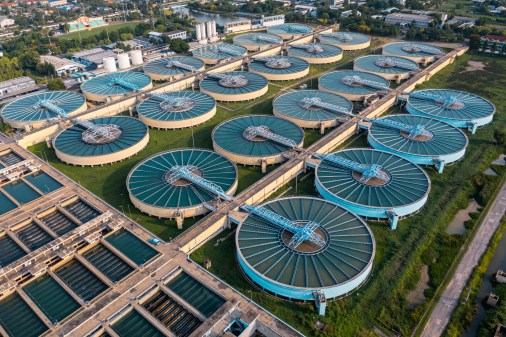
"Critical infrastructure is hard to defend in many ways that AI cannot fix, but we believe that frontier models can help find and repair weaknesses before those weaknesses are used to cut off power or make water unsafe," Anthropic wrote. "Defenders of critical infrastructure and the open-source software community have decades of security experience but have faced severe resource shortages that are exacerbated by this moment. We are recognizing their expertise in these domains and offering our support."
Cybersecurity partners within the coalition have likewise emphasized the necessity of public-private cooperation and AI integration. With critical sectors such as water treatment plants, electrical grids, and transportation networks increasingly targeted by ransomware groups and foreign intelligence operations, integrating machine intelligence into defensive playbooks is no longer viewed as experimental—it is viewed as mandatory.
Broader Implications
The introduction of Anthropic’s defense program carries profound implications for the future of national security, software development, and the legal frameworks governing autonomous technologies.
1. Shifting the Asymmetry in Cyber Warfare
For years, cybersecurity professionals operated under the gloomy maxim that "defenders must be right every time, while attackers only need to be right once." By embedding advanced AI models into the daily workflows of security analysts, the defense coalition hopes to flip this script. Automated triage and rapid patching can dramatically compress the window of exposure, leaving threat actors less time to weaponize zero-day vulnerabilities.
2. The Open-Source Dilemma: Speed vs. Accuracy
Anthropic’s new opt-in OSS scanning service introduces a calculated trade-off. By delivering scan results and proof-of-concept scripts faster—even when reports may occasionally contain inaccuracies—the company is prioritizing velocity over pristine curation. While this empowers maintainers to lock down code rapidly, it also places a burden on human developers to rigorously verify AI-generated outputs to prevent unintended functional regressions.
3. Legal and Regulatory Crossroads
As AI systems become more autonomous in detecting and neutralizing threats—and conversely, as policymakers debate the legal liabilities surrounding "agentic" AI actions—initiatives like this set vital precedents for industry self-regulation. By partnering directly with heavyweights in industrial automation (such as Rockwell Automation and Nozomi Networks) and government contractors (such as Booz Allen), Anthropic is embedding itself deeply into the regulatory and compliance fabric of critical national infrastructure.
Ultimately, Anthropic’s critical infrastructure defense program signals a maturation in how artificial intelligence companies approach safety. Rather than merely restricting access to powerful capabilities through rigid safety guardrails, the industry is increasingly moving toward active, collaborative deployment—putting advanced technology directly into the hands of those sworn to protect the digital and physical foundations of modern society.



