










LONDON — Apple has ramped up its long-running legal battle against the British government, launching a direct challenge in London’s Investigatory Powers Tribunal (IPT) over the state’s rigid refusal to publicly acknowledge a secret demand for access to encrypted user data.
The high-profile court appearance marks the latest chapter in a multi-year global standoff between Silicon Valley’s commitment to end-to-end encryption and international law enforcement agencies seeking technological workarounds to combat digital crime and terrorism.
Main Facts: The Battle Over Secrecy and Encryption
At the heart of the current tribunal hearing is not yet whether the UK government has the ultimate legal authority to demand a security backdoor into consumer tech platforms—though that fight looms large on the horizon. Instead, Thursday’s proceedings centered on the UK government’s strict adherence to its "Neither Confirm Nor Deny" (NCND) policy.
For over a year, government officials have refused to publicly validate or deny the existence of a Technical Capability Notice (TCN) served to Apple. This directive reportedly mandates that the tech giant build specialized access points—effectively a backdoor—into iCloud data.
Apple, joined by digital rights and privacy advocacy groups Privacy International and Liberty, argued before the IPT that the government’s insistence on total secrecy has become untenable. Legal representatives for the coalition pointed out that the existence of the order is already one of the worst-kept secrets in tech policy, having been extensively detailed by investigative journalists, confirmed by international politicians, and leaked by anonymous government sources.
By maintaining a blanket silence, Apple’s legal team argued, the UK government is trampling the foundational legal principle of "open justice" and silencing public discourse on a matter of profound global consequence.
Chronology of a Global Standoff
To understand how Apple and the British government arrived at this courtroom in London, it is necessary to trace the escalation of events over the past several years:
- Early 2024: Investigative reports, notably from The Washington Post, reveal that the British government secretly issued a sweeping directive requiring Apple to engineer a universal security backdoor into all global iCloud uploads. The order was bound by strict legal secrecy rules, barring Apple from even acknowledging its existence to its consumer base.
- The Fallout for UK Consumers: Rather than complying with the global backdoor mandate, Apple took aggressive defensive action. The company completely disabled the option for new users in the UK to enable Advanced Data Protection (ADP)—a feature that provides robust end-to-end encryption for iCloud backups, photos, and messages. Consequently, British users were left with weaker data security than their international counterparts.
- April 2025: In an early victory for tech transparency, judicial authorities struck down an initial attempt by the UK government to keep even the baseline facts of Apple’s legal challenge entirely secret. The court ruled that acknowledging the litigation posed no tangible threat to national security.
- Mid-2025: Following significant diplomatic pressure and pushback from the White House, the scope of the original mandate shifted. The British government conceded that it would not pursue access to American user data through the UK order. However, the overarching demand did not vanish; London subsequently issued a revised Technical Capability Notice specifically narrowing its sights onto UK-based Apple users.
- Late 2025 / Early 2026: In response to the modified, UK-focused directive, Apple initiated a formal second legal challenge, arguing that the revised notice still fundamentally undermines core privacy architecture.
- September 2026 (Today): Apple and allied privacy organizations present arguments at the Investigatory Powers Tribunal in London, directly attacking the government’s NCND policy and demanding the right to openly debate the state’s demands.
Supporting Data and Technical Realities
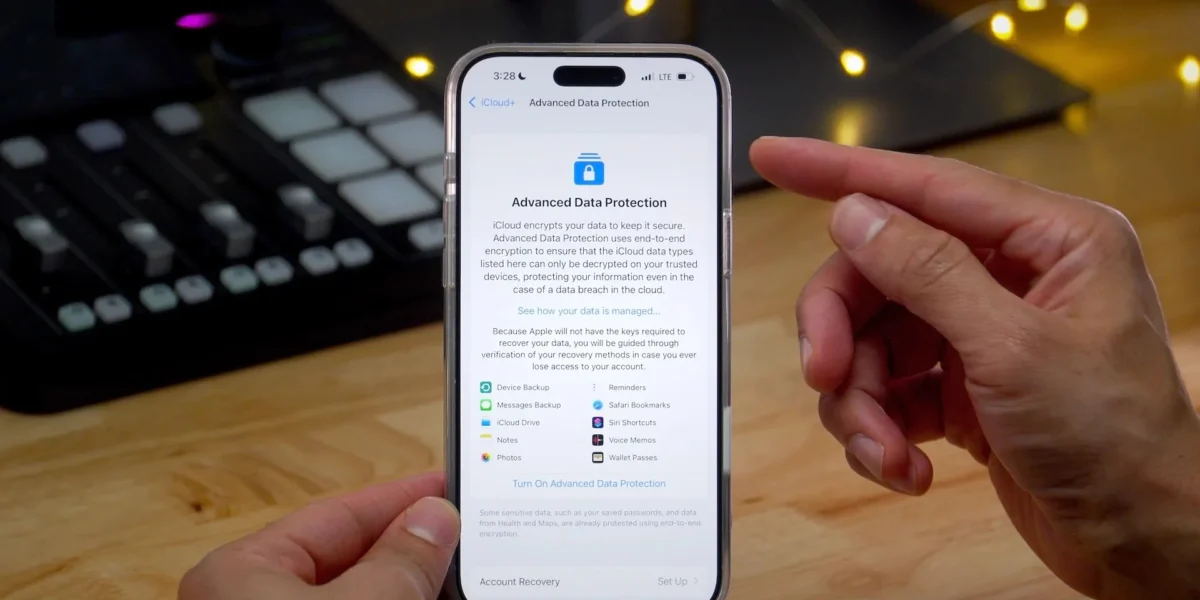
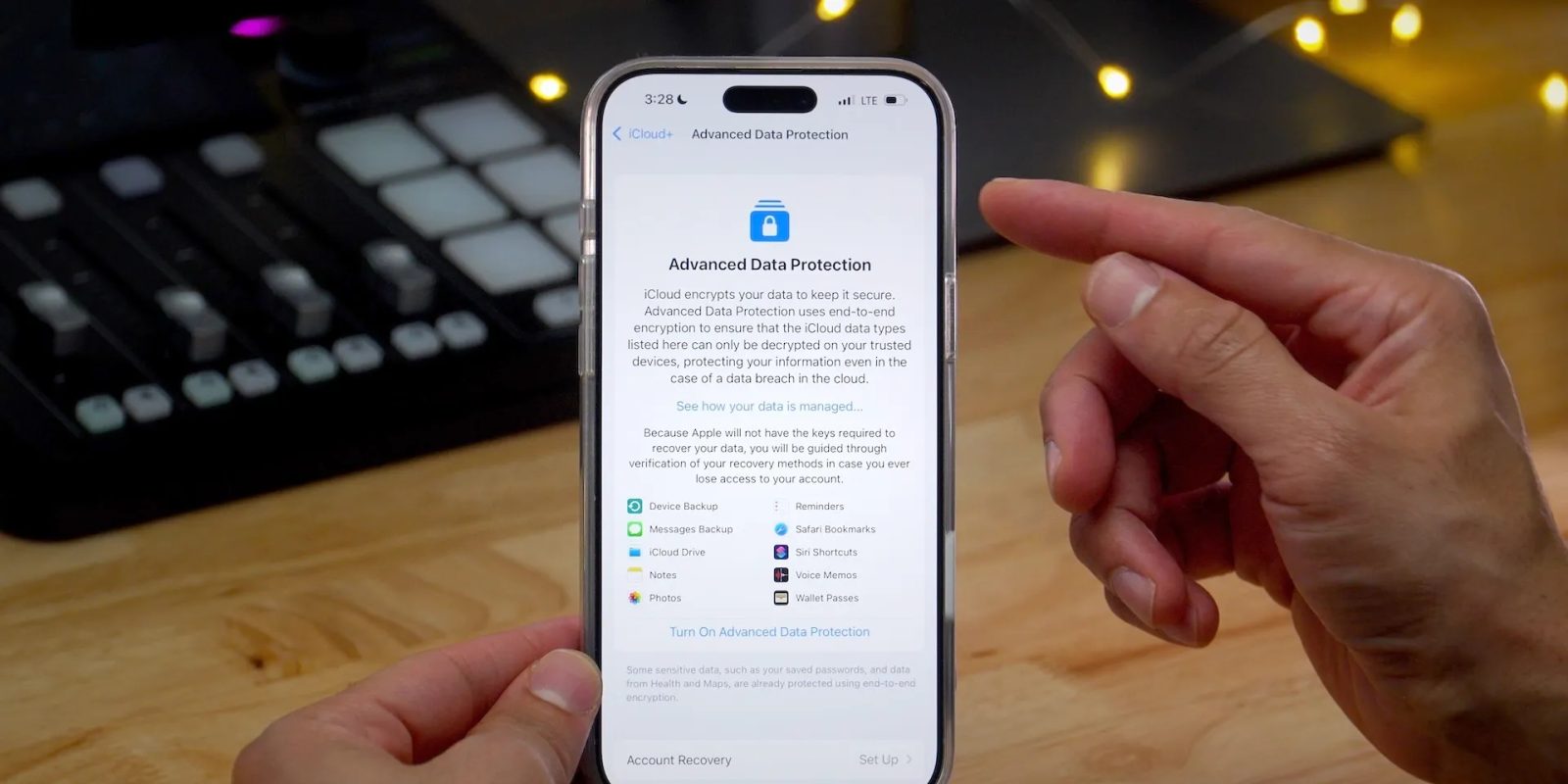
The technical friction driving this litigation stems from Apple’s implementation of Advanced Data Protection (ADP) for iCloud.
Standard cloud storage services typically employ server-side encryption, meaning the service provider holds the cryptographic keys required to decrypt user files. While this allows companies like Apple to recover data if a user forgets their password—and allows them to comply easily with lawful interception warrants—it also exposes user data to third-party interception, malicious cyberattacks, or state-sponsored surveillance.
End-to-end encryption (E2EE), utilized under ADP, ensures that cryptographic keys remain exclusively on the user’s trusted devices. Under this architecture, not even Apple can read the contents of an encrypted iCloud Backup, decode shared notes, or view photos stored in the cloud.
When a government entity demands a "backdoor," cryptographic experts universally agree that it requires introducing a fundamental structural flaw—often referred to as "exceptional access." Such a mechanism weakens encryption for all users globally, because a key designed exclusively for law enforcement can theoretically be reverse-engineered, stolen, or exploited by hostile nation-states and malicious actors.
Apple’s decision to strip ADP functionality from the UK market highlights the painful trade-offs companies face when national security mandates collide with consumer privacy frameworks.

Official Responses and Arguments in Court
During Thursday’s tribunal hearing, the legal arguments laid bare the frustration felt by privacy advocates and corporate defenders alike.
Ben Jaffey, representing the civil liberties campaign groups Privacy International and Liberty, did not mince words before the panel of judges. He characterized the government’s ongoing silence as "farcical."
"The horse has long bolted," Jaffey argued, emphasizing that the contents of the secret order are already common knowledge. He pointed out that U.S. lawmakers and federal officials have openly referenced the original mandate, while unnamed British officials have regularly spoken about the case off-the-record to media outlets.
Both Jaffey and Apple’s counsel asserted that wielding the NCND policy in an era of widespread leaks and international reporting makes a mockery of open justice. It effectively prevents independent security experts, academics, and consumers from debating whether state surveillance overreach is eroding constitutional rights.
Thus far, the UK government has defended its position by asserting that national security protocols necessitate strict confidentiality regarding operational capabilities and demands placed upon private telecommunications and technology companies.
Broader Implications for Privacy, Law Enforcement, and Tech
The outcome of Apple’s ongoing tribunal challenges carries profound implications that stretch far beyond the borders of the United Kingdom:

1. The Precedent for Global Surveillance
If the UK government successfully forces a major platform like Apple to compromise its encryption standards—or forces compliance under a shroud of legal secrecy—it creates a dangerous playbook for other authoritarian and democratic regimes alike. Countries with rigorous censorship or aggressive domestic surveillance apparatuses could point to the UK precedent to demand their own regional backdoors.
2. The Future of "Going Dark"
Law enforcement agencies worldwide have long argued that end-to-end encryption allows criminals, terrorists, and bad actors to operate with impunity—a phenomenon frequently termed "going dark." However, cybersecurity researchers and tech companies maintain that undermining encryption creates systemic vulnerabilities that endanger millions of law-abiding citizens. The IPT ruling will test how much deference courts give to intelligence agencies over cryptographic integrity.
3. Corporate Transparency and Consumer Trust
Apple has heavily marketed its brand around the premise of privacy as a "fundamental human right." Capitulating to a secret government backdoor—and being legally muzzled from telling its customer base about it—would represent a devastating blow to that brand identity. By fighting both the mandate and the secrecy rules in court, Apple is signaling to its global consumer base that it is willing to aggressively push back against government overreach.
Next Steps
With Thursday’s hearing successfully concluded, the Investigatory Powers Tribunal must now deliberate on whether the UK government can lawfully continue invoking its "Neither Confirm Nor Deny" policy under these specific circumstances.
Legal analysts note that a comprehensive hearing addressing the legality of the underlying Technical Capability Notice itself is not expected to take place until sometime next year. Until then, the digital rights community, global tech giants, and security agencies will be closely watching London for a ruling that could redefine the boundaries of digital privacy in the modern era.



