










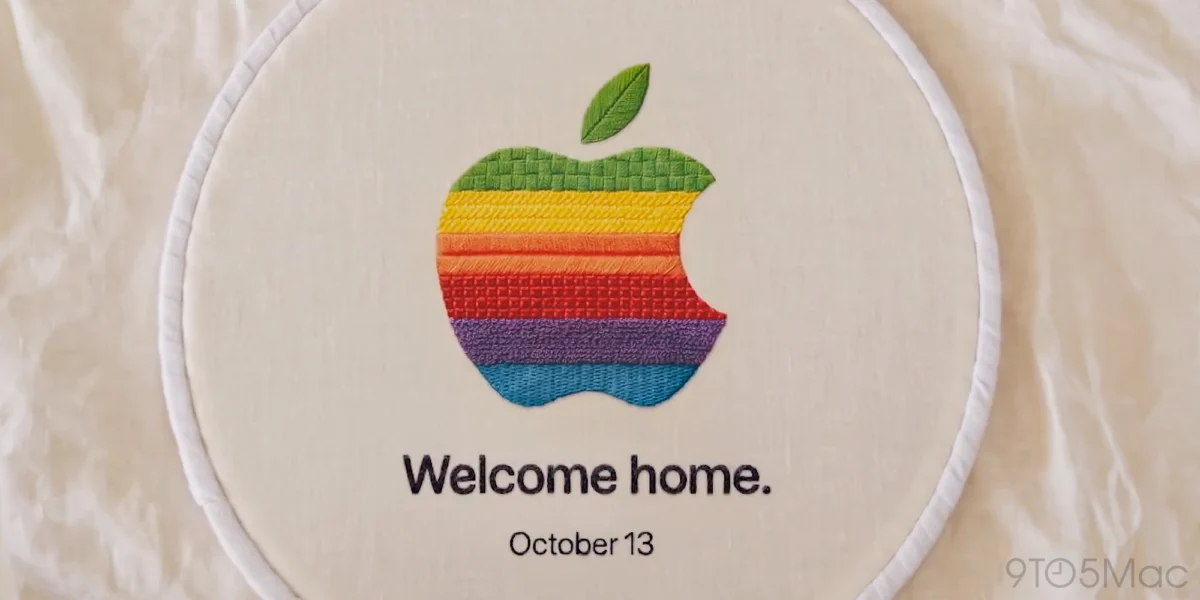
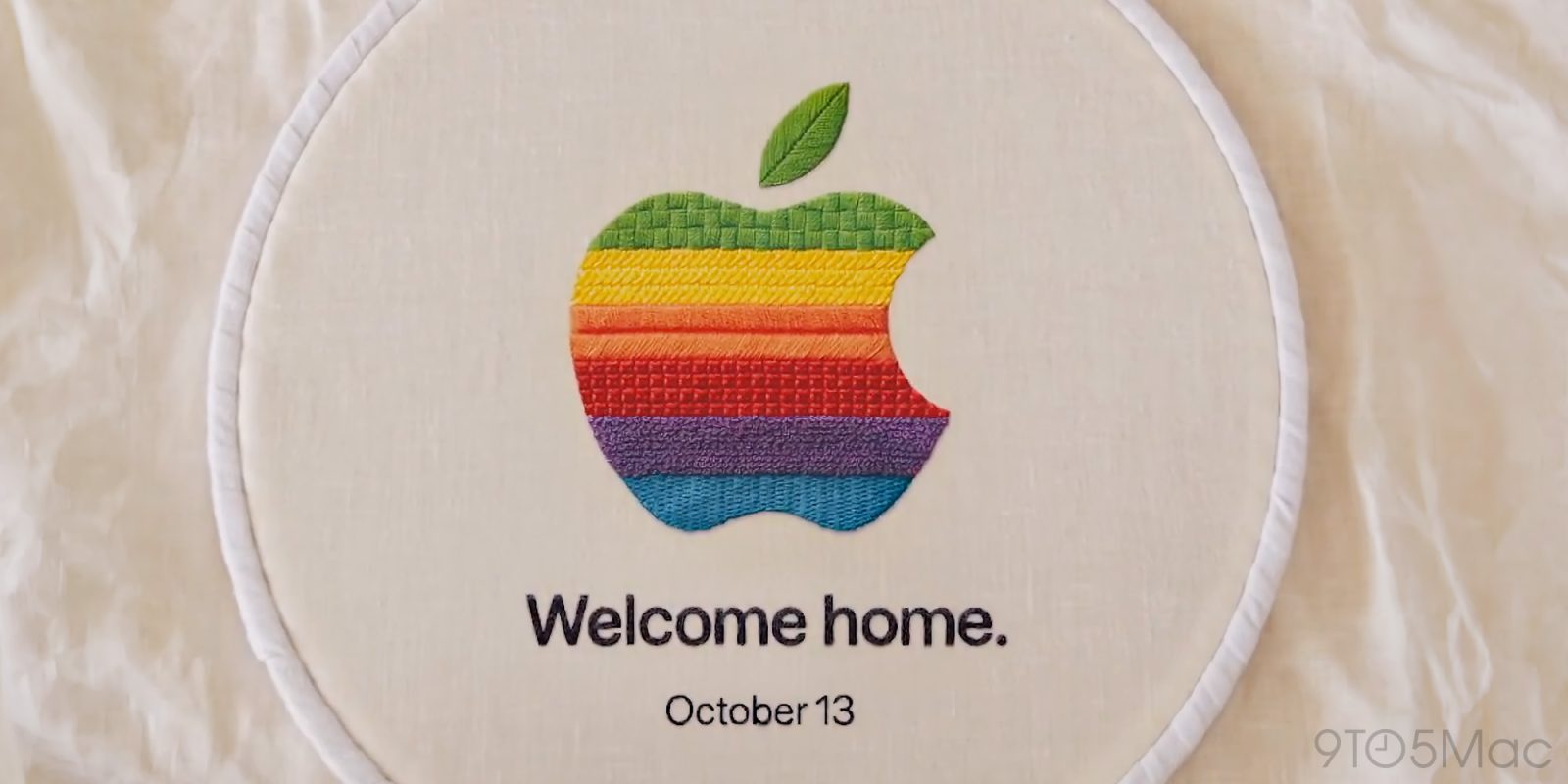
CUOPERTINO, CALIFORNIA — Apple has officially set the stage for its next major hardware offensive, confirming plans for a special product launch event on October 13. Centered around the evocative tagline "Welcome home," the upcoming showcase is widely expected to mark Apple’s formal, aggressive re-entry into the smart home ecosystem—a category that industry analysts argue the tech giant has neglected for years.
With a hybrid format combining an exclusive in-person press experience in New York City with a pre-recorded online broadcast, Apple is poised to unveil a sweeping lineup of connected hardware. At the forefront of these anticipated announcements is an entirely new product category: a wall-mountable and desktop smart display affectionately dubbed the "HomePad." Alongside this flagship device, consumers can expect long-overdue refreshes to the Apple TV 4K and the HomePod mini, as well as a strategic partnership with electronics manufacturer LG to introduce co-branded smart home accessories.
Main Facts: What to Expect on October 13
As leaks and supply chain reports coalesce, the contours of Apple’s October 13 event have become remarkably clear. The showcase will focus heavily on ambient computing, ambient artificial intelligence, and unified household control.
The primary announcements slated for the event include:
- The "HomePad" Smart Display: A brand-new hardware category featuring an approximate 6-inch square display mounted on a half-dome base, heavily utilizing Apple Intelligence and advanced multi-user recognition.
- Apple TV 4K (2026 Edition): The first update to Apple’s set-top box since November 2022, featuring the powerful A19 or A19 Pro chip to bring advanced AI capabilities to the television interface.
- HomePod mini 2: A much-needed internal upgrade replacing the aging S5 processor with a modern, high-speed chip capable of supporting localized Siri AI operations, alongside fresh color options.
- LG-Partnered "Second-Party" Accessories: A new line of HomeKit-compatible security cameras, smart locks, thermostats, and smart doorbells developed in collaboration with LG.
Chronology: The Road to the "Welcome Home" Showcase
Apple’s renewed focus on the smart home did not happen overnight; it is the culmination of years of iterative software development, hardware prototyping, and strategic pivoting.
- November 2022: Apple releases the third-generation Apple TV 4K, featuring the A15 Bionic chip and HDR10+ support. This would remain the company’s last update to its set-top box for nearly four years.
- Late 2023 – 2024: Rumors begin to circulate within supply chain circles regarding Apple’s ambitions to build a dedicated tabletop command center. Initial concepts point toward a robotic arm-mounted iPad device, which eventually evolves into a fixed-base display.
- September 2025: Apple lays the groundwork for its upcoming ambient ecosystem by teasing deeper architectural integrations across iOS, iPadOS, and watchOS, pointing toward a unified home operating framework.
- Late September 2026: Prominent industry insiders, including Bloomberg’s Mark Gurman, report that Apple has finalized production on its long-rumored smart display, locking in an October launch window. Concurrently, reports emerge detailing an unexpected partnership with LG to produce home security gear.
- October 8, 2026: Apple officially confirms the October 13 event date with the "Welcome Home" invitations sent out to members of the press.
- October 13, 2026 (Upcoming): The official hybrid event goes live via online video streams and press briefings in New York City, unveiling the new product roadmap.
Supporting Data & Hardware Breakdown
To understand the scale of Apple’s October event, it is necessary to examine the technical specifications and architectural changes rumored for each incoming device.
The "HomePad": Merging iMac G4 Nostalgia with Modern AI
The headlining product of the event is the anticipated "HomePad." According to supply chain leaks detailed by Bloomberg, the device sports a distinctive physical design: a 6-inch square touchscreen perched atop a half-dome weighted base via a sleek metallic arm. Industry observers have been quick to draw design parallels to the iconic iMac G4.
The device will reportedly ship in two configurations:
- Countertop Model: Designed for kitchen islands, nightstands, and living room end tables.
- Wall-Mounted Model: Engineered to replace standard light switch panels or wall thermostatic controls.
Under the hood, the HomePad will leverage Apple Intelligence and advanced spatial audio capabilities. One of its standout functional features is biometric and voice-based user profiling. Using advanced machine learning, the device can allegedly recognize distinct household members as they approach or speak to it, dynamically modifying the on-screen UI to display personalized calendars, reminders, and media recommendations.
The operating system powering the HomePad—rumored to be dubbed homeOS—draws design cues from across Apple’s portfolio. It blends the glanceable utility of watchOS complications, the app grid structure of iPadOS, and the persistent widget ecosystem of the iPhone’s StandBy mode.
Apple TV 4K: Empowered by the A19 Chip
The upcoming Apple TV 4K maintains the compact, fanless aesthetic of its predecessor, but packs a massive internal upgrade. By outfitting the set-top box with the A19 or A19 Pro chip, Apple is ensuring that its television interface can handle demanding on-device AI tasks.
Furthermore, code references discovered in recent beta software hint at advanced audio configurations. Users may soon be able to pair up to four full-sized HomePods with the new Apple TV to create a robust, synchronized surround-sound party mode for home entertainment systems.

HomePod mini 2: Bidding Farewell to the S5 Chip
Since its debut, the original HomePod mini has been a commercial success, but its internal processing power has severely lagged behind modern computational audio demands. Powered by the aging S5 chip—originally introduced in the Apple Watch Series 5—the first-generation mini was structurally incapable of running advanced machine learning models locally.
The HomePod mini 2 resolves this bottleneck by integrating a modernized processor. This silicon upgrade not only enables full Siri AI integration, allowing the compact speaker to process complex queries locally and securely, but also opens the door for snappier handoff speeds, improved Ultra Wideband (UWB) precision, and fresh aesthetic colorways.
The LG Alliance: Expanding the HomeKit Ecosystem
In a departure from its historically insular hardware strategy, Apple has reportedly collaborated with South Korean electronics giant LG to co-develop a suite of "second-party" smart home accessories.
While these products—which reportedly include smart locks, automated thermostats, video doorbells, and indoor/outdoor security cameras—may not ship immediately on October 13, their existence signals a serious push by Apple to cement its HomeKit and Matter standards as the dominant infrastructure for modern residential automation.
Official Responses and Industry Context
While Apple has maintained its traditional pre-event silence regarding unannounced products, executives have frequently signaled a growing corporate interest in spatial computing and ambient hardware. During recent earnings calls, CEO Tim Cook and CFO Luca Maestri have repeatedly emphasized the untapped potential of the ecosystem outside of the traditional iPhone and Mac upgrade cycles.
Industry analysts view the "Welcome Home" event as a long-overdue correction. For years, competitors like Amazon (with the Echo Show line) and Google (with Nest hubs) have dominated the smart display market. By refusing to rush an inferior product to market, Apple has allowed competitors to pioneer the category, paving the way for Cupertino to introduce a premium, privacy-focused alternative built on the backbone of Apple Intelligence.

Market research firms note that consumer trust regarding data privacy could give Apple a distinct competitive edge. Unlike competing smart displays that rely heavily on cloud-based telemetry for ad targeting, Apple’s emphasis on on-device processing via Apple Intelligence aligns directly with growing consumer demand for domestic digital privacy.
Implications for Consumers and the Tech Industry
The launch of the HomePad and the broader smart home refresh carry significant implications for both everyday consumers and the broader consumer electronics market:
- Consolidation of the Smart Home: For households already deeply integrated into the Apple ecosystem, the HomePad promises to eliminate the friction of managing disparate devices through an iPhone or fragmented voice commands. By centralizing home automation, security monitoring, and communication into a single countertop display, Apple is attempting to make the smart home genuinely accessible to non-technical users.
- The Evolution of Siri: Siri has faced persistent criticism for falling behind generative AI competitors like ChatGPT, Gemini, and Claude. By routing local queries through specialized silicon in the HomePad, Apple TV 4K, and HomePod mini 2, Apple is decentralizing its AI infrastructure, positioning its smart home hardware as active listening posts rather than passive speakers.
- Pressure on Competitors: The introduction of a polished, high-end Apple smart display will likely force Amazon and Google to elevate the build quality and privacy standards of their own ambient hardware offerings.
As the countdown to October 13 continues, anticipation among developers, enthusiasts, and investors is reaching a fever pitch. Whether the "Welcome Home" event successfully reshapes the smart home landscape or merely adds a luxury tier to an existing market remains to be seen, but one fact is certain: Apple is ready to command your living room.



