EA Sports FC 27 Review: A Masterclass on the Pitch, a Complex Labyrinth Off It
By The Gaming Desk Published September 2026
Every September, the gaming industry braces for the annual autumnal ritual: EA Sports rolling out its latest football simulation, accompanied by soaring promises that this year’s iteration is the definitive, most realistic version of the world’s game yet. EA FC 27 arrives carrying this familiar weight, but it does so with a distinct swagger. Introducing a heightened sense of realism, overhauled physics, structural changes to modes, and fresh avenues for Ultimate Team grinders to build their dream squads, the game has arrived following a week of early access.
After spending extensive hours with the game following the v1.0.1 update, this comprehensive review explores whether EA FC 27 warrants a permanent spot in your console or PC library, dissecting its on-pitch innovations, structural gambles, and economic shifts.
The Main Facts: What Defines EA FC 27?
At its core, EA Sports FC 27 represents a philosophical shift away from automated gameplay and toward individual player accountability. The headline features of this year’s release include:
Grounded On-Field Physics: A tangible weight to the ball, overhauled collision detection, and a lighting system that fundamentally changes evening matches.
Manual Defending Overhaul: A severe reduction in AI-assisted defending, shifting the burden of timing, spacing, and tackling entirely onto the player.
The Grounds (Open-World Hub): A major new social space exclusive to PC and current-gen consoles, drawing inspiration from open-world hubs seen in titles like NBA 2K.
Manager Career Revamp: Dynamic weekly player ratings, multi-staged transfer negotiations, and aggressive rival clubs capable of hijacking deals.
Ultimate Team Complexities: The introduction of "Streamlined SBCs," the persistent card-archiving "FUT Gallery," and a heavier, more convoluted multi-currency economy.
Chronology of the Release and Early Access Period
The rollout of EA FC 27 followed EA’s tried-and-true launch schedule, though player reception has evolved rapidly through each phase:
Early September 2026: EA Sports deployed the early access period for pre-order and Ultimate Edition buyers, giving select players a seven-day head start.
Mid-September 2026: The global launch day was swiftly followed by the deployment of the v1.0.1 patch. While the update stabilized online servers, it left lingering technical quirks unaddressed.
Post-Launch Phase: The community quickly splintered into distinct camps: hardcore competitive players praising the high skill ceiling, casual fans struggling with the steep learning curve, and Ultimate Team veterans navigating an increasingly dense web of monetization layers.
The Pitch Itself: Physics, Lighting, and Tactical Feel
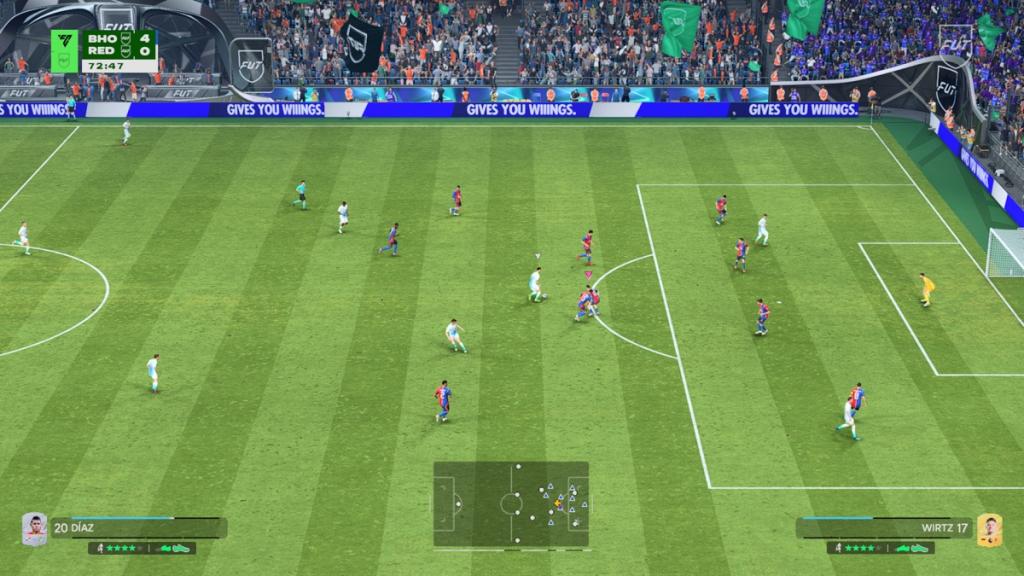
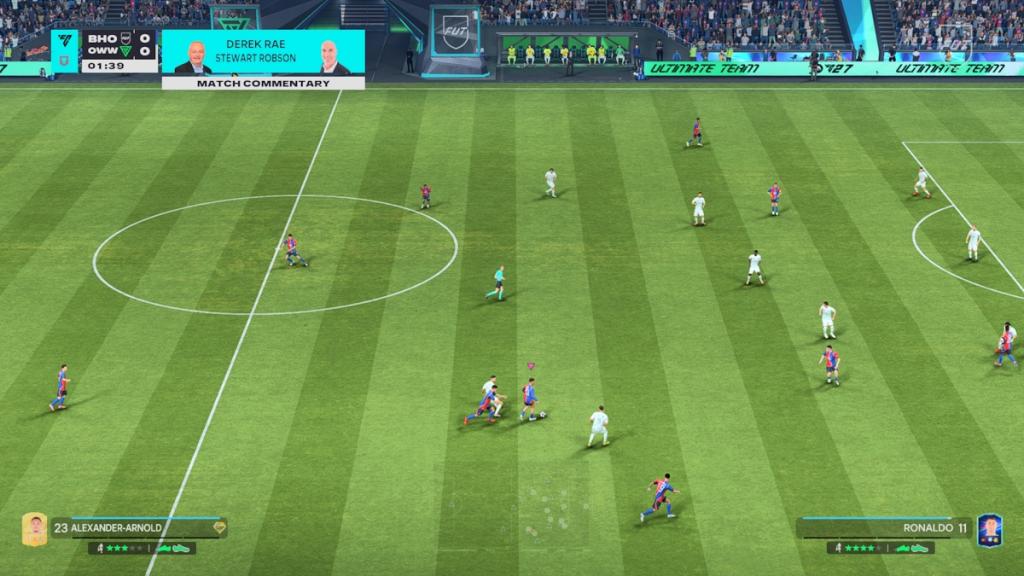
Gameplay remains the undisputed focal point of any football simulation, and this year’s on-field product largely delivers on its promises. For every pass, driven cross, or thunderous strike, the ball possesses a genuine, perceptible weight as it leaves the boot. Collisions are resolved with organic unpredictability, making the overall physics feel significantly more grounded and tactile than last year’s iteration, FC 26.
Lighting and Technical Hitching
One of the most immediate aesthetic upgrades is how the engine handles lighting and reflections. Tuesday-night matches under the stadium floodlights look remarkably better, benefiting from an atmospheric depth that you might not consciously appreciate until you switch back and forth between FC 27 and FC 26.
However, technical polish is not entirely uniform. While gameplay and online connections remained stable throughout testing, the pause menus and idle screens exhibited unexpected stuttering—a hitching anomaly absent from earlier versions. Furthermore, online match loading times felt marginally slower. While not outright dealbreakers, these technical blemishes persisted even after the v1.0.1 update, suggesting EA has optimization work ahead.
Defending: The Biggest Tactical Swing in Years
Without a doubt, the defining meta-shift of EA FC 27 lies in its defensive mechanics. In a bold move designed to elevate individual gaming skills, EA has intentionally gutted AI-assisted defending even further than it was in FC 26.
The End of Auto-Tackling
Auto-tackles are now vastly less reliable. Defensive AI units will hold their shape and offer structural support rather than recklessly diving in every time an opposing attacker drifts close. Consequently, the defensive burden rests squarely on your shoulders:
Manually selecting the correct defender.
Reading the opponent’s dribbling cues.
Timing your tackle with surgical precision.
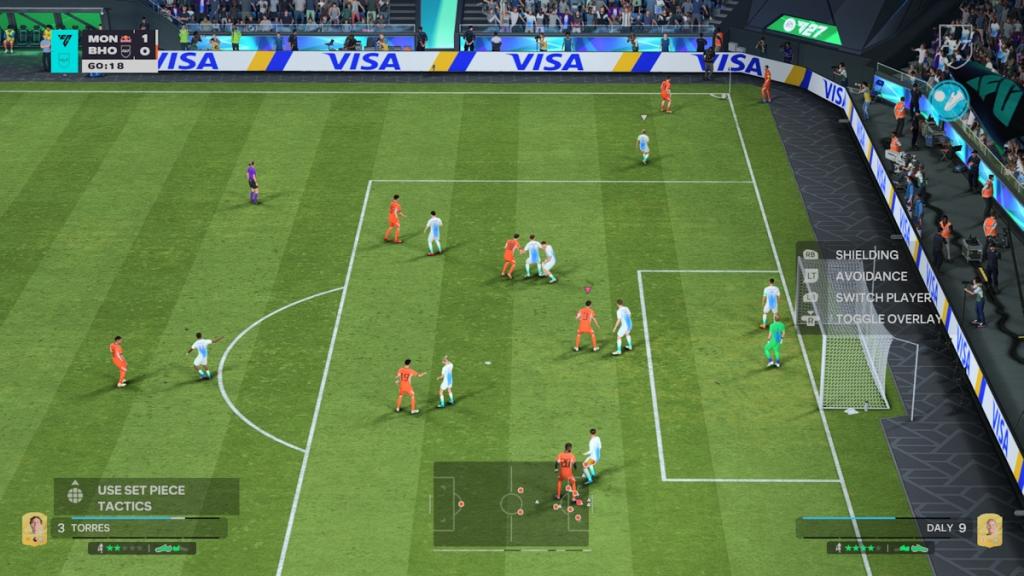
Miss your window, and you will be brutally punished—the AI will not bail you out. To compensate for this loss of automated safety nets, EA has enhanced the range of manual tackles and improved jockey speeds. Set pieces are equally unforgiving; non-controlled players no longer automatically position themselves inside the box during defensive corners, requiring you to actively switch bodies and win aerial duels.
For veterans returning from FC 25 or newcomers unaccustomed to "real" defensive fundamentals, this system will prove brutally difficult. Yet, it is ultimately a skill-rewarding design that will dictate the competitive meta for months to come.
Attacking Build-Up Play over Route-One Tactics
Because the defensive AI punishes lazy positioning, the attacking philosophy has shifted in tandem. You can no longer rely on route-one tactics, spamming through-balls, or mindlessly overloading runners forward. Attempting to rush the pitch will see you instantly swallowed up by disciplined backlines.
Instead, FC 27 rewards patience. Slowing the pace of the game, retaining possession, and passing through the thirds to stretch the opponent’s formation will trigger smarter attacking AI. Players make intelligent curved runs and exploit spatial gaps organically. This represents a welcome departure from the "sprint, cut-back, and cross" meta that dominated recent years, though it demands that players unlearn habits formed over multiple annual releases.
Note on Authentic Gameplay: These sweeping changes to attacking and defending are tailored explicitly for Competitive gameplay modes. Offline experiences, such as Career Mode, utilize "Authentic Gameplay 2.0," which deliberately introduces imperfect touches and unforced errors when players receive the ball under pressure. This creates a raw, cinematic feel that successfully separates casual offline play from the sweat of competitive online matches.
Supporting Data: Career Mode vs. Ultimate Team
To understand the bifurcated nature of EA FC 27, one must examine how EA has distributed its development resources across its primary single-player and multiplayer modes.
Game Mode
Major Changes in FC 27
Community Reception
Player Career
Minimal updates; identical pacing and progression loops.
Disappointing; stagnant compared to previous years.
Streamlined SBCs, FUT Gallery, delayed transfer market unlock.
Polarizing; rewards are lighter, economy is overly complex.
The Grounds
Open-world 100-player social hub (PC/Current-Gen only).
Ambitious, but currently thin on post-launch content.
Manager Career Shines
While Player Career remains largely ignored—running on the same tired progression loops seen for years—Manager Career has received a massive, long-overdue overhaul. Player ratings are no longer static throughout a season; they fluctuate dynamically on a weekly basis based on current form, physical fitness, and mental morale.
The transfer market has also been entirely rebuilt around realistic valuations. Negotiations now occur across multiple interactive stages rather than instantaneous cinematic cutscenes. Rival clubs can, and will, hijack your transfer pursuits mid-negotiation or walk away entirely if you hesitate. With the addition of sell-on fees, buy-back clauses, and loan-back requests, managing a football club genuinely mimics the high-stakes world of real-world sports administration.
Set Pieces and Celebrations: Nuance and Aura
Set Pieces
Free kicks and corners now utilize a two-stage system. Players first dictate the delivery’s curve and power, and then take manual control of a specific attacker inside the box to time their jump and positioning. While conceptually brilliant—rewarding structured build-up play—it currently feels like a confusing, over-complicated mess in practice. Demanding multiple rapid inputs, it will require a steep adjustment period for players accustomed to the old "fire-and-forget" corner mechanics.
Celebrations
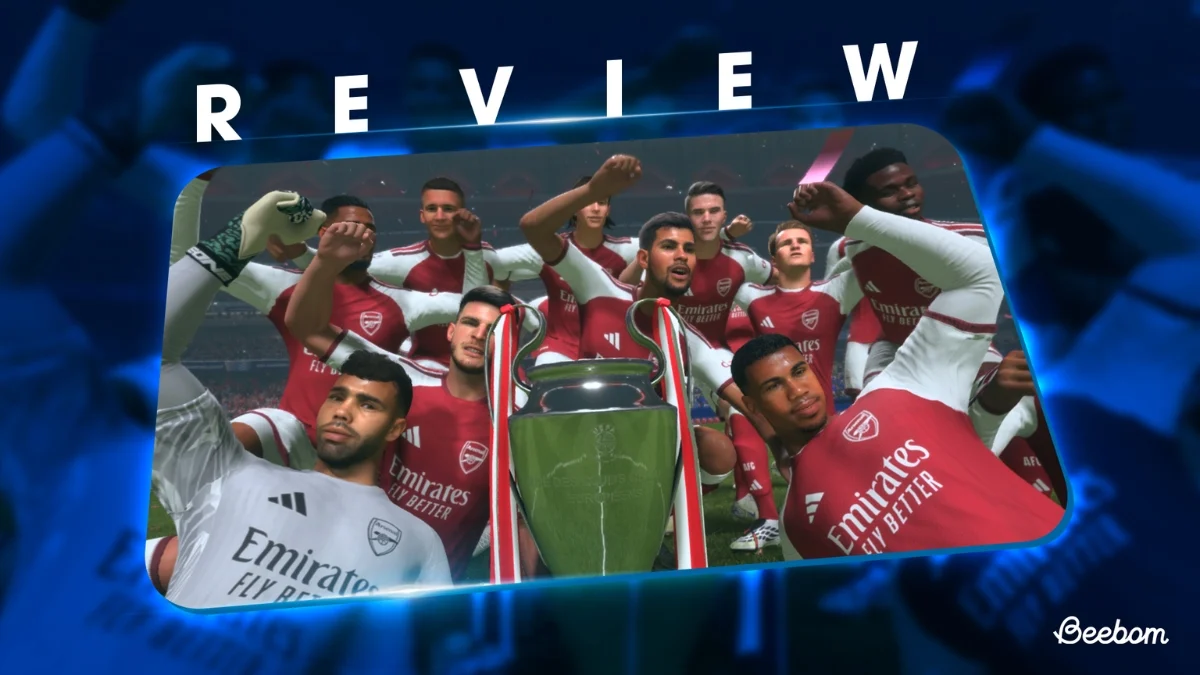
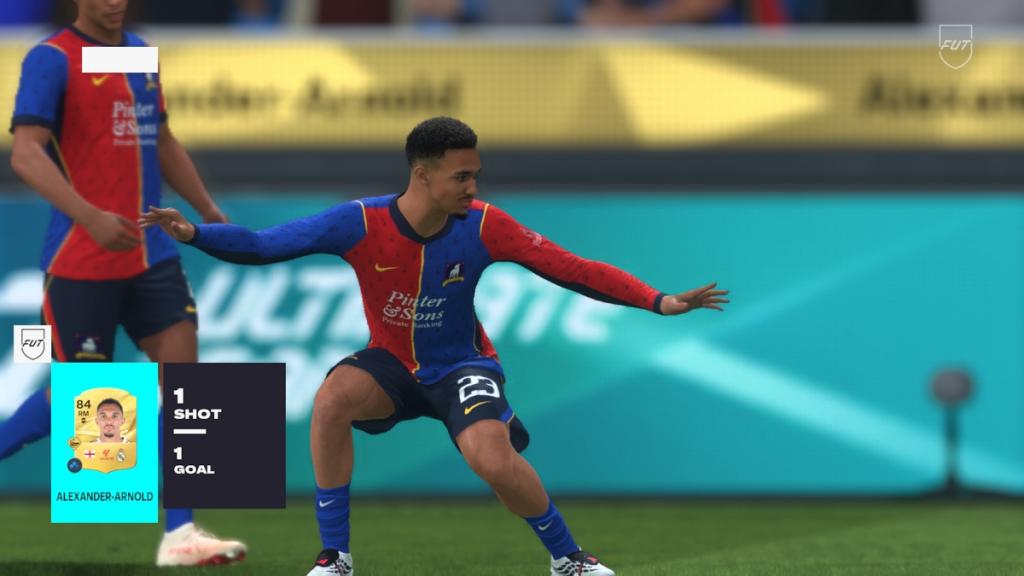
On a lighter note, celebrations have been updated to reflect current football culture rather than recycling aged animations. Arsenal defender Gabriel’s signature Gyokeres-style face-covering celebration and Matheus Cunha’s viral surfing routine are fully realized. While purely cosmetic, these details inject authentic personality into marquee players.
The Grounds: An Ambitious Leap into the Open World
The Grounds is easily the most experimental and debated addition to FC 27. Serving as EA’s direct answer to NBA 2K’s "The City," it is an expansive open-world social hub capable of hosting up to 100 players simultaneously. Split across three distinct districts—Montclair (France), Parkside (England), and Zeiza (Argentina)—the mode lets users craft custom avatars, select play archetypes, and dive into everything from 1v1 street matches to full Pro Clubs games.
Notably, iconic figures like Kylian Mbappe and Alex Hunter (making his first appearance since FIFA 19’s "The Journey") act as narrative mentors. However, The Grounds is currently hamstrung by a lack of substantial post-launch content. Furthermore, its restriction to PC and current-gen consoles (excluding PS4 and Xbox One users entirely) makes it an ambitious, unproven stepping stone that requires heavy future investment from EA to justify its existence.
Ultimate Team: Tightening the Grip
For Ultimate Team enthusiasts, EA FC 27 brings mixed blessings wrapped in aggressive monetization. Beneath a fresh coat of paint, the core FUT loop remains virtually unchanged: menus, chemistry systems, playstyles, and match structures mirror previous iterations. The real changes lie in the pacing of the grind—and it has become decidedly harsher.
The Transfer Market and Streamlined SBCs
Even accessing the transfer market requires completing a series of early objectives, forcing players into EA’s guided progression path rather than letting them trade freely from day one.
Squad Building Challenges (SBCs) have split into two formats. Alongside traditional squad building, EA has introduced Streamlined SBCs, allowing users to dump up to 30 individual player cards into a pool that calculates a total score based on rating and rarity. While this dramatically cuts down on duplicate card management busywork, the corresponding rewards feel proportionally lighter, trading challenge depth for volume.
FUT Gallery and the Currency Problem
The introduction of the FUT Gallery—a permanent archive tracking every card that has ever passed through your club, organized into thematic sets for Gallery points—is clever conceptually. Cards sold or sacrificed in SBCs still count toward your collection.
However, this feature introduces yet another resource layer. Players must now juggle five distinct currencies and progression tracks (Coins, FC Points, Season Pass XP, SBC scores, and Gallery points). This unnecessary complexity feels intentionally engineered to obscure value and funnel players toward purchasing microtransaction-based FC Points.
Implications and Official Responses
Industry Implications
Industry analysts view EA FC 27 as a critical test of publisher restraint. By elevating skill gaps in competitive matches while simultaneously tightening the economic mechanics in Ultimate Team, EA is walking a delicate tightrope. The success of The Grounds will likely dictate whether sports video games lean further into MMO-style open-world monetization in the coming decade.
Official Statements
Addressing the dramatic shift in manual defending during pre-launch developer deep dives, EA’s gameplay engineering team emphasized a desire to restore competitive integrity.
"We wanted to remove the safety net that allowed passive defending to dominate high-level play," lead gameplay producers stated during a community briefing. "FC 27 puts the outcome of every defensive duel back where it belongs: in the hands of the player’s timing and tactical awareness."
Regarding economic complaints surrounding Ultimate Team’s layered currencies, EA representatives have maintained that new features like the FUT Gallery and Streamlined SBCs are designed to give "long-tail utility" to every card acquired by players, ensuring no asset feels entirely wasted.
Verdict: The Final Whistle on FC 27
Having witnessed the franchise evolve through every tactical trend from long-ball counters to tiki-taka, EA FC 27 stands as the most mechanically rewarding football game EA has produced in the post-FIFA era. It is the first version in years where defending genuinely feels like an art form rather than an automated chore, restoring a high skill ceiling to 1v1 duels while punishing lazy attacking play.
The Final Assessment:
For Career Mode Fans and Purists: If you value on-pitch realism, manual depth, and deep managerial immersion, this is easily the best FC title in years.
For Ultimate Team Diehards: Temper your expectations. The core card-collecting loop hasn’t evolved meaningfully; it has simply become more demanding, more complex, and more heavily monetized.
EA FC 27 proves that EA Sports can still craft brilliant, responsive football on the grass—even if the corporate machinery surrounding the pitch continues to demand a heavier toll from its players.