








In an era defined by rapid digital consumption and the relentless pursuit of the extraordinary, artist Hao Hao has emerged as a voice of quiet resistance. Her latest digital illustration project, Light in Everyday Life (生活中的光), invites viewers to pivot their gaze away from the grand narratives of existence and toward the subtle, flickering, and often overlooked luminosity of the domestic and the daily. Published on July 22, 2026, the series serves as both a technical showcase of mastery in Adobe Photoshop and a meditative study on human emotional presence.

Main Facts: The Anatomy of a Visual Narrative
Light in Everyday Life is a collection of digital paintings that explore the intersection of human experience and atmospheric light. The project, hosted on the Behance platform, comprises a series of sketches and fully realized illustrations that emphasize texture, shadow, and the emotive power of brushwork.

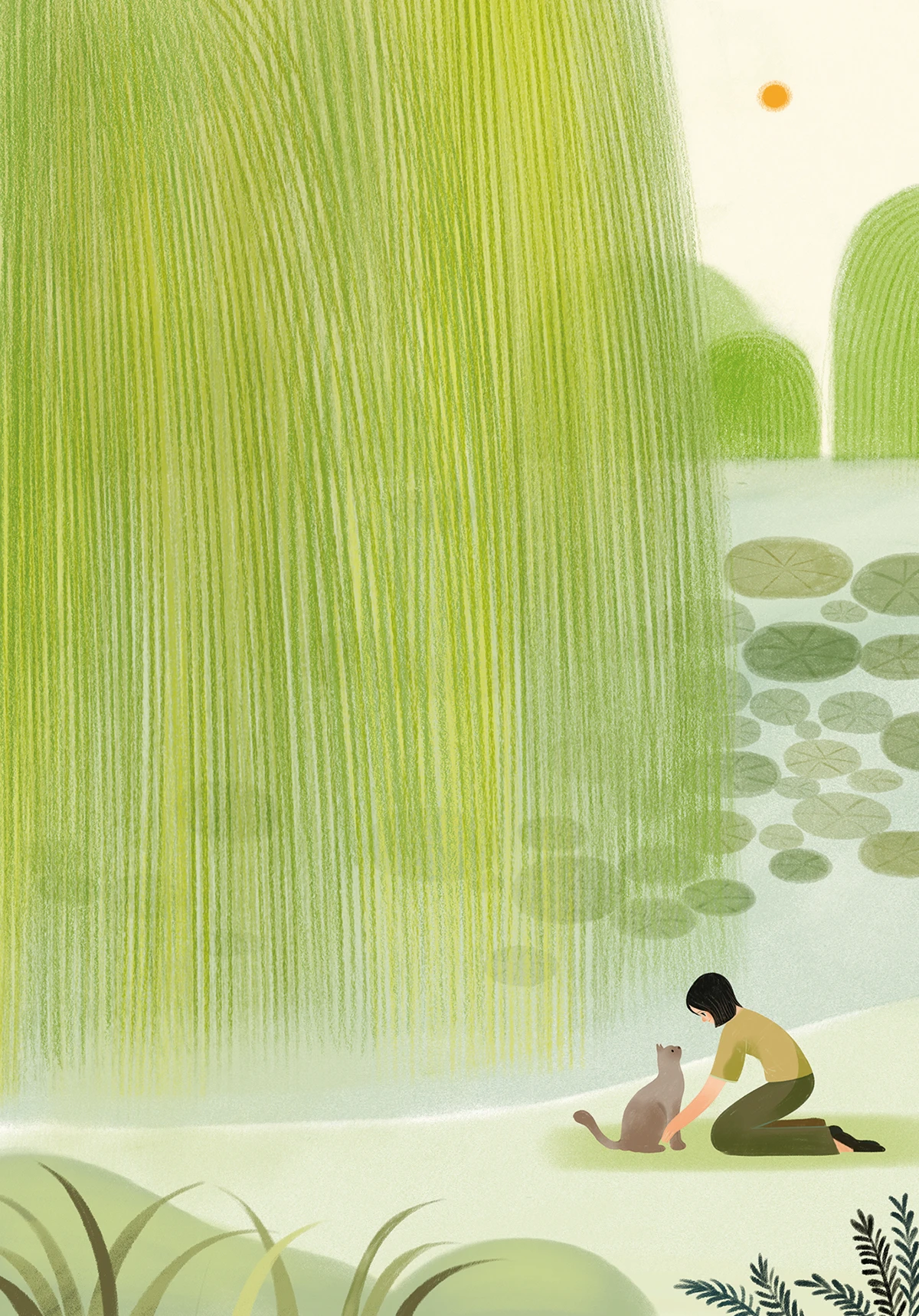
Rather than relying on high-contrast, high-octane imagery, Hao utilizes a palette of soft, diffused light to illuminate scenes that are inherently intimate—moments of solitude, quiet reflection, and the profound silence found within one’s own inner world. The project acts as a bridge between the artist’s technical development and her philosophical inquiry into the nature of "authenticity." For Hao, the "most authentic exhibitions" are not found in galleries, but in the quiet, fleeting instances of a person’s day-to-day life.

A Chronological Evolution of Technique
To understand the weight of this collection, one must view it as the culmination of a rigorous period of personal development. Over the preceding months, Hao focused on refining her digital craft, specifically targeting the fluidity of her brushwork.

The Foundation of Practice
In the initial stages of her project development, Hao documented her struggle to move beyond representational accuracy. Her early sketches were concerned with the physics of light—how it hits a surface, how it dissipates through curtains, and how it interacts with the human form. However, as the project progressed toward the final curation released in late July 2026, the focus shifted from technical optics to emotional resonance.

The Shift to Emotional Nuance
By mid-2026, the project underwent a thematic crystallization. Hao began to integrate more complex, layered strokes that allowed for a greater depth of field in her work. This evolution allowed her to move from merely depicting light to suggesting the feeling of being present in a sun-drenched room. The progression from the earlier, more rigid sketches to the final, emotive compositions serves as a timeline of her maturation as a digital artist.

Supporting Data: The Digital Canvas
The project is executed entirely through Adobe Photoshop, a tool that has become synonymous with digital illustration. However, Hao’s approach rejects the "polished" look often associated with digital art. Instead, she utilizes custom brush settings to mimic the organic imperfections of charcoal and oil on canvas.

- Software Utility: Adobe Photoshop.
- Artistic Focus: Digital Painting, Illustration, and Atmospheric Light Studies.
- Visual Strategy: The use of high-resolution, high-dynamic-range lighting effects creates a sense of "softness" that defines the collection.
- Subject Matter: The human figure in domestic environments, rendered with an emphasis on the "inner life" of the subject.
The data provided by the project’s engagement metrics on Behance suggests a strong resonance with audiences seeking "slow art." In a digital landscape dominated by high-speed content, the sustained dwell-time on Hao’s project pages suggests that the audience is finding a sense of "peace of mind" in her work—a core goal the artist explicitly stated.

Official Artist Statements and Philosophical Inquiry
Hao Hao has been notably vocal about the intent behind Light in Everyday Life. In her accompanying notes to the project, she writes, "I tried to convey emotion through more nuanced brushstrokes. I hope you can sense those emotions."

Perhaps most poignant is her invitation to her audience: "Go and observe the most authentic ‘exhibitions’ in life." This statement suggests that the artist views herself not as a creator of new realities, but as a curator of the existing, overlooked beauty of the human condition.

In another significant passage, she notes, "A rich inner life brings peace of mind even when alone." This sentiment acts as the thematic anchor for the entire project. The figures in her work are often alone, yet they are never lonely; they are accompanied by the light that fills their space, suggesting a self-sufficiency that resonates with modern viewers who are increasingly grappling with the pressures of social connectivity. Her concluding remarks, "The world is gentler than we imagine," provide a humanistic optimism that has become the hallmark of her brand.

Implications: The Return to the Personal
The success and reception of Light in Everyday Life carry significant implications for the contemporary art world and the trajectory of digital illustration.

The Rejection of Hyper-Realism
For several years, digital art has trended toward hyper-realism and the aesthetic of the "uncanny valley." Hao’s work represents a corrective, moving toward an "emotional realism" where the accuracy of the anatomy or the architecture is secondary to the accuracy of the mood. By prioritizing the "gentleness" of the world, she is pushing back against the sterile, hyper-perfected imagery often generated by AI and standardized digital techniques.

The Role of the Artist as an Observer
Hao’s work suggests a shift in the role of the digital artist. She frames the act of creating as an act of observing. Her work suggests that to be a great artist, one must first be a great "friend to all things." This philosophical approach bridges the gap between the artist and the viewer, inviting the latter to participate in the act of observation themselves.

The Cultural Impact of "Quiet Art"
In a 2026 cultural climate that is increasingly polarized and noisy, Light in Everyday Life serves as a sanctuary. The project’s popularity highlights a growing demand for art that facilitates mindfulness. It suggests that the digital space is no longer just a forum for commerce or rapid-fire information, but a space where individuals are seeking to reconnect with their own humanity.

Conclusion: A Gentle Reflection
Hao Hao’s Light in Everyday Life is more than a mere portfolio update; it is a profound testament to the power of observation. By capturing the way light touches a table, a wall, or a person’s face, she reminds us that beauty is not a rare commodity to be hunted, but a constant, surrounding presence to be acknowledged.

As we move through the latter half of 2026, the legacy of this project will likely be found in its simplicity. It does not demand that we change our lives or solve the world’s problems; it merely asks that we stop, look at the light, and remember that, despite the chaos of the outside world, the internal and immediate reality can be a place of profound peace. In the words of the artist herself, we are encouraged to simply "encounter the light in life," and in doing so, perhaps find a little more of ourselves.