






The automotive industry has long been defined by traditional metrics: zero-to-sixty times, top speed, and quarter-mile performance. However, Tesla’s latest unveiling of its next-generation Roadster has effectively moved the goalposts from the pavement to the air. By integrating aerospace-grade propulsion systems into a production vehicle, Tesla has transformed the Roadster from a mere supercar into a platform for physics-defying stunts that were previously the domain of science fiction.
The recent launch event was not merely a product reveal; it was a demonstration of a new engineering paradigm. As the Roadster navigated a series of aggressive stunts, it became clear that Tesla is leveraging its unique synergy with SpaceX to redefine what a "car" is capable of doing.
The Main Facts: A New Chapter in Performance
At the heart of the latest Roadster’s capabilities is the integration of "cold-gas thrusters." These are not standard combustion components; they are high-pressure air propulsion systems derived directly from the technology used in SpaceX’s Falcon 9 rocket guidance systems.
The demonstration left onlookers stunned as the Roadster exhibited three primary "impossible" maneuvers:
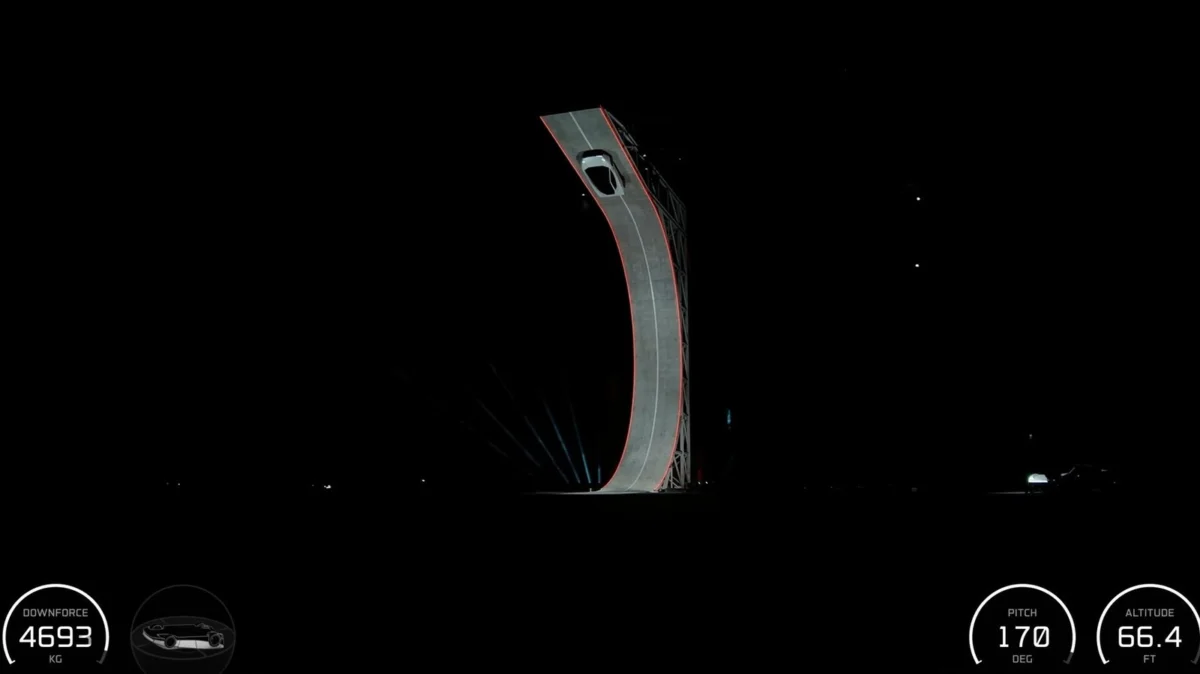
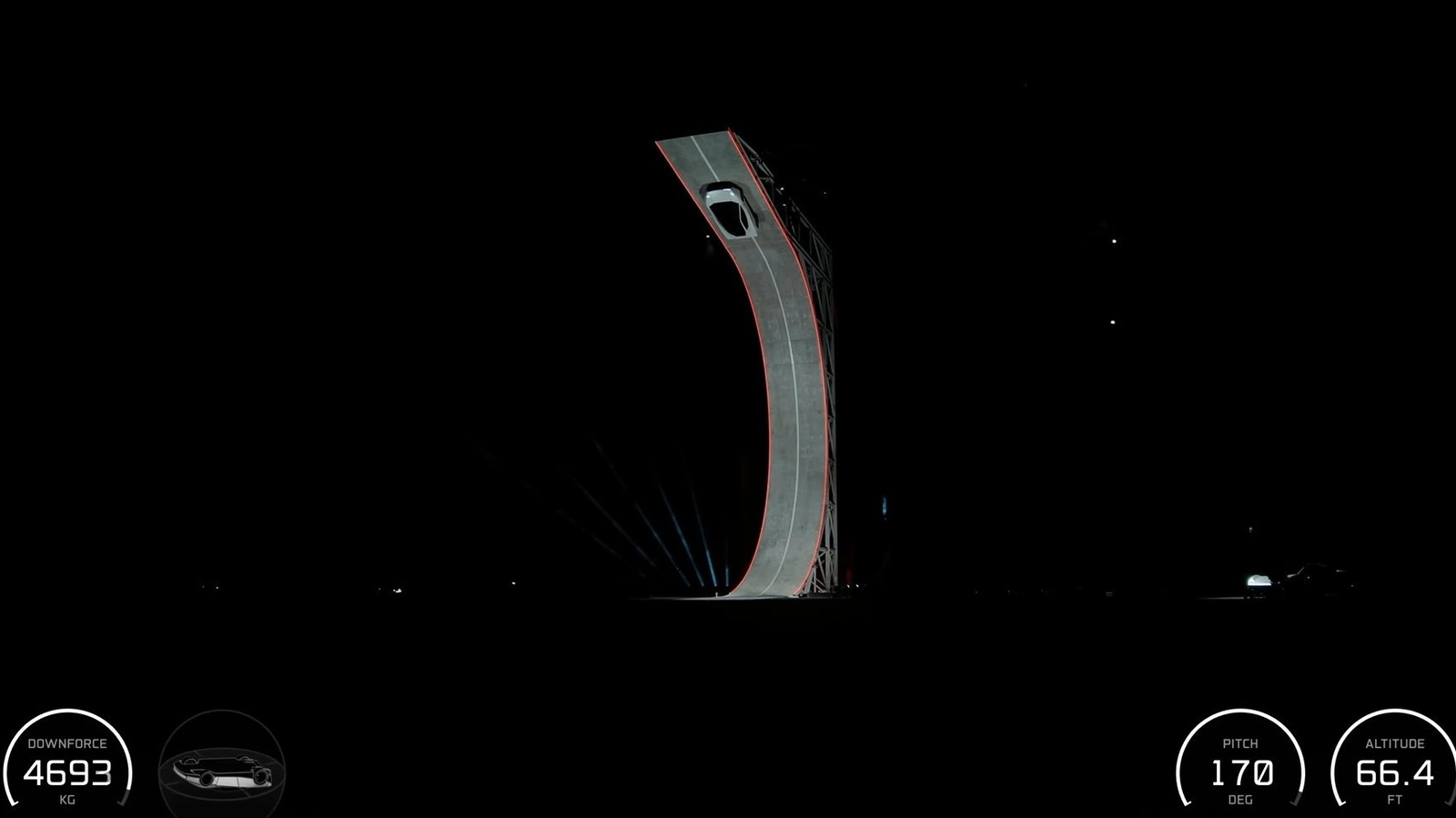
- The Vertical Inversion: The vehicle ascended a C-shaped ramp, coming to a dead stop while hanging entirely perpendicular to the ground, defying gravity through suction technology.
- The Kinetic Leap: The Roadster successfully cleared a gauntlet of parked Tesla vehicles, demonstrating suspension and propulsion capabilities that bridge the gap between automotive and aeronautical engineering.
- The Controlled Flip: In a grand finale, the vehicle executed a mid-air rotation from a stationary position, utilizing its thrusters to stabilize its descent and hover-land safely.
These maneuvers are powered by an advanced high-capacity battery array and the aforementioned cold-gas propulsion, which allows for rapid bursts of force that traditional internal combustion engines could never replicate.
Chronology: A Weekend of Stunt-Driven Innovation
The unveiling, which took place on October 16, 2026, was structured to showcase the evolution of the vehicle’s capabilities in real-time.
Phase 1: The Ramp Challenge
The event began with the Roadster approaching a massive C-shaped ramp. The first pass served as a baseline, but it was the second pass that captured global attention. The vehicle accelerated up the incline, transitioned to a vertical position, and remained suspended at the apex. The silence of the electric motors, punctuated only by the distinct hiss of the cold-gas thrusters, provided a stark contrast to the roar of traditional supercar launches.
Phase 2: The Obstacle Course
Following the ramp segment, the Roadster moved to a flat track lined with a row of parked Tesla vehicles. The car executed a clean jump over the line, highlighting the vehicle’s power-to-weight ratio. The precision of the jump suggested that the thrusters are not just for show; they are integrated with the vehicle’s flight control software to manage pitch, roll, and yaw.
Phase 3: The Aerial Finale
The event concluded with a stationary launch. By firing the thrusters from a standstill, the Roadster vaulted into the air, rotated 180 degrees, and utilized a precise burst of air to dampen its landing. This maneuver effectively moved the Roadster into a category of its own, blending the handling of a track car with the agility of a VTOL (Vertical Take-Off and Landing) drone.
Supporting Data: Understanding the Physics
To understand how a consumer vehicle can perform these stunts, one must look at the technical specifications and the reservation structure Tesla has released.
Reservation Tiers and Cost Analysis
Tesla has stratified the reservation process to cater to both the enthusiast and the elite performance driver:
- The Base Roadster: Requires a $5,000 reservation fee followed by a $45,000 payment within 10 days. This represents the entry point into the next-gen platform.
- The Performance "Suction" Package: Priced at $250,000, this tier includes the specialized suction technology and the core cold-gas thruster hardware. This package is aimed at those looking to replicate the vertical ramp maneuvers seen in the debut.
- The "Flight" Tier: The most exclusive iteration—the version capable of the hover-jump—is currently invite-only. This is a clear indicator that Tesla is treating the "flight" capability as a specialized, high-liability feature that requires significant training or specific track certification.
The SpaceX Connection
The cold-gas thrusters utilize pressurized air stored in carbon-fiber overwrapped pressure vessels (COPVs). By releasing this air through narrow nozzles, the car can create instantaneous thrust. Unlike chemical rockets, cold-gas thrusters are "clean" and provide the immediate, high-torque bursts necessary for short-duration aerial maneuvers.
Official Responses and Public Sentiment
The official Tesla social media channels were uncharacteristically brief, capturing the mood of the event with a simple post: "Real life, baby," accompanied by a video of the jump.
Industry analysts, however, have been more verbose. "Tesla has effectively gamified automotive engineering," noted one lead analyst at a major automotive consultancy. "By bringing SpaceX technology into the consumer space, they’ve moved from building cars to building machines that can navigate three dimensions. The regulatory challenges, however, are immense."
Safety advocates have expressed concerns regarding the "Flight" tier, noting that the ability to leave the ground introduces a new class of risk in public spaces. Tesla has maintained that these features are intended for "controlled environments" and closed-course usage, emphasizing that the software limiters prevent the vehicle from deploying thrusters under unsafe conditions.
Implications: The Future of Mobility
The implications of this demonstration extend far beyond the showroom floor. Tesla has effectively signaled that the internal combustion engine is not just obsolete—it is physically limited.
1. The Death of the Traditional Supercar
Traditional supercar manufacturers like Ferrari and Lamborghini rely on the visceral experience of a combustion engine. Tesla is pivoting away from "the roar" and toward "the impossible." By prioritizing weight-saving materials and high-energy-density propulsion, Tesla is making traditional horsepower figures look archaic.
2. Regulatory Hurdles
The "Roadster Stunt Show" has sparked immediate debate within the National Highway Traffic Safety Administration (NHTSA) and global counterparts. Can a vehicle that can jump be classified as a standard automobile? Does it fall under aviation regulations? As these vehicles enter the hands of private owners, lawmakers will be forced to grapple with a new classification of transport: the "Low-Altitude Road-Vehicle."
3. The Democratization of Advanced Propulsion
While the "Flight" tier remains an invite-only privilege, the technology itself is now in the wild. Historically, cold-gas thruster technology was restricted to spacecraft and orbital maneuvering. By mass-producing these systems for a car, Tesla is creating a supply chain for miniature, high-thrust aerospace components that could have secondary applications in robotics, heavy industry, and logistics.
4. Shifting Consumer Expectations
Tesla’s move forces the entire industry to reassess the value proposition of a luxury vehicle. When a car can "hover" or "stick to a wall," the definition of "luxury" shifts from leather interiors and infotainment systems to the ability to interact with the environment in entirely new ways. The next decade of automotive development will likely be defined by a "gravity race," where manufacturers strive to incorporate active-aerodynamic and thruster-assisted handling to compete with the new Roadster.
Conclusion
The Tesla Roadster stunt show was a masterclass in marketing and engineering convergence. By utilizing the SpaceX connection, Tesla has created a vehicle that captures the imagination of a generation raised on video games and sci-fi cinema.
While the average consumer may never need to hang their car upside down on a wall or jump over a row of sedans, the existence of these capabilities changes the brand’s identity. The Roadster is no longer just a fast car; it is a laboratory on wheels. As Tesla moves toward the delivery phase, the global automotive community will be watching closely to see if the reality of the production vehicle can match the physics-defying promises of the launch. One thing is certain: the era of two-dimensional driving has officially ended.