








Introduction: A Defining Moment for the Technology Sector
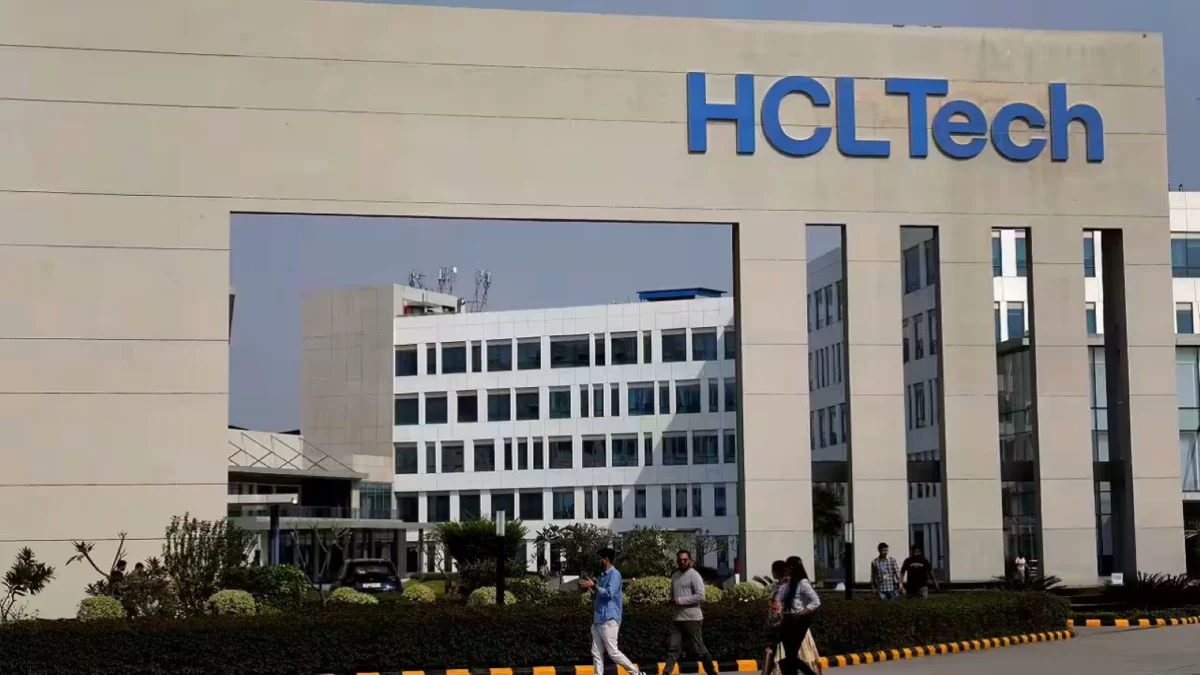
The global technology landscape is currently experiencing what industry experts describe as a "tectonic shift." As Artificial Intelligence (AI) moves from experimental sandbox environments to the core of enterprise operations, traditional service models are being forced to evolve. In the midst of this transformation, HCLTech—one of India’s premier global technology firms—has positioned itself not merely as a participant, but as an architect of this new era.
In her address within the HCLTech Annual Report for the fiscal year 2025-26, Chairperson Roshni Nadar Malhotra articulated a clear vision: AI is not a threat to the traditional IT services business, but a powerful tailwind. With a record of delivering $620 million in Advanced AI revenue in the last fiscal year, HCLTech is signaling that its future growth is inextricably linked to its ability to scale high-end intelligence solutions for its global clientele.
Main Facts: The Numbers Behind the Strategy
The fiscal year 2026 proved to be a challenging landscape for the broader IT sector, characterized by macroeconomic uncertainty, cautious client spending, and geopolitical volatility. Despite these headwinds, HCLTech demonstrated robust operational resilience.
- Financial Milestone: HCLTech concluded FY26 with $620 million in Advanced AI revenue. This figure serves as a vital indicator of the company’s transition from legacy service-based models to AI-integrated solutions.
- Market Positioning: For the third consecutive year, HCLTech achieved the fastest revenue growth in constant currency among its peer group.
- Strategic Intent: The company has publicly declared an ambitious goal: to be recognized as the world’s premier provider of AI-led solutions.
- Structural Integration: HCLTech is utilizing its "engineering DNA"—a legacy dating back to its inception—to build a full-stack AI portfolio that complements its existing IT services business.
Chronology: A 50-Year Journey of Reinvention
To understand HCLTech’s current pivot, one must look at its historical trajectory. The HCL Group is celebrating its 50th anniversary this year, marking five decades of technological evolution.
The Foundation (1976–1990s)
Founded by Shiv Nadar, the company’s initial vision was to foster technological self-reliance in India. The early years were defined by pioneering hardware developments, including the creation of India’s first indigenous 8-bit personal computer. This period established the company’s culture of engineering-led innovation.
The Services Era (2000s–2020)
As the global economy digitized, HCL transitioned into a global powerhouse for IT services, software-led engineering, and business process management. During this phase, the company focused on building deep-rooted client relationships and expanding its footprint across the Americas, Europe, and Asia.
The AI-First Paradigm (2021–Present)
The current chapter represents a shift toward AI-native service delivery. Recognizing that the "old ways" of software development and IT management are being disrupted, leadership has pivoted toward intellectual property (IP) through HCLSoftware and a heavy investment in AI-ready talent and infrastructure.
Supporting Data: Resilience in a Muted Environment
The 2025-26 fiscal year was, by all accounts, a stress test for the IT services sector. The industry witnessed a contraction in demand as global enterprises paused discretionary spending to reassess their digital budgets.
HCLTech’s ability to outperform its peers in this climate is attributed to two factors:
- A Differentiated Portfolio: By diversifying away from traditional "time-and-materials" contracts toward outcome-based and AI-driven engagements, HCLTech insulated itself from the worst of the budget cuts.
- Operational Discipline: The company maintained a focus on cost-efficiency and talent retention, ensuring that its core delivery engines remained operational even as market sentiments fluctuated.
Chairperson Roshni Nadar Malhotra noted that while near-term stock prices have been impacted by broader market caution, the internal fundamentals—including the strength of the order book and the depth of client partnerships—remain as strong as ever.
Official Responses and Strategic Vision
Roshni Nadar Malhotra’s Perspective
"The technology industry is undergoing a tectonic shift as AI reshapes how work gets done, with its promise of agility and productivity," Malhotra wrote in the annual report. She emphasized that HCLTech has historically viewed disruption as a catalyst for reinvention. For her, the goal is to leverage HCL’s core engineering DNA to integrate AI into every facet of the company’s service delivery, from cybersecurity to cloud migration.
C Vijayakumar’s Operational Mandate
CEO and Managing Director C Vijayakumar echoed the Chairperson’s sentiment, focusing on the execution aspect of the AI strategy. "The task before us is clear: to execute with speed and discipline and to earn our place among the winners in a market of this scale," he stated.
Vijayakumar highlighted that the company is not merely "adopting" AI but is actively re-architecting its business model to capitalize on the productivity gains that AI offers. He believes that the leaders of the next decade will be the firms that can balance the disruption of legacy systems with the integration of generative and predictive AI tools.
Implications: What This Means for the Industry
The shift HCLTech is undergoing carries significant implications for the global technology market.
1. The Death of the "Pure-Play" Service Model
As AI begins to automate coding, testing, and support functions, traditional IT service firms are seeing their margins squeezed. HCLTech’s strategy of building a "full-stack AI portfolio" suggests that the future of the industry lies in high-value, intellectual-property-led engagements rather than headcount-based services.
2. The Role of Engineering DNA
HCLTech is banking on its heritage as an engineering firm to differentiate itself from management-consultancy-led IT players. By maintaining a focus on hard-core technical proficiency, the company aims to build AI solutions that are robust, secure, and scalable—traits that are often lacking in generic, off-the-shelf AI implementations.
3. Geopolitical and Macroeconomic Resilience
The leadership has acknowledged that the "headwinds" of geopolitical uncertainty are likely to persist. By focusing on AI as a tool for "productivity and agility," HCLTech is attempting to sell a value proposition that is recession-proof. When clients face budget pressures, they do not stop spending on technology; they shift their spending toward solutions that promise faster returns on investment (ROI) through automation.
Conclusion: Looking Ahead to the Next 50 Years
As HCLTech enters its second half-century, it finds itself at a crossroads. The transition from a services-heavy organization to an AI-first innovation hub is fraught with technical and cultural challenges. However, the $620 million in Advanced AI revenue provides a tangible proof-point that the strategy is gaining traction.
The company’s leadership remains steadfast: the "tectonic shift" is not something to be feared, but a wave to be ridden. With a foundation of resilience, a clear mandate for AI-led growth, and a disciplined approach to execution, HCLTech is positioning itself to be a defining player in the digital economy of the late 2020s and beyond. Whether they can maintain their lead in the "fastest growing" category will depend on how quickly they can convert their R&D investments into enterprise-grade, large-scale AI deployments for their global client base.