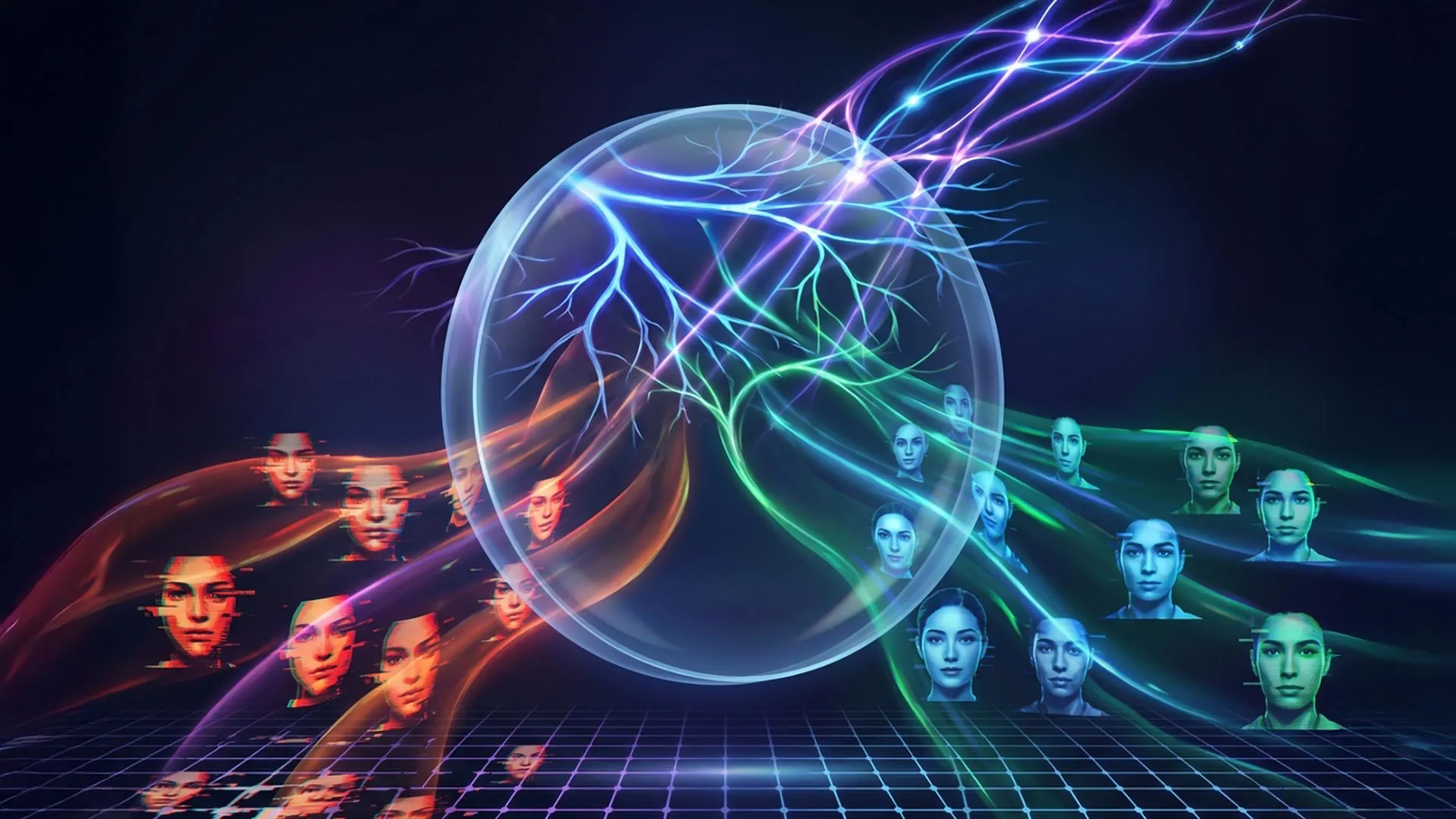
LOS ANGELES — As generative artificial intelligence continues to blur the boundary between synthetic fabrication and objective reality, the digital media ecosystem faces an escalating threat landscape. The proliferation of hyper-realistic deepfake videos—ranging from malicious political disinformation to sophisticated financial scams—has strained traditional content moderation infrastructure. Conventional digital detectors, while increasingly sophisticated, are rapidly hitting performance and scaling bottlenecks, weighed down by immense computational power demands and sequential processing limitations.
Now, a team of researchers at the University of California, Los Angeles (UCLA) has unveiled a radical departure from conventional computing architecture. Led by Professor Aydogan Ozcan, alongside co-lead authors Parnian Ghapandar Kashani and Dr. Shiqi Chen, the UCLA team has engineered a pioneering hybrid optical-neural processor. By leveraging the physical propagation and diffraction of light rather than relying exclusively on energy-intensive silicon chips, this breakthrough technology can screen 15 or more video streams simultaneously in a single optical pass.
Detailed in their seminal study, "Scalable, Energy-Efficient Optical-Neural Architecture for Multiplexed Deepfake Video Detection," published in the journal eLight, this system offers a high-throughput, energy-efficient, and attack-resilient first line of defense designed to safeguard digital platforms at unprecedented scales.
Main Facts: The Anatomy of an Optical Breakthrough
At its core, the UCLA processor fundamentally reimagines how neural networks evaluate digital media. Traditional artificial intelligence models process video frames sequentially through massive digital pipelines, executing hundreds of billions of floating-point operations for a single evaluation. As the global volume of digital video grows exponentially, this sequential reliance drives up processing times, creates severe throughput bottlenecks, and demands staggering amounts of electrical power.
The UCLA optical-neural processor alters this paradigm by shifting a core component of the deepfake detection workload from digital computation to physical optics.
- Parallel Stream Analysis: Unlike digital hardware that evaluates videos one after another, the UCLA system analyzes 15 or more video streams simultaneously in a single optical pass.
- Hybrid Architecture: The system employs a lightweight digital encoder as an initial step to capture compact spatial, spectral, and temporal features of each video. These features are translated into phase patterns displayed on a programmable spatial light modulator.
- Optical Wavefront Processing: This generated optical wavefront then travels through a free-space-based, passive optical decoder. Paired optical detectors at the terminal end directly output an authenticity score for each distinct video stream.
- Energy-Free Scaling: By utilizing passive, static optical structures that perform calculations via light diffraction, the system executes complex inferences without drawing additional electrical power for those processing layers.
Chronology: From Concept to Cutting-Edge Implementation
The development of this hybrid optical-neural system represents the culmination of years of foundational research in computational optics and diffractive artificial intelligence at UCLA’s Electrical and Computer Engineering Department, Bioengineering Department, and the California NanoSystems Institute.
Phase 1: Conceptualizing the Optical AI Bridge
For years, Professor Ozcan’s laboratory has explored how physical optics can accelerate machine learning tasks. While traditional AI relies on electrons moving through silicon transistors, optical computing harnesses photons, which can travel at the speed of light and intersect without interference. The challenge, however, has always been bridging the gap between digital video files and optical processing hardware. The UCLA team solved this by designing an intelligent encoding bridge: converting digital video features into light-manipulatable phase patterns.
Phase 2: Building and Training the Multiplexed Architecture
The researchers constructed an experimental bench utilizing visible light sources, a spatial light modulator, and free-space optical components. They trained the system to process multiplexed inputs—meaning multiple distinct video feeds are packed into a single optical wavefront, separated spatially or angularly, and decoded concurrently.
Phase 3: Empirical Validation and Stress Testing
In rigorous laboratory experiments, the team tested the processor against benchmark deepfake datasets, such as Celeb-DF, pushing its capacity from 15 simultaneous videos up to 18 streams per optical pass. Following baseline evaluations, the researchers subjected the system to advanced adversarial attacks, real-world image degradations (such as blur, noise, and JPEG compression), and entirely novel generative models like Google’s VEO-3, confirming the architecture’s resilience and adaptability.
Supporting Data: Unprecedented Accuracy at Scale
The empirical performance metrics recorded during the UCLA trials underscore the viability of optical computing as a commercial-grade screening tool. Operating under rigorous experimental conditions, the processor delivered exceptional statistical results.
Multi-Stream Processing Benchmarks
When processing 15 Celeb-DF videos simultaneously in a single optical pass, the processor achieved:
- Overall Detection Accuracy: 97.79%
- Sensitivity (True Positive Rate): 99.86%
- Specificity (True Negative Rate): 95.72%
In the context of deepfake screening, high sensitivity is paramount. A sensitivity rate of 99.86% equates to an average false-negative rate of approximately 0.14%, ensuring that an overwhelmingly vast majority of manipulated videos are successfully flagged and prevented from slipping through the initial security perimeter. Even when the researchers pushed the system’s capacity to 18 concurrent video streams in a single optical pass, the average detection accuracy remained exceptionally high at 96.13%.
The Power of Physical Depth
The UCLA team discovered that system capabilities could be further enhanced by increasing the physical depth of the passive optical decoder, rather than adding digital layers that consume more electricity. By integrating two optimized passive diffractive layers into the optical path—surfaces engineered to calculate through light diffraction—detection accuracy improved by approximately 6.8% when facing highly sophisticated deepfake manipulations. Crucially, because these diffractive layers are static physical structures, they achieve this performance boost without requiring additional electrical power during inference.
Confronting Next-Generation Generators (Google VEO-3)
Older deepfake detectors often falter when confronted with synthetic video generated by newer architectures, which frequently lack the crude digital artifacts of earlier generation techniques. To test their system’s future-proofing, the UCLA researchers exposed the optical processor to videos synthesized by Google’s VEO-3 model. Following minimal fine-tuning, the optical processor achieved:
- Detection Accuracy: 94.80%
- Sensitivity: 97.61%
These figures demonstrate that optical-neural processing is not merely overfitted to legacy deepfakes, but possesses the architectural flexibility required to adapt to rapidly evolving generative AI technologies.
Official Responses and Expert Insights
The implications of marrying optical physics with artificial intelligence have drawn significant attention within the academic and engineering communities.
Speaking on the motivations behind the project, Professor Aydogan Ozcan emphasized the unsustainable trajectory of purely digital deepfake detection. "As generative AI tools become democratized and increasingly sophisticated, the sheer volume of synthetic media threatens to overwhelm our digital infrastructure," Ozcan noted. "If every single frame of video must be run sequentially through massive power-hungry digital neural networks, we will face an untenable crisis of processing power, latency, and energy consumption."
Co-lead author Parnian Ghapandar Kashani highlighted the hardware-level security advantages inherent in the design. "By offloading part of the inference process to the physical propagation of light, critical parameters of our neural model are effectively embedded directly into the physical hardware," Kashani explained. "This creates a natural barrier against malicious actors attempting to reverse-engineer or map the detector to bypass it."
Dr. Shiqi Chen, co-lead author, pointed out the strategic placement of the technology within broader security pipelines. "We do not view this optical processor as a standalone replacement for every digital algorithm," Chen stated. "Rather, it is designed to act as an intelligent, high-speed gatekeeper. By filtering out the vast ocean of incoming media at the speed of light, we preserve heavy digital computing resources exclusively for deep, targeted forensic investigations of flagged content."
Implications: A New Paradigm for Media Authentication and Security
The successful demonstration of the UCLA optical-neural processor heralds profound implications across multiple sectors, transforming how society conceptualizes digital trust, cybersecurity, and content moderation.
1. Revolutionizing Content Moderation at Scale
Global social media platforms, video-sharing sites, and communication networks ingest petabytes of video data daily. Deploying traditional digital AI detectors to screen every uploaded file creates staggering server loads and carbon footprints. An optical-neural preprocessing layer could be integrated directly into server intake nodes, screening thousands of concurrent video streams with near-zero latency and minimal energy draw. Content identified as high-risk by the optical layer can then be routed to deep digital forensics engines, optimizing computational resource allocation.
2. Hardening Security Against Adversarial Manipulation
Digital AI models are notoriously vulnerable to "adversarial attacks"—subtle, human-imperceptible pixel alterations designed to trick a neural network into misclassifying a fake video as authentic. Because the UCLA system relies on physical light diffraction through complex, free-space optical components, its internal weights and mathematical operations are physically instantiated rather than stored in accessible digital memory banks. This physical obfuscation provides inherent resilience against white-box attacks and makes black-box adversarial optimization extraordinarily difficult for bad actors to execute.
3. Resilience in Adversarial Environments
Beyond deliberate adversarial tampering, digital media in the wild is frequently subjected to compression artifacts, environmental blur, low lighting, and transmission noise. The UCLA experiments confirmed that the optical processor maintains high reliability despite JPEG compression, image noise, blur, and experimental misalignments. This robust operational stability ensures that the technology remains dependable outside the controlled environment of a physics laboratory.
4. Broadening the Horizon of Optical Computing
Beyond deepfake detection, the success of UCLA’s hybrid optical-neural architecture serves as a proof-of-concept for the broader field of optical computing. As electronic processors face physical limits dictated by Moore’s Law and thermal dissipation challenges, hybrid systems that harness the parallelism and speed of light offer a viable pathway forward. From real-time military surveillance and autonomous vehicle perception to medical imaging analysis and large-scale media authentication, the marriage of optics and artificial intelligence stands poised to redefine the limits of computational efficiency.
As the digital world braces for an era where seeing is no longer believing, innovations like the UCLA optical-neural processor provide a vital technological counterweight—harnessing the fundamental laws of physics to restore integrity to our shared visual reality.