










Main Facts
The landscape of artificial intelligence is experiencing a seismic shift, moving away from exclusive reliance on massive cloud datacenters toward powerful, highly efficient local hardware. Driving this evolution is the rising utility of local AI—measured meticulously "by the token"—as increasingly sophisticated open-weights models are successfully optimized to fit onto local devices. Capitalizing on this momentum, NVIDIA has announced the official launch of the NVIDIA DGX Spark, a compact yet remarkably potent personal AI supercomputer designed to bring enterprise-grade machine learning infrastructure directly to the desks of everyday developers, researchers, and AI enthusiasts.
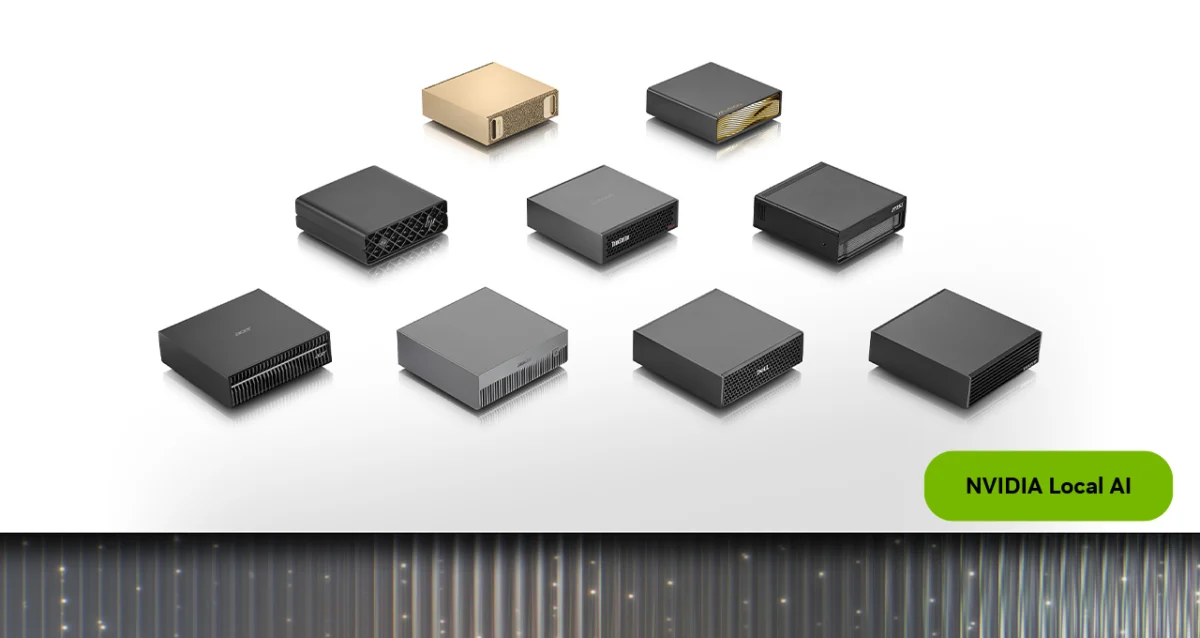
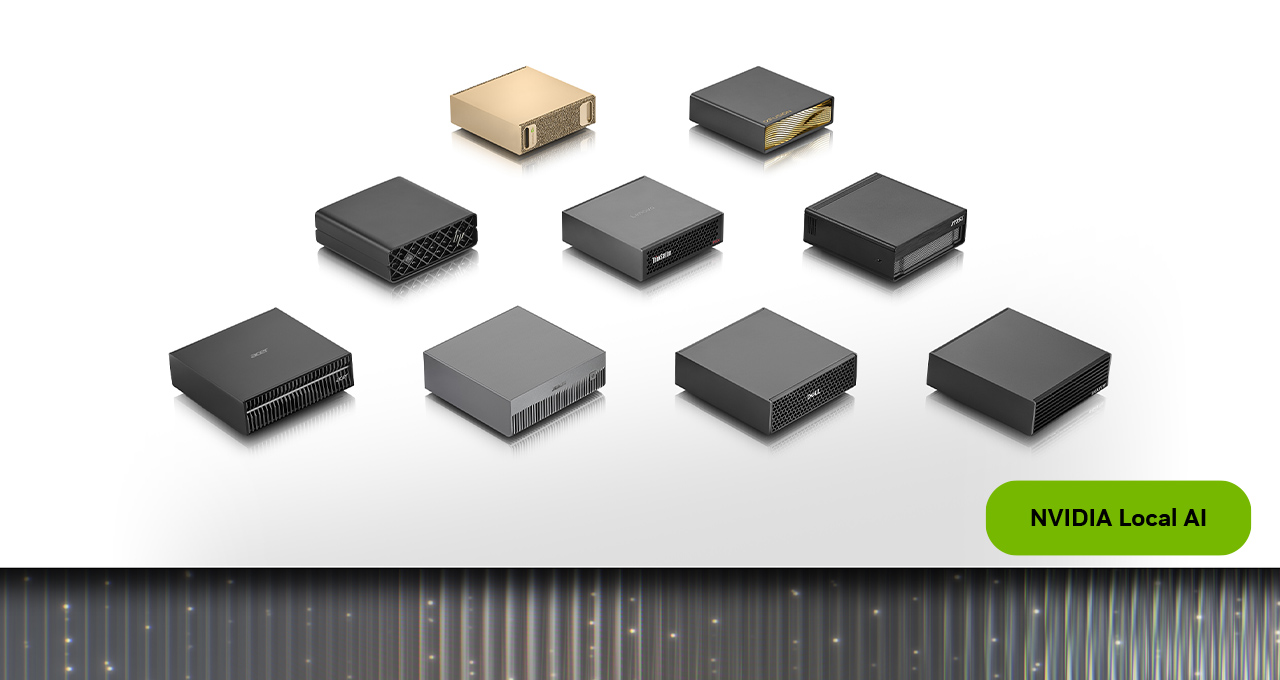
Slated for release this month, the DGX Spark will be available in a new, highly accessible 64GB unified memory configuration starting at an entry price of $4,999. Manufactured by top-tier hardware partners—including Acer, ASUS, Dell, Gigabyte, HP, and MSI—the system arrives pre-loaded with the DGX OS and the complete NVIDIA AI software stack, ensuring it is ready for deployment straight out of the box.
At its core, the DGX Spark is engineered around the advanced GB10 Grace Blackwell Superchip, integrating high-performance compute, high-bandwidth unified memory, NVIDIA ConnectX-7 networking, and a CUDA-accelerated AI ecosystem into a single, cohesive form factor. This enables developers to run capable AI agents entirely on-device, ensuring complete privacy, zero cloud dependency, and low-latency interaction. Furthermore, when computing demands inevitably outgrow a single machine, two DGX Spark units can be seamlessly clustered together using the NVIDIA Sync Cluster Assistant and a standard QSFP cable, effectively doubling memory capacity to 128GB and expanding model support up to 200 billion parameters without complex infrastructural overhauls.
Chronology
To understand how the personal AI supercomputer market reached this pivotal milestone, it is helpful to trace the rapid timeline of hardware miniaturization and agentic AI deployment:
- The Rise of Local LLMs (2023–2024): As open-source models like Meta’s Llama and Alibaba’s Qwen demonstrated near-frontier performance at smaller scales, developers increasingly demanded local hardware capable of handling inference without sending sensitive data to third-party cloud providers.
- The Shift to Agentic Workflows (2024–2025): AI shifted from simple conversational chat interfaces to autonomous "agents" capable of executing multi-step coding tasks, web browsing, and data science pipelines. This evolution exponentially increased local compute and memory requirements.
- Introduction of Next-Gen Architectures (Late 2025): NVIDIA unveiled its Grace Blackwell architecture, bridging the gap between high-performance datacenter compute and workstation-class thermal and physical footprints.
- The Partnership Announcements (Early 2026): Major hardware manufacturers aligned with NVIDIA to build desktop-form-factor AI appliances, culminating in the design of the DGX Spark series.
- October 23, 2026 (Launch Date): The DGX Spark 64GB officially hits the market through global manufacturer partners like Acer, ASUS, Dell, Gigabyte, HP, and MSI, priced at an accessible starting point of $4,999.
- End of October 2026 (Software Expansion): NVIDIA rolls out the NVIDIA Sync Model Launcher and prebuilt creator installers (such as for Blender), designed to democratize single-click local AI deployment and browser-based coding environments.
Supporting Data & Technical Specifications
The engineering specifications of the NVIDIA DGX Spark reveal a machine designed to bridge the chasm between lightweight edge devices and room-sized server racks.
Core Hardware Architecture
- Processor & GPU: Built around the cutting-edge GB10 Grace Blackwell Superchip, combining ARM-based Grace CPU cores with next-generation Blackwell graphics and tensor architecture.
- Memory Configuration: Features 64GB of high-speed unified memory in the base SKU, capable of running complex local models with up to 100 billion parameters entirely on-device. An available 128GB configuration shares the same software stack and architectural benefits.
- Networking: Outfitted with an integrated NVIDIA ConnectX-7 Network Interface Card (NIC), enabling ultra-low-latency node-to-node communication.
- Clustered Performance: Utilizing the NVIDIA Sync Cluster Assistant, two 64GB units can be paired via a direct QSFP cable. Rather than merely summing the hardware specs, internal NVIDIA benchmarks using the Qwen 3.8 27B test demonstrated that a clustered dual-system setup delivers up to 1.7x performance scaling alongside double the memory bandwidth, expanding total model capacity to 200 billion parameters.
Software Integration & Day-One Ecosystem
The DGX Spark is not shipped as a bare-bones workstation; it is a turnkey AI appliance equipped with:
- DGX OS & CUDA-Accelerated Stack: Fully optimized for immediate execution of machine learning workloads.
- Out-of-the-Box Runtimes: Native support for popular developer ecosystems including Ollama, vLLM, and PyTorch with CUDA.
- NVIDIA Agent Toolkit & Libraries: Complete access to CUDA-X AI libraries and Nemotron open-source models.
- Creator Ecosystem: Major creative software providers are rapidly adopting the platform. Blender, for instance, has announced a prebuilt, downloadable installer optimized specifically for DGX Spark hardware, arriving later this month.
- Automated Deployment Tools: The upcoming NVIDIA Sync Model Launcher automates the downloading and execution of models like Qwen3.8 27B across single units or clusters, linking directly to browser-based coding tools like OpenCode.
Official Responses & Industry Perspectives
The introduction of the DGX Spark has elicited enthusiastic responses from across the technology sector, underscoring a growing industry consensus that developer-centric local hardware is the missing link in enterprise AI adoption.
NVIDIA executives emphasize that the democratization of agentic AI requires removing infrastructural friction. By packaging enterprise-grade Grace Blackwell architecture into a workstation that sits quietly on a desk, NVIDIA aims to liberate developers from the constant friction, latency, and recurring subscription costs associated with cloud-only prototyping.
Ecosystem partners have similarly echoed this sentiment. Major hardware vendors—long renowned for supplying high-performance desktop and server workstations—have repositioned their engineering pipelines to support the DGX Spark standard. Companies like Acer, ASUS, Dell, Gigabyte, HP, and MSI are rolling out specialized form factors tailored for quiet, thermal-efficient desktop operation.
"Developers want to iterate quickly, privately, and without constantly worrying about cloud API bills or data privacy regulations," noted industry analysts tracking the workstation market. "By providing a standardized platform that scales smoothly from a single $4,999 desktop unit to a clustered multi-node setup using NVIDIA Sync, NVIDIA has built a frictionless on-ramp for the agentic era."
Furthermore, open-source model creators and tool developers are lining up to support the hardware. The integration of frameworks like NemoClaw, OpenClaw, Hermes Agent, and OpenShell on build.nvidia.com ensures that developers have immediate access to cutting-edge agent playbooks the moment they power on their machines.
Implications for the Future of AI Development
The arrival of the NVIDIA DGX Spark 64GB carries profound implications for software engineering, data privacy, enterprise research, and the broader consumer hardware market.
1. The Proliferation of Private, Local AI Agents
Until recently, running sophisticated multi-step AI agents—autonomous programs that can read codebases, execute scripts, search local databases, and solve problems—required routing sensitive corporate or personal data through third-party cloud APIs. The DGX Spark changes this paradigm. By packing enough unified memory to handle 100-billion-parameter models locally, developers can build, test, and deploy autonomous agents in an air-gapped environment. This is a game-changer for industries bound by strict data sovereignty laws, such as healthcare, finance, defense, and legal services.
2. Frictionless Scalability for Growing Teams
One of the traditional bottlenecks of local AI hardware has been the "dead-end" nature of workstations: once a model outgrew a single GPU’s VRAM, developers were forced to abandon local hardware entirely and migrate their entire pipeline to expensive cloud clusters. NVIDIA’s Sync Cluster Assistant elegantly solves this problem. A researcher can start with a single 64GB DGX Spark unit for everyday prototyping, and as projects expand to demand more parameters, simply snap a second unit into place via a QSFP cable. The NVIDIA Sync software handles topology detection and network configuration automatically, bridging the gap between desktop convenience and datacenter scalability.
3. Democratization of Creator Workflows
AI is no longer restricted to text-based chat windows. With platforms like Alibaba’s Qwen-Image-2.1 running locally on NVIDIA RTX GPUs, DGX Spark, and DGX Station units—coupled with native creator application support like Blender’s upcoming installer—digital artists, animators, and designers can generate, refine, and manipulate high-resolution visual assets directly on their local hardware. This eliminates render queues and cloud generation fees, placing creative control firmly back in the hands of the artist.
4. A Multi-Tiered Local AI Ecosystem
The DGX Spark is just one piece of NVIDIA’s sweeping autumn hardware offensive. Alongside the professional-grade DGX Spark systems, NVIDIA is rolling out new Windows PCs powered by NVIDIA RTX Spark in partnership with Acer, ASUS, Dell, HP, Lenovo, Microsoft, and MSI. Together, these initiatives illustrate a comprehensive hardware strategy: RTX Spark brings next-generation local AI capabilities to mainstream consumer and professional laptops, while DGX Spark provides heavy-duty, scalable supercomputing power for serious developers and researchers.
As the DGX Spark hits the market on October 23, starting at $4,999, it signals a clear trajectory for the industry: the future of AI development will not be confined entirely to remote server farms. Instead, the most innovative agents, models, and creative pipelines will be built locally, token by token, right on the developer’s desk.



