








By [Author Name]
Published: Photography Education & Equipment Insights

Introduction: Elevating Beyond the Hot Shoe
Welcome back to Introduction to Flash Photography. Building upon the foundational principles of bouncing light and understanding the basic qualities of illumination explored in our previous lesson, we now transition into the technical bedrock of modern photography: taking your flash off the camera.

For many emerging photographers, the transition from on-camera direct flash to off-camera lighting represents a critical threshold. On-camera flash often yields harsh, flat, and clinical imagery due to its direct, axial positioning relative to the lens. By separating the light source from the camera body, photographers gain absolute control over direction, shadow falloff, texture, and dimension.

However, achieving this creative freedom requires an understanding of how communication signals travel from a camera shutter to a remote light source, the terminology defining these systems, and the equipment required to build a reliable, cost-effective mobile lighting kit.

A Note on Evolving Industry Vocabulary
Before delving into the technical mechanics of triggering systems, it is vital to address a shift in photographic nomenclature. Historically, legacy flash systems and foundational lighting literature relied heavily on the hierarchical terms "Master" and "Slave" to describe units controlling the flash output versus those responding to commands.

In recent years, responding to persistent industry and consumer advocacy, manufacturers and educational platforms have actively moved away from this paradigm. Modern technical standards favor descriptive, precise terminology that reflects the underlying technology: Transmitter (formerly Master) and Receiver (formerly Slave). This terminology more accurately defines the functional role of each device within a wireless lighting network.

The Mechanics of Off-Camera Triggering
To understand how off-camera flash operates, one must examine the micro-chronology of a single exposure. When a photographer presses the camera’s shutter release button, a brief mechanical and electronic lag occurs—typically measuring slightly less than one-tenth of a second—before the shutter curtains physically begin to open.

This infinitesimal window of time is where the mechanics of off-camera flash execution take place:

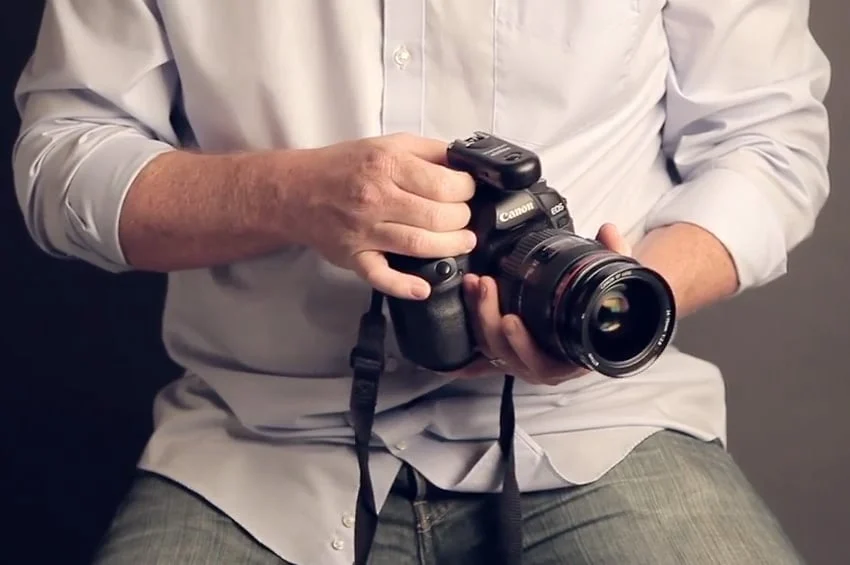
- The Signal Initiation: Upon pressing the shutter release, an electrical circuit is completed through the camera’s hot shoe—the metal mounting bracket atop the camera housing equipped with electronic contact pins.
- Transmission: If a hot-shoe-mounted device, such as a radio transmitter, is attached, it intercepts this electrical impulse.
- Conversion and Propagation: The transmitter translates the electrical signal into a radio frequency wave (or an optical pulse) and broadcasts it outward.
- Reception: Positioned remotely across the room, a corresponding receiver detects the incoming signal.
- Execution: The receiver instantly converts the wireless wave back into an electrical impulse, routing it through its own hot shoe to the attached flash unit.
- Synchronization: The remote flash fires precisely in sync with the opening of the camera’s shutter, exhausting its light energy entirely within the fraction of a second the sensor or film plane remains exposed.
While this fundamental sequence remains consistent across all off-camera lighting setups, the medium through which the signal travels varies significantly. These variations define the primary categories of off-camera flash systems available today.

Chronology and Classification of Flash Triggering Systems
1. Hardwired Connections (The Direct Link)
The most traditional and direct method of synchronizing a remote flash is through a physical cable. Within hardwired connections, systems generally fall into two categories:

- Dumb Sync Cords (PC Cords): Utilizing standard coaxial cables—such as traditional PC (Prontor-Compur) sync cords or minijack cables—these systems transmit a basic electrical pulse. This is classified as a "dumb sync," meaning the cable only transmits the command to fire. Photographers must manually walk over to the remote flash unit to adjust power outputs, zoom settings, and other parameters.
- TTL Sync Cords: For photographers requiring automated data transmission, TTL (Through-The-Lens) sync cords maintain full electronic communication between the camera body and the remote flash. One end mounts to the camera’s hot shoe, while the cable terminates in a remote hot shoe. These cables preserve advanced features like automated TTL metering and high-speed sync (HSS) while allowing the flash to be positioned away from the camera axis at a low cost.
Advantages: Hardwired systems are exceptionally reliable, immune to radio frequency interference, and generally much less expensive than wireless alternatives.
Disadvantages: Photographers are strictly tethered by the physical length of the cable, creating potential tripping hazards and mobility restrictions in dynamic shooting environments.

2. Optical Trigger Systems (Line-of-Sight Illumination)
Optical triggers rely on light—either visible pulses or infrared spectra—rather than physical cables to relay firing commands.

- Basic Optical (Dumb) Modes: A basic optical sensor on a secondary flash acts as a photoelectric eye. When it detects the burst of light from a primary flash (or a pop-up commander flash), it fires instantaneously in sympathy, adding its illumination to the scene. This system is inexpensive and offers a working range of roughly 25 to 50 feet. However, it provides only a manual dumb sync, lacks TTL functionality, and strictly requires an unobstructed "line of sight" between units.
- Proprietary Pre-Flash Systems: Advanced optical systems developed by major manufacturers like Canon and Nikon utilize automated pre-flash sequences. During the shutter lag interval, the primary unit fires a series of coded pre-flashes. The camera evaluates these pulses to calculate automated TTL exposures and transmit manual power adjustments to remote groups before triggering the main exposure flash. While capable of advanced automation and high-speed sync, these systems remain vulnerable to bright ambient light interference and line-of-sight blockages, while carrying a significantly higher price tag.
3. Radio Frequency (RF) Triggers (Modern Standard)
Widely regarded by working professionals as the superior method for off-camera illumination, radio triggers replace wires and light pulses with invisible radio waves.

- Performance and Range: RF signals easily penetrate walls, architectural barriers, and human bodies, eliminating the strict line-of-sight requirements of optical systems. Their effective operational range routinely extends from dozens to hundreds of yards.
- Evolution of Integration: Historically restricted to manual, non-TTL syncing, modern radio triggers and native radio-enabled speedlites (pioneered by units like the Canon 600EX-RT introduced in 2012) seamlessly integrate full TTL metering, remote power control, and high-speed sync across extended distances.
Supporting Data: Comparative Analysis of Triggering Methods
| System Type | Cost Range | Reliability | Range | TTL Support | Line-of-Sight Required? |
|---|---|---|---|---|---|
| PC Sync Cord | $10 – $30 | Very High | Cable Length (~3–15 ft) | No (Manual Only) | No |
| TTL Sync Cord | $30 – $80 | Very High | Cable Length (~3–6 ft) | Yes | No |
| Basic Optical | $15 – $40 | Moderate | 25 – 50 feet | No (Manual Only) | Yes |
| Proprietary Optical TTL | $250+ | Moderate | 30 – 45 feet | Yes | Yes |
| Manual Radio Triggers | $20 – $50 | High | 100+ yards | No (Manual Only) | No |
| TTL Radio Triggers | $70 – $250+ | High | 100+ yards | Yes | No |
Official Responses and Industry Shifts
Industry manufacturers have steadily phased out legacy optical infrared communication in favor of robust 2.4GHz radio frequency networks. According to engineering briefings from major photographic corporations, the shift was driven by professional demand for reliability in complex, high-interference environments such as sunlit outdoor venues and congested press events where optical signals frequently fail. Furthermore, the transition away from "Master/Slave" terminology has been universally adopted across firmware interfaces, user manuals, and marketing collateral by brands including Sony, Nikon, Canon, Fujifilm, and flash specialists like Godox and Yongnuo.

Implications for Photographers
The democratization of affordable 2.4GHz radio frequency technology has profoundly altered the educational landscape of photography. Amateurs and budget-conscious creators no longer need to invest thousands of dollars into proprietary studio monolights to experiment with multi-light off-camera setups.

By decoupling lighting from the camera body at accessible price points, photographers can rapidly master the inverse-square law, directional feathering, and complex shadow manipulation—skills that form the cornerstone of professional commercial, portrait, and wedding photography.

Practical Recommendations: Building an Entry-Level Off-Camera Kit
To transition theory into practice, below is a curated, budget-friendly equipment recommendation based on extensive market research and practitioner reviews, designed to get beginners up and running without exceeding a modest $100–$150 budget.

1. The Core Flash Unit: Yongnuo YN560-III (Approx. $75)
- Functionality: A manual-only speedlite featuring a built-in 2.4GHz radio receiver compatible with Yongnuo transmitter systems.
- Key Features: Features a flexible articulating bounce head, manual power control down to 1/128 power, a manual zoom head, and an external battery pack port. The integration of an internal receiver eliminates the need for external dangling dongles, streamlining field setup.
2. The Radio Trigger System: Yongnuo RF-603 II Transceiver (Approx. $20–$35)
- Functionality: Transceiver units that can dynamically operate as either a camera-mounted transmitter or a flash-mounted receiver.
- Key Features: Operating on a 2.4GHz frequency, these basic manual units plug directly into the camera hot shoe or remote flash base. Purchasing multi-packs often includes dedicated remote shutter release cables, allowing the photographer to trigger the camera remotely from across the room. (Note: Ensure you select the correct cable variant matching your specific camera brand).
3. Support Equipment: Light Stands (Approx. $20–$45)
- Recommendations: Entry-level 7-to-8-foot light stands from manufacturers like CowboyStudio or Impact provide economical support to keep total kit costs around the $100 mark. However, for improved durability and folding footprint portability, premium budget options like the LumoPro LP605 (approx. $45) offer superior engineering for mobile shooters.
Conclusion and Homework
Understanding the mechanics of off-camera flash—from the electronic handshake of the camera hot shoe to radio wave propagation—demystifies professional lighting control.

Your Homework Assignment: Begin exploring available entry-level off-camera flash systems, speedlites, and stands matching your specific budget and camera ecosystem. Ensure you preserve a portion of your equipment budget for our upcoming lesson, where we will examine flash modifiers, diffusion tools, and how to shape your newly mobilized light to achieve professional results.