









WASHINGTON, D.C. — In what is rapidly becoming one of the most consequential weeks for the performance marketing industry in years, major U.S. affiliate networks have taken the unprecedented step of removing PayPal Honey from their platforms. Six years after its blockbuster $4 billion acquisition by fintech giant PayPal, the ubiquitous browser extension and coupon aggregator finds itself on the outside looking in, dealing with severe regulatory and operational fallout following coordinated investigations by digital watchdogs.
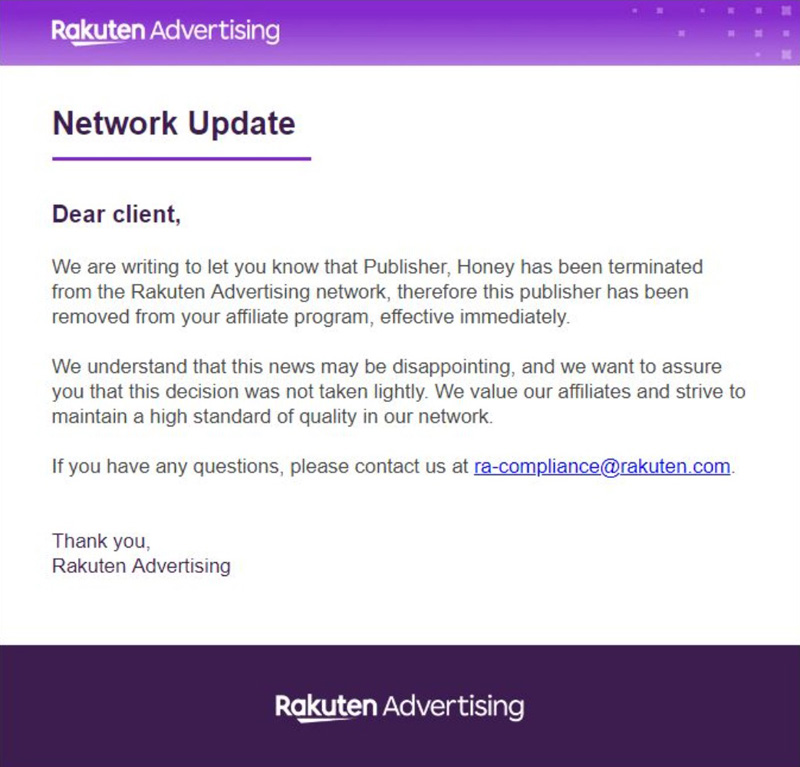
The swift actions taken by industry giants Rakuten Advertising and impact.com have sent shockwaves through the partnership economy. The enforcement actions follow mounting pressure from independent digital investigators, including prominent tech researcher Ben Edelman and digital sleuth MegaLag, whose deep dives into browser extension behavior brought long-standing industry anxieties regarding attribution manipulation into the public spotlight.
For affiliate managers, brand executives, and publishers alike, the episode serves as a watershed moment. It highlights the fragile nature of last-click attribution models, the limits of network-level oversight, and the urgent need for brands to actively police their own partnership channels.
Main Facts: The Fall of a Giant
The core controversy surrounding PayPal Honey centers on allegations of "attribution manipulation," specifically concerning the violation of established "stand-down" rules.
In modern affiliate marketing, the vast majority of programs operate on a last-touch-wins-all attribution model. Under this paradigm, the financial reward for a consumer conversion is awarded entirely to the last affiliate link or cookie the customer interacted with before completing a purchase.
Browser extensions like Honey sit uniquely within the consumer journey. They often operate at the bottom of the funnel, activating just as a user reaches the checkout page to offer coupon codes or cash-back incentives. To ensure fairness across the entire publishing ecosystem, industry standards and network agreements typically mandate that browser extensions "stand down"—meaning they must not fire or overwrite existing affiliate cookies if another publisher introduced the customer earlier in the clickstream.
According to investigative findings by Ben Edelman and subsequent network audits, Honey allegedly engaged in intentional stand-down violations and covertly bypassed these rules. By systematically injecting their own tracking code at the eleventh hour, they effectively hijacked customer journeys initiated by content creators, bloggers, and loyalty platforms, claiming commissions for sales they did not truly generate.
The consequences were immediate. PayPal Honey was summarily stripped of its status within the foundational U.S. affiliate networks that power thousands of enterprise-level brand programs.
Chronology of Events: A Week That Shook Affiliate Summit West
The timing of the crackdown could not have been more dramatic, coinciding precisely with the opening day of Affiliate Summit West, the largest annual gathering of performance marketers in the United States.

- Monday, January 12: Rakuten Advertising dropped the first major blow. Announcing that Honey had been "terminated from the network," Rakuten stated that the drastic measure was a necessary step to "maintain a high standard of quality" across its ecosystem. The news instantly dominated conversations on the exhibition floor at Affiliate Summit and erupted across professional social networks like LinkedIn and X (formerly Twitter).
- Friday, January 16: Additional enforcement arrived when impact.com confirmed that PayPal Honey was found to be "out of compliance" with its platform policies. Consequently, impact.com removed Honey from its Discovery Marketplace. Unlike Rakuten’s permanent termination, impact.com’s action manifested as a temporary suspension, pending a review of the software’s compliance mechanisms.
- Ongoing Fallout: Throughout the remainder of January, digital marketing forums, compliance agencies, and brand boardrooms continued to dissect the implications of the twin enforcement actions, questioning whether other browser-based publishers would face similar scrutiny.
Supporting Data and Industry Audits
The friction between downloadable software publishers (DSPs), browser extensions, and traditional affiliate publishers is far from new. However, recent empirical data underscores just how systemic these attribution friction points have become.
A recent independent audit conducted in the United Kingdom by the Affiliate & Partner Marketing Association (APMA) shed critical light on the mechanics of conversion misattribution. The APMA audited 30 major brands across 10 affiliate networks, examining interactions among three distinct affiliate categories. By evaluating the technical distinctions between strict "stand-down" enforcement and permissive "soft click" policies, the audit underscored the immense complexity of tracking early-funnel versus late-funnel touchpoints. The resulting 24-page report provided seven core recommendations for standardizing ethical practices across the global partnership sector.
Furthermore, comparative documentation provided by organizations like the Performance Marketing Association (PMA)—specifically their Affiliate Network DSP Policies Comparison—highlights the varying degrees of tolerance and technical enforcement mechanisms deployed by different networks.
Historically, network compliance departments have struggled to keep pace with rapid technological advancements in browser-based software, often leaving a governance gap that bad actors have been accused of exploiting.
Official Responses and Network Stances
The leadership of the impacted networks and industry associations has framed these enforcement actions as essential steps toward preserving trust within the digital marketing economy.
Executives at impact.com explicitly cited "attribution manipulation" as the primary driver behind Honey’s suspension, noting that actions undermining the fundamental integrity of partnership ecosystems will no longer be tolerated under a passive regulatory framework.
Similarly, Rakuten Advertising’s public communications stressed that maintaining pristine network quality requires zero tolerance for intentional rule circumvention.
However, industry veterans argue that network-level statements, while welcome, often arrive far too late. Critics point out that network compliance teams are primarily incentivized to monitor violations of network-wide policies rather than individual brand guidelines. Because networks derive revenue from transaction volume, critics argue there is an inherent conflict of interest that can delay decisive interventions against high-volume, enterprise-scale publishers.
Strategic Implications: Five Essential Lessons for Affiliate Managers
Analyzing the PayPal Honey controversy through the lens of program management reveals critical strategic takeaways for brands navigating the post-Honey landscape. Industry experts have distilled the fallout into five foundational lessons:
1. One Bad Apple Spoils the Entire Program
In the affiliate space, a rule-violating publisher does more than skim commissions—it poisons the well for high-quality partners. Savvy, content-driven affiliates routinely audit brand program rosters using professional policing tools before deciding to invest their promotional efforts. If they see notorious attribution hijackers thriving within a program, ethical affiliates simply decline to participate. Protecting brand equity requires aggressively pruning bad actors so that trustworthy partners feel safe and valued.
2. Do Your Own Policing; Never Rely Solely on Networks
Brands must draft explicit, unambiguous terms and conditions (Ts & Cs) within their affiliate agreements. While a robust contract does not automatically stop bad behavior, it establishes the legal and operational framework required to enforce compliance. Because affiliate networks have competing incentives, brands must take the reins on active, routine policing rather than outsourcing their program’s integrity to third-party network monitors.
3. Master the Technical Details
Affiliate managers cannot effectively regulate what they do not understand. Investigating nuances like "stand-down" logic, soft-click tracking, and cookie-overwriting mechanisms requires continuous education. Leveraging resources like the APMA’s attribution audits and the PMA’s DSP comparisons ensures that brand managers possess the technical literacy necessary to differentiate between legitimate consumer-facing software and predatory attribution manipulation.
4. Avoid Dangerous Generalizations
A common trap in affiliate management is swinging the pendulum too far in response to a scandal. When one browser extension or loyalty platform violates terms, insecure managers often panic and ban an entire class of publishers—lumping legitimate reward platforms, closed user groups (CUGs), and helpful browser tools into the same exclusionary bucket. Every publisher must be evaluated individually on their operational merits, avoiding sweeping generalizations that stifle program innovation.
5. Diversify Your Affiliate Base Rigorously
Perhaps the most damning critique highlighted by the Honey debacle is the "all eggs in one basket" syndrome. Many brands discover to their horror that upwards of 80% of their affiliate-driven revenue depends on a handful of publishers, often concentrated within a single affiliate category.
To build a resilient program immune to single-point-of-failure shocks, brands must actively cultivate a diversified ecosystem. Industry veterans recommend exploring up to 28 distinct affiliate types, including:
- Affinity groups
- Card-linked offers
- Charities and fundraisers
- Content producers
- Complementary brands
- Co-registration affiliates
- Coupons and deals
- Connected TV (CTV)
- Consultants and service providers
- Datafeed-driven websites
- Domainers
- Educators
- Email marketers
- Existing customers and brand advocates
- Loyalty affiliates (D2C websites and CUG solutions)
- Mass media opportunities
- Mobile-oriented affiliates
- Online communities and forums
- Paid search affiliates
- Pay-per-call publishers
- Podcasters
- Post-checkout solutions
- Ranking and review sites
- Retargeting and cart abandonment solutions
- Social media influencers
- Sub-affiliate networks
- Software and browser extensions
- Video marketers
Conclusion
The expulsion of PayPal Honey from Rakuten Advertising and impact.com marks the end of an era of lax enforcement regarding bottom-funnel attribution. As the partnership economy matures, brands can no longer afford to treat affiliate compliance as a passive background process.
By taking charge of program policing, mastering the technical intricacies of attribution rules, and fiercely diversifying their publisher portfolios, brand managers can transform this regulatory shockwave into an opportunity to build healthier, more resilient, and ultimately more profitable affiliate marketing programs for 2026 and beyond.