NEW DELHI / BENGALURU — In a historic milestone underscoring the shifting tectonic plates of global aerospace and defense manufacturing, British engineering titan Rolls-Royce convened its full board meeting in India for the very first time. The high-profile, three-day visit serves as a definitive signal of the company’s intent to deeply integrate its operations within the South Asian subcontinent.
At the heart of this diplomatic and industrial push is Rolls-Royce’s aggressive bid to secure a landmark partnership for the co-development and manufacturing of an indigenous propulsion system for India’s ambitious Advanced Medium Combat Aircraft (AMCA) programme—the nation’s flagship fifth-generation fighter jet project.
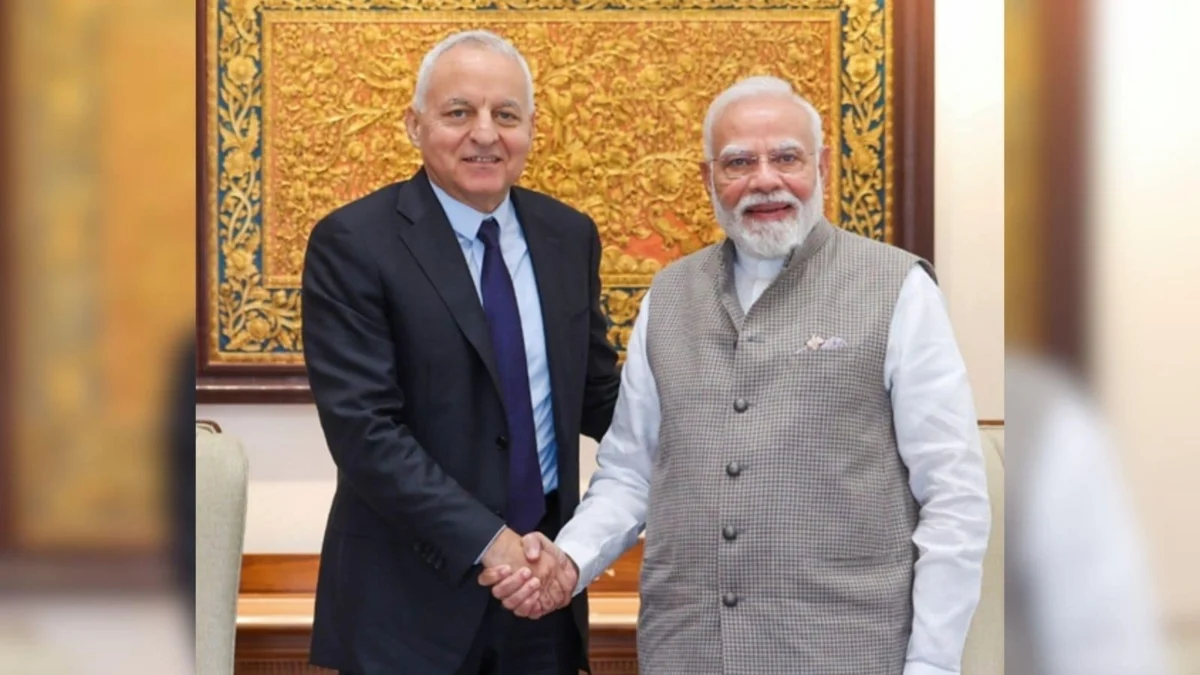
The high-stakes visit featured intensive deliberations between the British multinational’s executive leadership, Indian government ministers, defense stakeholders, and Prime Minister Narendra Modi. As New Delhi accelerates its "Atmanirbhar Bharat" (Self-Reliant India) campaign, aerospace giants are racing to align their commercial strategies with India’s uncompromising demands for domestic manufacturing, technology transfer, and localized intellectual property rights.
1. Main Facts
The core narrative of the Rolls-Royce board’s inaugural Indian sojourn revolves around defense alignment, co-development ambitions, and deep-rooted industrial integration:
- Historic Board Conclave: For the first time in its storied corporate history, Rolls-Royce held a board of directors meeting outside its traditional Western jurisdictions, choosing India as the venue to deliberate on global growth strategies.
- Top-Level Leadership Engagement: The delegation was led by Chief Executive Officer Tufan Erginbilgiç and Chair Dame Anita Frew, alongside members of the board. The leadership held high-level discussions with Prime Minister Narendra Modi, focusing on aerospace, defense, and energy sectors.
- The AMCA Engine Bid: Rolls-Royce is positioning itself to be the engine partner of choice for India’s fifth-generation AMCA fighter program. In August, the company announced a strategic intent to partner with Reliance Industries to design, manufacture, and support a next-generation combat engine locally.
- Proposed Aerospace Complex: The industrial proposal includes establishing a state-of-the-art Aerospace Gas Turbine Complex in India. This hub would oversee the complete lifecycle of the engine—from initial design and prototyping to manufacturing, testing, and maintenance—while scaling up to support future naval, military, and civil aviation needs.
- Competitive Landscape: Rolls-Royce faces intense competition for the lucrative AMCA contract. France’s Safran has tabled a separate proposal to partner with India’s Gas Turbine Research Establishment (GTRE). Meanwhile, initial AMCA prototypes are slated to utilize General Electric’s F414 engines, though persistent global supply chain bottlenecks have created urgency for a localized production partner.
2. Chronology of Events
The convergence between Rolls-Royce’s corporate roadmap and India’s defense modernization strategy has accelerated through a carefully orchestrated series of milestones:
Pre-2024: Laying the Groundwork
For decades, Rolls-Royce has maintained a robust footprint in India, powering various platforms for the Indian Armed Forces—particularly the Adour engines used in Jaguar and Hawk aircraft, alongside marine gas turbines. However, these engagements were largely transactional, relying on direct exports and localized maintenance support rather than co-development.
August 2024: The Reliance-Rolls-Royce Partnership Announcement
In a major turning point, Rolls-Royce and Reliance Industries declared a strategic intent to collaborate on combat engine design and development. This move signaled a shift in Rolls-Royce’s corporate strategy, pairing its world-class propulsion engineering expertise with the formidable industrial scale and financial backing of one of India’s largest conglomerates.
Late 2024: Supply Chain Realities for the F414 Engine
As India’s Aeronautical Development Agency (ADA) and Hindustan Aeronautics Limited (HAL) pushed forward with the AMCA airframe design, the initial reliance on General Electric’s F414 engine ran into predictable global aerospace supply chain delays. These delivery backlogs catalyzed India’s urgency to fast-track alternative, sovereign propulsion options.
Current Visit: The Inaugural Board Meeting in India
Culminating these strategic shifts, the Rolls-Royce board descended upon India for a three-day intensive visit. The delegation began in the capital, meeting with Prime Minister Modi and key defense bureaucrats, before traveling to Bengaluru to evaluate the company’s digital and engineering prowess firsthand at its Global Capability and Innovation Centre.
3. Supporting Data and Industrial Footprint
To understand the weight of Rolls-Royce’s ambitions in India, one must examine the sheer scale of the company’s current operations and the technological gaps it aims to bridge:
- Bengaluru Innovation Hub: The board’s inspection of the Global Capability and Innovation Centre in Bengaluru highlighted Rolls-Royce’s reliance on Indian engineering talent. The center plays a critical role in digital systems, software development, advanced analytics, and aerospace research.
- The Capability Gap in Aero-Engines: While India has made immense strides in designing and manufacturing indigenous airframes (such as the Tejas Light Combat Aircraft and advanced helicopter platforms), high-thrust aero-engine design remains the single largest technological vulnerability in the nation’s defense sector. Only a handful of nations globally—the US, UK, France, and Russia—possess the metallurgy, fluid dynamics mastery, and manufacturing tolerances required to build modern fighter jet engines.
- The Reliance Industrial Ecosystem: By partnering with Reliance Industries, Rolls-Royce aims to satisfy India’s strict offset and localization guidelines. The proposed Aerospace Gas Turbine Complex is envisioned as an anchor institution capable of spawning a robust tier-1 and tier-2 vendor ecosystem within India.
- Dual-Use and Multi-Domain Applications: The proposed engine complex is not restricted to the AMCA fighter alone. The facility is designed to scale dynamically, catering to future unmanned combat aerial vehicles (UCAVs), twin-engine deck-based fighters (TEDBF) for the Indian Navy, and heavy-lift transport initiatives.
4. Official Responses and Leadership Perspectives
The significance of the visit was underscored by carefully calibrated statements from both Rolls-Royce executive leadership and Indian state officials, reflecting a shared vision of long-term partnership.
Addressing the media and government stakeholders during the visit, Rolls-Royce CEO Tufan Erginbilgiç emphasized the centrality of India to the firm’s global strategy:
"India is very important to Rolls-Royce and our long-term growth ambitions. We want to deepen our role as a strategic partner supporting energy security, infrastructure growth, national security and connectivity, contributing to economic growth for India."
Erginbilgiç’s remarks framed the company not merely as a defense contractor seeking export revenue, but as an embedded partner invested in India’s broader socio-economic and technological rise.
From the Indian perspective, the government’s reception of the high-level delegation highlights New Delhi’s pragmatic approach to defense procurement. Prime Minister Modi’s administration has consistently maintained that foreign original equipment manufacturers (OEMs) can no longer view India as a mere buyer’s market. Technology transfer, joint intellectual property ownership, and domestic manufacturing lines are non-negotiable prerequisites for participation in major Indian defense acquisitions.
5. Strategic Implications
The convergence of Rolls-Royce’s corporate ambitions with India’s defense modernization carries profound ramifications for regional geopolitics, global aerospace supply chains, and domestic industrial capability.
Achieving True Strategic Autonomy
For decades, India’s defense preparedness has been vulnerable to geopolitical shifts, sanctions, and supply chain disruptions originating from foreign capitals. By pursuing an indigenous fifth-generation fighter engine through co-development—mirroring successful past models seen in civil aerospace or naval propulsion—India seeks to secure sovereign control over intellectual property, maintenance, overhauls, and future block upgrades.
Intensifying Transatlantic and European Defense Rivalry
Rolls-Royce’s aggressive entry into the AMCA engine sweepstakes sets up a fascinating corporate duel with French aerospace giant Safran. While Safran has pursued its own pathways with India’s Gas Turbine Research Establishment (GTRE), Rolls-Royce’s pairing with Reliance introduces an alternative private-public industrial synergy. This competition ultimately benefits India, driving down costs, accelerating timelines, and forcing European OEMs to sweeten their technology transfer offers.
Mitigating GE F414 Bottlenecks
While General Electric remains deeply entrenched in India’s immediate fighter plans—powering the Tejas Mk1A and the initial batches of the AMCA—global manufacturing backlogs at GE have forced New Delhi to diversify its risk portfolio. Having a secondary, highly localized engine development track ensures that India’s fifth-generation ambitions are not held hostage by external industrial bottlenecks.
Transforming India into an Aerospace Export Hub
Beyond servicing domestic requirements, the establishment of an advanced Aerospace Gas Turbine Complex in India could transform the country into a regional hub for maintenance, repair, and overhaul (MRO) and component manufacturing. As Western defense budgets face constraints and supply chains diversify away from traditional manufacturing hubs, India’s combination of cost-competitive engineering talent and scaled industrial capacity positions it uniquely on the global stage.
Conclusion
Rolls-Royce’s historic board meeting in India marks the threshold of a new chapter in Indo-British defense and industrial cooperation. By anchoring its future growth to India’s "Atmanirbhar Bharat" initiative and positioning itself as a willing partner for the complex AMCA engine programme, the British engineering icon is adapting to the realities of a multipolar world where technology transfer and local value creation are paramount.
As negotiations progress and the contours of the proposed Aerospace Gas Turbine Complex take shape, the coming months will determine whether Rolls-Royce can successfully translate its boardroom goodwill into a defining, generational contract that powers India’s skies for decades to come.