






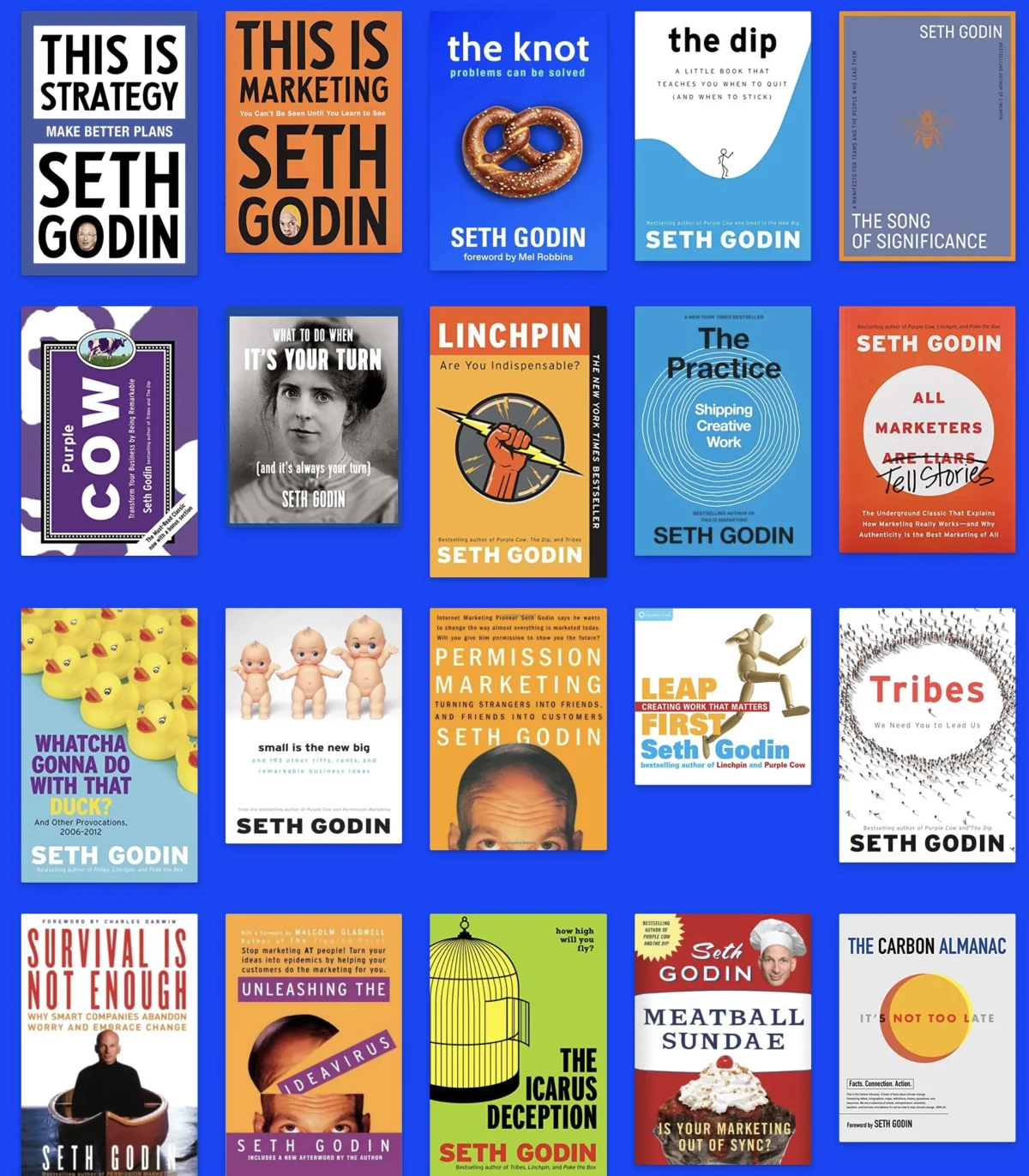
NEW YORK — Renowned author, entrepreneur, and marketing visionary Seth Godin has introduced a novel digital experiment into the literary world. On October 22, 2026, Godin unveiled a newly constructed web application—fittingly dubbed the "Hotlist"—designed to catalog a comprehensive collection of his published works while introducing a real-time, user-driven ranking mechanism.
The platform, hosted at hotlist.sethgodin.com, offers visitors a centralized directory to discover, explore, and acquire copies of Godin’s extensive bibliography. However, the defining feature of the page is its dynamic architecture: the layout continuously re-indexes itself based on aggregate user engagement, elevating the most frequently clicked titles to the forefront.
By marrying minimalist digital design with interactive crowd-sourced curation, Godin continues to push the boundaries of how creators interact with their audiences, turning a static bibliography into a living, breathing leaderboard of literary popularity.
Main Facts
- The Innovation: Seth Godin launched an interactive web page (hotlist.sethgodin.com) featuring a wide array of his books.
- Core Mechanism: When visitors click on a book cover or title, they are redirected to a comprehensive directory detailing where to purchase a copy. Simultaneously, the website’s backend registers the click and automatically re-indexes the page, shifting the most popular titles to prominent positions.
- Launch Date: The project was officially announced and deployed on October 22, 2026.
- Objective: To create a centralized, reader-influenced hub that highlights which of Godin’s concepts and books are resonating most strongly with contemporary audiences in real time.
Chronology of the Release
The rollout of the Hotlist page reflects Godin’s signature approach to digital deployment: swift, understated, and deeply focused on user participation.
Phase 1: Conceptualization and Development
Leading up to October 2026, Godin recognized a common friction point for both longtime readers and newcomers: navigating a decades-long career spanning dozens of bestselling books, manifestos, and independent projects. While traditional publisher websites offer static catalogs arranged by release date or alphabetical order, Godin sought a mechanism that would reflect active, organic interest rather than historical chronology. Development focused on creating a frictionless user interface that pairs minimalist visual presentation with instant, responsive backend re-indexing.
Phase 2: The October 22 Deployment
On October 22, 2026, the page went live quietly via Godin’s primary digital channels. Accompanied by a clean screenshot of the user interface and a characteristically concise announcement ("I just built a page containing many of my books…"), the launch immediately drew traffic from his vast readership across the globe.
Phase 3: Real-Time Data Collection and Initial Re-Indexing
Within hours of going live, the Hotlist began processing thousands of reader clicks. As visitors explored titles ranging from foundational marketing texts to niche creative manifestos, the page’s algorithm dynamically shifted the grid layout. Books experiencing a surge in curiosity immediately claimed top-tier visibility, creating an organic leaderboard dictated entirely by audience attention rather than algorithmic ad spend or publisher push.
Supporting Data and Context
To understand the significance of Godin’s Hotlist, one must examine the sheer volume and cultural footprint of his literary output. Over a career spanning more than three decades, Seth Godin has authored over 20 international bestsellers that have been translated into upwards of 40 languages.
A Snapshot of Godin’s Literary Footprint
- Foundational Texts: Books such as Permission Marketing (1999) fundamentally altered how digital marketers approached consumer consent and relationship-building. Later works like Purple Cow (2003) introduced the concept of remarkable products that naturally stand out in crowded marketplaces.
- Creative and Cultural Guides: Titles including The Dip (2007), Linchpin (2009), Tribes (2008), and This Is Marketing (2018) have served as career guidebooks for millions of entrepreneurs, artists, corporate leaders, and freelancers.
- Experimental Formats: Beyond traditional publishing houses, Godin has pioneered alternative publishing models, including independent book launches, serialized projects, and ultra-short manifestos like Whatcha Gonna Do with That Duck? and The Practice (2020).
The Hotlist page acts as a unifying bridge across this diverse ecosystem. By presenting these works in a single visual grid—featuring clean cover art thumbnails and direct pathways to acquisition—the page solves the paradox of choice often faced by readers entering Godin’s digital ecosystem for the first time. Instead of relying on a static list, the audience collectively decides which ideas are most urgent for the current cultural moment.
Official Responses and Public Reaction
Within the digital marketing, author, and tech communities, the launch of the Hotlist was met with immediate analysis, praise, and experimentation.

Reader and Creator Commentary
Social media platforms, particularly LinkedIn and X (formerly Twitter), saw an influx of discussions regarding Godin’s latest project. Many digital creators lauded the simplicity and cleverness of the mechanics.
"Seth is practicing what he has preached for thirty years," noted one prominent tech entrepreneur online. "Instead of telling people what they should read, he built a system that listens to what the market actually cares about in real time."
Others pointed out the psychological nuance of the dynamic leaderboard. By showing users which books are currently receiving the most clicks, the Hotlist leverages subtle social proof. A visitor who might have been undecided on which title to explore next is naturally drawn to the items already scaling the ranks, creating a self-reinforcing loop of discovery.
Godin’s Perspective on Digital Interaction
True to his style, Godin has kept formal press statements to a minimum, letting the work and the platform speak for themselves. However, his philosophy on attention, generosity, and digital architecture provides clear context for the project. Throughout his writing and lecturing, Godin has consistently argued that the modern economy runs on attention and trust, not interruption. The Hotlist embodies this philosophy: it does not force advertisements or pop-ups onto the user; instead, it invites voluntary exploration and transparently rewards collective curiosity.
Implications for Digital Publishing and Author Platforms
While the Hotlist may appear at first glance to be a simple directory for one author’s catalog, industry analysts suggest it could serve as a blueprint for how independent creators, publishers, and e-commerce platforms approach user engagement and catalog navigation.
1. Moving Beyond Static Landing Pages
Traditional author websites typically feature a static grid or list of books, sorted chronologically or by publisher preference. While functional, these pages offer zero feedback loops. Godin’s implementation introduces a gamified, responsive layer to discovery. When a user clicks a book, they are not just navigating to a store; they are casting a vote that alters the visual hierarchy of the site for subsequent visitors.
2. Decentralized Curation in the Age of Noise
In an era dominated by algorithmic feeds controlled by massive social media conglomerates, creators are increasingly looking for ways to reclaim direct relationships with their audiences. By building a proprietary, lightweight application that tracks reader intent, Godin demonstrates how creators can build simple, elegant tools that surface what matters most without relying on black-box recommendation engines.
3. Insights into Audience Demographics and Timing
For authors and publishers, understanding when specific topics capture public imagination is invaluable. While long-term sales data provides a lagging indicator of what people bought weeks or months ago, click-stream re-indexing provides a leading indicator of what topics are sparking immediate curiosity today. If a sudden global event or cultural shift drives readers toward books on resilience or leadership, the Hotlist reflects that shift instantly.
Conclusion
Seth Godin’s deployment of the Hotlist at hotlist.sethgodin.com is more than a convenient catalog—it is a living experiment in digital interaction, reader agency, and minimalist design. By allowing his audience to collectively curate his literary catalog in real time, Godin has once again demonstrated why he remains one of the most innovative thinkers in modern business and communication. As readers continue to click, explore, and re-index the page, the Hotlist stands as a testament to the power of treating an audience not as passive consumers, but as active participants in the creative journey.