





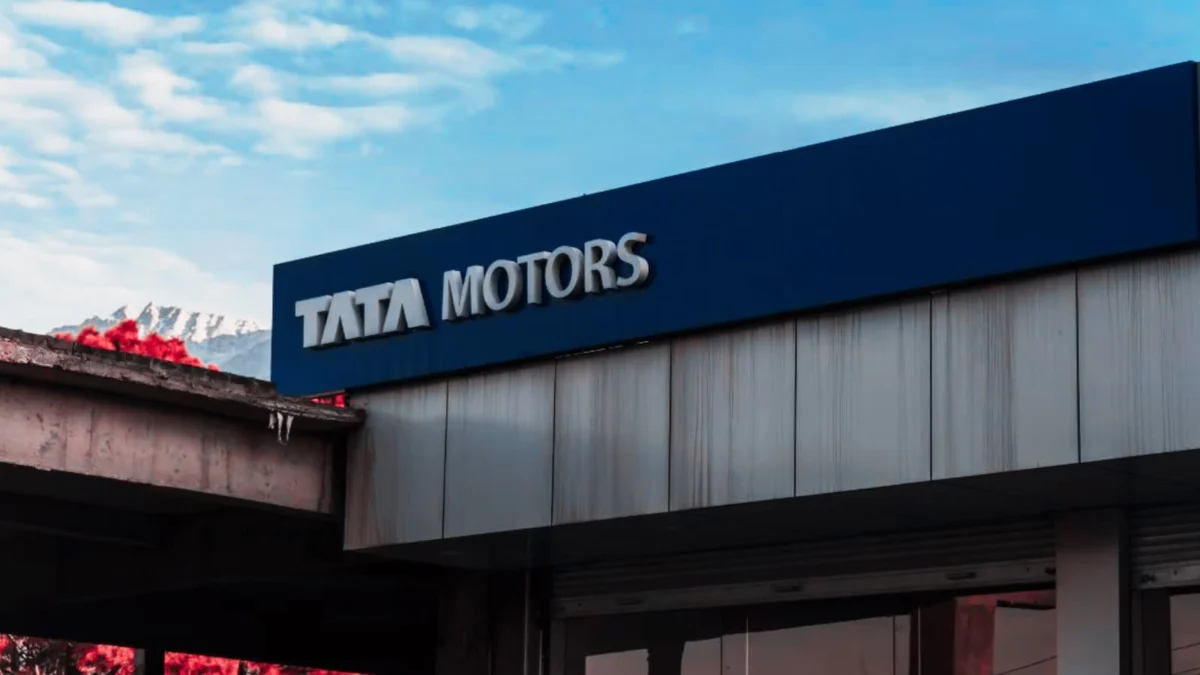
MILAN / MUMBAI — In a landmark cross-border transaction that reshapes the global commercial vehicle landscape, Indian automotive titan Tata Motors has successfully crossed the finish line in its takeover bid for Italy’s iconic truck and powertrain maker, Iveco Group.
According to an official corporate release issued by Tata Motors, the all-cash voluntary tender offer—executed through its subsidiary TML CV Holdings B.V.—surpassed its minimum acceptance threshold of 80% in the dying hours of the bidding window. By the time the acceptance period officially closed at 5:30 PM Central European Time (CET) on October 26, shareholders had tendered an overwhelming 87.8% of Iveco shares.
The successful completion of this threshold paves the way for the settlement process, with shareholders who opted into the tender slated to receive their payouts on October 30. The acquisition represents one of the most significant strategic plays by an Indian multinational in the European industrial manufacturing sector, marrying Tata’s aggressive global ambitions with Iveco’s deep-rooted European engineering heritage, advanced powertrain technologies, and extensive commercial footprint.
Main Facts of the Acquisition
The multi-billion-euro acquisition has been executed under specific financial, structural, and operational parameters that reflect both the competitive nature of the takeover battle and Tata Motors’ determination to capture a dominant global market share in commercial vehicles.
- The Final Stake: TML CV Holdings B.V. secured 87.8% of Iveco Group’s total outstanding shares, comfortably clearing the 80% minimum acceptance condition set by the acquirer.
- Valuation and Offer Price: Tata Motors acquired the shares at a final price of €14.40 per share. This figure was explicitly labeled by Tata management as their "best and final" price following weeks of negotiation and pushback from minority stakeholders.
- Total Financial Outlay: Based on the 87.8% acceptance rate of Iveco’s total share capital, the total cash consideration for the transaction translates to a substantial multi-billion-euro investment, solidifying Tata Motors’ position as a heavy-hitting player in Western European industrial markets.
- Settlement Timeline: The acceptance window officially slammed shut on October 26, 2023, at 5:30 PM CET. Financial disbursement to the participating shareholders is scheduled for October 30.
- Vehicle of Acquisition: The transaction was spearheaded and financed through TML CV Holdings B.V., a dedicated European subsidiary of Tata Motors designed to streamline regulatory compliance, asset management, and cross-border integration.
Chronology of the Takeover Battle
The road to securing nearly 88% of Iveco Group was far from straightforward. It involved a high-stakes chess match of corporate diplomacy, public valuation disputes, and a dramatic eleventh-hour surge in shareholder participation.
Phase 1: The Initial Approach and Skepticism
The groundwork for the acquisition was laid months prior, as Tata Motors sought to expand its international footprint beyond its dominant presence in India and its successful integration of Jaguar Land Rover (JLR). Iveco Group, renowned for its commercial vehicles, fire-fighting equipment, and industry-leading powertrain division (FPT Industrial), emerged as an ideal target to accelerate Tata’s technological roadmap, particularly in zero-emission commercial transport and hydrogen fuel cells.
Phase 2: The Initial Bid and Activist Resistance
Initially, Tata Motors tabled a lower voluntary tender offer, which was quickly met with friction from institutional voices within the Iveco shareholder base. The most prominent early obstacle came from activist investment firm Petrus Advisers. Holding a 3.8% stake in Iveco, Petrus Advisers publicly pushed back against Tata’s initial overtures, arguing vociferously that the bid fundamentally undervalued the Italian manufacturer’s asset portfolio, technological prowess, and future earnings potential. Petrus urged fellow shareholders to withhold their shares, casting a temporary shadow of doubt over the success of the tender.
Phase 3: The Sweetened Offer ("Best and Final")
Sensing the resistance and determined to avert a failed takeover, Tata Motors returned to the drawing board. On October 9, the Indian automotive giant made a decisive upward revision, raising its offer price from €14.10 per share to €14.40 per share. Alongside this financial bump, Tata leadership drew a hard line in the sand, officially designating €14.40 as their "best and final" offer, signaling that no further concessions or bidding wars would be entertained.
Phase 4: The Tense Mid-Offer Lull
With just one week remaining before the October 26 deadline, market watchers grew anxious. Mid-term tallies released by Tata Motors revealed that acceptances stood at a modest 35% of the shares—well below the ambitious 80% threshold required to make the acquisition viable.
However, seasoned corporate finance experts remained calm. Addressing the apparent shortfall, Tata Motors Managing Director and CEO Girish Wagh publicly reassured markets, noting that in complex cross-border voluntary tender offers, institutional investors and asset managers frequently wait until the final 24 to 48 hours to formally tender their shares, balancing risk and maximizing leverage.
Phase 5: The Eleventh-Hour Surge and Victory
Wagh’s prediction proved remarkably accurate. In the final stretch of the bidding window, a massive wave of institutional and retail shareholders flooded the system with tenders. By the time the clock struck 5:30 PM CET on October 26, the cumulative tally had skyrocketed from 35% to an impressive 87.8%, blowing past the 80% minimum threshold and sealing Tata Motors’ historic victory.
Supporting Financial and Operational Data
To fully comprehend the scale of the Tata-Iveco transaction, it is essential to examine the structural metrics of both entities and the economic context of the European commercial vehicle market.
| Metric / Parameter | Detail / Value |
|---|---|
| Acquirer | Tata Motors Ltd. (via TML CV Holdings B.V.) |
| Target Company | Iveco Group N.V. |
| Final Acquisition Price | €14.40 per share ("Best and Final") |
| Previous Offer Price (Pre-Oct 9) | €14.10 per share |
| Final Acceptance Rate | 87.8% of total shares |
| Minimum Acceptance Threshold | 80.0% |
| Offer Closing Date & Time | October 26, 5:30 PM CET |
| Payment / Settlement Date | October 30 |
| Key Activist Opposition | Petrus Advisers (Holders of a 3.8% stake) |
| Key Executive Spokesperson | Girish Wagh, MD & CEO, Tata Motors |
The Commercial Vehicle Ecosystem
Iveco Group boasts an extensive industrial footprint across Europe and Latin America. Prior to the takeover, Iveco operated independently following its spin-off from CNH Industrial. The company is structured around several high-performing pillars:
- Commercial Vehicles: Light, medium, and heavy-duty trucks serving diverse logistics and municipal sectors.
- Powertrain (FPT Industrial): A world-class developer of internal combustion, electric, and alternative-fuel engines for on-road, off-road, marine, and power generation applications.
- Financial Services: Captive financing arms that facilitate dealer and customer vehicle acquisitions across global markets.
For Tata Motors, acquiring this ecosystem means instantly absorbing decades of European manufacturing expertise, established dealer networks, and advanced research and development facilities focused on decarbonizing heavy transport.
Official Responses and Stakeholder Reactions
The successful conclusion of the tender offer has elicited strong reactions from corporate leadership, industry analysts, and market regulators across Europe and India.
Tata Motors Leadership
Speaking on the heels of the final tally, Girish Wagh, Managing Director and CEO of Tata Motors, expressed profound satisfaction with the outcome, highlighting the resilience of the negotiation process and the strategic alignment between the two industrial giants.
"We always maintained confidence in the underlying industrial logic of this combination," Wagh noted during an investor briefing. "The final surge in acceptances reflects a clear recognition by Iveco’s shareholders of the immense value that can be unlocked by bringing these two powerhouses together. We respect the dialogue we’ve had with all stakeholders throughout this process—including those who challenged our valuations—as it ultimately helped shape a robust, definitive transaction. We look forward to completing the settlement on October 30 and immediately turning our attention to collaborative growth, technological synergy, and expanding our global footprint."
The Dissenting Voices: Petrus Advisers
While the 87.8% acceptance rate confirms overwhelming institutional buy-in, the journey was marked by vocal opposition. Petrus Advisers, the activist fund holding 3.8% of Iveco, had previously argued that €14.10—and even the revised €14.40—failed to capture the full intrinsic value of Iveco’s green technology portfolio and its powertrain division, FPT Industrial.
While Petrus Advisers had urged market participants not to tender their shares at the initial price points, the sheer weight of institutional investors choosing the liquidity and certainty of Tata’s €14.40 cash offer ultimately overwhelmed the activist block’s resistance, rendering their blocking minority ineffective once the 80% threshold was breached.
Global Implications and Future Outlook
The acquisition of Iveco Group by Tata Motors is not merely a corporate buyout; it is a tectonic shift in the global commercial vehicle hierarchy that carries profound implications for the automotive industry at large.
1. Acceleration of Green Technology and Decarbonization
The global commercial vehicle sector is undergoing its most radical transformation in a century, driven by stringent carbon emissions regulations, the phase-out of internal combustion engines, and the race toward electrification and hydrogen fuel cell adoption.
While Tata Motors has made monumental strides in electric mobility within its domestic Indian market and through its British subsidiaries, Iveco brings advanced European R&D, heavy-duty electric vehicle platforms, and FPT Industrial’s cutting-edge powertrain solutions. The combined entity will possess the financial muscle, engineering talent, and patent portfolio to aggressively compete with established European, American, and East Asian heavy-duty manufacturers in the race for zero-emission logistics.
2. Supply Chain and Global Footprint Integration
Geographically, the merger creates a complementary powerhouse. Tata Motors dominates the South Asian commercial vehicle market, with deep roots in India, parts of Southeast Asia, and select African nations. Iveco, conversely, commands immense brand loyalty and operational infrastructure across Western and Southern Europe, South America, and parts of the Middle East.
By integrating these supply chains, the consolidated group can optimize component sourcing, reduce manufacturing redundancies, and insulate itself more effectively against regional supply chain shocks and geopolitical trade friction.
3. Consolidation in the European Industrial Sector
The successful takeover of an Italian industrial crown jewel by an Indian multinational also signals a broader evolution in global capital flows. Historically, cross-border automotive acquisitions often flowed from Western economies into emerging markets. Tata Motors’ successful integration of Jaguar Land Rover years ago proved that Indian conglomerates could successfully nurture and revitalize Western automotive brands.
The acquisition of Iveco solidifies Tata’s reputation as a sophisticated, patient, and capable global operator capable of navigating complex European regulatory landscapes, labor unions, and activist shareholder dynamics.
4. Next Steps for Integration
With the cash settlement scheduled for October 30, attention will quickly pivot from financial engineering to operational execution. Management teams from both Tata Motors and Iveco Group will face the intricate task of cultural integration, streamlining administrative functions, and outlining a unified product roadmap.
While integrating two massive industrial entities always carries near-term execution risks, the overwhelming 87.8% mandate from shareholders provides the incoming leadership with a clear, undisputed mandate to steer the combined company into its next chapter of global growth.
This is a developing story. Further updates regarding regulatory sign-offs, post-acquisition governance structures, and strategic roadmap announcements will be provided as they become available.