










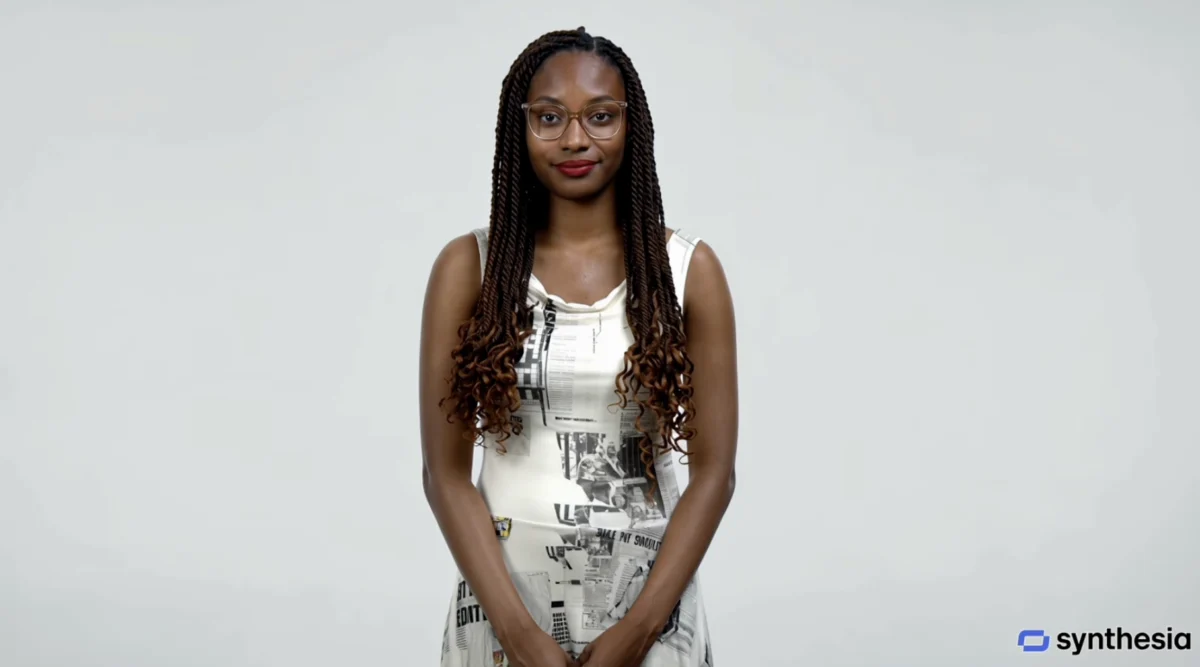
In the rapidly evolving landscape of generative artificial intelligence, few companies have captured the imagination—and the capital—of the enterprise world quite like Synthesia. Once a niche startup operating out of the United Kingdom, the company has ascended to the pinnacle of the AI video generation market, boasting a $4 billion valuation and exceeding $100 million in Annual Recurring Revenue (ARR). But beyond the financial metrics, Synthesia is pioneering a frontier that sits at the intersection of human identity and machine automation: the creation of interactive, hyper-realistic digital avatars.
This summer, the reality of this technology became personal. After receiving a link to an interactive virtual avatar of Alexandru Voica, Synthesia’s head of corporate affairs, I realized that the conversation around AI in public relations had shifted. We were no longer merely discussing the ethics of AI-generated press releases; we were witnessing the emergence of the "final boss" of PR: a persistent, knowledgeable, and always-on digital proxy.
The Evolution of the Digital Twin
Synthesia’s core offering has long been its video-creation platform, which allows enterprises to generate training and marketing videos by simply typing a script. However, the company has aggressively expanded into agentic AI. Their latest innovation, "Roleplay Sessions," represents a significant leap forward. Instead of passive video consumption, employees can now engage in real-time, interactive scenarios—such as practicing high-stakes sales pitches—with an AI avatar that listens, responds, and provides analytical feedback on the user’s performance.
To better understand this technology, I visited Synthesia’s new New York office in September. The experience was transformative. When invited to create my own digital twin, I accepted without hesitation. The process was surprisingly streamlined: a brief session in a mini film studio, a few minutes of high-fidelity voice recording, and a series of photos were all it took to synthesize a digital facsimile of myself.
The result was twofold: I was provided with a "personal" avatar capable of reading any script I provided, and an "interactive" avatar—a deterministic agent trained specifically on my reporting regarding venture-backed startup fraud. By constraining the model to a specific dataset, the developers ensured that the avatar acted as a specialized knowledge repository, refusing to wander into personal anecdotes or off-topic conjecture.
A Technical Deep Dive: Under the Hood
The creation of an interactive digital avatar is a sophisticated orchestration of modern machine learning. Synthesia’s stack is a modular ecosystem, integrating several distinct models to simulate human presence:
- Voice-to-Text (Speech Recognition): This layer captures the user’s vocal input and transcribes it into data.
- Agentic Language Model: Acting as the "brain," this model processes the input, determines the intent, and retrieves the appropriate response based on the training data.
- Text-to-Voice (Synthesis): The retrieved response is converted back into high-fidelity audio, capturing the nuances of the original subject’s speech patterns.
- Video Animation Model: This is Synthesia’s proprietary secret sauce. It animates the avatar’s facial movements, eye contact, and gestures in sync with the audio, providing the illusion of life.
While Synthesia utilizes its own proprietary video and voice models, the architecture is designed for interoperability. Customers can choose to integrate third-party services from labs like ElevenLabs, Cartesia, Google, or OpenAI, and they maintain the flexibility to host these agents on their own cloud infrastructure or utilize Synthesia’s managed services.
The Human Reaction: Between Awe and "AI Psychosis"
When I introduced my digital twin to friends and family, the reactions were telling. To the uninitiated, the experience was a blend of technical fascination and visceral discomfort. My mother, perhaps the most candid critic, found the likeness "amazing" yet deeply unsettling, joking about the existential confusion of seeing two of me.
My friends noted that while the likeness was impressive, it didn’t perfectly capture the subtle idiosyncrasies of my voice or mannerisms—a reminder that we are still in the early innings of human synthesis. However, the "creepiness" factor was palpable. There is a psychological threshold triggered by a machine that looks and sounds like someone you know but operates with the mechanical precision of an algorithm.
This experience brought to light the concept of "AI psychosis"—the potential for users to become emotionally tethered to, or confused by, nondeterministic avatars. When an avatar is allowed to pontificate freely, powered by a general-purpose Large Language Model (LLM), the boundary between human intent and machine generation blurs. By keeping my avatar deterministic, Synthesia kept the interaction grounded in facts, but one can easily see how a more conversational, "free-thinking" agent could radically alter the dynamics of human interaction.
Implications for Journalism and the Workforce
The existence of these avatars forces a difficult question upon the media industry: If a digital twin can effectively present news or answer common questions, what is the future of the human journalist?
Industry reactions are polarized. Some investors argue that audiences will never accept an AI surrogate for a human reporter, citing the inherent necessity of trust, empathy, and moral judgment in journalism—traits that, at present, cannot be outsourced to a silicon-based agent. Others are less certain, suggesting that in a world already saturated with "AI slop," the role of the human journalist may evolve into that of an editor or curator, while avatars handle the heavy lifting of dissemination.
The corporate implications are perhaps more immediate. We are entering an era where a "version" of an employee can essentially work overtime. Imagine a scenario where a CEO or a subject matter expert is "present" in ten different training sessions simultaneously, answering questions and coaching staff in real-time. The productivity gains are staggering, but the cultural shift—the idea that our digital footprint could eventually outwork our physical selves—is profound.
Looking Toward the Future
As I examined my avatar in the silence after it finished speaking, I felt a peculiar, lingering sensation. I found myself waiting for it to blink, to smile, or to acknowledge its own existence—a human projection onto a digital surface. It is, perhaps, the ultimate irony of our time: we are building machines that mimic us so effectively that we are forced to re-examine what makes us human in the first place.
For now, the technology remains in its adolescence. It is less jarring than the uncanny valley of humanoids, and it carries the safety valve of being able to "log off." But as companies like Synthesia, D-ID, HeyGen, and Colossyan continue to iterate, the line between the physical and the digital will only grow thinner.
We are entering a new chapter of professional life where cloning one’s expertise is becoming a standard business asset. Whether this leads to a more efficient world or a more disconnected one remains to be seen. But one thing is clear: the digital mirror has been polished, and it is staring back at us. We must now decide who, or what, will do the talking.



