






By Angela Courtin, VP of Sports & Entertainment Marketing, and Justin Connolly, VP Global Head of Media & Sports, YouTube
As the final whistle echoed across the stadiums and the confetti settled on the pitch following the dramatic conclusion of the FIFA World Cup 2026™, the world was left to process a tournament of unprecedented scale. For the global audience, the experience was no longer confined to the traditional television set; it was a sprawling, multi-platform digital phenomenon. YouTube, serving as a primary hub for global fandom, played a pivotal role in this transformation, cementing the 2026 tournament as the most-viewed FIFA World Cup in the platform’s history.
The Dawn of a New Era in Sports Broadcasting
The FIFA World Cup 2026™ represented a landmark shift in how fans interact with the "beautiful game." Through a strategic partnership between FIFA and YouTube, the platform evolved into a comprehensive ecosystem where premium official broadcasts coexisted with the raw, authentic energy of creator-led content. From the technical mastery of broadcasters like CazéTV—which achieved historic live-streaming milestones—to the intimate, behind-the-scenes coverage provided by digital creators, YouTube provided a 360-degree view of the tournament.
This synergy between legacy media and the creator economy was not merely additive; it was transformative. By meeting fans where they already spent their time—on their phones, tablets, and connected living room TVs—YouTube succeeded in turning a month-long event into a sustained, daily digital conversation.
A Tournament of Astronomical Metrics
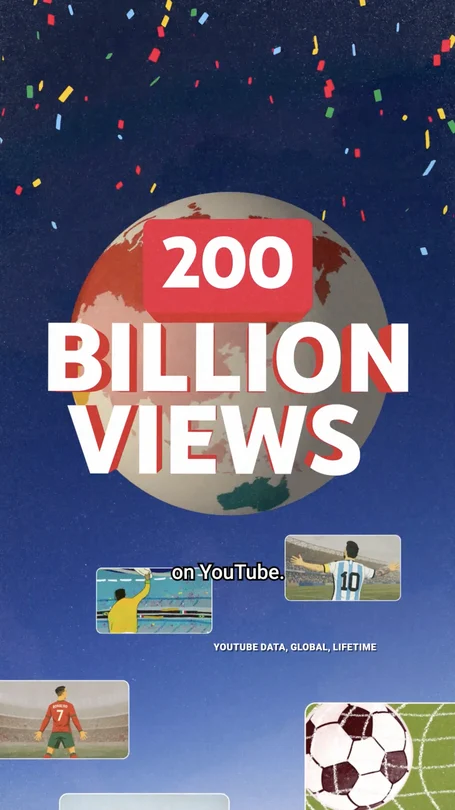
The numbers tell a story of unparalleled growth. With this tournament, YouTube pushed the cumulative lifetime views for FIFA World Cup-related content past the 200 billion mark. During the 2026 event itself, over 1.7 billion unique viewers tuned in to watch tournament-related content on the platform.
The Television Revolution
Perhaps the most significant shift was the migration of the YouTube experience to the big screen. Over 550 million unique viewers consumed World Cup content directly on their televisions. This transition highlights the maturation of YouTube as a primary destination for high-fidelity, long-form sports broadcasting, effectively competing with and complementing traditional cable and satellite providers.
The Final Showdown
The crowning jewel of the tournament’s digital footprint was the final match between Spain and Argentina on July 19. The official YouTube broadcasts captivated a global audience, drawing over 21 million Average Minute Audience (AMA) across more than 40 markets. At its peak, the platform saw over 27 million concurrent viewers, a testament to the robust infrastructure and global reach that YouTube has cultivated over the past decade.
FIFA’s Digital Growth
The official FIFA YouTube channel experienced an explosive surge in engagement. Between June 11 and July 19, the channel accumulated over 4 billion views and welcomed 7.5 million new subscribers. This brought their total to over 34 million, solidifying the channel as the central repository for the tournament’s historical archives, highlights, and official commentary.
Chronology of a Digital Phenomenon
The trajectory of the tournament on YouTube can be categorized into three distinct phases of engagement:
- The Build-up (Pre-June 11): The lead-up saw a surge in long-form documentary content, player profiles, and training ground insights. Creators utilized YouTube Shorts to build anticipation, creating a "hype cycle" that ensured international audiences were emotionally invested before the first ball was kicked.
- The Group Stage and Knockouts (June 11 – July 12): This was the phase of "peak discovery." As underdogs emerged and heavyweights faltered, the algorithmic discovery of YouTube ensured that fans received personalized updates. The sheer volume of content—from match highlights to fan reactions—kept the platform buzzing 24/7.
- The Creator Cup and the Finale (July 12 – July 19): The mid-tournament exhibition match in New York’s Central Park, led by creators IShowSpeed and Celine Dept, served as a cultural bridge, drawing 10 million live views. This set the stage for the final week, where viewership peaked during the Spain-Argentina final.
The Creator Economy: A New Lens on the Game
Traditional sports journalism has long been the gatekeeper of the game. However, the 2026 FIFA World Cup™ saw a paradigm shift as a global roster of creators—boasting a combined 350 million subscribers—took center stage.
These creators did not just report on the game; they humanized it. By offering unique perspectives, from "fan-cam" reactions to deep-dive tactical breakdowns, this creator roster generated over 2.5 billion views. The YouTube FIFA Creator Cup, held on July 12, was perhaps the strongest evidence of this shift. By hosting an exhibition match that felt as much like a cultural event as a sporting one, YouTube proved that the next generation of fans values personality-driven content as much as the athletic performance itself.
Official Perspectives and Strategic Implications
For YouTube leadership, the success of the 2026 tournament is proof that the "living room" strategy is working. With more than 45 billion hours of sports content consumed annually on the platform, YouTube is no longer just a "social" site; it is a primary broadcaster.
"Our partnership with FIFA was built on the goal of accessibility," noted our internal sports marketing division. "By removing barriers to entry and ensuring that high-quality, high-definition live streams were available globally, we were able to reach audiences that traditional broadcasters might have missed."
The implications for the sports industry are clear:
- Direct-to-Consumer Dominance: The success of the 2026 World Cup proves that fans are ready to bypass traditional pay-TV models if the digital experience is seamless, high-quality, and community-oriented.
- The Rise of the "Creator-Broadcaster": The hybrid model of professional broadcasting combined with creator commentary is the future of sports media. It provides depth for the hardcore analyst and accessibility for the casual viewer.
- Globalized Localized Content: By leveraging a local creator network in different markets, YouTube was able to tailor the World Cup experience to specific cultural nuances, making a global event feel like a local celebration in every corner of the world.
Conclusion: Looking Toward the Future
The FIFA World Cup 2026™ was more than just a tournament; it was a digital laboratory that proved the efficacy of a decentralized, multi-creator, and platform-first approach to global sports. As we look ahead, the lessons learned from these record-breaking weeks will undoubtedly inform the next generation of sports media.
YouTube has successfully transformed from a repository of highlights into a live-broadcasting powerhouse. As the digital and physical worlds continue to blur, the platform remains committed to providing fans with a front-row seat to history, ensuring that no matter where they are, the roar of the stadium is just a click away. The 2026 World Cup was just the beginning; the future of sports, it seems, will be live, social, and exclusively on YouTube.