










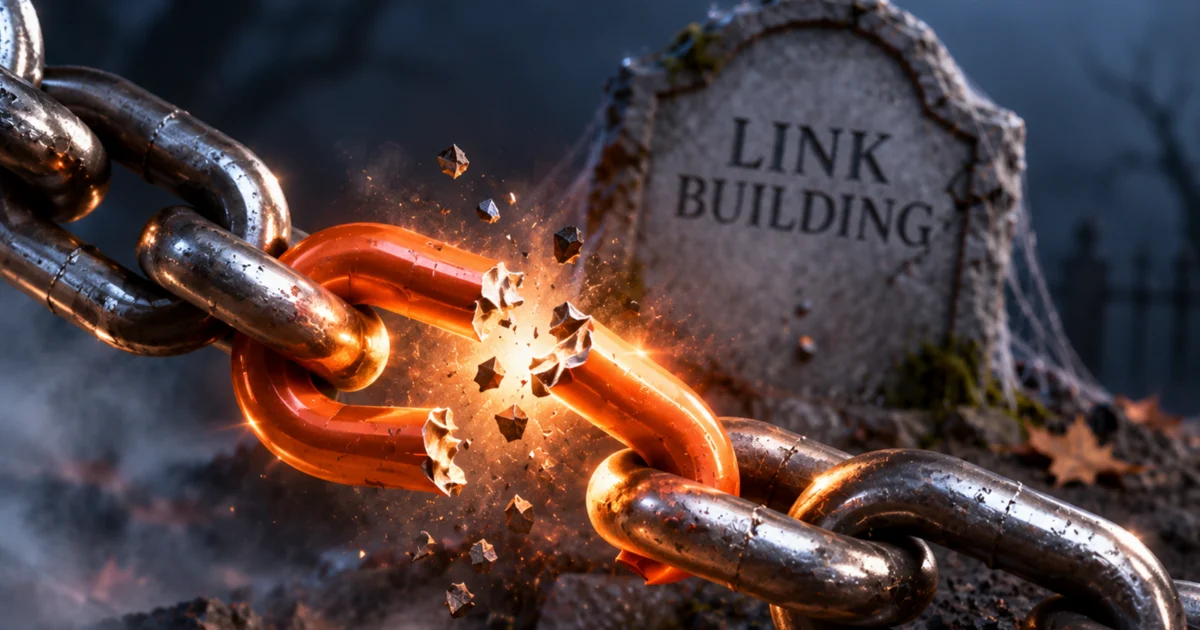
As the search engine landscape rapidly shifts toward artificial intelligence-driven experiences, digital marketers are grappling with a fundamental question: Is link building dead, or is it simply transforming?
To answer this pressing industry concern, Search Engine Journal is hosting a high-profile, free webinar titled The Link Building Graveyard: What to Bury & What Still Wins. Scheduled for Wednesday, October 21, 2026, at 2 p.m. ET, the session will feature Michael Johnson, CEO of Resolve, and will be moderated by SEJ Founder Loren Baker.
The webinar aims to cut through the industry noise, offering marketers a pragmatic keep-or-cut framework to refine their off-page SEO and AI visibility strategies for 2027 and beyond.
Main Facts: The Intersection of Link Building and AI Search
The core premise of the upcoming webinar challenges the narrative that traditional SEO tactics are entirely obsolete in the age of generative search. While algorithms have grown more sophisticated—relying heavily on Large Language Models (LLMs), semantic understanding, and direct conversational interfaces—the foundational mechanics of the web remain unchanged.
- The Role of Links in AI Discovery: Google’s AI Overviews, AI Mode, and other conversational search interfaces do not operate in a vacuum. They draw heavily on live web pages to synthesize answers, verify facts, and source citations. Relevant, earned backlinks serve as vital pathways that help search engine crawlers discover, index, and evaluate content authority.
- The Presenters: Michael Johnson, Chief Executive Officer of organic growth agency Resolve, will lead the session, bringing years of empirical campaign data to the table. Loren Baker, Founder of Search Engine Journal and Foundation Digital, will moderate the discussion, steering the conversation toward actionable takeaways for agency owners, in-house marketers, and enterprise SEOs.
- The Event Details: The live session takes place on October 21, 2026, at 2:00 p.m. ET. Registration is open to the public, and participants who cannot attend the live broadcast will receive a full recording upon signing up.
Chronology: How Off-Page SEO Reached the 2027 Crossroads
To understand why a "link building graveyard" framework is necessary for 2027, it is vital to trace how the discipline has evolved over the past decade.
Phase 1: The Volume-Driven Era (Pre-2020)
For many years, link building was often treated as a numbers game. Success was frequently measured by the sheer volume of acquired backlinks, leading to widespread adoption of automated directory submissions, low-quality guest blogging networks, and comment spam. Search engines responded with major algorithm updates—most notably Google’s Penguin updates—which penalized manipulative linking practices and forced the industry to mature.
Phase 2: The Quality and Digital PR Revolution (2020–2024)
As search engines grew more adept at evaluating contextual relevance, the industry pivoted toward Digital PR and high-end content marketing. Securing links from authoritative news publications, industry blogs, and resource pages became the gold standard. Marketers focused on creating data-driven studies, infographics, and expert commentary to naturally earn citations and authority.
Phase 3: The Generative Search Disruption (2025–2026)
With the widespread rollout of Google’s AI Overviews and conversational search modes, industry panic briefly suggested that backlinks would lose all value. However, empirical studies published in early 2026 painted a more nuanced picture. Rather than rendering off-page SEO useless, AI search engines integrated traditional ranking signals—including backlink profiles—as a core filter for determining which web pages are trustworthy enough to be synthesized into AI-generated answers.
Phase 4: The Strategic Modernization for 2027
Today, SEO professionals face the challenge of separating outdated, resource-heavy tactics from modernized, high-impact campaigns. The upcoming Resolve webinar serves as a timely intervention for planning 2027 budgets and resource allocations, helping teams decide precisely what to discard and where to double down.
Supporting Data: What the Numbers Tell Us About Links and AI Citations
Skeptics of link building often argue that users no longer click traditional blue links, rendering off-page authority metrics obsolete. However, data from leading SEO software providers refutes the idea that backlinks and modern visibility are mutually exclusive.
A landmark citation study published by Ahrefs in March 2026 shed significant light on the relationship between traditional organic rankings and AI search visibility. The research revealed a striking overlap: 37.1% of the unique URLs cited within Google’s AI Overviews also held top-10 organic search rankings for the exact same query.
This statistic underscores a critical reality for modern marketers:
- The Foundation Remains: High organic visibility—which is heavily influenced by a healthy, relevant backlink profile—acts as a primary prerequisite for winning AI citations.
- Correlation, Not Guarantee: While holding a backlink or a top-ranking position does not guarantee that an AI model will cite your URL, the underlying authority signals that earned that backlink are precisely what algorithms use to vet trustworthy sources.
- Dual-Engine Optimization: Marketers can no longer optimize exclusively for traditional search or exclusively for generative engines. The two ecosystems are deeply intertwined. Winning in AI search requires the baseline authority that traditional off-page SEO provides.
Official Perspectives and Expert Insights
Industry leaders emphasize that the definition of "link building" must expand to encompass brand mentions, digital PR, and entity authority.
Michael Johnson, CEO of Resolve and keynote speaker for the upcoming SEJ webinar, has consistently advocated for a shift away from transactional, low-value link acquisition toward integrated brand visibility campaigns. According to Johnson and the Resolve team, modern off-page strategies must align directly with the user intent questions that brands are uniquely qualified to answer.
"Link building still has a job to do in AI search: help your best content get found," notes the editorial team behind the webinar. Instead of building links merely for the sake of manipulating PageRank, forward-thinking SEOs are using earned placement campaigns to amplify original research, interactive tools, and definitive buyer guides.
Loren Baker, commenting on the evolving mandate of search marketers, highlights that adaptability is key. "As search engines evolve to provide direct answers via AI, the brands that succeed are those that act as trusted primary sources," Baker explains. "Getting those sources recognized requires a sophisticated approach to off-page visibility—one that weeds out spammy tactics and prioritizes genuine industry authority."
Implications: What This Means for Your 2027 SEO Strategy
The transition into 2027 requires marketing teams to critically evaluate their standard operating procedures. Blindly executing legacy link-building packages can drain marketing budgets while yielding diminishing returns—or worse, triggering algorithmic penalties.
Here are the key implications for organizations preparing their 2027 off-page programs:
1. Pruning the "Graveyard" Tactics
Marketers must audit their current agencies and internal processes to identify and eliminate tactics that offer no defensive or offensive value in an AI-dominated search environment. Strategies relying on private blog networks (PBNs), low-effort guest post farms, and irrelevant directory spam must be permanently retired.
2. Shifting Toward Asset-Led Link Acquisition
To earn links that satisfy both traditional algorithms and AI citation filters, teams must invest in proprietary assets. This includes:
- Original Industry Research: Conducting primary surveys and publishing original data reports that journalists and industry peers naturally want to reference.
- Interactive Tools and Calculators: Building functional web utilities that solve specific user problems, naturally attracting resource links.
- Comprehensive Expert Guides: Creating definitive content that answers complex buyer questions, positioning the brand as a thought leader.
3. Aligning Off-Page SEO with Brand Entities
In the era of AI Overviews, search engines care deeply about entity recognition—understanding who a brand is, what they specialize in, and whether they are recognized as an authority across the wider web. Off-page SEO must now be viewed as an exercise in entity building rather than simple link accumulation. Every earned mention and relevant link reinforces the brand’s knowledge graph footprint.
4. Securing Your Spot at the Webinar
For digital marketers looking to build a bulletproof roadmap for the coming year, attending The Link Building Graveyard: What to Bury & What Still Wins offers a strategic shortcut. Participants will gain direct access to real-world campaign examples, actionable keep-or-cut checklists, and expert guidance from Michael Johnson and Loren Baker.
Registration is currently open via Search Engine Journal. Marketers unable to attend the live broadcast on October 21, 2026, are encouraged to register anyway to receive the complete session recording directly in their inbox.



