










The JavaScript ecosystem is currently experiencing a period of profound transformation. From the architectural debates surrounding runtime compatibility to the rapid proliferation of autonomous AI coding agents, the landscape is shifting under the feet of developers. As Deno grapples with its identity in a post-Node.js world and new frameworks like Tamagui push the boundaries of cross-platform UI, the industry finds itself at a crossroads between maintaining legacy stability and embracing radical, AI-driven automation.
The Gravity Well: Deno and the Legacy of Node.js
The recent discourse surrounding Deno has reignited one of the most persistent debates in software engineering: the balance between innovation and compatibility. Ryan Dahl, the creator of both Node.js and Deno, recently shared a poignant reflection on Hacker News regarding the trajectory of Deno. Dahl remarked that Deno has been “sucked into the gravity well of Node compatibility,” prompting a fundamental question: "Why reimplement Node? It works."
This statement serves as a critique of the modern developer’s reliance on the massive, albeit aging, ecosystem of Node.js. While Deno was initially envisioned as a "clean slate" alternative—designed to fix the structural security and modularity flaws of Node—market reality has dictated a shift toward API compatibility. To survive and thrive in a production environment, Deno has had to adopt the Node.js standard, effectively becoming a compatible alternative rather than a total replacement.
The Trademark Elephant in the Room
The tension is further complicated by the ongoing legal and branding discourse surrounding the JavaScript trademark. As Deno continues to refine its runtime, the question of who owns, governs, and ultimately defines the direction of "JavaScript" remains a point of contention. While runtime developers focus on performance and features, the legal status of the language’s nomenclature acts as a backdrop to these technical shifts, raising questions about whether the language’s future is truly decentralized or tied to the historical baggage of the organizations that birthed it.

The Rise of Agentic Coding: A New Paradigm
If the last decade was defined by the transition from jQuery to React, the next is arguably being defined by the transition from human-written code to agent-assisted development. This shift is best exemplified by the emergence of high-performance coding harnesses and agentic applications.
CodeAF and the Efficiency Benchmark
The competitive landscape of AI coding assistants has been disrupted by the arrival of CodeAF. In a recent study involving ten different coding harnesses tasked with resolving 113 real-world GitHub issues, CodeAF emerged as the top performer. Crucially, it demonstrated superior economic efficiency, solving issues at a cost 3.4 times lower than Claude Code and 4.8 times lower than OpenCode.
This data highlights a critical maturation phase for AI agents. It is no longer enough to simply generate code; these tools must now optimize for compute costs and contextual accuracy. By providing an open-source harness for open models, the creators of CodeAF are effectively democratizing the power of high-end software engineering agents, moving them out of the hands of proprietary, expensive walled gardens.
OpenCode 2.0: Agentic Autonomy
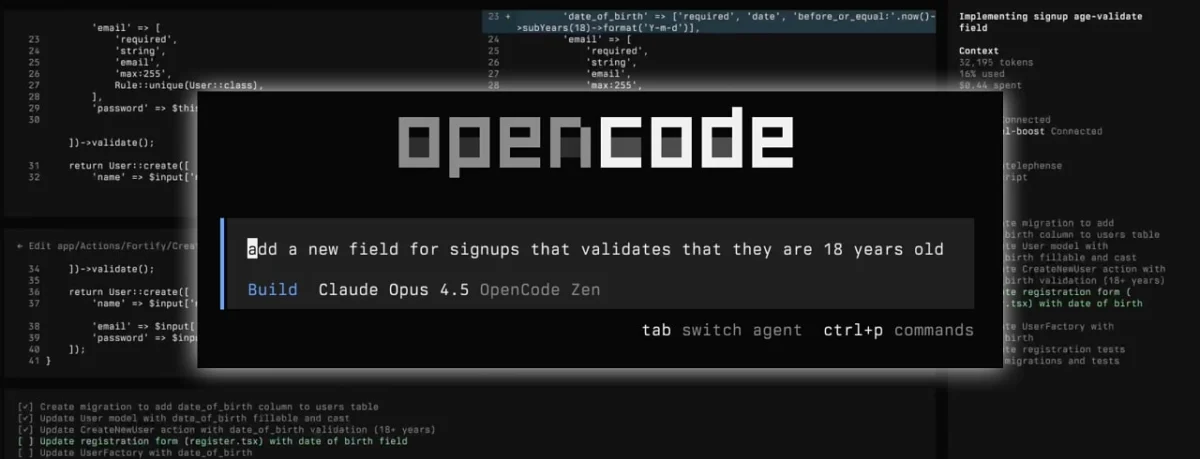
Complementing the rise of specialized harnesses is the evolution of agentic applications like OpenCode 2.0. Built on the Bun runtime, OpenCode 2.0 represents a significant leap forward in developer-agent interaction. Unlike earlier iterations that functioned as simple "chat-to-code" interfaces, version 2.0 introduces background subagents and a dedicated "code mode." This allows the model to script Machine Control Protocol (MCP) tool calls, essentially turning the agent into a self-contained engineer capable of interacting with complex systems. By supporting both vanilla JavaScript and Effect-driven codebases, OpenCode is positioning itself as a foundational layer for the next generation of software production.

Technical Innovations and Ecosystem Shifts
While the debate over runtimes and agents dominates the headlines, the day-to-day work of web development continues to evolve through incremental but impactful technical advancements.
Cross-Platform UI: The Tamagui 3 Milestone
In the realm of frontend development, the goal of "write once, run anywhere" has long been the holy grail. Tamagui 3 has made a significant stride toward this reality. By offering a unified styling system that bridges the gap between React web applications and React Native, Tamagui provides a compiler-backed solution that maintains high performance across platforms. The introduction of Tailwind-style props and React Strict DOM support in version 3 suggests that the industry is standardizing on more expressive, component-centric design patterns that do not sacrifice performance for portability.
Visualizing React: Understanding the Tree
As React applications grow in complexity, the "mental model" of the component tree has become increasingly difficult to maintain. Jules Blom’s recent work on a visual notation for React’s parent and owner trees provides a much-needed tool for developers. By creating a playground that generates these trees dynamically from source code, Blom is helping engineers debug the often-obscure ownership relationships that lead to rendering bottlenecks and state management errors.
Obscure Syntax and Functional Invocation
JavaScript, by its nature, is a language of infinite flexibility, sometimes to its own detriment. Recent discussions surrounding obscure methods for invoking functions—specifically techniques that bypass traditional parentheses—serve as a reminder of the language’s complex internal logic. While these methods are rarely suitable for production code, they highlight the deep, often overlooked mechanics of the JavaScript engine, which continues to intrigue and challenge developers.
Implications for the Industry
The convergence of these trends suggests several key implications for the future of software development:
- The Commoditization of Infrastructure: With the rise of efficient agents like CodeAF and OpenCode, the "labor" of writing boilerplate code is being rapidly commoditized. The value of a developer is shifting from syntax mastery to system architecture and agent oversight.
- Runtime Convergence: The struggle for dominance between Node, Bun, and Deno is increasingly being settled by compatibility. The runtime that provides the most stable "drop-in" experience for existing Node.js code while offering superior speed (as seen with Bun) or security (as seen with Deno) will likely capture the enterprise market.
- The Agentic Lifecycle: We are moving toward a future where codebases are not just maintained by humans, but by long-lived LLM sessions. Tools like Trigger.dev, which enable durable, long-lived AI sessions that survive deployment crashes and browser refreshes, are essential for this transition.
- Performance as a Feature: From WebGPU-based animation libraries like Shaders—which allow developers to inject complex visuals without writing raw shader code—to high-performance barcode scanning APIs like STRICH, there is a clear demand for "plug-and-play" performance. Developers no longer want to build foundational tools; they want to consume them as services.
Conclusion
The state of JavaScript in late 2026 is one of paradoxical maturity and rapid volatility. While the core language continues to struggle with its history—as evidenced by the "gravity well" of Node compatibility and ongoing trademark questions—it is simultaneously undergoing an AI-driven renaissance.
The developer of tomorrow will likely spend less time worrying about the specific differences between Node and Deno and more time managing the workflows of agentic coding systems. They will rely on cross-platform UI kits like Tamagui to ensure consistent experiences and utilize visual diagnostic tools to navigate the complex component trees of modern React apps.
As we look ahead, the industry’s success will be defined by its ability to integrate these high-level abstractions without losing the fundamental control that makes JavaScript the most versatile language on the web. The "gravity well" of the past is undeniable, but the momentum toward an agentic, performance-first future is clearly the dominant force driving the ecosystem forward.



