The landscape of modern web development is shifting at an unprecedented pace. This week, we have seen major milestones across the JavaScript ecosystem, ranging from foundational library updates that promise leaner, faster performance, to the emergence of agentic coding tools that are fundamentally changing how developers interact with their IDEs. As the community continues to refine its tooling, the focus has shifted toward optimization—not just in terms of code size, but in the efficiency of development workflows and infrastructure costs.
Main Facts: The New Standard in Web Tooling
The current wave of innovation is characterized by three core pillars: architectural efficiency, agentic extensibility, and performance engineering.
Perhaps the most significant news for the React-adjacent ecosystem is the official release of Preact 11. Following a six-year development cycle, this release represents a maturation of the library’s mission to provide a lightweight, high-performance alternative to React while maintaining a familiar modern API. With improved hydration processes, automatic ref forwarding, and a shift toward an ESM-only distribution model, Preact 11 is positioned to meet the demands of modern, modular web applications.
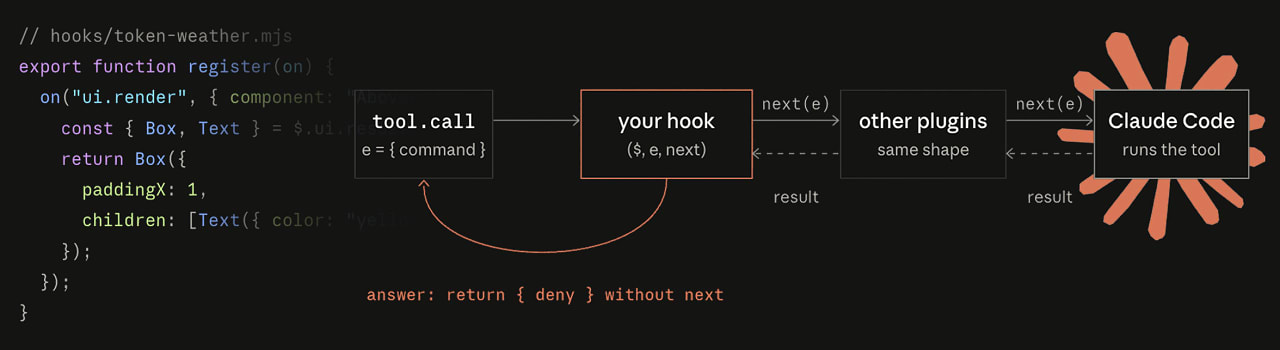
Simultaneously, the industry is witnessing the rapid adoption of AI-assisted coding tools. The release of "Mods" for Claude Code marks a pivot from static AI suggestions to dynamic, agentic coding harnesses. By allowing developers to use JavaScript to hook into the agent’s lifecycle—enabling real-time monitoring of context windows, custom UI rendering, and behavioral adjustments—tools like Claude Code are moving beyond simple text completion to becoming full-fledged programmable development assistants.

Finally, Effect 4.0 has arrived, showcasing the power of a "ground-up rewrite." By rebuilding its core and runtime, the library has achieved a 5x reduction in minimal bundle sizes and a staggering 86% decrease in memory overhead per concurrent task, proving that high-level functional programming abstractions do not have to come at the expense of raw performance.
Chronology: A Week of Significant Updates
The evolution of these tools did not happen in a vacuum; it is the culmination of years of iterative engineering.
- 2020-2026 (The Preact Journey): The road to Preact 11 began in 2020. Over these six years, the Preact team focused on addressing the "hydration mismatch" issues that have long plagued SSR (Server-Side Rendering) frameworks, gradually refining the API to ensure that developers could transition from React with minimal friction.
- The Rise of Agentic Coding (2025-2026): Throughout the past year, the focus in AI-driven development shifted from basic chatbots to agents that reside within the developer’s terminal. Claude Code’s introduction of "Mods" this week is the latest step in this progression, moving from "black-box" AI to an extensible, "white-box" developer tool.
- Performance Optimization Cycles: Companies like Booking.com have been systematically auditing their Node.js infrastructures. Their recent success in cutting service costs by 38% by migrating away from PM2 toward more efficient worker thread management (via Platformatic’s Watt) highlights a broader industry trend of returning to low-level performance tuning in high-scale environments.
Supporting Data: Efficiency and Scale
The metrics surrounding these releases underscore a clear trend: the industry is prioritizing "lean" architecture.
Cost and Memory Efficiency
The case study from Booking.com is a testament to the impact of architectural choices. By moving from a process manager (PM2) to an approach leveraging worker threads and optimized load balancing, they demonstrated that modernizing the runtime environment is just as critical as writing efficient code. A 38% reduction in costs is not merely an optimization; it is a fundamental improvement in the sustainability of their service architecture.

Bundle Sizes and Runtime Performance
Effect 4.0’s release provides the most striking data points of the week. In a world where "bundle bloat" is a primary concern for frontend performance, a 5x reduction in bundle size is a massive achievement. Furthermore, the 86% improvement in memory efficiency per concurrent task addresses a common criticism of functional libraries: that they are too resource-heavy for high-throughput, real-time applications.
Official Responses and Developer Perspectives
The reception to these updates has been largely positive, reflecting a developer base that is eager for tools that offer more control.
The Preact Philosophy
The Preact team has emphasized that the upgrade to version 11 is designed to be as seamless as possible, though the shift to an ESM-only package is a deliberate move to modernize the library’s dependency chain. The community response suggests that while the transition requires some configuration updates, the long-term benefits of a cleaner, more standardized package structure are worth the effort.
Extensibility in AI
Addy Osmani’s demonstration of creating a "live forecast" of a context window in only 80 lines of code via Claude Code Mods has sparked a conversation about the future of developer tools. Developers are beginning to view AI as an API surface rather than a static product. By allowing users to "watch events and change behavior," Claude Code is empowering developers to build their own custom workflows on top of existing LLM capabilities.
Implications for the Future of Web Development
The confluence of these developments suggests three major shifts in how we will build for the web over the next few years.
1. The Death of the "Black Box"
Whether it is through the open, transparent API of Claude Code’s Mods or the clear, type-safe structures offered by Effect, developers are demanding transparency. They no longer want tools that hide complexity behind opaque interfaces. They want to peek under the hood, hook into the runtime, and optimize every cycle of execution.
2. The Return to Low-Level Performance
For years, the industry was content with the "performance is cheap" mindset, relying on increasing cloud resources to hide inefficient application code. The work done by companies like Booking.com and the engineering team behind Effect 4.0 indicates that this era is ending. As cloud costs rise and the demand for more complex, AI-driven applications grows, developers are once again focusing on memory management, worker thread utilization, and bundle optimization.
3. The Agentic Development Workflow
The integration of TypeScript-driven agent workflows—such as those seen with Trigger.dev—is fundamentally changing how we handle long-running processes. The ability to manage queues, retries, and stateful tasks directly within the TypeScript ecosystem, without worrying about timeouts or infrastructure limitations, is lowering the barrier for entry for complex, production-grade AI applications.

4. A More Composable Ecosystem
From Rahul M. Juliato’s work on readable regular expressions in TypeScript to the focus on composable components in Preact, the ecosystem is moving toward a more "Lego-like" architecture. Developers are looking for modularity—tools that can be plugged in, extended, and combined to form custom solutions tailored to specific business needs rather than monolithic frameworks that dictate every aspect of the project.
Conclusion
The current state of JavaScript is characterized by a mature, professional focus on efficiency and extensibility. Whether it is the lean runtime of Preact 11, the dramatic memory optimizations of Effect 4.0, or the programmable agentic workflows offered by Claude Code, the common thread is clear: the modern developer wants more power, more control, and less overhead.
As we look toward events like the Mozilla Festival, the focus will undoubtedly remain on these themes: how to gather, connect, and build the next generation of the web using tools that are not only powerful but also sustainable. The industry is moving away from the "hype" cycle of AI and into the "integration" cycle—where the real work of building robust, efficient, and maintainable software is being done. For the JavaScript developer, the road ahead is one of precision, performance, and unprecedented control over the development environment.