





SEATTLE — In an era where malicious actors leverage frontier artificial intelligence models to weaponize vulnerability disclosures within minutes, enterprise security teams face an unprecedented deluge of alerts. Modern application scanners frequently flood security operations centers with thousands of findings daily—many of which prove unreachable, entirely unexploitable, or already neutralized by existing runtime controls.
Addressing this critical operational bottleneck, Amazon Web Services (AWS) has officially announced the general availability of AWS Continuum for code vulnerabilities. Designed to bridge the historical gap between automated detection and complex manual remediation, AWS Continuum intelligently identifies, validates, prioritizes, and automatically proposes actionable patches for software vulnerabilities. By synthesizing deep code analysis with live infrastructure context, the new service aims to transform how organizations defend large-scale application estates.
Main Facts: What is AWS Continuum?
AWS Continuum is an advanced, context-aware cloud security service engineered to streamline vulnerability management from discovery to remediation. Rather than merely outputting raw scanner alerts, the service performs a rigorous triage process:

- Exploitability Confirmation: Continuum determines whether a reported vulnerability is genuinely exploitable within the specific operational environment.
- Context Graph Integration: The service builds a comprehensive context graph by pulling data from both code repositories (such as GitHub or Amazon S3 buckets) and live AWS environments via dedicated regional collectors.
- Automated Remediation: For verified issues, Continuum generates targeted fixes—including code patches, dependency upgrades, or configuration modifications—and delivers them directly as pull requests.
- Human-in-the-Loop Governance: Every remediation requires explicit human authorization, ensuring that engineering teams retain absolute control over code deployment while dramatically reducing their manual investigative workload.
Initially, AWS Continuum for code vulnerabilities is available in the US East (N. Virginia) and US West (Oregon) AWS Regions, with broader geographic rollouts anticipated.
Chronology: The Evolution of Modern Vulnerability Management
The journey toward automated, context-driven security tooling has accelerated rapidly in response to shifting threat landscapes.
The Era of Static Scanners
Historically, application security relied heavily on static application security testing (SAST), dynamic application security testing (DAST), and software composition analysis (SCA) tools. These scanners produced expansive lists of vulnerabilities categorized by generic severity scores (e.g., CVSS metrics). However, these scores operated in a vacuum, lacking awareness of network topologies, data sensitivities, or runtime defenses. A critical vulnerability on an isolated development utility looked identical on paper to a medium-severity flaw sitting one network hop away from a primary payment database.

The Generative AI Threat Multiplier
In recent years, the balance of power shifted dramatically. Threat actors began employing frontier AI models to rapidly transform theoretical vulnerability disclosures into working, highly sophisticated exploit code in a matter of minutes. Consequently, security teams found themselves overwhelmed by a compounding volume of findings. Manually investigating whether a finding was exploitable routinely demanded hours of painstaking analysis, while deploying a fix safely often required days of cross-functional coordination between security, infrastructure, and application development teams.
The Birth of AWS Continuum
Recognizing that traditional remediation workflows were too slow to counter AI-accelerated threats, AWS developed Continuum to automate the heavy lifting of proof-of-concept validation and patch generation. By connecting code repositories directly with AWS resource configurations, the service automates the contextual evaluation that previously bottlenecked engineering organizations. Today’s general availability milestone marks the culmination of this development, transitioning the tool from conceptual architecture to a fully supported production service.
Supporting Data: How Continuum Operates Under the Hood
To understand the efficacy of AWS Continuum, one must examine its core technical architecture, which relies on multi-layered analysis and sophisticated risk modeling.
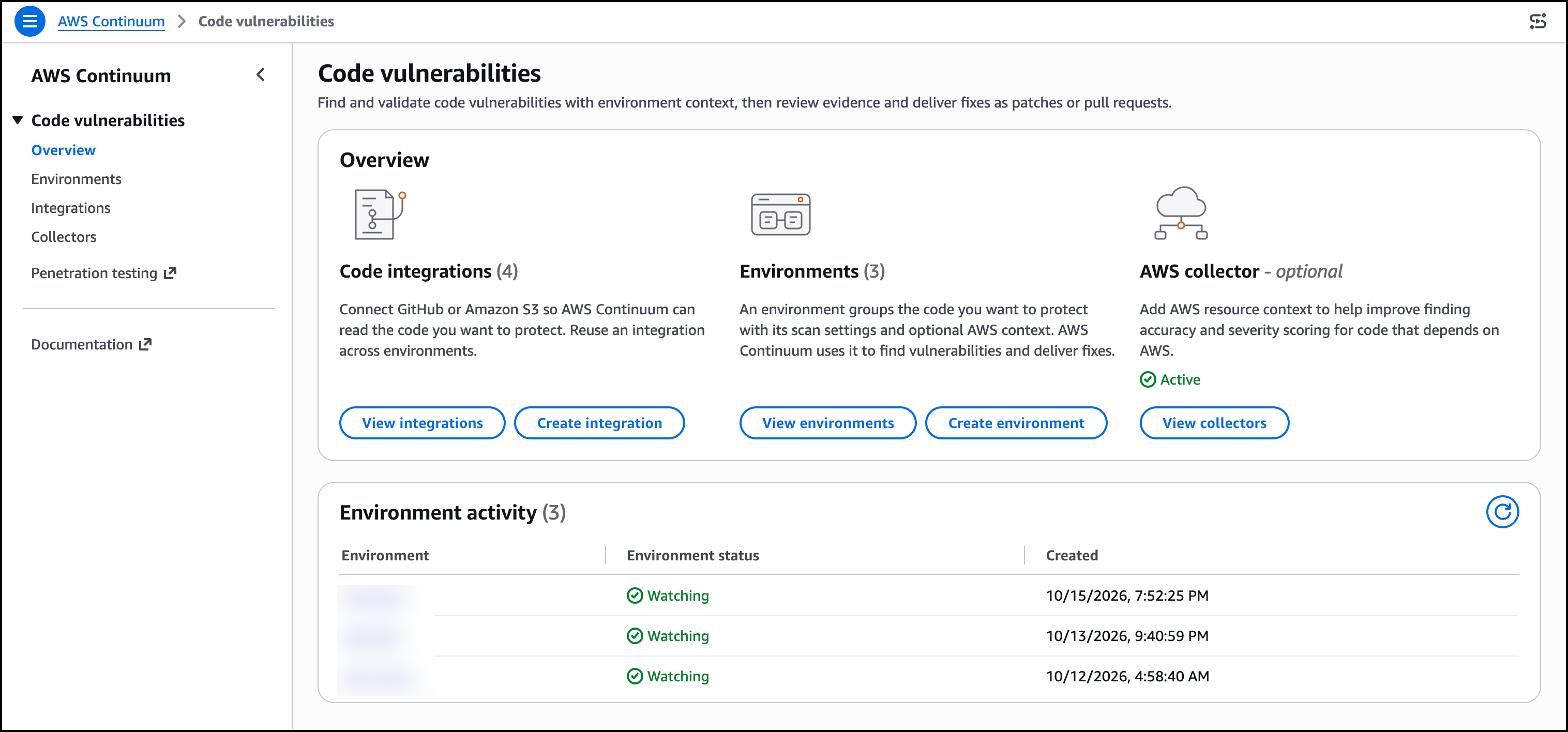
Context Graph and Environmental Mapping
Continuum constructs a unified context graph by amalgamating two primary telemetry streams:
- Source Code Repositories: Integrated via GitHub or Amazon S3 buckets, allowing the service to analyze vulnerable code paths, dependencies, and syntax.
- AWS Infrastructure Context: Utilizing AWS Config resources and network configurations gathered by regional collectors deployed within customer accounts.
By analyzing this graph, Continuum maps system dependencies, identifies data sensitivities (such as customer data stores, authentication pipelines, and payment processors), and maps potential attack paths. This enables the platform to rank vulnerabilities not by abstract severity, but by their proximity and accessibility to high-value corporate assets.
Rigorous Validation and Evidence Levels
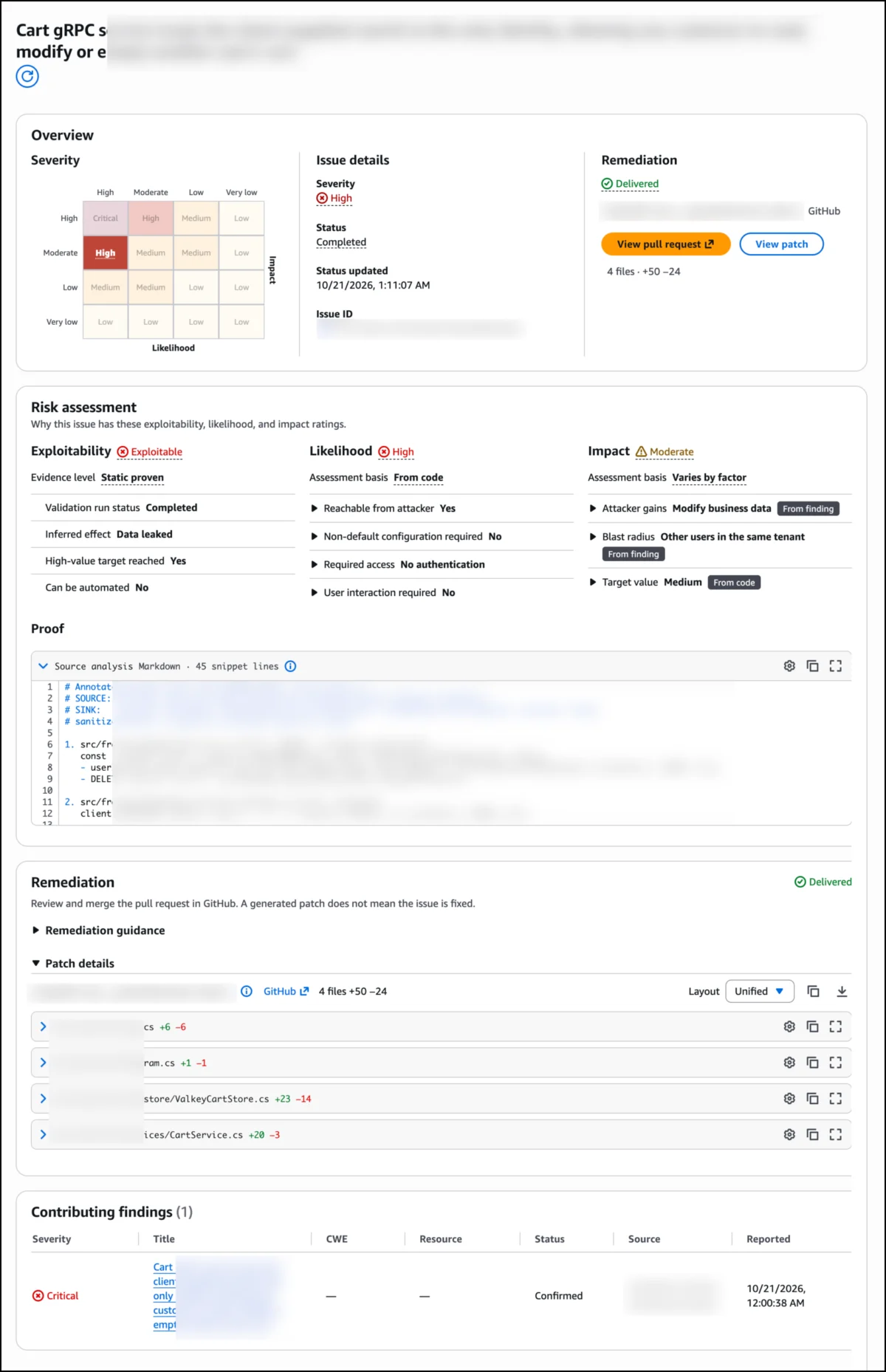
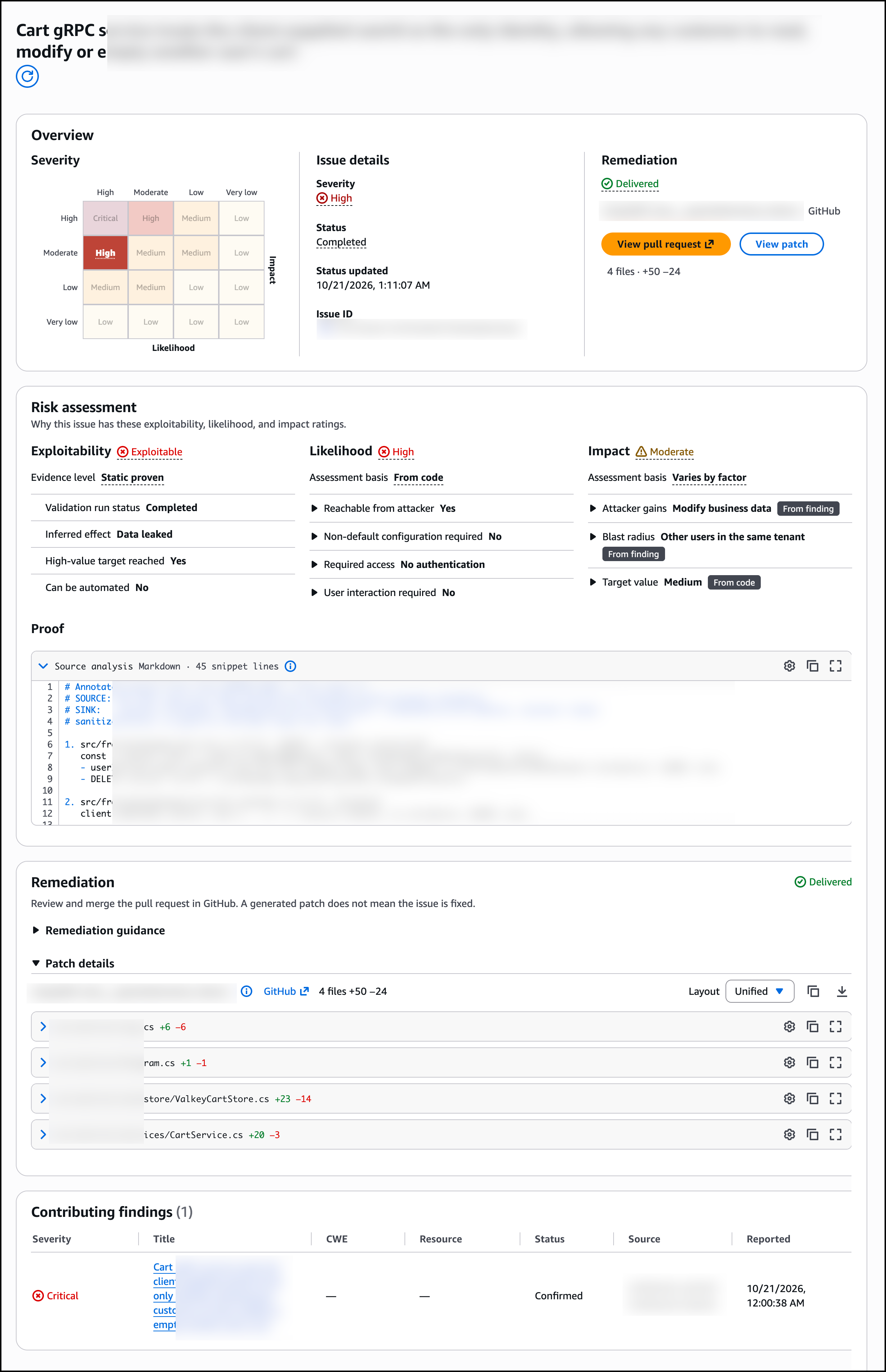
When a vulnerability is flagged, Continuum subjects it to rigorous automated evaluation, assigning specific evidence levels:
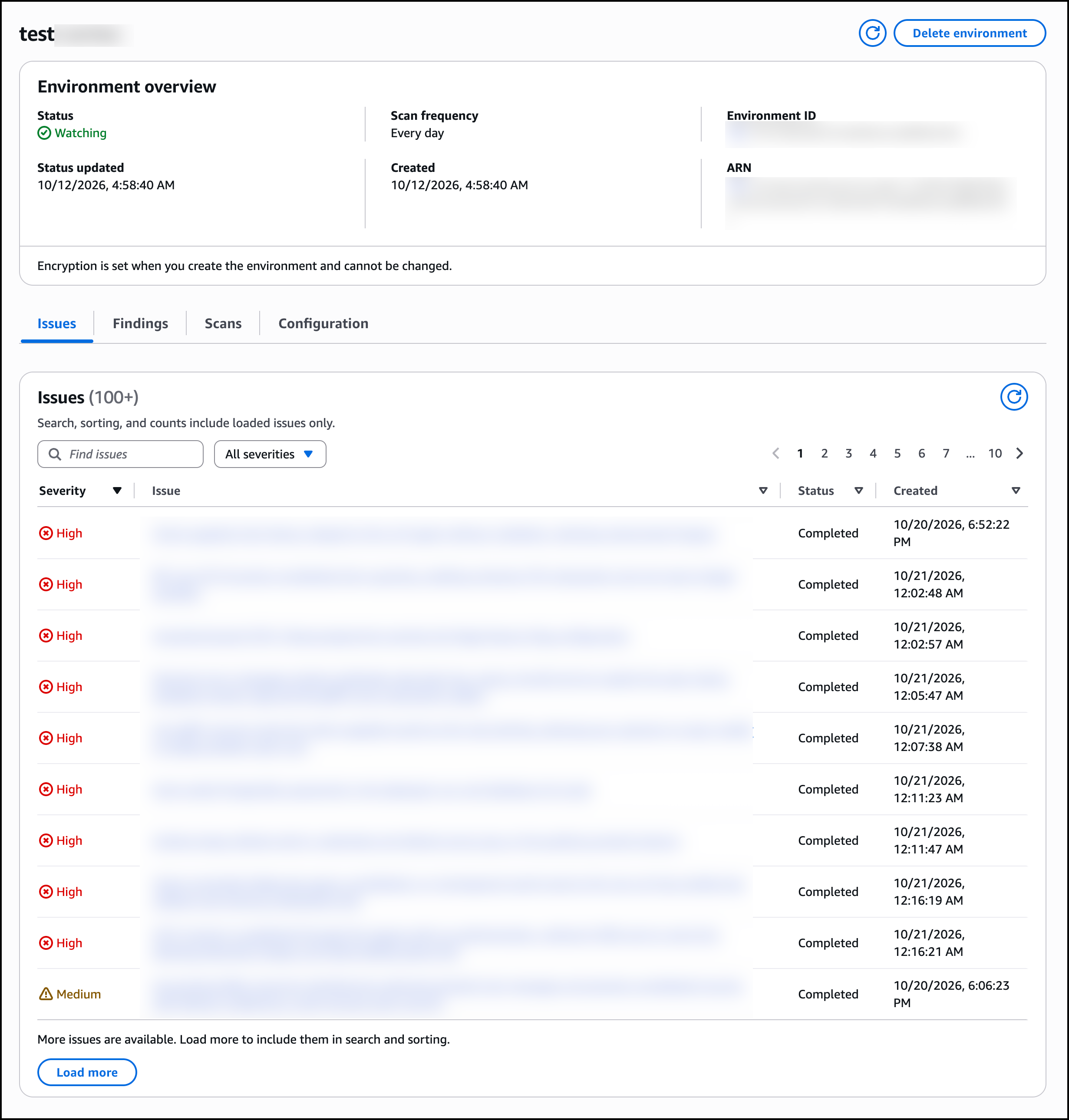
- Static Proof: The verdict is proven definitively through static analysis of the vulnerable code path.
- Sandbox Execution: For reproducible findings, Continuum executes the exploit within an isolated sandbox environment, generating verifiable proof-of-concept code and step-by-step reproduction notes.
- Blast Radius Assessment: The service evaluates network reachability, authentication requirements, and user interaction thresholds to determine the exact likelihood and potential business impact of a successful breach. It also audits existing runtime defenses to check whether current controls would automatically intercept the attack path.
Streamlined Remediation Workflows
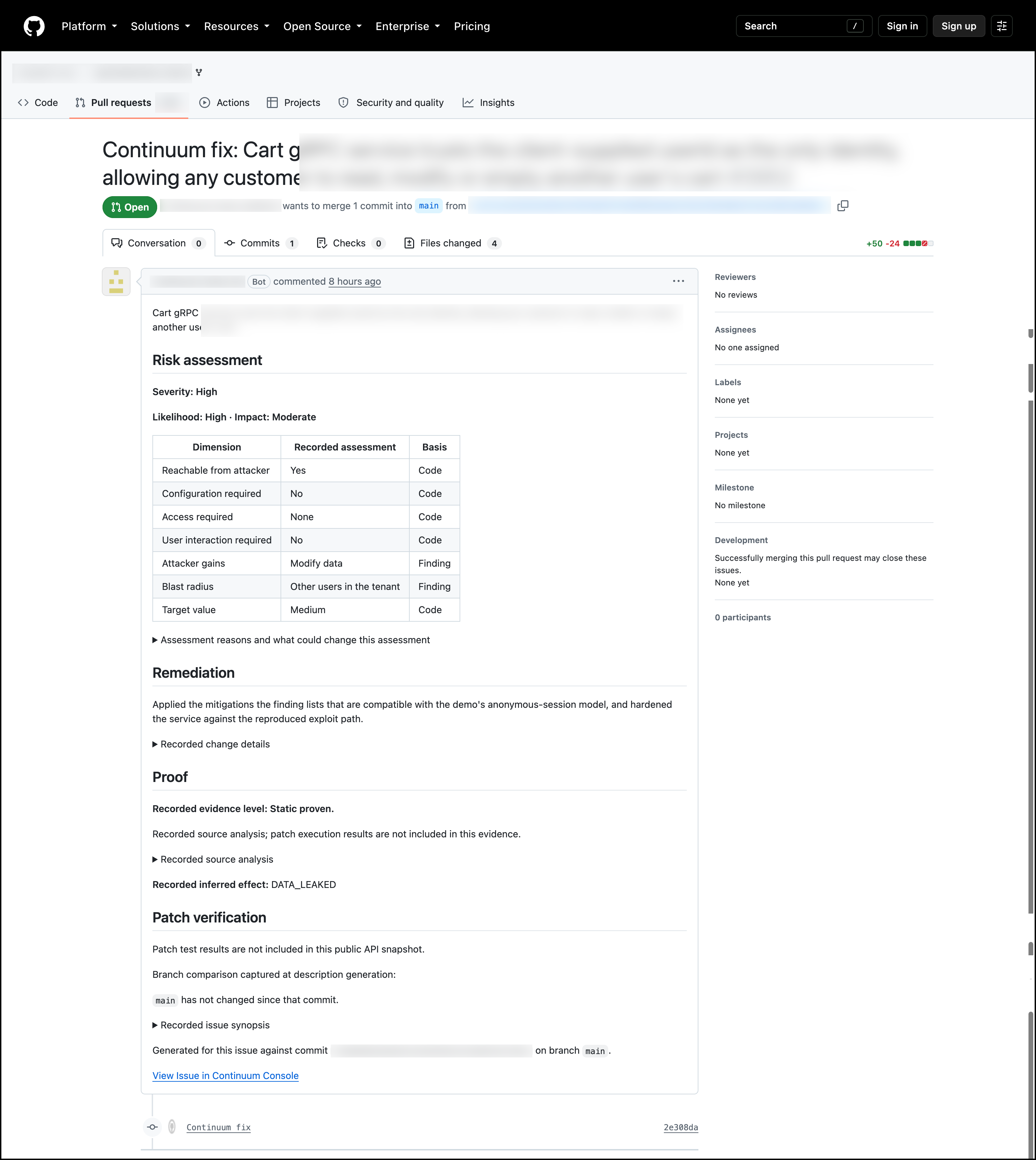
Once an issue is validated, Continuum constructs a precise remediation package—modifying source files, upgrading dependencies, or altering configurations—and pushes it as a pull request to the connected repository.
- Inside the pull request description, reviewers can access the complete risk assessment, proof-of-concept analysis, and remediation summary without ever leaving their native development workflow.
- Developers retain final authority: they review, test, and merge the pull request manually.
Looking forward, AWS plans to introduce customizable policy guardrails, allowing mature organizations to authorize Continuum to autonomously apply specific classes of low-risk fixes once rigorous test-coverage and historical-success gates are cleared.
Official Responses and Industry Implications
The launch of AWS Continuum addresses long-standing pain points in enterprise DevSecOps, eliciting strong commentary from industry analysts and security leaders alike.
Bridging the DevSecOps Divide
For years, friction between software development teams and security operations has hindered rapid patch deployment. Security teams demand immediate remediation of high-alert vulnerabilities, while developers push back against generic alerts that lack local context, fearing that unvetted patches will destabilize production environments.
AWS Continuum directly targets this cultural and technical friction. By packaging fixes into familiar pull requests enriched with verifiable proof-of-concept data and blast-radius calculations, the service aligns security mandates with developer workflows.
Future Outlook and Governance
Security architects note that while automated tools like Continuum significantly reduce mean-time-to-remediation (MTTR), governance remains paramount. Industry best practices dictate that organizations adopting automated patching services should initially operate in "proposal-only" mode—mirroring Continuum’s default setting—to build confidence in the system’s output before gradually enabling automated merging for routine updates.
Furthermore, the introduction of AWS Continuum underscores a broader industry pivot: the realization that signature-based scanning is insufficient for modern cloud environments. As cybercriminals weaponize artificial intelligence to scale their attack capabilities, defensive systems must similarly employ contextual AI and automated reasoning to keep pace.
Conclusion
AWS Continuum for code vulnerabilities represents a major evolutionary step in cloud-native security. By replacing generic, noisy scanner alerts with empirically proven, context-ranked vulnerabilities and ready-to-merge pull requests, AWS is equipping organizations to neutralize threats faster than ever before.
Enterprises operating large-scale application estates can begin exploring AWS Continuum today within the US East (N. Virginia) and US West (Oregon) Regions by accessing the AWS Continuum console and reviewing the official user documentation. As organizations increasingly adopt intelligent remediation frameworks, the balance of power in application security is poised to shift decisively back in favor of the defenders.