






The landscape of web development is undergoing a profound transformation. From the infrastructure of our continuous integration pipelines to the very frameworks that define how we build user interfaces, the ecosystem is pivoting toward extreme performance, portability, and the integration of AI-driven workflows. This report examines the latest shifts in the JavaScript and web ecosystem, highlighting the tools and methodologies currently reshaping how software is delivered.
Main Facts: The Current State of the Web Ecosystem
The recent wave of releases and technical discourse reveals three core themes: the miniaturization of desktop applications, the optimization of CI/CD pipelines for massive scaling, and the maturing relationship between human developers and artificial intelligence.
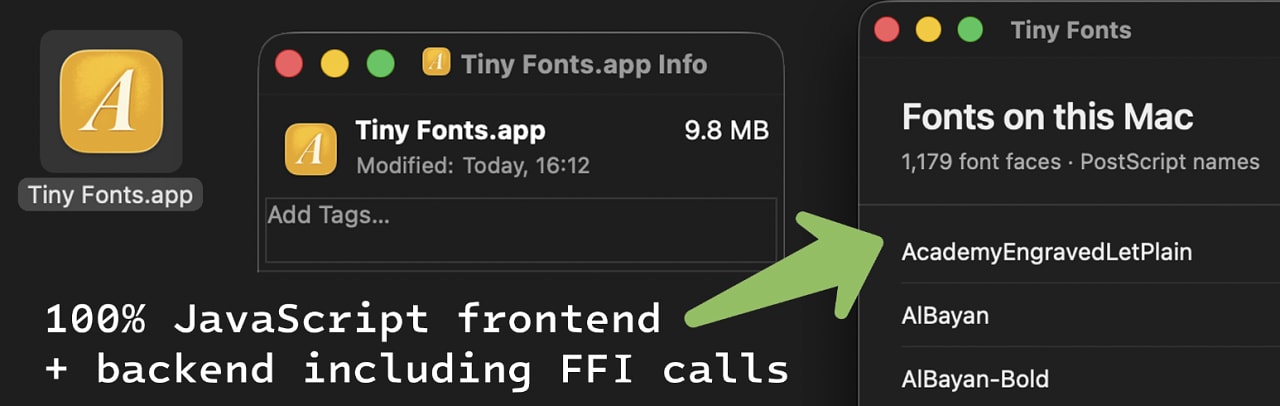
At the forefront is tinyjs, a compelling new entry in the desktop application space. By leveraging txiki.js, it allows developers to build cross-platform desktop applications under 10MB—a stark contrast to the bloated electron-based binaries common today. Simultaneously, industry giants like Linear are setting new benchmarks for CI/CD efficiency, demonstrating that as test suites grow, architectural refactoring becomes a competitive necessity. Furthermore, the release of Plotly.js 4 and the emergence of specialized WebGPU kernels from Hugging Face underscore a push toward high-performance computing within the browser environment.
Chronology: A Week of Breakthroughs
The recent surge in technical updates suggests a coordinated push toward efficiency.
- Linear’s CI Overhaul: Early in the week, Linear shared their blueprint for handling massive test growth, proving that architectural shifts—such as moving to Oxlint—can yield immediate cost and time savings.
- The Desktop Frontier: The introduction of tinyjs offered a fresh perspective on lightweight application deployment, challenging the status quo of heavy runtime dependencies.
- Plotly.js 4 Launch: Plotly released its most significant update to date, modernizing its codebase by integrating native TypeScript types and shifting to MapLibre.
- AI Integration: Hugging Face’s release of 207 Apache-2.0 WebGPU kernels signaled a shift in how AI models will run natively in browsers, moving away from server-side dependence for high-compute tasks.
- The Framework Debate: Discourse throughout the week peaked with Brooks Lybrand’s analysis of the necessity of frameworks in an AI-dominated coding landscape, framing them as essential abstractions for agent-based development.
Supporting Data: Efficiency and Performance Metrics
The industry is currently obsessed with "trimming the fat," as evidenced by recent performance metrics shared by leading engineering teams:

1. CI/CD Optimization (Linear Case Study)
Linear faced a classic scaling problem: as their feature set grew, their test suite exploded, leading to spiraling CI costs. By implementing a two-pronged strategy, they achieved:
- AST Linting: Rewriting type-aware ESLint rules as plain Abstract Syntax Tree (AST) checks resulted in a 55% reduction in linting time.
- Oxlint Adoption: Moving to the high-performance Rust-based linter, Oxlint, further solidified these gains.
- Vitest Isolation: By selectively disabling Vitest’s isolation mode, the team saved an additional 17% in monthly CI costs.
2. Plotly.js 4 Technical Improvements
The update to Plotly.js 4 is not merely aesthetic; it represents a major structural shift:
- MapLibre Integration: Removing the Mapbox GL dependency eliminates the need for API tokens, significantly lowering the barrier to entry for map-heavy data visualizations.
- TypeScript Native: Moving to native TypeScript types enhances the developer experience and reduces runtime errors in large-scale data applications.
3. The "Tiny" Revolution
tinyjs represents a return to minimalist software architecture. By providing a txiki.js-powered backend, it offers full system access, including Foreign Function Interface (FFI) support, while maintaining a footprint well under the industry standard of 100MB+ for traditional desktop wrappers.
Official Responses and Expert Perspectives
The Framework Debate: Does Complexity Have a Future?
Brooks Lybrand, a member of the Remix team, has pushed back against the narrative that "frameworks are dead." He argues that as AI agents increasingly write code, the "ad-hoc" frameworks generated by these agents are often inferior to battle-tested, community-maintained ones. "If you are using AI, you are using a framework," Lybrand notes. "The question isn’t whether to use one, but how to ensure that framework provides the necessary guardrails for agentic development."
The "Product Engineer" Shift
Laurie Voss, in her analysis We Are All Product Engineers Now, suggests that the technical divide is closing. The modern developer is no longer just a coder; they are a product architect. Understanding customer needs—not just API endpoints—is now considered a core technical competency. This shift is echoed by Anthony Fu’s Devframe, a project designed to treat developer tools as first-class citizens, allowing them to run across any environment, thereby reducing the "siloing" of engineering tooling.
The Future of JavaScript and AI
Michael Ficarra, a TC39 delegate, recently questioned whether AI is fundamentally altering how the JavaScript language itself is designed. The consensus among the inner circles of the language design community is that JavaScript is evolving to become more "machine-readable" and "agent-friendly," a move that will likely influence upcoming ECMAScript specifications.
Implications: The Path Forward
The convergence of these trends points to three major implications for the software industry:
1. The Era of "Invisible" Infrastructure
With the rise of Devframe and improved CI/CD strategies, the friction of "tooling fatigue" is being addressed. Developers are moving toward universal standards. When a tool can be defined once and run anywhere—whether in the browser, on the server, or within an IDE—the barrier to building robust developer experiences drops significantly.
2. Performance as a Competitive Edge
The success of Linear’s CI optimizations and the adoption of high-performance tools like Oxlint and SolidJS 2.0 indicate that performance is no longer a "nice-to-have." For modern startups, efficient build pipelines are a direct financial metric. Teams that ignore the bloat in their development lifecycle will find themselves outpaced by those who treat build-time optimization with the same rigor as runtime performance.
3. Browser-Native Intelligence
Hugging Face’s collection of WebGPU kernels is a harbinger of a massive shift in AI deployment. By moving heavy matrix multiplication and quantization operations to the client side, developers can build AI-powered apps that respect user privacy, run offline, and reduce server costs. This will likely spark a new wave of "local-first" AI applications that do not rely on constant cloud connectivity.
Conclusion: Adapting to the New Standard
The ecosystem is clearly moving toward a more mature, optimized, and performant state. Whether it is through the aggressive shrinking of desktop binaries via tinyjs, the adoption of AST-based linting, or the move toward client-side AI kernels, the message to developers is clear: Efficiency is the new growth.
As we look toward the next year of web development, the developers who thrive will be those who embrace these new, high-efficiency paradigms. We are moving away from the era of "move fast and break things" into an era of "move intelligently and scale efficiently." The tools exist; the challenge now lies in how effectively teams can integrate these innovations into their existing workflows to deliver better products to their users.
The web is not just surviving; it is becoming leaner, faster, and more capable than ever before. Those who leverage these tools effectively will define the next generation of digital experiences.