










The month of July has proven to be an exceptionally dense period for developer tooling, open-source infrastructure releases, and AI workflow orchestration utilities. This month’s software ecosystem release cycle features a broad spectrum of innovation—ranging from zero-setup codebase visualization engines and self-hosted single sign-on (SSO) systems to native PHP compilers that output direct assembly, and multi-protocol terminal-based file transfer explorers.
Whether you are scaling web applications, engineering high-throughput backend services, managing distributed infrastructure, or building specialized pipelines for LLM-driven development, this curated compilation reviews the most notable toolchain additions introduced to the market this month.
Chronology of Releases: The July Tool Lifecycle
The continuous stream of releases throughout July has reshaped expectations around how local development environments, deployment targets, and AI agent ecosystems interact.
- Early July: Attention immediately centered on performance evaluations and local orchestration environments. Benchmarking suites like ReactBench set a new standard for testing AI coding models against real-world React component criteria rather than isolated unit tests. Concurrently, lightweight infrastructure tools like Foglamp Scan and terminal utilities such as TermSCP appeared to address friction points in repository analysis and multi-protocol file management.
- Mid-July: The focus shifted toward compile-time efficiency and self-hosted security infrastructure. Projects like elephc—a compiler that translates a subset of PHP directly to native assembly—challenged traditional VM runtime dependencies. Simultaneously, open-source identity providers like VoidAuth and serverless infrastructure experiments like Cloudflare’s Agentic Inbox provided developers with robust alternatives to commercial SaaS layers.
- Late July: The final stretch of the month introduced advanced native interfaces for modern hardware, notably Contained, a SwiftUI GUI bridging Apple’s native Container CLI, and design-to-code automation engines like Open Design.
Main Facts: Core Architectural Advancements
1. Code Review and Repository Intelligence
Codiff
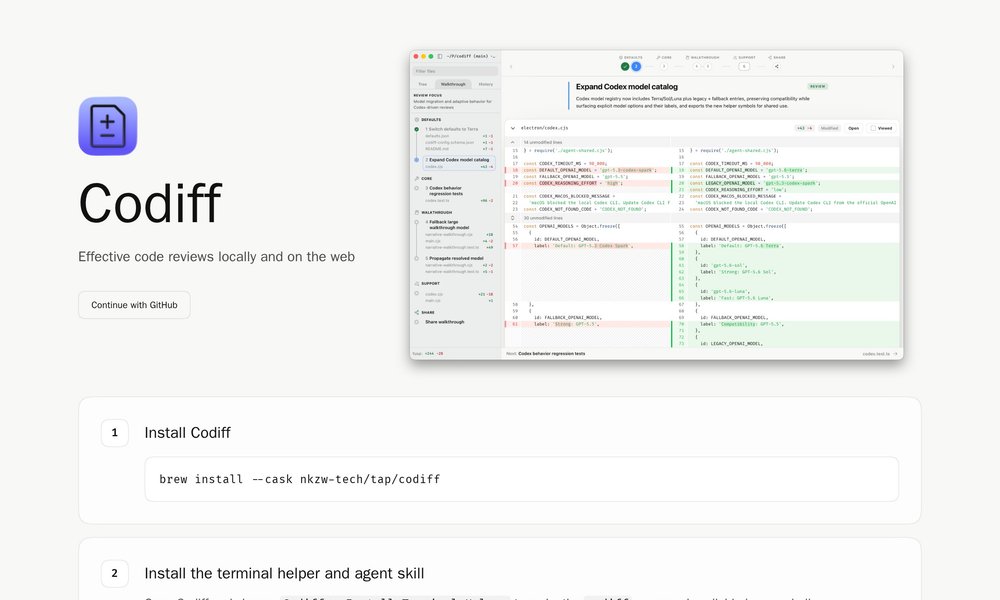
Codiff offers an alternative to traditional inline pull-request views. Functioning as a fast, minimal local diff viewer, it bridges the gap between raw Git output and human-readable context. Beyond rendering visual line changes outside of a primary IDE, Codiff automatically generates Large Language Model (LLM) walkthroughs of code differences, supports inline commenting targeted for GitHub and GitLab workflows, and exports complete reviews cleanly into Markdown format.
Foglamp Scan
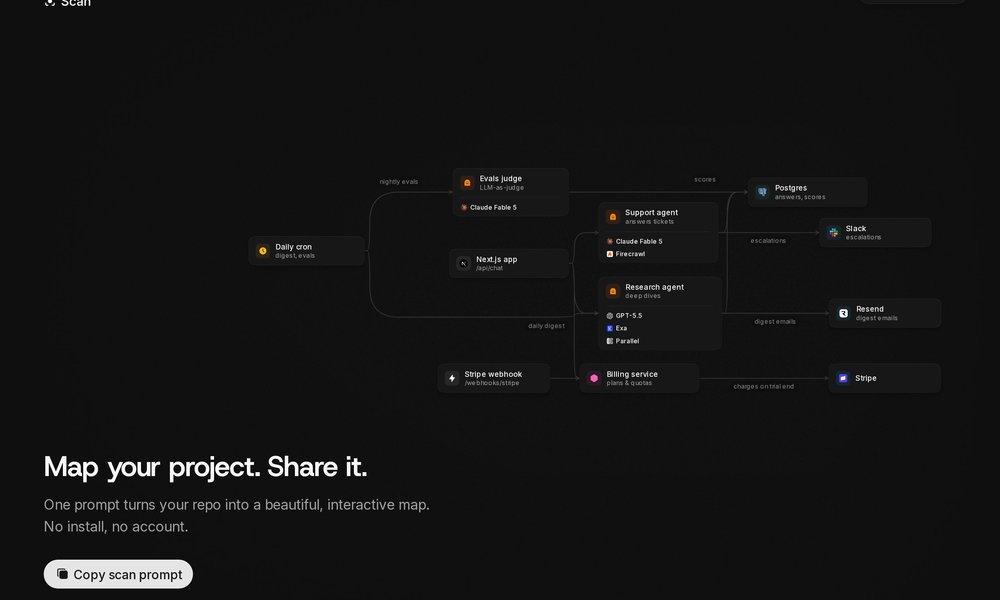
Designed for immediate contextual awareness, Foglamp Scan requires zero installation or configuration profiles to map an unfamiliar codebase. Triggered via a prompt issued directly to a local coding agent, it inspects project architecture and outputs a shareable visualization map. This tool targets developers onboarding onto legacy or unmaintained repositories where manual structural mapping would otherwise incur heavy time penalties.
ReactBench
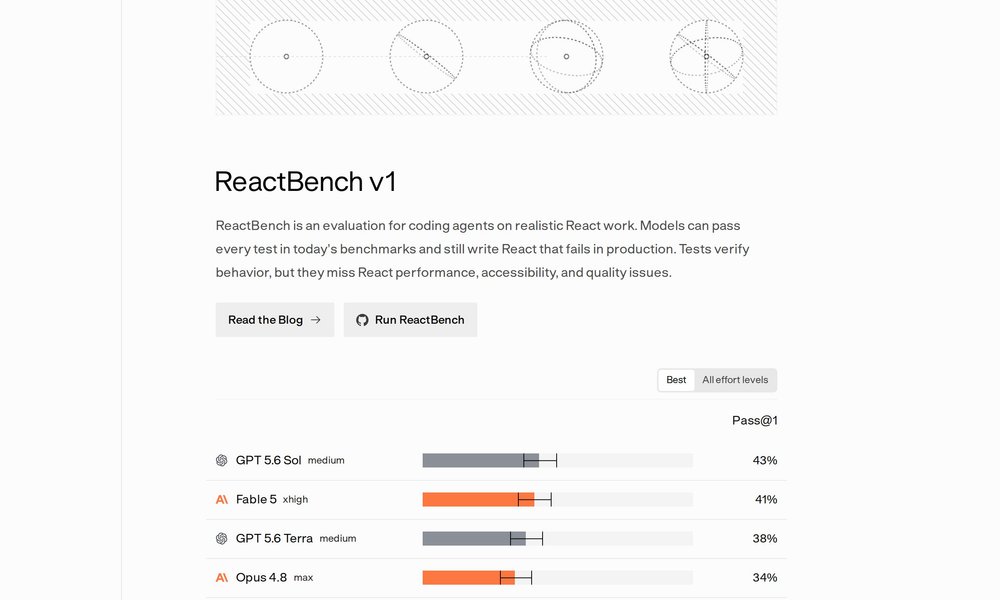
As AI coding assistants integrate deeper into frontend engineering pipelines, evaluating their actual code quality has become paramount. Developed by the team behind React Doctor, ReactBench abandons simplistic unit-test pass rates in favor of evaluating coding agents on real-world React work. It systematically tests generated outputs for component performance, accessibility (a11y) compliance, and production readiness, publishing a transparent leaderboard for frontend model selection.
2. AI Agent Orchestration and Development Environments
OpenChamber
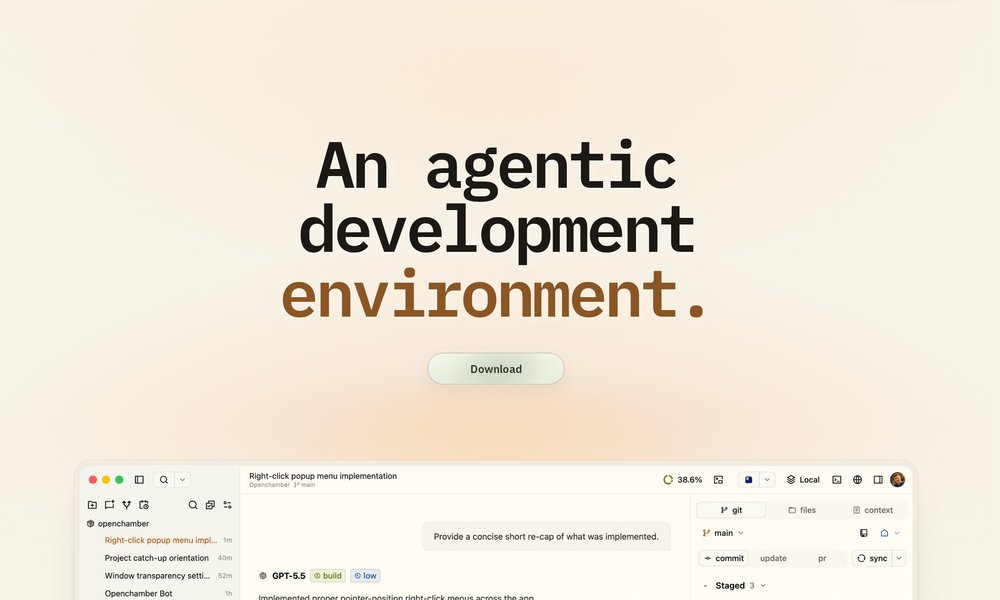
OpenChamber is an open-source, agentic development environment purpose-built for multi-model AI coding workflows. Available across macOS, Windows, and web browsers, it supports simultaneous multi-model execution via an integrated Agent Manager. Key architectural features include multi-window parallelized workspaces, password-gated remote tunnel access, and a native mobile companion application currently in beta testing.
Open Design
Bridging the gap between code generation and graphic visual design, Open Design operates as a local, open-source alternative to proprietary design-to-code platforms. Licensed under Apache-2.0, it turns local coding agents into functional design engines compatible with 21 different agent frameworks (including Claude Code, Codex, Cursor, and Gemini) and over 150 design systems. It supports complex output pipelines, rendering functional deliverables directly to HTML, PDF, PPTX, and MP4 formats.
Ponytail
Verbosity remains one of the primary efficiency bottlenecks when leveraging AI coding agents. Ponytail introduces a lightweight ruleset configured directly into agent environments (such as Claude Code or GitHub Copilot). By restricting unnecessary code generation patterns, benchmarks indicate that Ponytail reduces overall code output volume by up to 54% without sacrificing safety parameters or introducing architectural regressions.
prompt-mac
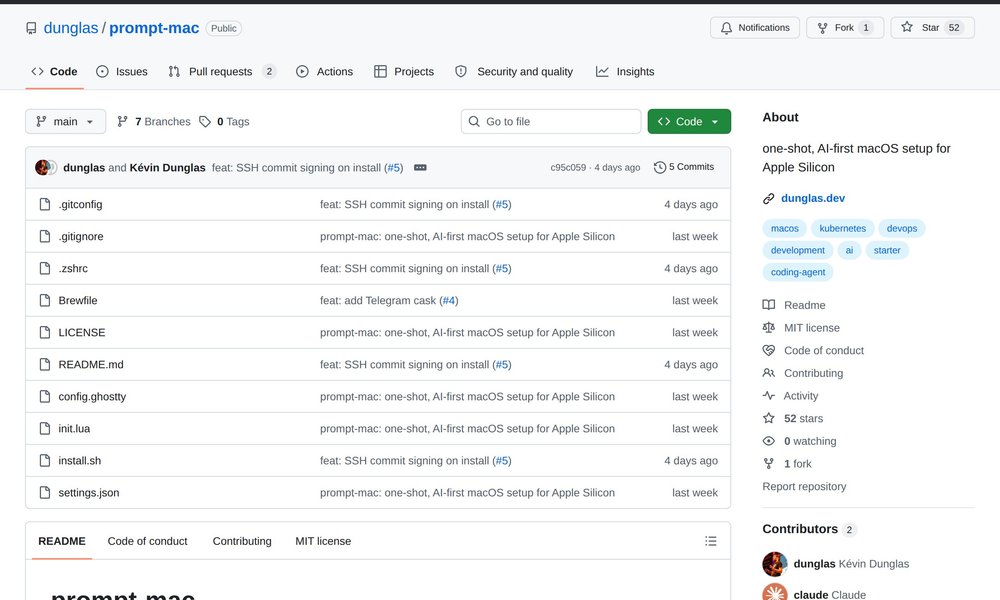
For developers provisioning fresh macOS hardware specifically for AI-augmented workflows, prompt-mac provides a one-shot, idempotent setup script. Executed via a single terminal command, it provisions CLI utilities, system applications, and specialized editor configurations tailored for a lean, agent-first development pipeline.
3. Native Infrastructure, Compilers, and Containers
elephc
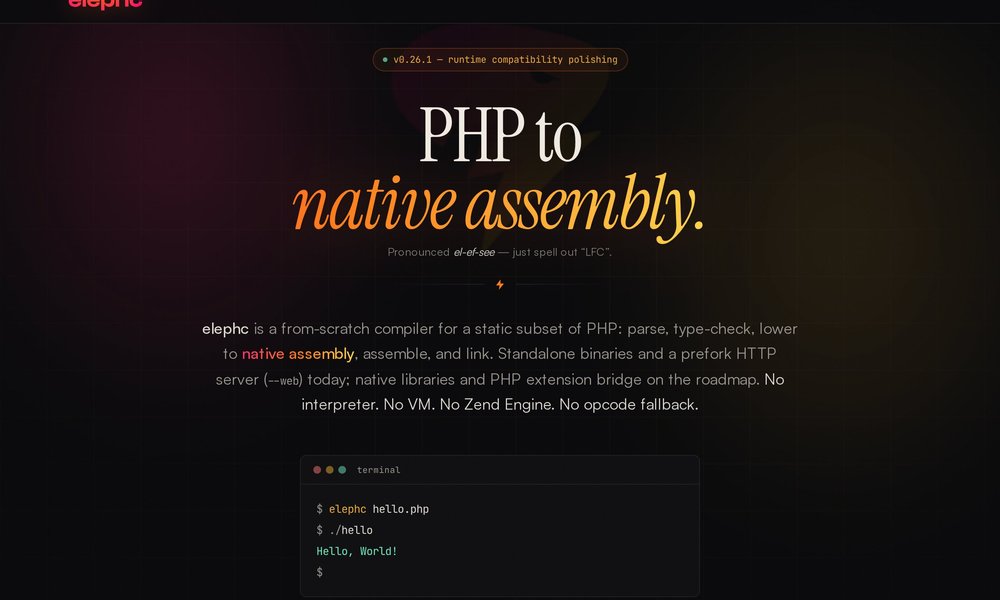
In a radical departure from traditional interpreted PHP runtime architectures, elephc compiles a static subset of the PHP language directly into native machine assembly. Operating completely independently of the Zend Engine, virtual machines, or standard interpreters, the compiler ships with over 400 built-in functions, 21 native data types, and an extensive test suite exceeding 3,000 cases. It produces standalone, high-performance binaries paired with a prefork HTTP server, allowing developers to ship high-speed PHP logic without provisioning a traditional PHP runtime environment.
Contained
Leveraging Apple Silicon hardware architecture and macOS, Contained provides a polished, pre-1.0 SwiftUI graphical user interface for Apple’s native Container CLI. Eschewing heavy virtualization layers, it manages local containers, images, volumes, networks, and registries through a native Mac interface featuring Liquid Glass visual cards, Docker Compose file importing, and a floating management toolbar.
Docker Go SDK
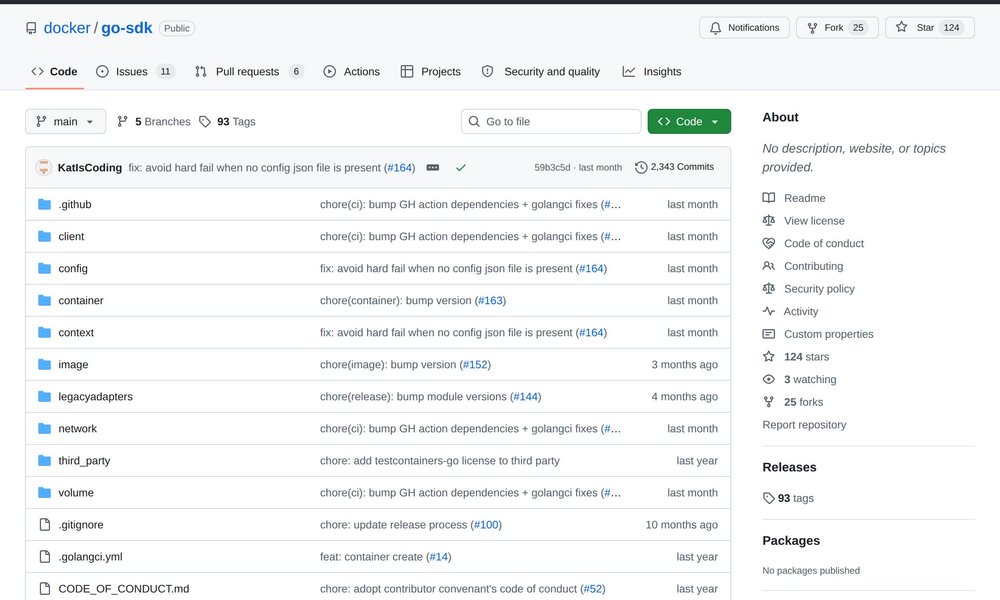
The official Docker Go SDK offers a higher-level abstraction layer over the low-level Moby client. Designed specifically for Go developers writing integration tests or local container orchestration utilities, it streamlines common operational patterns such as authenticated image pulls, container lifecycle management, automatic random port allocation, and configurable wait strategies.
Yerd
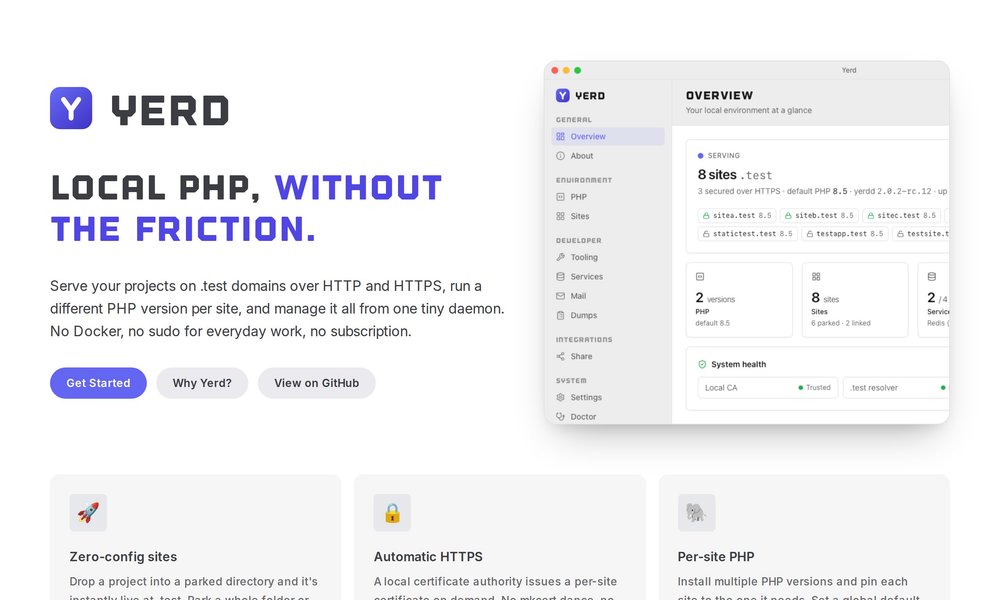
Positioned as a lightweight alternative to graphical local development stacks, Yerd is an 8 MB desktop daemon for macOS and Linux that manages complete local PHP environments. Operating entirely free of Docker or Electron overhead, it supports multiple concurrent PHP versions, automatic .test domain generation with native HTTPS, and integrated relational database and caching runtimes including MySQL, MariaDB, PostgreSQL, and Redis.
4. Networking, Security, and Identity Management
VoidAuth
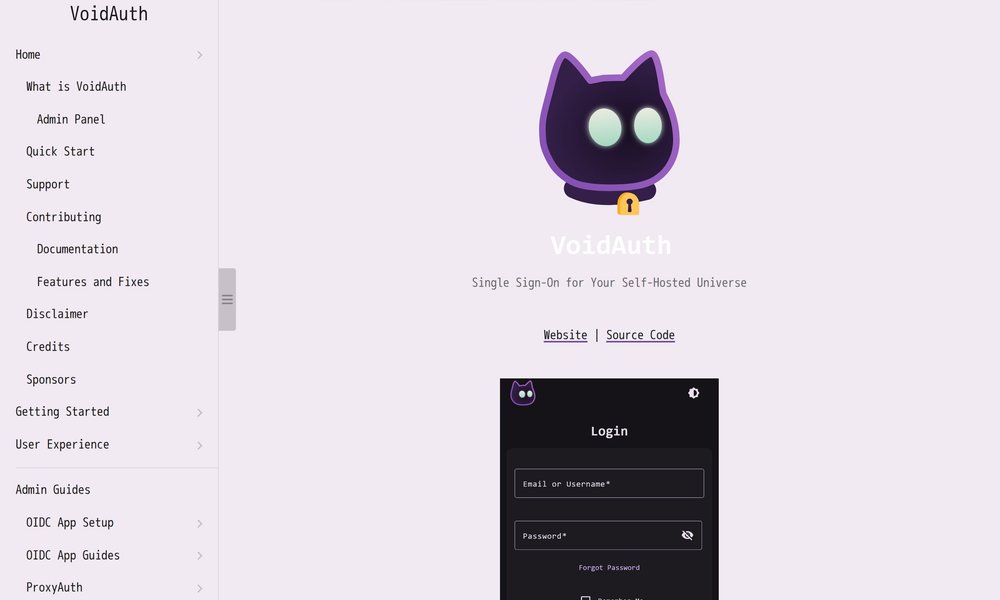
Addressing the administrative burden of managing fragmented credentials across self-hosted infrastructures, VoidAuth is an open-source single sign-on (SSO) solution built for personal and small-team servers. It supports OpenID Connect (OIDC), Lightweight Directory Access Protocol (LDAP), passkeys, multi-factor authentication (MFA), self-registration, user invitations, and deep UI branding customization. Backed by PostgreSQL or SQLite databases with encryption at rest, it centralizes authentication across disparate self-hosted services.
TermSCP
TermSCP is a cross-platform (Windows, macOS, Linux, BSD) terminal-based file transfer explorer designed for multi-protocol environments. Featuring a responsive Terminal User Interface (TUI), it natively speaks Secure Copy Protocol (SCP), SFTP, FTP/FTPS, Amazon S3, Kubernetes pods, Server Message Block (SMB), and WebDAV. Sensitive credentials are securely stored using native system keychains.
FingerprintJS
For applications requiring robust visitor identification without relying on transient or easily purged cookies, FingerprintJS computes unique browser attribute hashes. These persistent visitor identifiers survive incognito browsing sessions and standard data clearing routines, providing a reliable foundation for security audits and analytics.
5. Content Management, Productivity, and Utilities
Shoutrrr
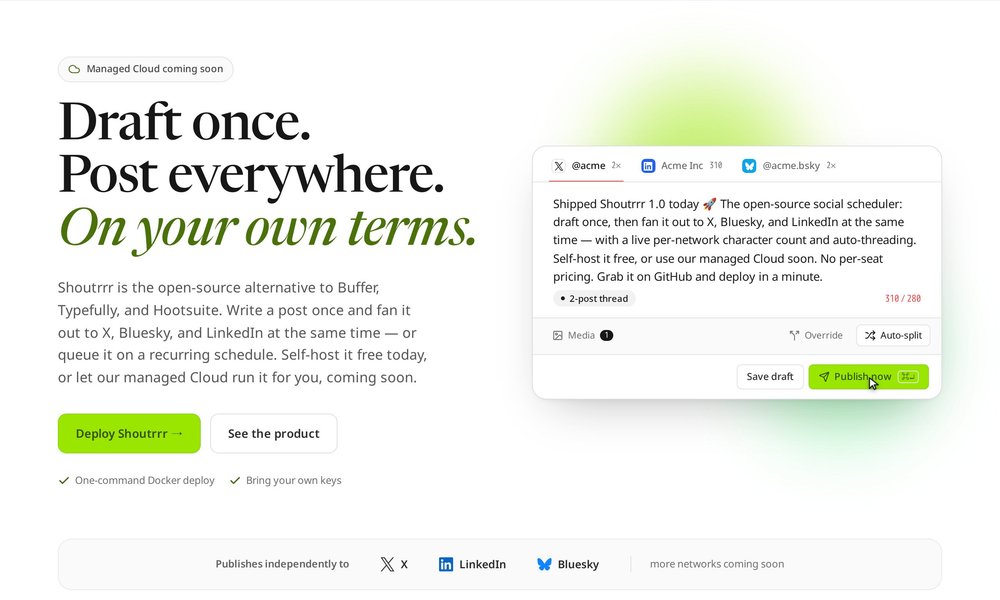
Shoutrrr offers an open-source, self-hosted alternative to social media management platforms like Buffer and Hootsuite. Allowing users to draft content once and publish simultaneously across X, Bluesky, and LinkedIn, it includes scheduled queue management, workspace segmentation, and team access controls secured by encrypted credential storage. Deployment is natively supported via Docker, with managed cloud distribution options available.
Cloudflare Agentic Inbox
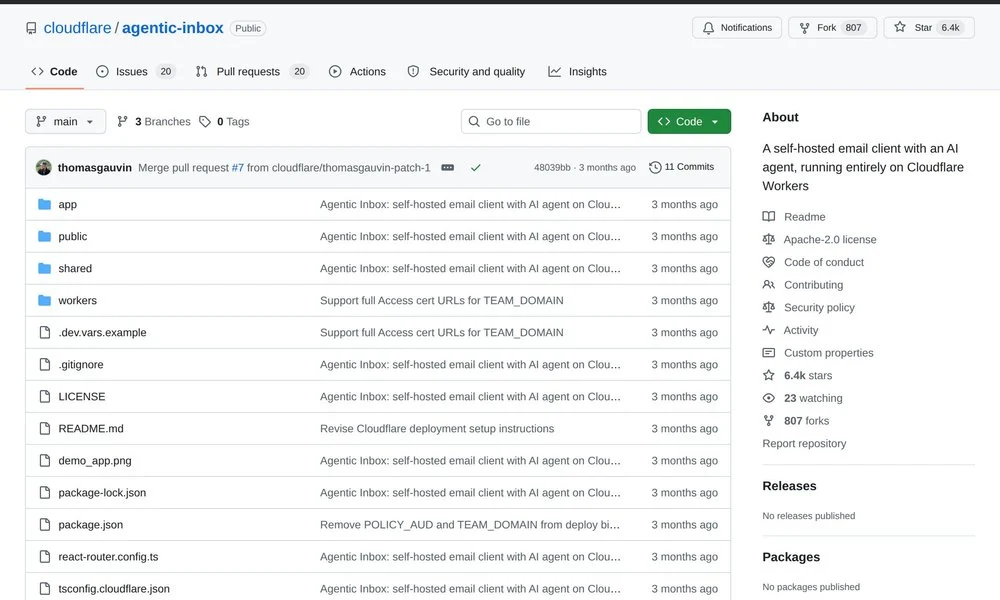
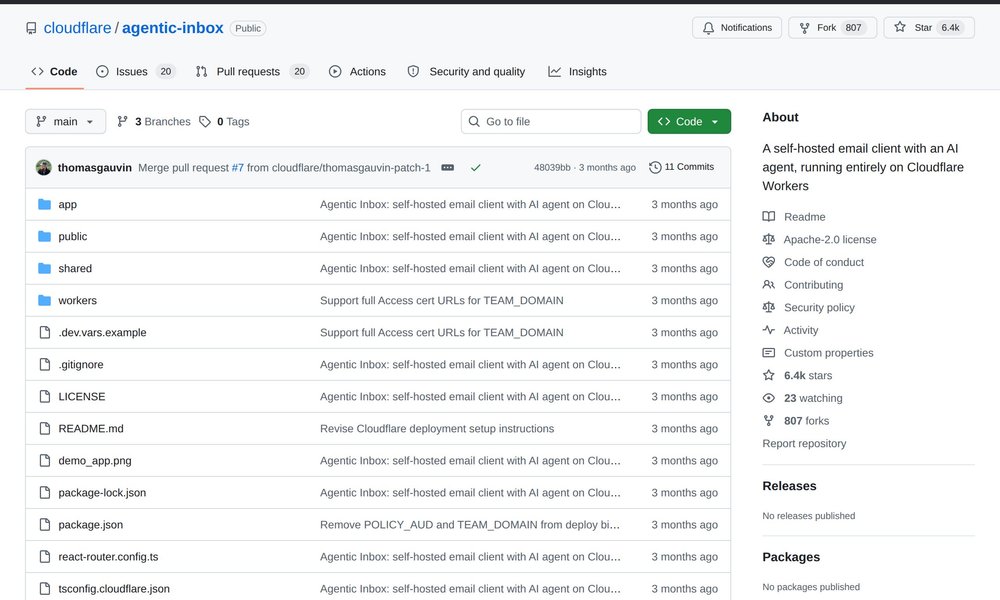
Built entirely on serverless primitives, Cloudflare Agentic Inbox is a self-hosted email client integrated with an autonomous AI agent. Inbound email processed via Cloudflare Email Routing directs messages to isolated Durable Objects running local SQLite instances, while binary attachments are routed to R2 storage. The integrated AI agent manages inbox searches, conversation parsing, and draft generation without requiring a traditional mail server infrastructure.
TablePro
TablePro is a high-performance native database client engineered for Mac and iPhone hardware. Supporting over 21 distinct database engines—including MySQL, PostgreSQL, MongoDB, Redis, and SQLite—it features an advanced SQL editor with autocomplete and Vim mode integration, an embedded AI assistance layer, entity-relationship (ER) diagram generation, server health dashboards, and seamless iCloud synchronization.
Cortext
Developed by Automattic, Cortext is a specialized WordPress plugin designed to establish structured knowledge bases directly within a standard WordPress site. Eschewing proprietary SaaS formats, it introduces nested pages, typed collections, and multiple layout views that publish entirely through native WordPress data storage structures.
Hidden Bar
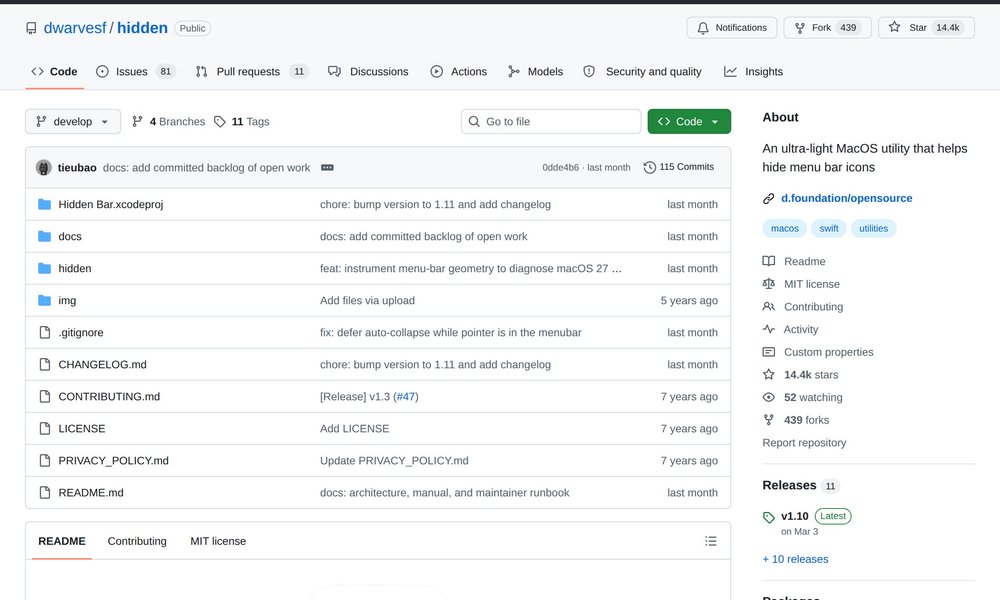
Hidden Bar is a lightweight macOS utility designed to clean up cluttered menu bars. Operating on macOS Ventura and later, users drag rarely used status icons into a secondary hidden drawer, toggling visibility instantly via mouse clicks or custom global keyboard shortcuts.
Supporting Data and Benchmarking Metrics
To contextualize the scale and performance impact of July’s tooling releases, several metrics stand out across testing frameworks and compiler benchmarks:
- Code Reduction Efficiency: Benchmarks utilizing the Ponytail AI ruleset recorded an average 54% reduction in generated code volume from LLM coding agents, significantly lowering technical debt accumulation during rapid prototyping cycles.
- Compiler Footprint: Binaries compiled via elephc demonstrate near-instant startup times and minimal memory footprints compared to traditional Zend Engine execution trees, bypassing bytecode interpretation overhead entirely.
- Protocol Coverage: TermSCP unifies 8 distinct file transfer and storage protocols (SCP, SFTP, FTP/S, S3, Kubernetes, SMB, WebDAV) within a single memory-safe Rust binary.
- Database Interoperability: Client tools like TablePro and environment managers like Yerd natively bridge multi-engine backend requirements, supporting upwards of 21 enterprise database variants out of the box.
Official Responses and Developer Community Reception
Reactions across open-source maintainer channels and developer forums (such as Hacker News, Reddit’s r/programming, and GitHub discussions) highlight a clear overarching trend: the push toward local-first, agent-compatible infrastructure.
Maintainers of tools like OpenChamber and Foglamp Scan noted unprecedented inbound community contributions, attributing the surge to developers seeking alternatives to heavy, cloud-tethered developer IDEs. Similarly, the introduction of native-assembly compilation via elephc sparked rigorous technical debates regarding the future viability of static compilation subsets for high-performance microservices written in legacy web languages.
Infrastructure engineers running self-hosted setups have similarly praised identity tools like VoidAuth and serverless mail experiments like Agentic Inbox, emphasizing the growing desire to decouple personal and small-team infrastructure from centralized, rent-seeking SaaS providers.
Implications for the Software Engineering Lifecycle
The maturation of July’s toolchain releases signals several long-term structural shifts in how applications are architected, reviewed, and deployed:
- AI-Native Code Governance: With evaluation suites like ReactBench and code-curb rulesets like Ponytail, the industry is moving away from blind LLM adoption toward strict quality-assurance gating and verbosity control. Developers no longer measure agent productivity purely by lines of code written, but by architectural cleanliness, accessibility compliance, and production readiness.
- The Renaissance of Native Compilation: Projects like elephc demonstrate that languages traditionally reliant on heavy virtual machine runtimes can be adapted for bare-metal performance, opening new avenues for micro-services and serverless cold-start optimization.
- Decentralized Self-Hosting: The proliferation of secure, zero-config self-hosted tools (VoidAuth, Shoutrrr, Agentic Inbox, Yerd) indicates a strong counter-movement against subscription fatigue. Developers are increasingly equipped to run robust, enterprise-grade authentication, mailing, and publishing pipelines locally or on self-managed infrastructure with minimal operational overhead.
As these tools transition from early-stage repositories into production-grade utilities, the August development cycle will undoubtedly build upon this foundation, further blurring the lines between manual programming and autonomous, agent-driven engineering workflows.



