This report was produced in partnership with Atmosphere TV.
In an era defined by the fragmentation of digital attention, where consumers are increasingly retreating into personalized, algorithmically curated feeds, a counter-movement is taking root. The post-pandemic consumer is emerging from the solitary confinement of the home office and the endless scroll of the smartphone to reclaim the physical world. From the buzz of a local pub to the rhythmic pulse of a neighborhood gym, the public sphere is experiencing a profound renaissance.
For brand marketers, this shift represents more than just a return to normalcy; it is a fundamental pivot in the geography of influence. As the dominance of traditional digital ad ecosystems begins to show signs of saturation, the "communal experience" is rapidly becoming the most sought-after frontier for authentic brand engagement.
The Paradigm Shift: From Individual Scrolls to Shared Screens
The transition from digital isolation to physical collectivity has been one of the most significant sociological developments of the 2020s. Following years of lockdowns and social distancing, consumer behavior has undergone a permanent recalibration. People are no longer just looking for products; they are curating their leisure time with intentionality, prioritizing social connection and the shared vitality of public spaces.
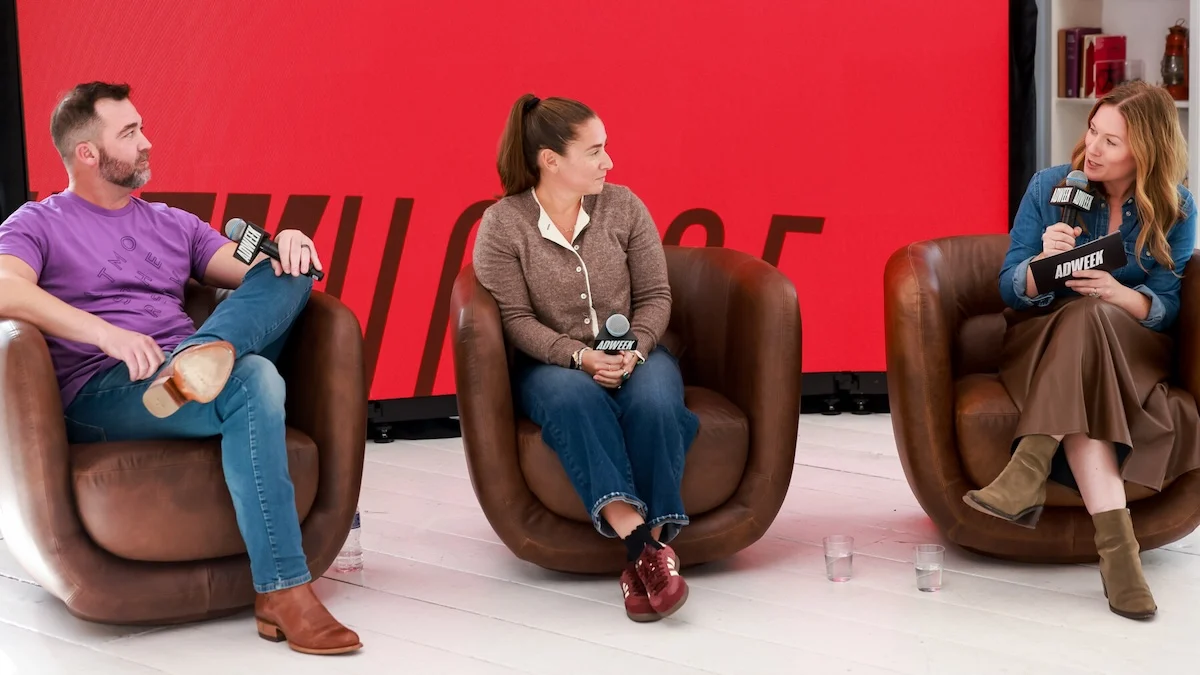
During a recent panel at ADWEEK House Advertising HQ, Zoë Ruderman, chief content officer at ADWEEK, moderated a high-level discussion with Blake Sabatinelli, CEO of Atmosphere TV, and Lindsay Sutton, SVP and head of marketing for Atmosphere TV. The discourse centered on a singular, urgent question: How can brands transition from being "interrupters" in a digital stream to becoming "participants" in a shared physical environment?
The consensus was clear: the era of purely siloed, one-to-one digital marketing is hitting a wall. To break through the noise, brands must move where the energy is—into the bars, restaurants, gyms, and waiting rooms where people are actively engaging with the world around them.
The Power of Communal Experience: A New Marketing Logic
"Community experiences matter again," Blake Sabatinelli noted during the panel. For Sabatinelli, the opportunity lies in the intersection of timing, geography, and context. Unlike the intrusive nature of pop-up ads or pre-roll videos on personal devices, brand messaging within communal spaces—delivered via high-quality, non-disruptive, ambient media—is increasingly viewed as a natural component of the environment.
The Psychology of Shared Energy
The most compelling argument for communal media is the heightened emotional state of the audience. Consider the atmosphere of a sports bar during a high-stakes game. The energy is visceral, the focus is collective, and the mindset is inherently positive and engaged.
"If you think about the mindset and mentality that you’re in when you’re watching sports, just think about the energy and the feeling that you have," Sabatinelli explained. "If you’re a brand, you want to be associated with that feeling and that energy because it’s bringing a positive mindset to the viewer."
When a brand aligns itself with the positive, shared energy of a public space, it bypasses the "ad-avoidance" reflex that characterizes much of the online experience. Instead of being a distraction, the content becomes an extension of the shared experience.
The Creative Imperative: Collaboration Over Intrusion
While the opportunity is vast, the execution is delicate. Lindsay Sutton, who brings a background as a creative brand strategist to her role at Atmosphere TV, emphasized that the transition to communal marketing requires a departure from traditional "push" tactics.
Avoiding the "Interruption" Trap
Sutton notes that the primary mistake brands make when entering physical spaces is treating them like digital billboards. "Brands should avoid producing campaigns that feel intrusive or distracting," she said. The solution, according to Sutton, lies in a collaborative model where the platform, the brand, and the environment work in concert.
"We will ask, ‘What makes sense for this moment?’ and build that together," Sutton explained. This collaborative ethos is designed to ensure that the content is additive to the viewer’s experience rather than a friction point.
Engineering Innovation: Beyond the Static Ad
One of the most compelling aspects of the Atmosphere TV approach is its technical capability to integrate data-driven, real-time interactivity into the physical space. Sabatinelli pointed to a notable campaign for a financial services partner that tracked runners during the Boston Marathon. By displaying live data and milestones directly in the environments where people were watching, the brand transformed from a passive advertiser into a participant in the marathon’s narrative.
"We’re doing things that you can’t get anywhere else because we have an engineering team that sits down and works with brands," Sabatinelli said. This highlights a crucial shift: the future of out-of-home (OOH) media is not just "out there"; it is dynamic, responsive, and deeply integrated into the events of the day.
Challenging the Digital Hegemony
Perhaps the most candid moment of the ADWEEK House panel occurred when Sutton reflected on her own journey as a marketer. Like many of her peers, she admitted that before joining the Atmosphere TV team, her strategic focus was dominated by the "tried and true" digital platforms.
"We weren’t thinking about the communal space as a place that we could tap, that you could get additional value out of," Sutton confessed. "We always thought about marketing as one person traveling along their journey, vs. these much larger moments or shared moments that we could have been planning for."
This admission highlights a blind spot in the modern marketing industry. For years, the industry has been obsessed with individual tracking, conversion funnels, and the granular data offered by Meta and Google. While these tools remain essential, they have also created a bubble of saturation.
The Saturation Problem
Sabatinelli echoed this sentiment, offering a blunt assessment for brand marketers who are hesitant to venture beyond the digital "walled gardens."
"Marketers need to think about the media ecosystems that exist outside of Meta and Google," he stated. "We’ve reached a point of saturation on those platforms, especially when it comes to acquisition. At a certain point, you’re going to have to find another modality to reach people."
The implication is clear: if a brand’s growth is stagnant on digital platforms, it is not necessarily a failure of the brand, but a failure of the medium. The "acquisition cost" on major digital platforms has climbed to unsustainable levels, and the returns on investment are often diluted by competition. Communal spaces offer a "blue ocean" of sorts—a landscape where the audience is not only present but also receptive.
Implications for the Future of Brand Strategy
The shift toward communal media has significant implications for how brands structure their budgets and their creative teams in the coming years.
- The Rise of "Ambient" Marketing: Brands will need to shift their creative focus from "attention-grabbing" to "ambient-enhancing." The goal is to be present in a way that feels organic to the environment, requiring a more nuanced approach to art direction and messaging.
- Data-Driven Physicality: As seen with the Boston Marathon example, the marriage of real-time data and physical screens is the next frontier. Brands that can leverage live, relevant data to power their physical placements will gain a significant competitive advantage over those relying on static assets.
- Holistic Journey Mapping: Marketing leaders must move beyond the "individual user journey" and start mapping "communal journeys." This involves understanding where and when target demographics congregate and identifying the shared emotional peaks of those experiences.
- Diversifying the Ecosystem: The reliance on a handful of digital giants has created a systemic risk for many brands. Diversifying media spend into communal, non-digital-first environments provides a hedge against platform volatility and algorithm changes.
Conclusion: Reclaiming the Public Square
The "communal experience" is not a trend; it is a fundamental human need that technology can no longer fully satisfy in isolation. As consumers return to gyms, bars, and public venues, they are seeking connection, energy, and shared narratives.
For brands, the message from the panel at ADWEEK House is unambiguous: the digital world is essential, but it is incomplete. To achieve the next level of impact, brands must step out of the individual silo and into the shared space. By doing so, they don’t just reach an audience—they become part of the very fabric of the communal life that makes that audience human.
As Sabatinelli and Sutton emphasized, the future belongs to those who can meet the consumer in the right place, at the right time, with a message that respects the energy of the room. The transition may require a new way of thinking, but the reward is a level of brand resonance that a digital screen simply cannot replicate.