





In a move that has sent shockwaves through the digital operations of public institutions and community organizations, Meta has begun enforcing a restrictive test on Facebook that effectively places a paywall on the ability to share hyperlinks. While Meta maintains that this initiative—integrated into its new "Meta One" subscription tiers—is designed to enhance professional experiences, the reality on the ground suggests a disjointed, confusing, and potentially harmful rollout that is sweeping up government agencies and small nonprofits despite explicit assurances that such entities would be exempt.
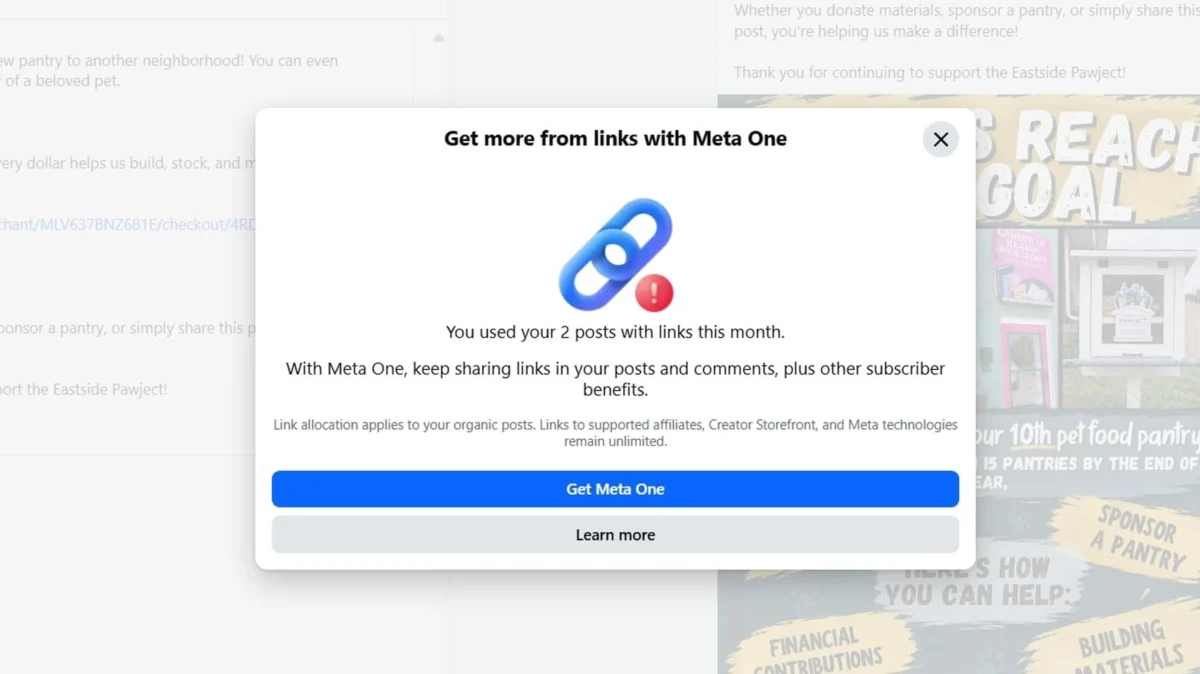
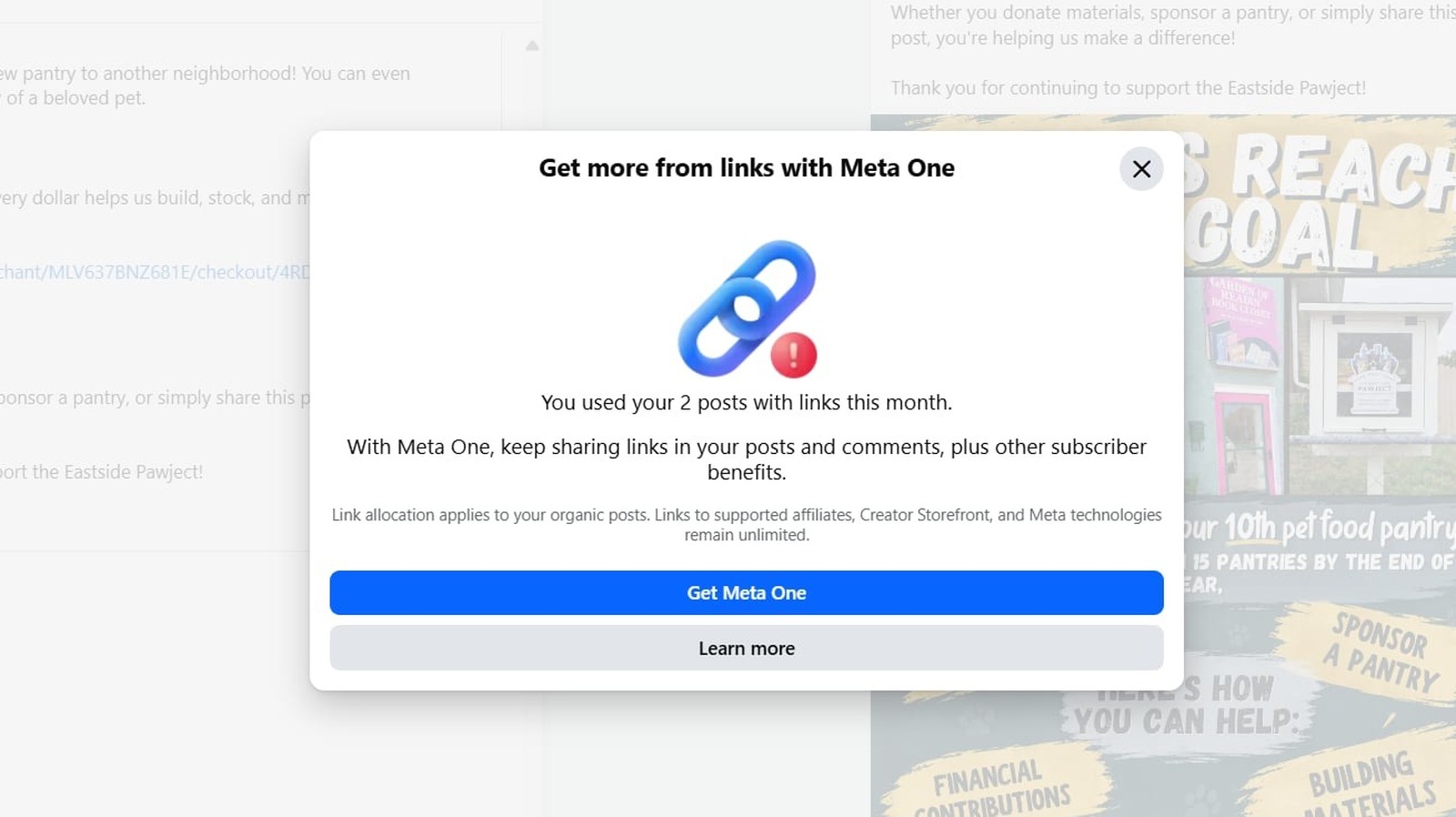
For years, the ability to post a URL has been a fundamental utility of the internet. For a city government, it is the primary way to disseminate emergency alerts, town hall schedules, and public health data. For a local food pantry, it is the lifeline for connecting donors to donation portals and volunteers to sign-up sheets. Now, many of these organizations are being greeted with a cold, automated notification: "You can add links to 2 posts per month, and you’ve used them all."
The Core Conflict: When Basic Functionality Becomes a Luxury
The heart of the controversy lies in the transition of a foundational feature into a premium service. Meta’s "Meta One" plans, which the company frames as an AI-centric subscription suite, are now tethered to the most basic of social media actions: posting a link. Under the current test parameters, users who reach their two-link monthly limit must either cease sharing URLs or subscribe to a tiered plan starting at roughly $50 per month, with higher tiers reaching up to $500 for "unlimited" access.
The frustration among users is not merely about the cost; it is about the sudden disruption of a digital infrastructure that they have relied upon for over a decade. Organizations that have built their entire outreach strategy around Facebook—a platform they were encouraged to use for community engagement—are now finding their ability to communicate throttled by an algorithmic gatekeeper.
A Chronology of the Rollout and Resistance
The implementation of these restrictions has been marked by inconsistency and a lack of clear communication.
- Late 2025/Early 2026: Meta began testing the inclusion of link-sharing limits as part of its broader Meta Verified and "Meta One" initiatives. Initially, these restrictions appeared to be targeted at commercial entities and aggressive advertisers.
- Summer 2026: As the test expanded, reports began surfacing from municipal governments and small, verified nonprofits that their accounts were suddenly being flagged for "over-posting" links.
- September 2026: The impact reached a critical mass. Communications managers for small towns, such as Greenville, Texas, found their municipal pages restricted, preventing them from linking to official city resources.
- October 2026: Several nonprofits, including the Indianapolis-based East Side Pawject, reported that their ability to organize community events was being directly hampered by the two-link-per-month cap. Following intense public scrutiny and media inquiries, some organizations reported that their access was abruptly restored without explanation, highlighting the erratic nature of the test.
Data and Tiered Access: The Cost of Connection
Meta’s pricing structure for the Meta One plan is categorized into tiers that vary by user, leading to further confusion. While one organization might be quoted $50 for eight links, another might be offered different rates based on their account history or geographic location.
The pricing breakdown generally follows this trajectory:
- Entry Level: Often includes no additional link-sharing privileges on Facebook, focusing instead on AI tools or Instagram bio links.
- Mid-Tier ($49.99/mo): Typically offers eight links per month.
- High-Tier ($149.99/mo): Typically offers 20 links per month.
- Premium ($499.99/mo): The only tier currently offering "unlimited" link sharing.
For a small nonprofit, a monthly fee of $150 represents a significant portion of their operational budget—money that would otherwise be spent on direct services. As Jeff Bannister of the nonprofit SparkPoint noted, the return on investment for such a subscription is effectively negative for a grassroots organization that relies on social media for awareness rather than direct revenue generation.
Official Responses and the "Exemption" Paradox
Meta’s official stance has been a masterclass in corporate ambiguity. When pressed on why entities that are explicitly supposed to be exempt—such as government offices and verified nonprofits—are being hit by the restrictions, the company’s responses have been reactive rather than proactive.
In a statement provided to media outlets, a Meta spokesperson stated: "We’ve been testing whether sharing links on Facebook should be part of the Meta One subscription. We will continue to evolve the experience based on the feedback we receive and what we learn."
Following the publication of initial reports on these issues, Meta issued a follow-up clarification: pages must specifically list "nonprofit" in the "Category" section of their Facebook page settings for the system to correctly identify and exempt them. However, this defense has been met with skepticism. Many organizations argue that their status as a government entity or a registered nonprofit is verified through other Meta tools, such as the company’s own fundraising and donation platforms. The failure of Meta’s system to recognize these existing verification markers has led many to characterize the move as a clumsy, if not predatory, attempt to drive subscription revenue at the expense of public utility.
Implications for Public Discourse and Community Trust
The implications of this test extend far beyond the immediate frustration of social media managers.
1. The Erosion of Digital Public Squares
For many citizens, particularly in rural or underserved areas, Facebook is the internet. When a local government is prevented from linking to an emergency road closure, a public safety notice, or a city council agenda, the flow of information is constricted. By monetizing the link, Meta is essentially taxing the dissemination of public interest information.
2. The Vulnerability of Grassroots Organizations
Small nonprofits, which lack the marketing budgets of large corporations, rely on the organic reach of Facebook to survive. If they are forced to choose between paying a $150 monthly subscription fee or losing their ability to connect with their community, many will choose the latter, resulting in a loss of social capital and a decline in volunteer engagement.
3. A Shift Toward "Platform Migration"
The frustration is already prompting a shift in strategy. Many organizations are moving toward "workarounds," such as posting URLs in the comments section, using pinned posts that are never updated, or creating Facebook Events to bypass the link limit. Others, however, are beginning the difficult process of migrating their audiences to alternative platforms. This represents a significant risk for Meta: by pushing its most loyal and community-focused users to the brink, the company may be accelerating the obsolescence of its own platform.
4. The AI Disconnect
Perhaps the most contentious aspect of the Meta One plan is the bundling of basic features with "AI-centric" marketing. Users have pointed out that link-sharing is a rudimentary technology that requires no AI processing power. Tying this feature to an AI subscription package creates a sense of profound dissonance, where the user feels they are being sold a premium product for a feature that has been free for nearly two decades.
Conclusion: A Turning Point for Social Media
The current situation serves as a bellwether for the future of social media. As these platforms struggle to maintain growth and profitability, the temptation to monetize basic functionality increases. However, the case of the "link-sharing paywall" suggests that there is a line between value-added services and the taxation of essential communication.
For organizations like Greenville’s library or the East Side Pawject, the message from Meta is clear: their importance to the community does not insulate them from the company’s bottom-line imperatives. As this test continues, the tech giant faces a critical test of its own—whether it will prioritize the integrity of the information ecosystem it manages, or whether it will continue to treat the public square as a proprietary asset to be auctioned off to the highest bidder.
As it stands, many organizations are left in a state of limbo, waiting to see if their "nonprofit" status will be recognized by the algorithm, or if they will be forced to abandon a tool they have spent years perfecting. The long-term impact on the health of online community engagement may be far greater than the revenue generated by a handful of subscription plans.