










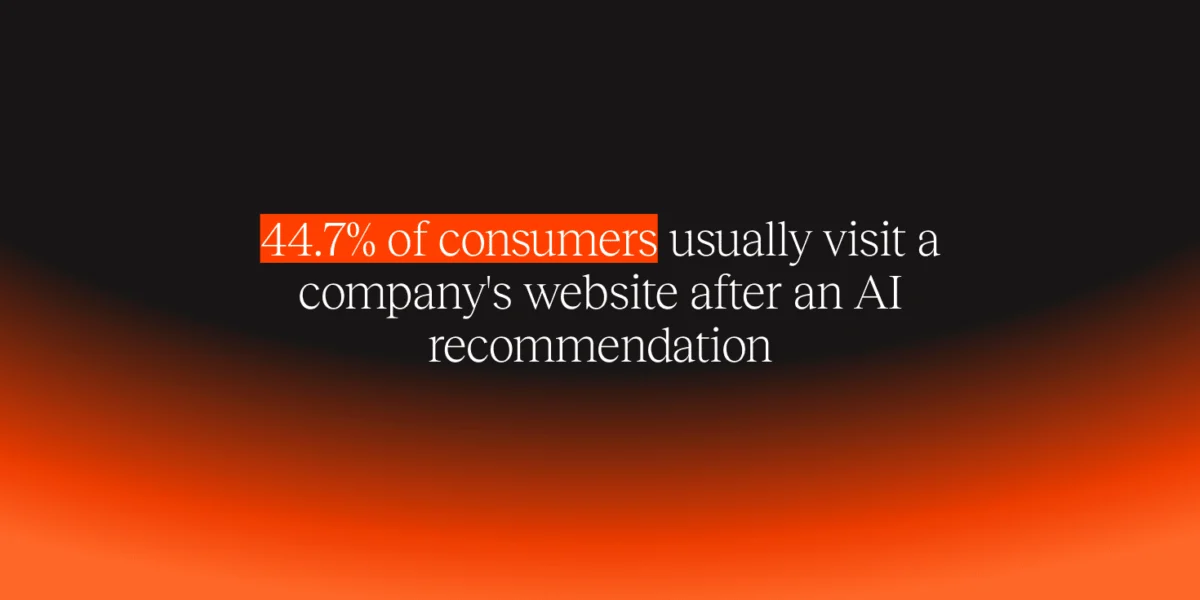
LOS ANGELES — September 22, 2026 — In the rapidly shifting landscape of digital commerce, a new paradox has emerged: while Artificial Intelligence has become the primary engine for product discovery, it has simultaneously triggered a profound crisis of confidence among consumers. A comprehensive new report from Kinsta, a leader in managed WordPress hosting, reveals that while consumers are increasingly bypassing traditional search engines in favor of AI-driven research, they are treating the resulting outputs with deep-seated skepticism, ultimately relying on brand websites as the definitive "source of truth."
This shift signals a departure from the "AI-will-replace-everything" narrative. Instead, the data suggests that the digital ecosystem is bifurcating: AI serves as the initial funnel for narrowing choices, while the corporate website has evolved into the final, critical arbiter of brand legitimacy.
The New Discovery Funnel: AI as the First Filter
For years, the industry debated whether AI would render the traditional website obsolete. According to the Kinsta report, that fear was misplaced. AI has indeed cemented itself as the default research tool, with 59.2% of consumers reporting they use AI tools frequently or occasionally to begin their purchasing journey. Furthermore, 53.8% of respondents admit they now sometimes or often skip traditional search engines and brand websites entirely during their initial discovery phase.
The convenience of LLM-based discovery—where a user can prompt an AI to "find the best wireless headphones for travel under $300"—is undeniable. However, the data highlights a significant "discovery gap." While 61.2% of consumers believe that AI will eventually replace traditional websites as the primary way to find products, their behavior suggests a deep-seated need for human verification that AI cannot currently satisfy.
The Trust Gap: Why Consumers Are Skeptical of Algorithms
The core of the Kinsta report rests on a stark finding: the more AI becomes a part of the consumer experience, the more guarded consumers become. The report identifies a "Trust Gap" that complicates the sales funnel for brands that fail to anchor their digital presence in human-centric design and verifiable facts.
Key Data Points on AI Skepticism:
- The Content Bias: 58% of consumers report that they trust content less if they suspect it was generated by AI.
- The Search Preference: 52.1% of consumers explicitly state they trust traditional, human-curated search results more than those provided by AI engines.
- The Verification Requirement: Only 18.8% of consumers are willing to accept an AI-generated product recommendation at face value without performing their own secondary research.
This skepticism is rooted in a growing awareness of AI hallucinations, biased algorithms, and the proliferation of low-quality, AI-generated "fake" reviews. As the internet becomes flooded with synthetic content, consumers are increasingly viewing AI as a "starting point" rather than a "final authority."
Chronology: From Search Supremacy to AI-Driven Discovery
To understand the current state of consumer trust, one must look at the rapid evolution of the digital landscape over the past few years.
- Pre-2023 (The Search Era): Discovery was dominated by traditional search engines and social proof. Trust was derived from SEO rankings and organic user reviews.
- 2023–2024 (The AI Hype Phase): The release of advanced LLMs led to a rapid adoption of generative AI. Businesses rushed to integrate AI, often sacrificing human voice for machine-generated volume.
- 2025 (The Era of Saturation): The internet faced a glut of low-quality, synthetic content. Consumers began to experience "AI fatigue," leading to a noticeable decline in trust for content that lacked a clear human signature.
- 2026 (The Verification Era): As the Kinsta report highlights, we have entered a phase where the "human-verified" website is once again the gold standard. Consumers now use AI for efficiency but use websites for validation.
The Infrastructure Mandate: Performance as a Proxy for Credibility
The most significant takeaway for businesses is that the "last mile" of the consumer journey—the company website—is now under more pressure than ever. When a consumer is referred to a brand via an AI chatbot or search summary, they arrive at the website in a state of high skepticism. They are essentially asking: "Is this company real, and can I trust them with my money?"
The Role of Performance
In this context, technical performance—speed, uptime, and security—is no longer just a technical metric; it is a signal of brand integrity.
- Speed: A slow-loading site in 2026 is interpreted as a sign of neglect or lack of resources.
- Security: With AI-driven phishing and deepfakes on the rise, a secure, professional website provides the reassurance a consumer needs to complete a transaction.
- Uptime: Frequent outages or broken site elements confirm the consumer’s worst fears: that the brand is unreliable.
"When someone lands on a website after getting a recommendation from AI, they’re already asking themselves whether they can trust what they’re looking at," says Cody Landefeld, co-founder and partner at Mode Effect. "The website must immediately project professionalism and authenticity to bridge that trust gap."
Expert Perspectives: Re-evaluating the Digital Storefront
Industry experts suggest that the role of the web professional is shifting from purely "content creation" to "trust engineering."
Cody Landefeld (Mode Effect)
Landefeld emphasizes that the content itself must be distinct. "Our clients tell us that people don’t take AI-generated content or reviews at face value anymore. They are looking for the ‘human spark’—the nuances, the genuine case studies, and the transparent product details that an AI simply cannot fabricate without deep, proprietary data."
Jeremy Fremont (Multidots)
Jeremy Fremont, director of business development at Multidots, echoes this sentiment, noting that while the top-of-funnel has been disrupted, the bottom-of-funnel is remarkably resilient. "AI has changed how people discover a brand, but buying still remains largely the same. Consumers still make that call once they are on the website, after they’ve had a chance to check things out for themselves."
Matt Reid (Kinsta)
Matt Reid, chief marketing officer at Kinsta, views the current climate as an opportunity for brands to distinguish themselves. "People are using AI to narrow their options, then coming to websites to make sure the recommendation checks out. Websites aren’t becoming less important because of AI. If anything, they’ve become the crucial last line of defense against bad information."
Strategic Implications: How Brands Should Respond
For businesses looking to survive and thrive in this new environment, the Kinsta report suggests a shift in digital strategy:
- Invest in "Human-First" Content: While AI can assist in the drafting process, content must be audited, enriched, and personalized by humans to maintain brand credibility.
- Prioritize Technical Excellence: Given that the website is the "final court of appeal," infrastructure cannot be an afterthought. Managed WordPress solutions that offer high-speed, secure, and reliable performance are no longer optional—they are foundational.
- Transparency as a Competitive Advantage: In an age of synthetic content, being transparent about your brand values, your sourcing, and your customer reviews will set you apart from competitors relying on generic, AI-generated copy.
- Verification Architecture: Ensure that the path from an AI recommendation to your product page is seamless, but use that landing page to build immediate trust through testimonials, security badges, and clear, authoritative information.
Conclusion: The Resurgence of the Human-Verified Web
The Kinsta report serves as a wake-up call for the digital industry. The "AI revolution" has not destroyed the website; it has evolved the website into a fortress of truth. As consumers become more adept at navigating the AI-generated web, they are becoming increasingly sophisticated at spotting the difference between hollow, machine-generated noise and the substance of a credible, human-operated business.
Brands that ignore this shift, continuing to rely on low-quality AI content and neglecting their digital infrastructure, will find themselves losing the very trust they need to convert a visitor into a customer. In 2026, the brand that provides the most reliable, fast, and human-verified experience is the one that will win the market.
About Kinsta
Kinsta is a premium managed WordPress hosting solution designed for all types of businesses, from startups to Fortune 500 enterprises. With a focus on speed, security, and exceptional support, Kinsta empowers over 230,000 customers in 128 countries to build and scale their digital presence. By providing a stable, high-performance foundation, Kinsta enables brands to focus on what matters most: building trust with their customers. For more information, visit kinsta.com.



