









The rapid ascent of Artificial Intelligence (AI) as the primary engine of global economic growth has sparked a profound debate regarding the future of traditional industry heavyweights. Recently, Uday Kotak, the founder and director of Kotak Mahindra Bank, ignited a national conversation by highlighting a staggering disparity between the valuations of emerging US-based AI giants and the established titans of the Indian corporate sector. His observations, spurred by the meteoric rise of Anthropic, serve as a wake-up call for Indian policymakers and corporate leaders alike.
The Anthropic Phenomenon: A Paradigm Shift in Valuation
The catalyst for this discourse is the initial public offering (IPO) of Anthropic, the San Francisco-based AI powerhouse behind the Claude family of large language models. Founded in 2021, the company has achieved what many analysts once considered impossible: reaching a valuation of USD 1.5 trillion in less than five years.
Anthropic priced its IPO at USD 83 per share, comfortably surpassing its previously anticipated range of USD 70–78. With an offering comprising 980 million shares, the company is set to make its debut on the Nasdaq Global Select Market under the ticker symbol ‘ANT’. This valuation milestone is not merely a financial figure; it is a signal that global capital is aggressively pivoting toward companies that possess the infrastructure to dominate the next decade of technological transformation.
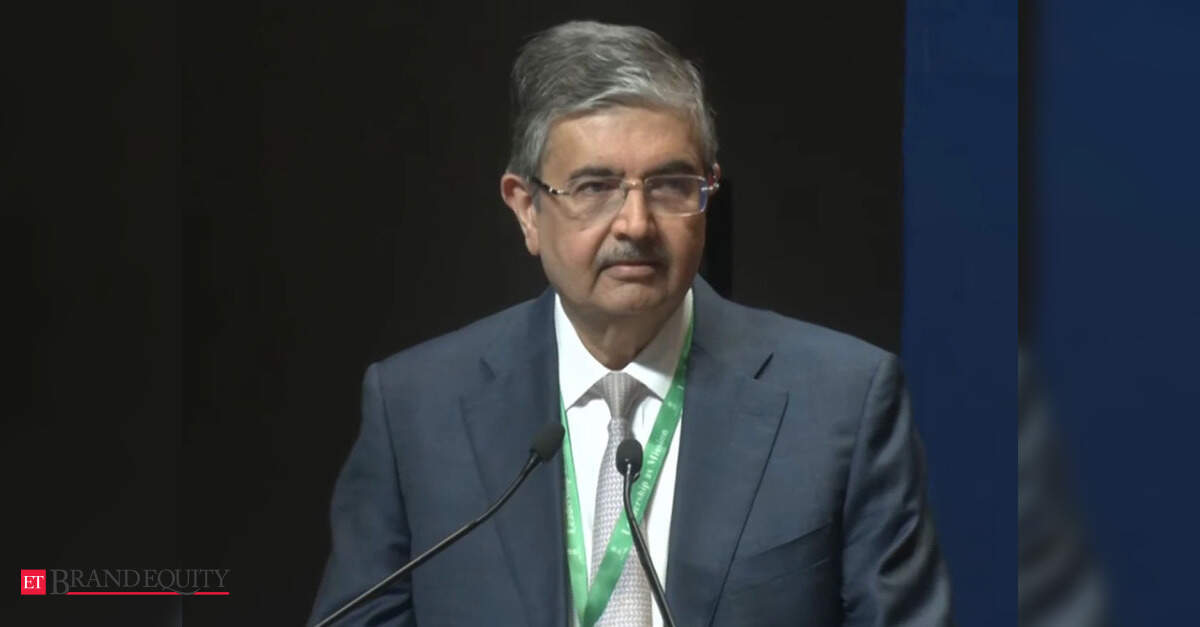
For context, Anthropic’s USD 1.5 trillion valuation effectively eclipses the combined market capitalization of India’s top ten largest corporations. This comparison, highlighted by Kotak in a widely discussed post on X (formerly Twitter), underscores a massive divergence in how the market values legacy economic power versus future-ready technological innovation.
Chronology of a Tech Titan
To understand the scale of Anthropic’s achievement, one must look at its rapid developmental timeline:
- 2021: Anthropic is founded by former members of OpenAI, with a focus on AI safety and the development of steerable AI models.
- 2023: The launch of the Claude series gains significant traction, positioning the company as a primary challenger to OpenAI’s ChatGPT.
- Early 2024: The company secures massive tranches of capital from institutional investors, rapidly scaling its infrastructure and talent pool.
- November 2024: Anthropic announces its IPO, setting a price point that values the firm at over USD 1.5 trillion.
- November 20, 2024: The anticipated close of the IPO, marking the firm’s transition into the public markets and setting the stage for institutional adoption.
This trajectory is a testament to the "winner-takes-all" dynamic prevalent in the AI sector, where early movers with significant compute resources and research capabilities can achieve unprecedented scale in a fraction of the time required by industrial-era companies.
Supporting Data: The Disparity in Market Capitalization
The core of Uday Kotak’s argument lies in the arithmetic of global market dominance. India’s market, while robust and the fastest-growing major economy, is largely composed of banking, energy, FMCG, and IT services firms that have matured over several decades.
While these companies—such as Reliance Industries, Tata Consultancy Services, and HDFC Bank—are pillars of stability and domestic growth, their valuation multiples are fundamentally different from those of Silicon Valley’s AI darlings. In the US market, capital is rewarded for growth potential, research and development breakthroughs, and the ability to disrupt existing labor markets. In contrast, Indian companies are often judged on consistent cash flows, dividend yields, and macroeconomic stability.
Kotak’s question—"Are we undervalued, or do we need to catch up in the new world?"—strikes at the heart of this data. If the global market is pricing a five-year-old AI company higher than the top ten Indian firms, it suggests a profound shift in where the "smart money" perceives value to be locked. The implication is that the global economy is decoupling from traditional metrics, favoring companies that own the intellectual property of the future over those that own the physical infrastructure of the present.
Implications: The Challenge for India’s Corporate Landscape
The rise of Anthropic is not just an American success story; it is a global indicator of the "AI divide." For India, the implications are three-fold:
1. The Innovation Gap
India has long been the "back office" of the world, providing high-quality IT services. However, the AI revolution is shifting the value proposition from service delivery to model creation. Indian companies must pivot from maintaining the code of others to owning the proprietary AI models that will drive global industries.
2. Capital Allocation and Risk Appetite
Indian capital markets remain relatively conservative compared to the venture capital and public market appetite seen in the US. To foster companies that can reach trillion-dollar valuations, India needs a deeper ecosystem for "moonshot" funding—where investors are willing to back high-risk, high-reward ventures that may not see profitability for several years but possess the potential to revolutionize global processes.

3. Human Capital and Research
While India produces millions of engineering graduates, the nation faces a brain drain where top-tier AI researchers often gravitate toward US-based labs. Building a competitive ecosystem requires fostering domestic AI research hubs that can compete with the resources of Anthropic or OpenAI, ensuring that the next generation of AI intellectual property is developed on Indian soil.
Official Perspectives and Expert Analysis
Market analysts have weighed in on Kotak’s assessment, largely agreeing that the Indian market suffers from a "valuation discount" relative to US tech stocks. However, many experts caution against direct comparisons. "Anthropic is a singular entity operating in a specific, high-growth sector that is currently experiencing a valuation bubble," noted one market strategist. "Indian firms are the bedrock of the real economy. You cannot compare the valuation of a bank that serves 100 million people with an AI model that has yet to prove its long-term commercial sustainability."
Nevertheless, the consensus among observers is that Uday Kotak’s warning is timely. As AI integrates into every sector—from banking and retail to healthcare and governance—the inability to innovate in the AI space will eventually be reflected in the bottom lines of even the most established Indian corporations.
Conclusion: A Call to Action for the Next Decade
Uday Kotak’s intervention serves as a necessary provocation. It challenges the complacency that can sometimes settle in after years of steady domestic growth. To avoid falling behind in the "new world," India must incentivize a shift in mindset: moving from a focus on incremental efficiency to radical innovation.
The success of Anthropic is a reminder that in the age of AI, time is the most expensive commodity. If a company can be built, scaled, and valued at a trillion dollars in five years, the traditional timelines for corporate growth are effectively obsolete. For India to remain a global leader, it must move beyond being a consumer of AI technology and become a creator of it. Whether the answer to Kotak’s question is that Indian firms are undervalued or that they are lagging in the "new world," the reality remains the same: the race for global technological supremacy is underway, and the leaderboard is changing rapidly.
The question for Indian leaders is no longer how to preserve what they have built, but how to evolve into the architects of the next era of human industry.