







In a strategic maneuver to reclaim ground in the hyper-competitive race for artificial intelligence supremacy, Google announced on Thursday that it is integrating “computer use” capabilities into its Gemini desktop application for macOS. This pivotal update transforms Gemini from a passive conversational chatbot into an active digital agent, capable of navigating native applications, managing local files, and executing complex, multi-step workflows on a user’s behalf.
As the industry shifts from simple text generation to autonomous task completion, Google’s latest move represents a significant evolution in how humans interact with their machines. By allowing Gemini to “see” and operate within the macOS environment, the tech giant is positioning its AI not just as a research tool, but as a digital colleague.
Main Facts: A New Frontier for Gemini
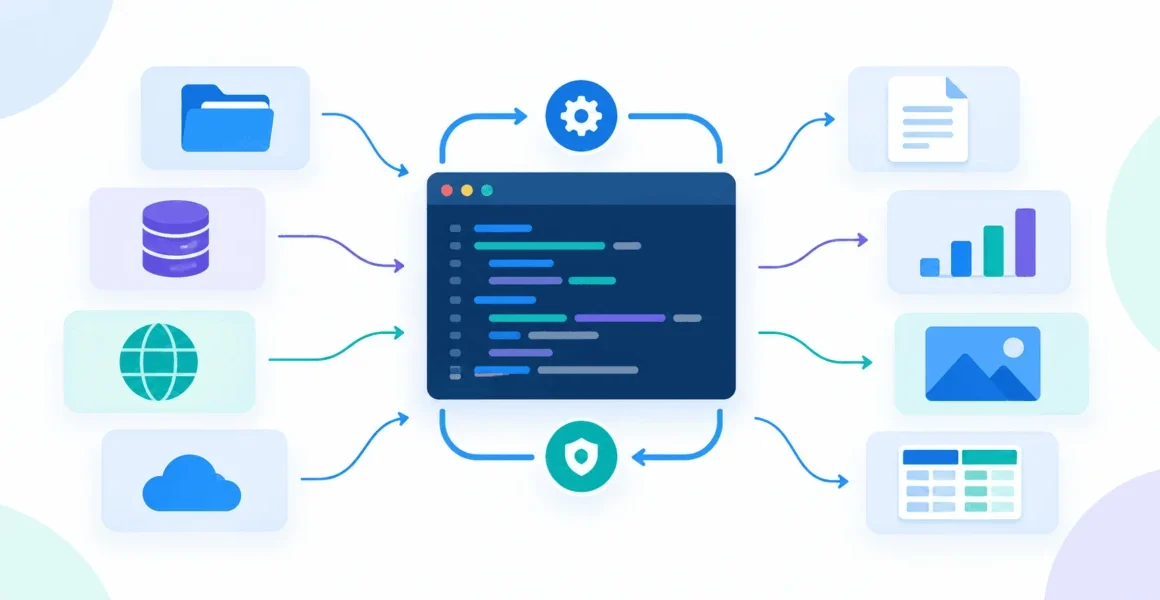
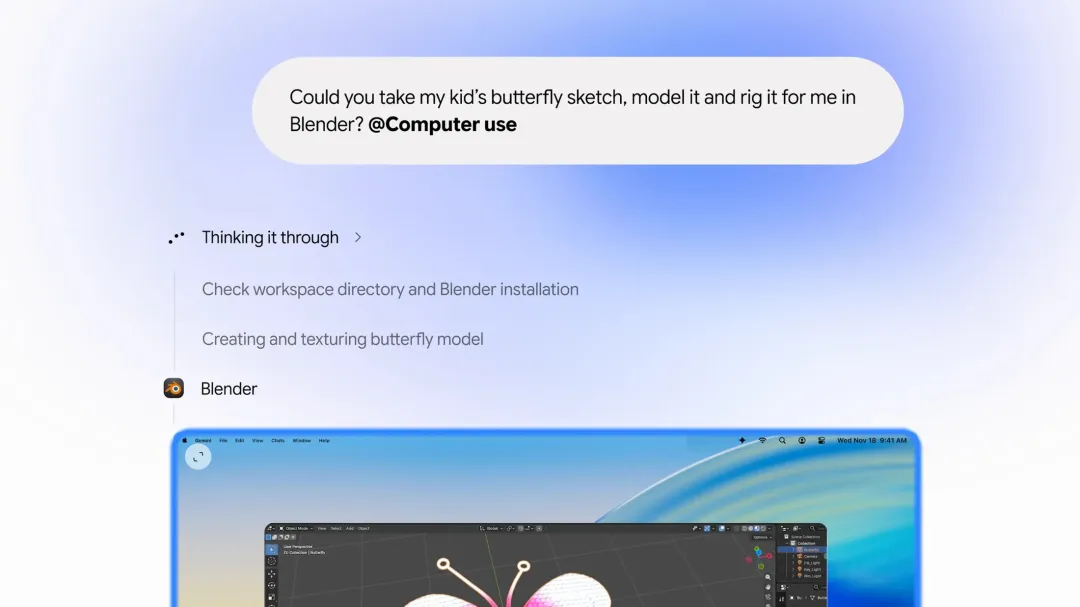
The core functionality of this update is the ability for Gemini to interact directly with the operating system’s interface. Unlike traditional AI integrations that rely solely on APIs, "computer use" allows the model to view the screen and perform actions as a human would—moving the cursor, clicking buttons, typing in fields, and navigating between applications.
Key highlights of the rollout include:
- Background Execution: Users can instruct the AI to perform tasks while their own screen remains free, allowing them to continue working simultaneously.
- Live Preview: Within the Gemini chat interface, users receive a real-time visual feed of the AI’s progress, ensuring transparency throughout the task execution.
- Human-in-the-Loop Security: Control remains firmly with the user. All actions taken by Gemini can be paused, stopped, or approved in real-time, mitigating the risks associated with autonomous agents.
- Targeted Use Cases: Google envisions the tool handling repetitive, high-friction tasks, such as organizing large batches of files, filling out digital forms, synthesizing data from online dashboards into slideshows, and cross-referencing information across disparate local and web-based apps.
The feature is currently restricted to English-language users in the United States who maintain a Google AI Plus, Pro, or Ultra subscription.
Chronology: The Road to Agency
Google’s journey toward agentic AI has been marked by a series of rapid-fire announcements, signaling an internal push to catch up with rivals who entered this space earlier.
- September 2026: Google unveiled its revamped "CC" (Common Context) AI agent. Designed with a focus on household management, this agent was built to synchronize a family’s digital life across calendars, email threads, and chat logs. It served as a precursor to the current, more powerful desktop-native agents.
- Early November 2026: Google expanded the availability of Gemini “Tasks.” This in-app feature was designed to act as a bridge between conversation and execution, allowing the AI to assist with signing into secure websites, executing online purchases, and scheduling appointments.
- Mid-November 2026: The current announcement marks the leap from web-based task assistance to full system-level control on macOS, signaling that Google is now prioritizing deep OS integration as a core pillar of its product roadmap.
While this rollout is significant, industry analysts note that Google is arriving late to a party already attended by OpenAI, Anthropic, and Meta. Anthropic, for instance, set the gold standard for "computer use" earlier in the year, and OpenAI has been aggressively pushing its own agentic capabilities within the ChatGPT desktop client.
Supporting Data: Why "Agentic" is the New Benchmark
The industry’s pivot toward "agentic" workflows is driven by a realization that LLMs (Large Language Models) have reached a plateau in terms of raw text generation. The next frontier is utility.
According to recent industry benchmarks, the time saved by automating "tedious workflows"—such as data entry, file sorting, and cross-application reporting—can exceed 40% of an office worker’s daily task load. Google’s internal data suggests that the new Gemini features are designed to minimize "context switching," the psychological and productivity drain that occurs when a user moves between browser tabs, file managers, and communication apps.
Furthermore, the subscription model behind these features (requiring the premium AI tiers) highlights Google’s intent to monetize the productivity gains offered by these agents. As the cost of inference remains high, the company is betting that enterprise and power users will prioritize the ROI of automated workflows over the monthly cost of a premium subscription.
Official Responses and Strategic Positioning
Google’s messaging surrounding this release emphasizes "empowerment" rather than "automation." By framing the AI as a collaborator that requires human approval, the company seeks to alleviate fears regarding AI autonomy.
"Our goal is to reduce the friction of the digital experience," a Google spokesperson stated during the announcement. "By allowing Gemini to navigate the Mac environment, we are not replacing the user; we are giving them a force multiplier that handles the mundane, repetitive elements of their day so they can focus on high-value creative work."
However, the company remained tight-lipped regarding the expansion of this feature to other operating systems like Windows or Linux, or its rollout to international markets. This silence is likely due to the significant regulatory hurdles and localized data-handling requirements that vary wildly across the European Union and other jurisdictions.
Implications: The Future of the Human-Computer Interface
The introduction of computer use to Gemini is not merely a feature update; it is a fundamental shift in the human-computer interface (HCI).
1. The Death of the "App Silo"
Historically, applications have functioned as silos. Moving data from a PDF in a local folder to an online CRM required manual copy-pasting. With an agentic model like Gemini, the boundaries between apps become porous. The AI acts as a universal adapter, effectively turning the operating system into a unified workspace.
2. Security and Privacy Concerns
The ability for an AI to control a cursor and input data raises significant security questions. If an AI has the permission to "browse websites" and "make purchases," it must have access to sensitive credentials. Google’s emphasis on the "pause and stop" mechanism is a direct response to these concerns, yet security experts argue that as these agents become more autonomous, the window for human intervention will shrink, potentially creating vulnerabilities if the AI is tricked into malicious actions.
3. Impact on the Workforce
As agents become more capable, the nature of "knowledge work" will evolve. Tasks that are currently defined by their repetition—data entry, basic report generation, and file management—will likely be offloaded entirely to AI. This shift will force a re-evaluation of entry-level roles, which have traditionally relied on these tasks as a training ground for newer employees.
4. The Competitive Landscape
For Apple, the integration of Gemini into macOS is a double-edged sword. While it adds immense value to the Mac as a productivity platform, it also highlights the limitations of Apple’s own "Apple Intelligence." Should users find Gemini’s agentic capabilities superior to Apple’s native offerings, the platform power balance could shift, with users choosing their hardware based on how well it runs their preferred third-party AI agent.
Conclusion
Google’s move to bring Gemini to the macOS desktop is a clear signal that the "AI Agent" is the next major product cycle in consumer technology. By enabling the AI to interact directly with the local environment, Google is attempting to solve the problem of digital clutter and workflow inefficiency.
While the current version is limited to the U.S. and requires a subscription, the trajectory is clear: the future of computing will not be defined by which apps you open, but by how effectively your AI agent navigates them for you. Whether users will embrace a digital assistant that controls their cursor remains to be seen, but one thing is certain: the era of the passive chatbot is over, and the era of the active agent has begun. As Google continues to iterate on this technology, the focus will undoubtedly shift toward reliability, security, and the ability to operate across increasingly complex software ecosystems.